
11 Fun Facts I’ve Learnt About Animals in Uganda
This trip was supposed to be relaxing. We’re planning to take it easy, enjoy every moment, relish the nature around us. In reality we spent an intense time, full of animals, people, stories and driven kilometres. Again, I was very lucky, because a man who accompanied us, who became my friend towards the end, turned out to be so knowledgable that there was no question he left without an answer. I will write about him in another story. For now, that’s what I’ve remembered about the wildlife in Uganda.
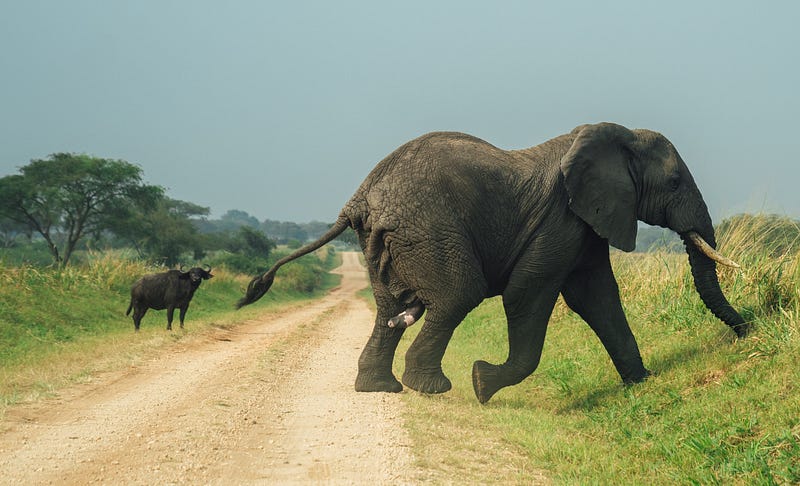
1.You won’t hear walking elephants. They may look like massive, noisy beasts, but their footfalls are soft and quiet. They are ‘digitigrade’ — they walk on their toes, and their heels rest on a spongy cushion. That soft padding helps support their weight and dull the sound of their footsteps. As a result, elephants can walk almost silently despite their colossal weight. This means you could be next to a group of elephants and have absolutely no idea they are there. Elephants have a fantastic memory contrary to the antelopes, which sometimes forget why they even run (which makes them an easy target for lions and other cats).
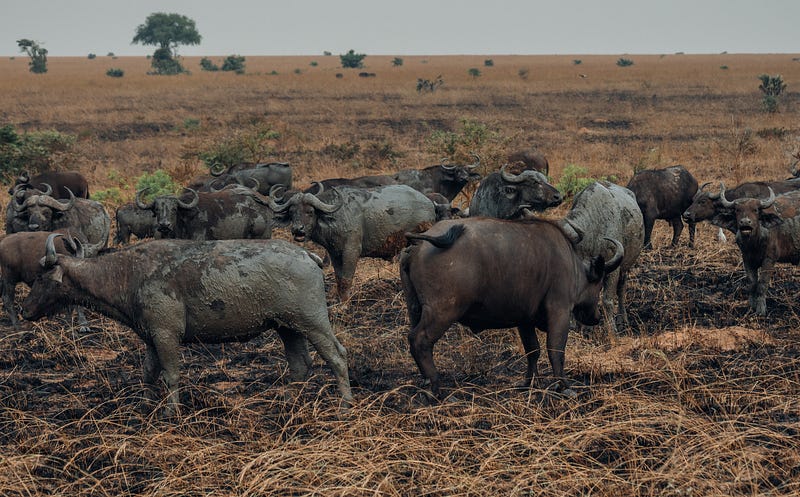
2. Buffalos (embogo) have amazing eyesight, hearing, power and speed. When they get old or lose a battle, the herd kicks them out. Lonely buffalo is extremely dangerous because it’s more aggressive than a group. One embogo is a perfect opportunity for an easy lunch for big cats; therefore, it’ll try to kill anything that comes its way. Lonely buffalo tries to find another abandoned buffalo. They slowly start creating a small group just to increase their chances of survival — Ugandans call them a ‘bunch of losers”.
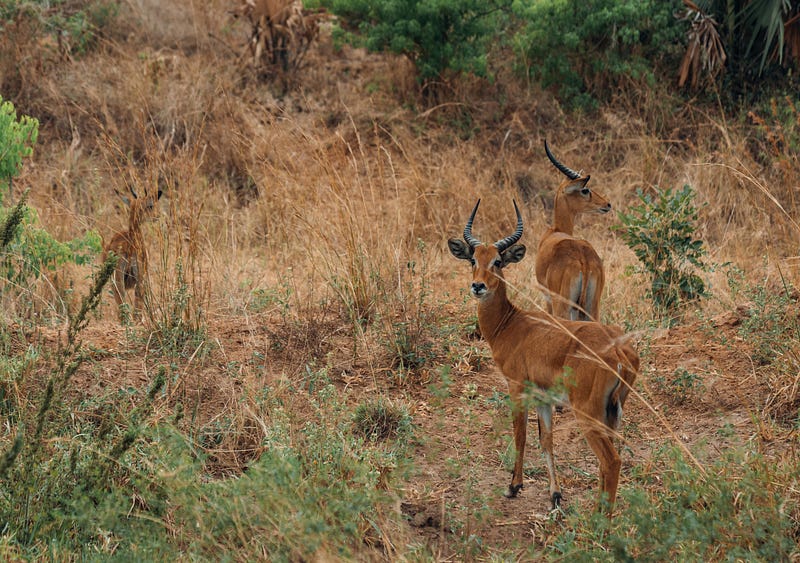
3. Antelopes might not be considered the most intelligent animals out there. Still, they have this unique skill to pretend their own death. Once caught, they can lie down without sight of life, lower their heartbeat, and hope the predator will be either distracted or loosen its grip. Antelopes developed senses that help them detect lions or leopards while still having time to escape. They can run up to 43 miles per hour. After giving birth, the female antelope must leave the group for around three months until the newborn is fast enough to not create a hazard to the rest of the animals.
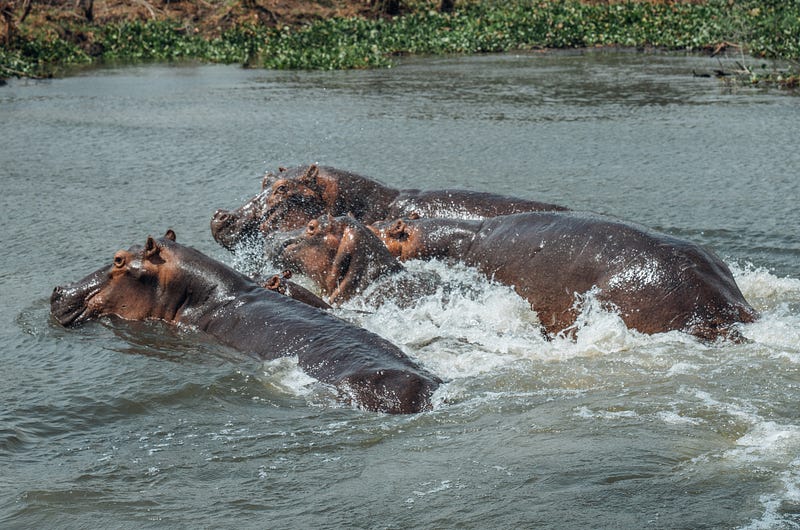
4. Hippos don’t swim. Shocking, right? They move around by pushing off from the river bottom or simply walking along the riverbed in a slow-motion gallop, lightly touching the base with their slightly webbed toes. Hippos sink when in deep water, and also they don’t breathe underwater. They can run pretty fast. Even though they weigh from 3000 to 9920 pounds, they run faster than 30 miles per hour. They spend days in the water to thermoregulate their body temperature. Hippos are considered to be the most dangerous animals in Africa. They’re active at night when they search for food, mostly grass.
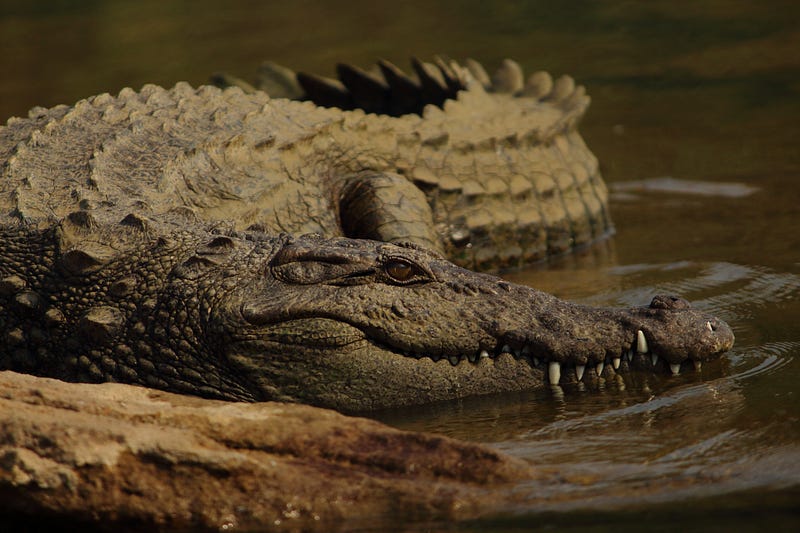
5. Crocodiles are my least favorite. Contrary to other animals that mostly kill to eat, they kill to… kill. Crododile’s jaw is extremely powerful, skin is thick and plated, contains bony structures which make it bulletproof. Same as hippos, they have excellent eyesight, especially during the night. Apparently, they like to have fun by playing in streams, surfing currents, or riding on each other’s backs.
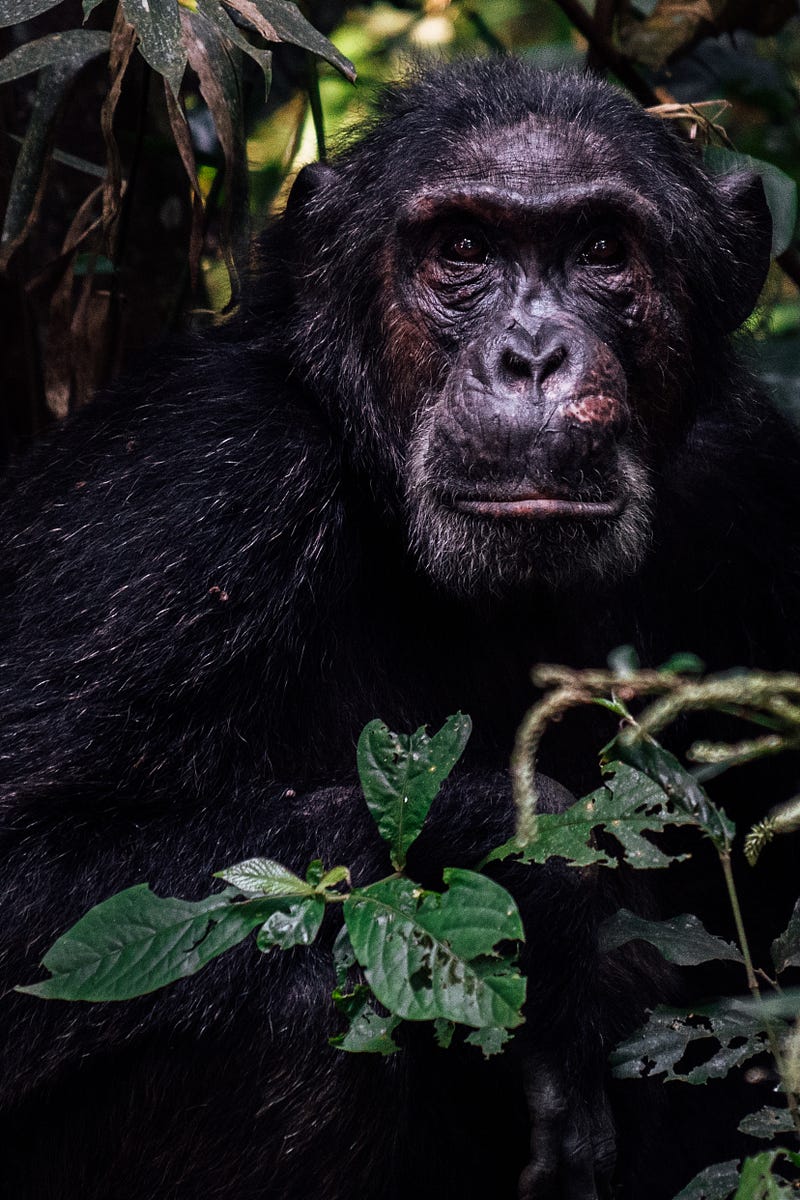
6. Wild chimpanzees live only in Africa. Humans share with chimpanzees 95 to 98 percent of the same DNA. We are much more closely related to them than to gorillas. Our two species are descended from a single ancestor species that lived six or seven million years ago. They can learn Sign Language and use tools to feed and protect themselves. Chimpanzees have sex year-round. When a female is in heat, the skin around her genitals becomes pink and swollen — a clear sexual signal to males.
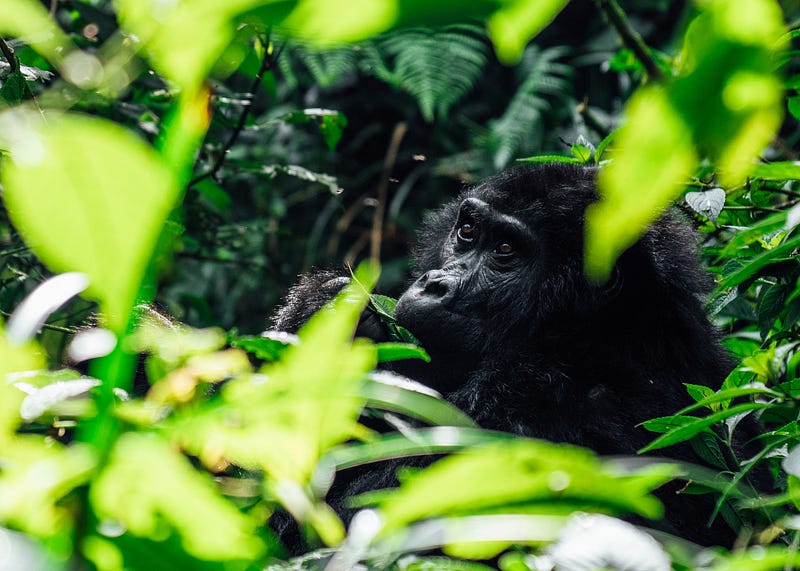
7. Around 1063 Mountain Gorillas are living in the wild. They live in east-central Africa in two groups — one in the Virunga Volcanoes (spanning region of 3 national parks in Uganda, Rwanda, and the Democratic Republic of Congo) and the other in Ugandan Bwindi Impenetrable National Park, which connects to Sarambwe Nature Reserve, DRC. Those big and most powerful living primates are found in high-altitude montane and bamboo forests surrounded by agriculture and settlements. They have 16 different types of call, i.e., short barks when they’re mildly alarmed or curious. The famous standing pose with beating the chest and roars is used to intimidate rivals or a call for action = fight. Same as chimpanzees, mountain gorillas’ eyes are dark brown, framed by a dark ring around the iris.
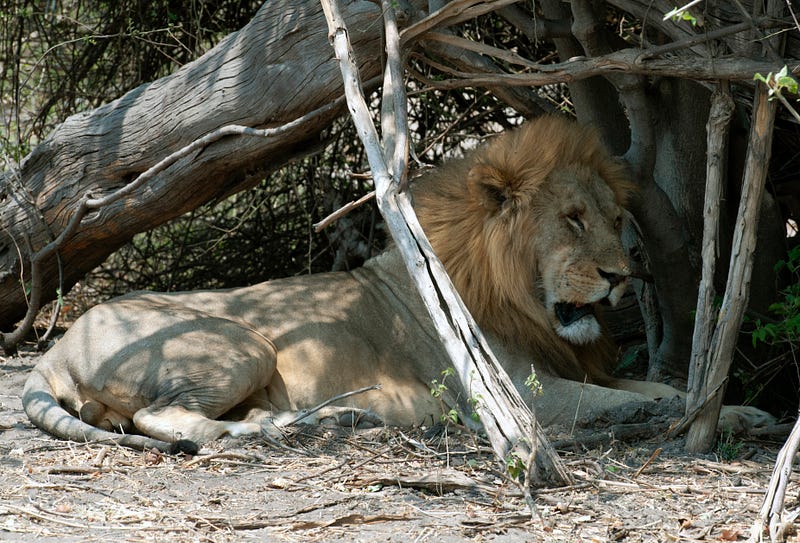
8. Lion’s roar is LOUD. It can be heard up to eight kilometers away. They’re the only cats that live in groups. Most of the hunting is done at night as their eyes have adapted to the dark; however, lions hunt also during storms as the noise makes it harder for prey to see and hear them. They play roles when hunting. Some play the role of ‘center’ and others the role of ‘wing.’
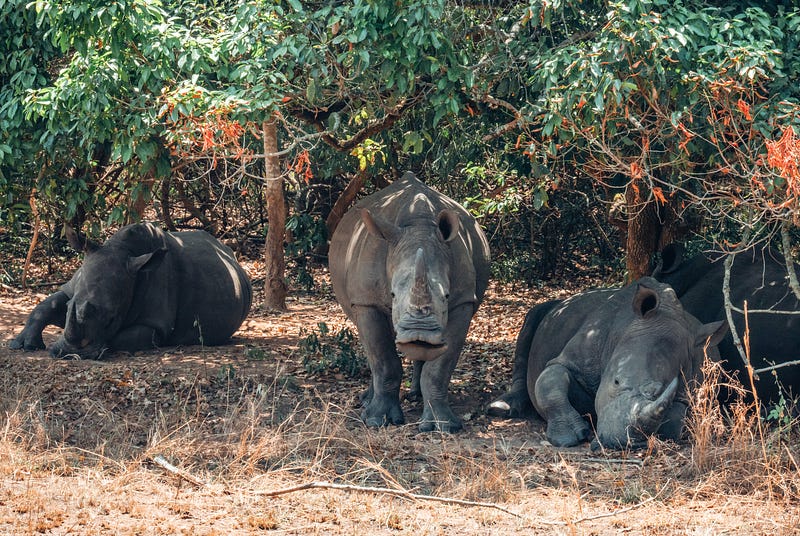
9. The first baby rhino born in Uganda was named after its parents coming from Kenya and USA. Its name is Obama. Their famous horns are made from the same stuff as our fingernails. They run fast, and they’re very dangerous. If you get on its way, you should try to climb a tree at the height of around 2 meters above the ground. Or hide behind thick bushes.
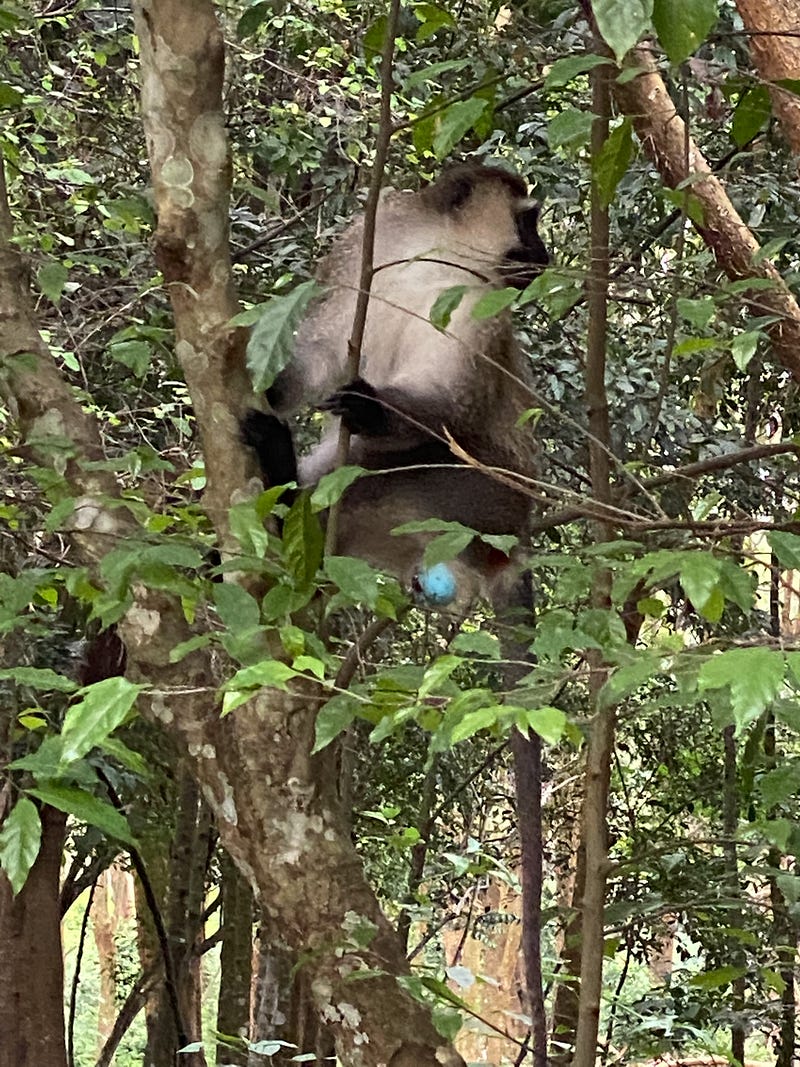
10. There is a certain kind of monkey that caught my attention. I saw it at the Ishasha lodge, while it was playing around our cabin. Vervet monkeys have small cute faces and bright blue testicles. The blue color will change over the male’s lifetime according to social status. In other words, a low-ranking monkey will have much lighter nuts than an alpha. Apparently, female monkeys are pretty much attracted to this color.
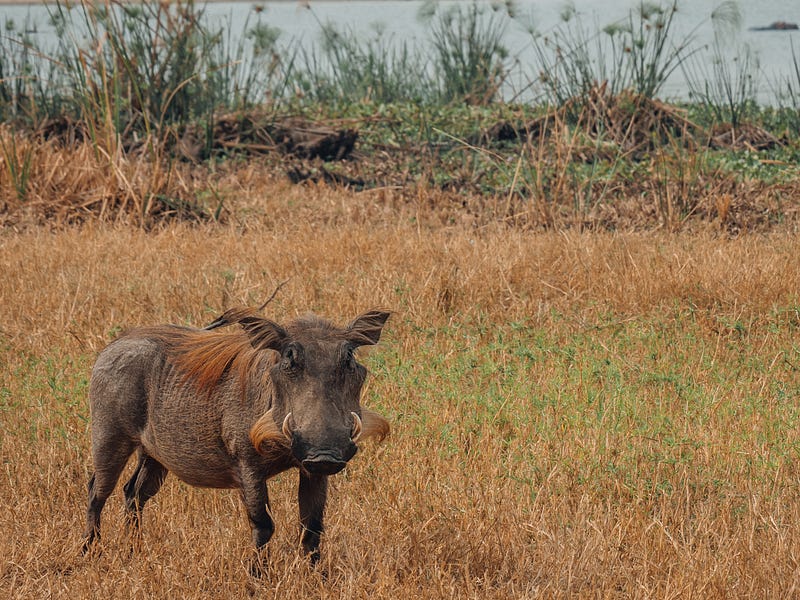
11. Warthogs gain my love during this trip. I mean, we’ve all seen The Lion King, right? So Pumba in the real world might be slightly less cute than in the cartoon, but their funny moves and sticking-up tails are about the same. Warthogs are fast and tough. They’re not afraid to fight. But they’re also quite curious and approached us on several occasions. Obviously, we kept our distance, gave nothing to eat, and respected their homeland.
About me: My name is Joanna Skladanek. I was born in Poland but for the last 15 years, I’ve worked as a flight attendant and was based in Dubai, United Arab Emirates. I studied Tourism, as well as Human Rights and Humanitarian Law. I am a photographer, writer, and content creator (mainly) on Instagram. On Medium I will write about everything that interests me: traveling, photography, cultures, wellness, self-improvement, self-development, and a tiny bit of fictional short stories.
Want to stay in touch? Follow me and join my e-mail list here.


