
More Checks! The Gas Rebate Act Is Peak America
A new level of absurdity
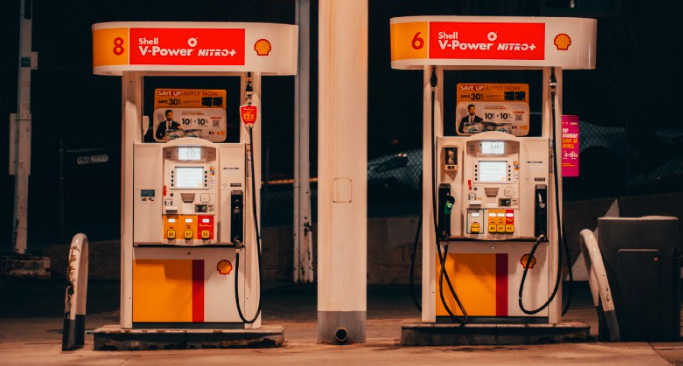
House Democrats this week introduced a bill to send “stimulus” checks to consumers to alleviate the ongoing pain at the pump. Under the proposed legislation, for the rest of the year, individuals making $75,000 or less (or couples making $150k or less) would see a $100 check when gas prices exceed $4 per gallon. With numbers like $5/gallon, $6/gallon, even $7/gallon across the country, the answer from Congress is to simply help you pay for it — with your own money.
Is there anything more American than massively subsidizing oil and gas companies with public money, which distorts the market and artificially lowers consumer prices, and then when prices get too high anyway also subsidizing consumers on the other end—again with public money? All to prop up an industry that is killing the planet. And then, to make it all worse, balking at the idea of government intervention to control price because that would be manipulating the free market. This is the level of absurdity we have reached in America in 2022.
The Environmental and Energy Study Institute reported that direct subsidies to the fossil fuel industry totaled $20 billion per year, with 80% going toward oil and gas.
I’m not saying I wouldn’t love a check. I live in New York; I don’t drive. I would still love a check. We all love checks. But when you have to subsidize the middle class for basic household expenses like running a car, the system is broken. And yet, we still seem to think that short-term fixes (which — let’s be real — are only intended to secure votes during a mid-term election year) are real solutions to deep, deep problems. The answer from our leaders is to offer a temporary fix instead of confronting the nation with the truth: our way of life needs a major overhaul.
Life in America in 2022 is a nasty blow to your checkbook daily. Not only is gas super expensive, but so are groceries and housing. And most consumer goods. And real estate. And flights, baseball games, and movies. And a laundry list of monthly micro media subscriptions. (Thanks for the increase, Netflix. If you’re going to jack up prices, please make something better than The Power of the Dog.) During the pandemic, our societal failures were exposed in the light of day, and yet two years after the national emergency began, we’re blaming a whole new set of scapegoats: the supply chain, war in Ukraine, and a president who’s been cleaning up the largest political, medical, economic, and international-relations mess in modern history — all with 40% inflation hovering over his head.
Let’s look ourselves in the mirror for real. None of this would feel as painful if wages kept pace with inflation, if healthcare was free, if unions were healthy and strong, if corporations lowered their profit expectations to something short of astronomical, if Big Tech didn’t destroy industry after industry on its seemingly unstoppable march to the Metaverse, and if we found a way to accept that reasonable regulations on the free market give it structure and focus. They don’t hamper economic growth; they curb corruption, malfeasance, and exploitation. All of our problems are connected. High gas prices are just what the everyman is bitching about this week.
President Biden, in his defense, is taking steps to change our course. In late January, he signed an executive order directing federal agencies to stop providing subsidies to the fossil-fuel industry. His goals? A carbon pollution-free power sector by 2035 and a net-zero economy by 2050. The push for electric vehicles — the one you saw on full display in ad-after-ad during the Super Bowl — is his administration’s effort to finally get the nation to drive green. (We just can’t call it “green,” because the “Brotherhood of Muscle” might find that too weak and progressive for their liking.)
In the meantime, we will have to settle for short-term fixes and band-aid solutions, like gas rebate checks for $100 which, in all likelihood, will arrive three months after they’re needed, just like the at-home Covid tests. 🤦
Related Reading


