
The Maddening Brand Spin of the Netflix Price Hike
Wow, kudos to the comms team at Netflix for the A+ flat-out BS on “why” they are raising prices. This morning, consumers were treated to a simple email from the streamer about “why” the price will climb to $15.49 per month in April. The subject line promises a “why.” The strategy behind the email is clearly to make sure consumers understand the “why” so that they don’t unsubscribe. Surely there was an oppressive series of corporate communications meetings at Netflix (Zoom meeting at 1pm!) to nail the language here before the email went out. The reason they landed on: “to bring you more entertainment” and “to deliver more value…”
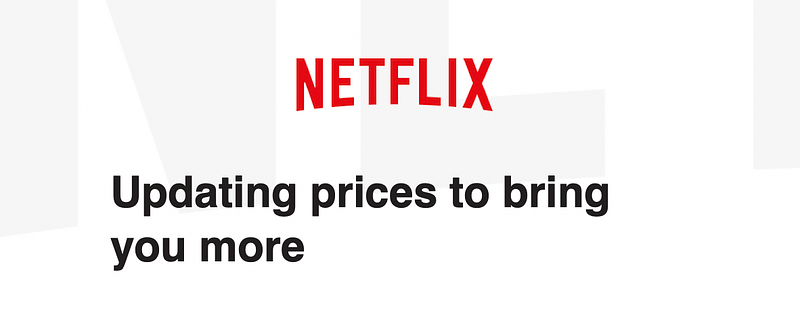
Here’s the problem. There is no mention of the real reasons. There is no mention of rising television and film production costs across the industry/world, nor mention of Reason #1: wanting to make more money to respond to investor pressure re: their falling stock price. Were their intentions purer, they may have mentioned wanting to pay people more to better honor film craftspeople — from assistants to directors and producers — in light of recent Hollywood union negotiations and strike threats, or even mentioned a new commitment to paying more for independent films. (I’m a filmmaker, so that one is a sore spot for me and my colleagues.) You can’t expect them to say any of that? Nope. Apparently, they want to deliver more. And make more. This is about their stock price.
In response to that investor pressure, instead of re-evaluating C-suite salaries and/or cost-cutting internally and/or excising wasteful spending on some rather dubious (uh, crap) content, instead of a deep look inside the studio, they are simply hiking the price for consumers. And they’re hiking it at a time when consumers are dealing with ongoing stress from the financial fallout of the pandemic, $6/gallon gas prices ($7.75 in Los Angeles), and unprecedented inflation due to mass corporate greed. Yep. Let’s stop blaming Biden for inflation and Russia for gas price hikes. How about brands return less to investors right now while the world recovers from the greatest economic disaster of our lifetime?
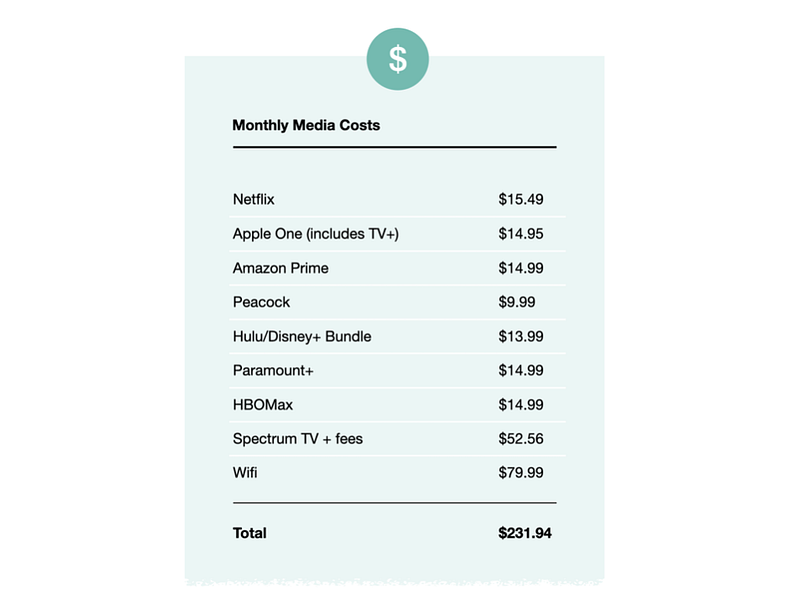
What this means for consumers is that all the other streamers are likely to now follow suit and raise their prices. So, our monthly media bills creep up and up. We cut the cord to get rid of our cable bill, but now we have a higher bill. It’s just divided into tiny little expenses so you don’t actually notice that you are paying more. How does that work? If you actually want to have a full channel line-up now, you’ll pay well more than you ever paid for cable. I did some quick math in my own checkbook to see what I have been spending. I am shocked to report that it is even higher than I thought: $231.94/month. (See below.) And there are only two of us in my house.
The streamer wars are great if you are a warring party — who can leverage the power of digital/wifi, your historical content catalogue, and your existing brand name to cut out the cable providers and theater owners, pay less to content creators, and squeeze every penny for yourself. But caught in the middle are those of us footing the bill: the consumers. To add insult to injury, today’s Netflix message was sly. It seemed so, well…nice of them. You are charging me more so you can give me more? Thank you so much. Embedded is a spin-doctor sleight-of-hand that turns the issue from a stock problem into a consumer responsibility. It makes the reason for the hike the hungry and ravenous consumer who just wants more, more, more. You are consuming so much! We have to give you more! So we’re charging you more. Wow, you are a hungry little boy, aren’t you?
Brands always make price hikes the consumer’s fault.
Almost two years ago, I wrote a piece here on Medium about the gaslighting that was sure to come from brands as we exited the pandemic. The reason that piece was so successful was that we’re all exhausted from corporate spin. Modern consumers are savvy. We understand when brands are lying. We see through their posturing and positioning. I wouldn’t go as far to say that today’s Netflix message is gaslighting, but it is surely emotional manipulation. They are raising prices so they can deliver “stories that lift you up, move you or simply make your day better.” You, consumer, have emotional needs that we can fill. We’ll just be taking more money out of your checking account to do it.
On the other side of the pandemic, consumers want honesty, straight talk, and some acknowledgement that we have all been to hell and back since 2020. Ignoring that is the gaslighting.


