avatarJack Krier

Free AI web copilot to create summaries, insights and extended knowledge, download it at here

4542

Abstract

etter, write on one of those bespoke connectivity-free devices.</p><p id="2493">In short, find a way to create a barrier between your writing project and the rest of the world.</p><p id="4237">Once all distractions are cut out, you can bundle your energy and creativity in one area:<i> your writing</i>.</p><p id="9173">This consolidation of creative energy will boost your speed and also reduce negligence-related errors.</p><figure id="6f10"><img src="https://cdn-images-1.readmedium.com/v2/resize:fit:800/1*Hv3fbQDfEnDvCeT0yfzhCA.jpeg"><figcaption>Picture by Negative Space / <a href="https://www.pexels.com/photo/coffee-notebook-pen-writing-34587/"><b>Pexels</b></a></figcaption></figure><h1 id="1968">4. Find your best writing routine and stick to it</h1><p id="9f4b">Building a writing routine over long stretches is the single most effective way to become a faster writer.</p><p id="9a7f">In the case of Chilean poet <a href="https://www.vice.com/en_us/article/wjpy8z/i-copied-the-routines-of-famous-writers-and-it-sucked">Pablo Neruda</a>, this routine meant writing down anything at any time.</p><p id="2488">Ernest Hemingway wrote every morning after sunrise for many decades. Henry Miller adopted his <a href="https://jamesclear.com/daily-routines-writers">10 writing commandments</a>. And <a href="https://jamesclear.com/daily-routines-writers">Kurt Vonnegut</a> constantly highlighted the benefits of physical exercise for his literary creativity.</p><p id="26e8">In short, every writer has a routine.</p><p id="1a4f">No matter your preferred time and rituals, find a routine that succeeds in marrying speed and quality.</p><p id="962f">Once attained, this routine will safeguard your writing speed by giving you a <i>constant</i>. Mentally, this constant will reduce writer’s block and other dilatory factors.</p><p id="acb5">As for myself, I dedicate most of my mornings exclusively to writing. I focus solely on the creative part of my business and don’t let administrative tasks hinder my productivity.</p><p id="ab20">Before lunch, I don’t think about emails, meetings, and business calls. My mind is entirely fixated on creating new content.</p><p id="9a1b">Over time, this made me a faster writer by operating a clear <a href="https://readmedium.com/7-creativity-unlocking-habits-to-overcome-your-drought-2ff4a9909928">separation</a> between administrative and artistic tasks.</p><h1 id="479c">5. Write without thinking too much</h1><p id="701e">The main benefit of pre-designing the structure of your articles is the ability to write without thinking too much.</p><p id="48e2">If your piece is well-outlined with clear arguments, you won’t need to rethink your messages throughout the writing process.</p><p id="e836">When it comes to speed, this will kill two birds with one stone.</p><p id="38d0">First, you’ll come up with a first draft in no time at all. Secondly, it will speed up your editing.</p><p id="864e">You won’t have to edit your arguments and message. Your editing will solely concern the body of your piece, not the sole.</p><h1 id="b156">6. Edit with no mercy</h1><p id="557d">Once that first draft is “complete”, you’ll be able to edit with no mercy.</p><p id="aaae">To become a faster writer, your editing routine should have 2 main components: <i>speed</i> and <i>conclusiveness</i>.</p><p id="1d04">Yes, editing quickly is not easy and takes a lot of practice.</p><p id="a955">Here’s how I became faster at editing.</p><p id="d942">For starters, I use a few apps to eliminate grammar mistakes and wordiness from the getgo.</p><p id="1a54">I also do a word search for expressions like “on that subject” or “in this context”. These signify repetitions and excessive decoration.</p><p id="2c3e">Another method I use is to highlight the main points that were part of my initial structure.</p><p id="c8fc">This enables me to compare my original plan with the first draft. I then ask the following questions:</p><ul><li>Is every point developed?</li><li>Are there enough illustrating examples?</li><li>Do the sub-arguments channel the main message?</li></ul><p id="4955">These questions will lead me to conclusiveness.</p><p id="17be">I answer them conclusively and implement the results. If the result is already satisfactory, then that’s it.</p><p id="e349">As with most creative endeavors, practice makes perfect.</p><p id="3bd7">In the last 5 years, I’ve written over 700 articles. Ergo, this technique didn’t originate overnight.</p><p id="aa76">The major challenge resides in finding <i>your</i> idea

Options

l hacks to forge a swift and conclusive editing method.</p><figure id="fefc"><img src="https://cdn-images-1.readmedium.com/v2/resize:fit:800/1*xcuswBi0hl21kTru1tIGMw.jpeg"><figcaption>Picture by Pexels<b> / <a href="https://pixabay.com/photos/desk-ink-education-paper-table-1869579/">Pixabay</a></b></figcaption></figure><h1 id="b443">7. Use a 3-draft approach</h1><p id="a506">To guarantee speed and quality, I use a 3-draft approach.</p><p id="a8c6">The first draft is the result of a free-wheeling writing process.</p><p id="5aaf">This draft adheres to a pre-defined plan, but I don’t examine every sentence.</p><p id="7d5a">The second draft is usually the part with the most editing. I enhance stylistic elements and also combat wordiness. This second draft should resemble a ready-to-publish version.</p><p id="f7c2">Finally, the third and final draft will be the result of a global review. I check the general coherence of the piece and see if all the transitions work.</p><p id="a76a">This generally doesn’t take a lot of time. The heavy editing has been done before and the major weaknesses have been rectified. This third review also includes formatting and pictures.</p><p id="7582">You might wonder how this will speed up your writing.</p><p id="f65e">In a nutshell, a clearly-defined approach assigns a purpose and creative method to each of the 3 drafts.</p><p id="f2d8">By knowing every draft’s function and mechanics, you can concentrate on the task at hand — accelerating the entire process.</p><h1 id="a8a2">8. Forget perfection, strive for progress</h1><p id="a22e" type="7">“Have no fear of perfection, you’ll never reach it.” – Salvador Dali</p><p id="3c21">My last speed-furthering writing hack is to stop trying to come up with the <i>perfect </i>article.</p><p id="3b87">Begin with a simple truism: perfection does not exist. You will <i>neve</i>r write a perfect story.</p><p id="5ed1">Once you’ve internalized this principle, you’ll stop worrying about every little detail.</p><p id="41d1">The pursuit of progress is a better attitude.</p><p id="b74b">Instead of trying to perfect every little element of your writing, identify flaws in your older pieces, and try to correct them in your next article.</p><p id="9134">Even if it’s just a little improvement — like using a better word in a specific context — this progression will keep you motivated and suppress your perfectionism.</p><p id="a0c0">Once your obsessive perfectionism has waned, your time gains will become apparent.</p><h1 id="63fc">You might also like</h1><div id="d49d" class="link-block"> <a href="https://readmedium.com/3-good-and-3-bad-reasons-to-start-a-blog-329f6cc9d248"> <div> <div> <h2>3 Good and 3 Bad Reasons to Start a Blog</h2> <div><h3>Do you have the right motivation?</h3></div> <div><p>medium.com</p></div> </div> <div> <div style="background-image: url(https://miro.readmedium.com/v2/resize:fit:320/1*d0eyYQyQUVFqsajOhWkhPw.jpeg)"></div> </div> </div> </a> </div><div id="b9a0" class="link-block"> <a href="https://readmedium.com/the-3-worst-pieces-of-writing-advice-ive-ever-gotten-78789e1816e9"> <div> <div> <h2>The 3 Worst Pieces of Writing Advice I’ve Ever Gotten</h2> <div><h3>And how to correct them</h3></div> <div><p>medium.com</p></div> </div> <div> <div style="background-image: url(https://miro.readmedium.com/v2/resize:fit:320/1*QVT2z-L4PKoP363Mw5EGLg.jpeg)"></div> </div> </div> </a> </div><div id="73b6" class="link-block"> <a href="https://readmedium.com/7-creativity-unlocking-habits-to-overcome-your-drought-2ff4a9909928"> <div> <div> <h2>7 Creativity-Unlocking Habits to Overcome Your Drought</h2> <div><h3>How to get out of creative holes</h3></div> <div><p>medium.com</p></div> </div> <div> <div style="background-image: url(https://miro.readmedium.com/v2/resize:fit:320/1*zBcBPgt-1Y7axCKf9mYzfw.jpeg)"></div> </div> </div> </a> </div><figure id="12c8"><img src="https://cdn-images-1.readmedium.com/v2/resize:fit:800/1*Lliym8ipoQIbj4SrbIgVxQ.png"><figcaption></figcaption></figure></article></body>

8 Effective Steps to Write Faster Without Losing Quality

How to combine speed and quality
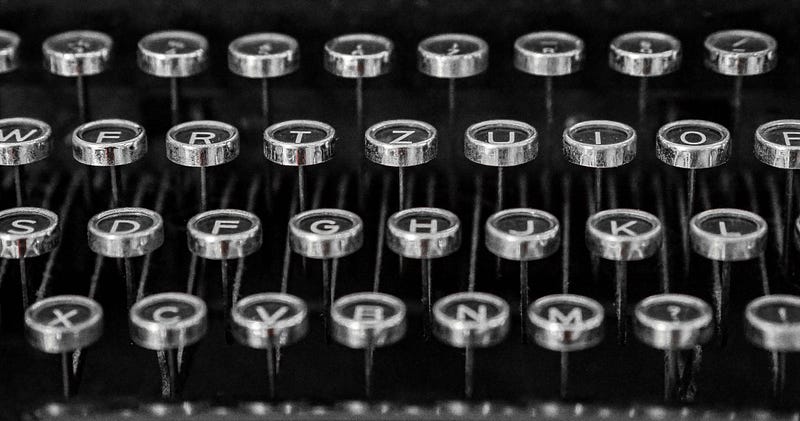
Picture by Laura Chouette / Unsplash

Most writers struggle with speed and efficiency.

We want to create inspiring content without spending entire days on a single piece. To remain successful, we need consistent first-rate output.

This creates a dual challenge.

On one side, excessive speed is a definite quality killer.

I know, lots of blogging gurus boast about finishing posts in less than an hour. Their methods often prioritize speed with little regard to vocabulary and style.

This may work for some people, but most writers need a broader approach. If your sole obsession is speed, it will undermine every other aspect.

On the other hand, not writing quickly enough will impede your ability to publish consistently. Your content might be great, but your posting frequency will suck.

Hence, a routine that produces high-quality content with reasonable speed is a writer’s greatest asset.

On this basis, here are 8 effective steps to write faster without losing quality.

1. Plan your articles in advance

Planning your pieces is essential to becoming a faster writer.

I use a 3-step approach.

First, identify the message of your story. What kind of argument do I want to transmit to the reader?

Secondly, break this argument down into smaller points. Once these sub-arguments are delineated, design a structure for your piece.

As an example, the message of this story is the following: I want to show people how to write faster without weakening the quality of their work.

I will subsequently break this message down into 8 steps. Now I have the spine of my story.

Finally, I decide on the main title, subtitle, and headlines.

This strategy is naturally adaptable. Some people inverse my planning process. Others start with the introduction to define an opportune message.

No matter your method, find an efficient way to design the basic structure of your article before writing the first sentence.

2. Avoid ornamentation and repetitions

“If I started to write elaborately, or like someone introducing or presenting something, I found that I could cut that scrollwork or ornament out and throw it away and start with the first true simple declarative sentence I had written.” — Ernest Hemingway

If you want to become a faster writer, eliminate excess ornamentation from your pieces.

I know, the lure of decorating our sentences with vivid descriptions is compelling. It makes our writing feel more “alive”.

Nevertheless, fast writing is synonymous with getting to the point. If you want to expedite your output, get your arguments across without accessory descriptions.

Here’s an example of removing ornamentation:

“I found a weak, sickly cat in the street today. It had been abandoned in a dark alley and didn’t look healthy. It must have been through a lot.”

“I found an abandoned, frail-looking cat in a dark alley today.”

Shorter sentences with pertinent adjectives can work wonders for your writing speed. Instead of beating around the bush, they convey essential information without long descriptions.

You’ll stop thinking about every single detail and write faster as a result of fewer ornamentation ideas.

The same goes for repetitions. Transmit a clear point and don’t try to explain it twice. This will boost your writing speed and also keep your reader’s interest.

3. Cut out all distractions

Rapid, high-quality writing requires discipline and focus.

A lack of distractions is of paramount importance in this context.

Uninstall your social media apps if you have to. Go into flight mode. Or even better, write on one of those bespoke connectivity-free devices.

In short, find a way to create a barrier between your writing project and the rest of the world.

Once all distractions are cut out, you can bundle your energy and creativity in one area: your writing.

This consolidation of creative energy will boost your speed and also reduce negligence-related errors.

Picture by Negative Space / Pexels

4. Find your best writing routine and stick to it

Building a writing routine over long stretches is the single most effective way to become a faster writer.

In the case of Chilean poet Pablo Neruda, this routine meant writing down anything at any time.

Ernest Hemingway wrote every morning after sunrise for many decades. Henry Miller adopted his 10 writing commandments. And Kurt Vonnegut constantly highlighted the benefits of physical exercise for his literary creativity.

In short, every writer has a routine.

No matter your preferred time and rituals, find a routine that succeeds in marrying speed and quality.

Once attained, this routine will safeguard your writing speed by giving you a constant. Mentally, this constant will reduce writer’s block and other dilatory factors.

As for myself, I dedicate most of my mornings exclusively to writing. I focus solely on the creative part of my business and don’t let administrative tasks hinder my productivity.

Before lunch, I don’t think about emails, meetings, and business calls. My mind is entirely fixated on creating new content.

Over time, this made me a faster writer by operating a clear separation between administrative and artistic tasks.

5. Write without thinking too much

The main benefit of pre-designing the structure of your articles is the ability to write without thinking too much.

If your piece is well-outlined with clear arguments, you won’t need to rethink your messages throughout the writing process.

When it comes to speed, this will kill two birds with one stone.

First, you’ll come up with a first draft in no time at all. Secondly, it will speed up your editing.

You won’t have to edit your arguments and message. Your editing will solely concern the body of your piece, not the sole.

6. Edit with no mercy

Once that first draft is “complete”, you’ll be able to edit with no mercy.

To become a faster writer, your editing routine should have 2 main components: speed and conclusiveness.

Yes, editing quickly is not easy and takes a lot of practice.

Here’s how I became faster at editing.

For starters, I use a few apps to eliminate grammar mistakes and wordiness from the getgo.

I also do a word search for expressions like “on that subject” or “in this context”. These signify repetitions and excessive decoration.

Another method I use is to highlight the main points that were part of my initial structure.

This enables me to compare my original plan with the first draft. I then ask the following questions:

  • Is every point developed?
  • Are there enough illustrating examples?
  • Do the sub-arguments channel the main message?

These questions will lead me to conclusiveness.

I answer them conclusively and implement the results. If the result is already satisfactory, then that’s it.

As with most creative endeavors, practice makes perfect.

In the last 5 years, I’ve written over 700 articles. Ergo, this technique didn’t originate overnight.

The major challenge resides in finding your ideal hacks to forge a swift and conclusive editing method.

Picture by Pexels / Pixabay

7. Use a 3-draft approach

To guarantee speed and quality, I use a 3-draft approach.

The first draft is the result of a free-wheeling writing process.

This draft adheres to a pre-defined plan, but I don’t examine every sentence.

The second draft is usually the part with the most editing. I enhance stylistic elements and also combat wordiness. This second draft should resemble a ready-to-publish version.

Finally, the third and final draft will be the result of a global review. I check the general coherence of the piece and see if all the transitions work.

This generally doesn’t take a lot of time. The heavy editing has been done before and the major weaknesses have been rectified. This third review also includes formatting and pictures.

You might wonder how this will speed up your writing.

In a nutshell, a clearly-defined approach assigns a purpose and creative method to each of the 3 drafts.

By knowing every draft’s function and mechanics, you can concentrate on the task at hand — accelerating the entire process.

8. Forget perfection, strive for progress

“Have no fear of perfection, you’ll never reach it.” – Salvador Dali

My last speed-furthering writing hack is to stop trying to come up with the perfect article.

Begin with a simple truism: perfection does not exist. You will never write a perfect story.

Once you’ve internalized this principle, you’ll stop worrying about every little detail.

The pursuit of progress is a better attitude.

Instead of trying to perfect every little element of your writing, identify flaws in your older pieces, and try to correct them in your next article.

Even if it’s just a little improvement — like using a better word in a specific context — this progression will keep you motivated and suppress your perfectionism.

Once your obsessive perfectionism has waned, your time gains will become apparent.

You might also like

Writing
Creativity
Freelancing
Productivity
Work
Recommended from ReadMedium