
7 Creativity-Unlocking Habits to Overcome Your Drought
How to get out of creative holes

We all know the drill. We wake up, go through our usual morning routine, and look forward to a productive day.
Suddenly, we hit a wall.
Some call it “writer’s block”, others the “creative drought”, but one thing is certain: it affects all content creators equally.
Sometimes, we simply cannot find the right fuel for our creative engine.
The good news is that a few powerful habits that can help you break through the wall. In many cases, a tiny spark will light a glowing fire of creativity.
On this basis, here are 7 creativity-unlocking habits to overcome your drought.
1. Find inspiration everywhere at any time
“Inspiration is hard to come by. You have to take it where you find it.” — Bob Dylan
Inspiration nourishes the output of any content creator.
Writers need it to create magic with words, photographers transform it into captivating images, and videographers use it to re-create scenes from their mental cinema.
However, at times, even the most talented artists struggle to unearth the seeds that will plant new ideas.
So, how do we find new seeds?
One technique that works well for me is to look for inspiration everywhere at any time.
In some cases, mundane situations can spawn fantastic ideas.
On a dreary afternoon in 1937, J.R.R. Tolkien was sitting in his teacher’s office correcting school papers.
Fed up with the robotic nature of this task, he decided to write on a blank student paper. Out of nowhere, he came up with the words “In a hole in the ground there lived a hobbit.”
Tolkien had previously developed the concept of “Middle Earth”, but this seemingly banal moment was the real start of a literary masterpiece.
Tolkien’s example demonstrates that even when you’re bored and uninspired, amazing ideas can pop up — you just have to be ready for them.
Another creativity-boosting habit is the consumption of inspirational content. Good books or blogs in your niche often provide remedies to your shortage of ideas.
In this context, accessory elements from other people’s work can serve as a source of inspiration for your next project.
An article about the best bars in New York might mention former speakeasies. The redevelopment of Prohibition-era speakeasies sounds like a great idea for a blog post, doesn’t it?
2. Write everything down
After 5 years of blogging and freelancing, I can safely say that the best ideas emerge while you’re lying in bed, unable to sleep at night. Other writers will concur.
This is why I always keep a pen and notebook next to my bed. 8 out of 10 nightcrawler ideas will be garbage, but 2 will be sensational.
This also works during the day. No matter the situation, write down every single idea that pops up.
Many will be useless, but a few golden thoughts will help you smash through future writer’s blocks.
3. Eliminate distractions to let your creativity flourish
Distractions reinforce the walls we face as creators.
Whether it’s social media, endless news feeds, or incessant email traffic, your creativity will lose momentum if you allow distractions into your creator’s routine.
Yes, the temptation can be overwhelming. I don’t know what kind of content to produce right now. Maybe I should just watch TV and check the news.
In this instance, you try to combat your lack of ideas with procrastination instead of creativity-furthering habits.
Ask yourself: how did I overcome my last drought?
By refreshing news feeds? Probably not. By aimlessly scrolling down Instagram? Certainly not.
Remove the clutter from your mind and let your creativity flourish.
By clearing your thoughts, you free up space in your head instead of wreaking havoc. You don’t bombard your brain with random news, social media posts, and annoying emails.
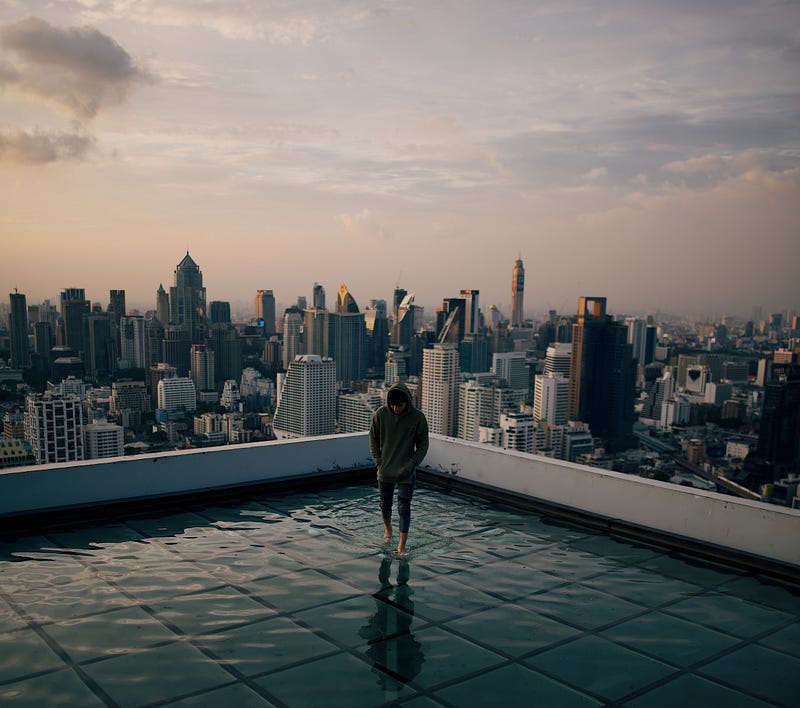
4. Separate the administrative part from the creative side of your business
Many creators are artists and business owners at the same time.
In this context, reconciling the mindset of an entrepreneur with the viewpoint of an artist can be challenging.
On one side, your venture’s profitability is your main concern. Another part of you wants to create powerful art.
This constant dichotomy can mess up your head and hamper your creativity.
This is why you need to operate a clear separation between entrepreneurial and creative tasks.
To tackle the problem, I usually set up two distinct working blocks.
Because mornings are my most creative period, I will not complete any financial or administrative tasks before lunch. I don’t respond to business emails and I don’t schedule client calls.
In that same vein, I will set aside a couple of hours in the afternoon and focus solely on business-related to-dos.
This frees up morning hours and unleashes my creativity. Thanks to the separation, artistic sparks will not be extinguished by administrative emails or business calls.
5. Take refreshing breaks
Many entrepreneurs underestimate the potency of short, energizing breaks.
A couple of years ago, I spent a month in Japan. It was a working holiday with a few Japanese lessons squeezed in between.
During my time in Tokyo, a local friend invited me to his workplace. I witnessed the legendary Japanese working spirit firsthand. It was exactly what I imagined.
The office oozed politeness, corporate loyalty, and work ethics. One thing, however, blew my mind.
Located in Tokyo’s glittering Ginza district, the company headquarters boasted a massive “relaxation palace”, complete with an Onsen, capsule bedrooms, and a buffet. It reminded me of a luxurious airport departure lounge.
Is this your after-work spot? I asked my Japanese friend.
No, this is our break room. We mostly use the Onsen before work and the sleeping areas to take our afternoon “Kamin” — power nap.
Power nap? I wasn’t familiar with the concept.
Yes, our bosses encourage us to sleep for 10–20 minutes every 5 hours. It furthers productivity. His response inflamed my curiosity.
Napping between meetings? I couldn’t wrap my head around that.
You should try it. It is becoming more and more common in Japan.
I decided to give it a shot.
I should stress that I am not a sleepyhead. Before my power nap experiment, I don’t remember ever taking an afternoon siesta.
My Japanese friend had suggested the “key method”.
Here’s how it works: lay down with a key in your hand, your arm stretching over the edge of the bed. Try to fall into a very light sleep. When you hear the chink of the key dropping to the floor, get up immediately. This should take no more than 15 minutes.
To my amazement, it worked. I felt rejuvenated and didn’t even need an afternoon coffee.
According to Forbes, the secret lies in the duration of the nap. Because it’s short, your mind remains on standby instead of shutting down. You don’t enter the deep part of your usual sleep cycle. The nap is nonetheless long enough for your body to feel invigorated.
I’ve used it countless times since and it helped me overcome several creative droughts.
Every so often, I have vague ideas in my head but I cannot find the motivation to turn them into actual content.
After 15 minutes of power napping with the key method, I usually find ways to transform opaque thoughts into concrete results.
This example illustrates the efficacy of short, refreshing breaks. For some people, a jog in nature works better than a power nap. Others prefer rewarding themselves with food or drinks.
No matter the type of pause, find a way to put your mind to rest for a couple of minutes. Applied correctly, this can unchain your creativity.
6. Switch tasks and platforms
A creative drought often conceals a need for variation.
Many content creators perform their craft in different fields and niches. A lack of ideas often only affects one area, not all of them.
Switching tasks can work creative wonders in this context.
When it comes to creativity, action inspires action. Getting the creativity train rolling in one area of your business will have a positive effect on others.
Lacking the inspiration to continue your next writing piece? Design a few cool Instagram posts in the meantime.
This has been my go-to method for the last couple of years. Because I work as a writer and photographer, I always use one discipline to fuel the other.
In this regard, an aesthetic, newly-edited photograph usually helps me vanquish the odd writer’s block.
7. Revisit your older creations
In some instances, inspiration comes from within.
In the world of content creation, this refers to your previous work.
You might be out of topics for your next blog article. What should I write about? I feel like I’ve discussed every single subject in the world.
Don’t throw in the towel just yet, undeveloped topics might be hiding in plain sight.
As an example, earlier this year, I wrote a blog post about my perfect night routine. I had briefly mentioned the importance of a blank mind at night.
A couple of weeks ago, I revisited this article and found some inspiration to elaborate on ways to empty your mind if you are stressed out.
Sometimes, outward inspiration is superflous. The next big idea could be shimmering in the background of your last great piece of content.
If you enjoyed this article, join my email list to stay in touch.


