
8 Deliciously Fun and Unusual Tips to Skyrocket Your Writing Skills
These don't ask you to write more. In fact, they don't involve writing at all!

You’ve heard it a million times. You need to write more to improve your writing skills. But what if I told you that that’s only a part of it?
You don’t become a better writer just by writing 5,000 words a day. Or by reading 70 books and blog posts on writing, marketing, and grammar.
What if I told you that there are other ways to grow as a writer? Ways that aren’t only easy but a tonne of fun!
See, what we forget is that excellent writing isn’t restricted to putting words on paper. Your experiences, insights, and sensory inputs inform your writing.
How you live is how you write.
And no, you don’t need to go to the Himalayas or read for five hours a day to gain valuable insights.
You can do that by being mindful of how you exercise those writing muscles.
Here are eight things you can do to dramatically jack up your writing skills and become a more prolific writer:
#1 Nothing like a good story to escape reality. Indulge in page-turning fiction
You already read books that teach you how to write better, improve your marketing skills, make more money, yada, yada…
I’m not talking about that kind of reading.
Read for the sheer pleasure of it. There are few things that give more delight than being lost in a good story.
Even if you write nonfiction, you need to read fiction because:
- It introduces you to different writing styles and helps develop your writing voice.
- It makes you more empathetic. Readers connect deeply with writers who understand them.
- It sharpens your understanding of techniques like metaphors, points of view, narrative structures, and sensory details.
“Imagination is more important than knowledge.”~ Michael Scott
Fiction sharpens your writing craft no matter what you write.
#2 Get your butt off the chair. Go for a walk
“The compact between writing and walking is almost as old as literature — a walk is only a step away from a story, and every path tells.” ~Robert Macfarlane
From Ernest Hemingway to J.K. Rowling, from Virginia Woolf to Rebecca Solnit — writers love(d) to walk.
- A walk in nature sans phone is one of the best ways to clear your head and get some exercise.
- As you take in the sights, sounds, and smells, you grow calmer. You enter a meditative state. Your anxiety subsides. You are more attuned to listening to your inner creative voice.
“Me thinks that the moment my legs begin to move my thoughts begin to flow.”~Henry David Thoreau
I fell in love with walks after the pandemic struck. An evening walk in my colony’s park in Delhi was a welcome relief after being stuck in the house the whole day.
I became a regular walker after moving to Luxembourg last year. We live in a place surrounded by forests. Walking in the woods with my dogs has been refreshing and therapeutic.
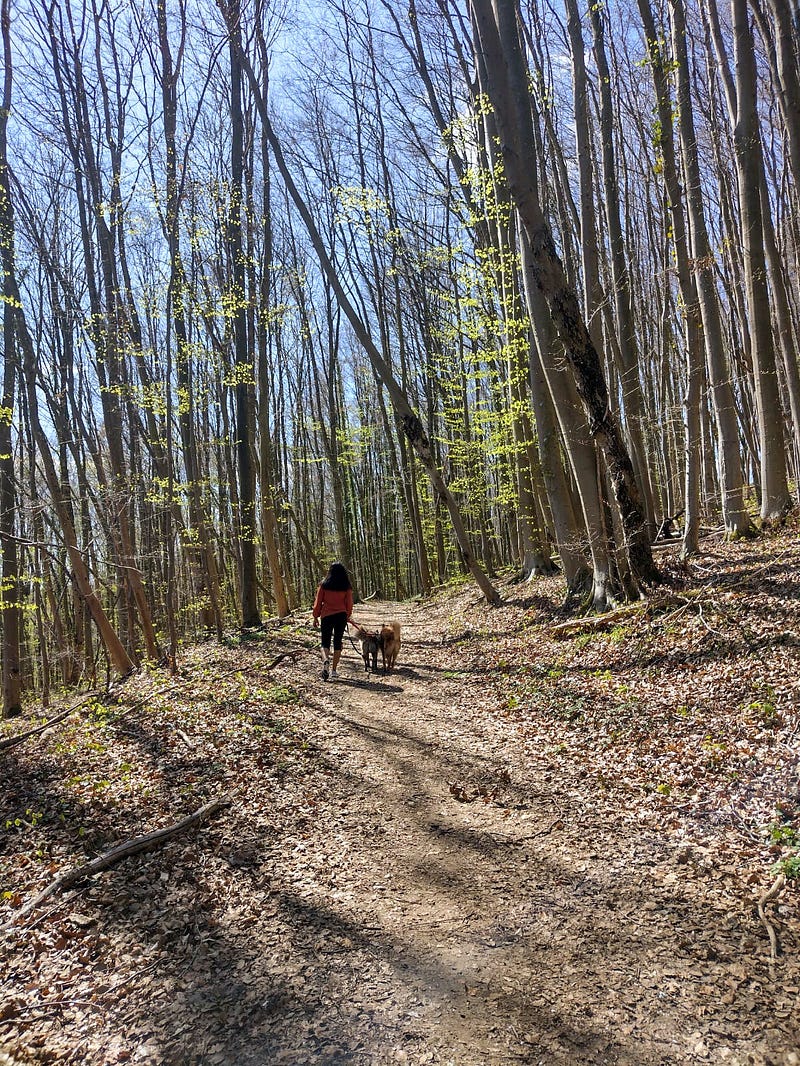
Even if you live in a crowded city, you can walk in a park or a quiet neighborhood. Research suggests walks in green urban spaces and quiet neighborhoods can be as beneficial.
If that too is not possible, then walk on a treadmill or follow a walking video on YouTube.
#3 Wake up with sloppy kisses. Get a dog
“Happiness is a warm puppy.” ~Charles Shultz (cartoonist, Peanuts)
Dogs give structure to our days. This is especially important for writers who work on their own schedules. Sometimes, that schedule looks like writing all day in our pajamas with a slice of pizza for lunch.
You’ll need to take your dog for a walk twice a day.
- It gives you a break from work.
- You get exercise and churn good ideas while on the walk.
Dogs also keep you grounded. To them, you’re the most special person in the universe. That helps when rejections make you feel worthless.
Similarly, when you pick up their poop from the roadside, your sense of ego disappears. You realize that no matter how great a writer you are, you’re still an ordinary human in the greater scheme of things. Isn’t that thought freeing?
(Note: Though having a dog is fun, it’s also a lot of work. Get a dog (or any other pet) when you’re ready for a long-term commitment. Also, please adopt strays/shelter dogs instead of buying from breeders.)
#4 Indulge in creative playtime. Pursue a non-writing hobby
Learning something new activates parts of your brain that weren’t exercised during writing. When you’re learning the rules of a new language or an instrument, your brain is making new connections.
- This divergent thinking helps boost your creativity.
- It also develops focus.
- You have a fun and meaningful pursuit.
And while you’re at it, you aren’t actively thinking about ways to make money from it. That’s a welcome break, right?
#5 Be a child again. Scribble in your notebook
Julia Cameron’s The Artist’s Way prescribes morning pages for creatives. These are three pages of longhand writing first thing in the morning.
“(Morning) Pages clarify our yearnings. They keep an eye on our goals. They may provoke us, coax us, comfort us, even cajole us, as well as prioritize and synchronize the day at hand. If we are drifting, the pages will point that out. They will point the way True North. Each morning, as we face the page, we meet ourselves. The pages give us a place to vent and a place to dream.”~Julia Cameron
I loved this practice till life got in the way. Even if you don’t write three pages every morning, make journaling a habit. A few lines will do.
I’ve come out of writer’s blocks through journaling. Whenever I’m frozen and my sharp-tongued inner critic is at her caustic best, I write in my journal. It’s oddly freeing.

When you journal, your perfectionist side grows quieter and you get some writing done. You forget to censor yourself because longhand writing feels casual and private.
Once you brain dump your thoughts, you can connect your ideas with more coherence. Journals can be a place to get down your ideas before you start typing the first draft. I do that with projects that feel daunting.
Journaling is also a great way to detoxify your mind from negative emotions. In Chatter, Ethan Kross discusses how journaling helps stop our mental chatter. While writing, we cannot go to a new thought before closing one loop. That helps in putting a stop to the repetitive thinking that sometimes overwhelms us.
#6 You don’t need to go to the mountains, you need to go within yourself
If you think meditation is all woo-woo then think again. Companies like Google and Goldman Sachs have introduced meditation to their employees. Not for nothing, right?
To be a better writer, you need more:
- Resilience
- Focus
- Empathy
- Calmness
- And of course, creativity.
Meditation helps with these and more.
Danny Penman, author of Mindfulness for Creativity, says that meditation opens our minds to new ideas. We pay more attention to our thoughts. It also gears our mindset to better deal with rejections.
“Meditation is intermittent fasting for the mind. Too much sugar leads to a heavy body, and too many distractions lead to a heavy mind. Time spent undistracted and alone, in self-examination, journaling, meditation, resolves the unresolved and takes us from mentally fat to fit.” ~Naval Ravikant.
Research suggests that even a few minutes of mindfulness meditation helps boost creativity. All you need is 5–10 minutes a day.
#7 Shake it, move it, to become a kickass writer
Some of us feel intimidated by the word “exercise”. We equate it to being a gym rat or doing serious sports. Don’t restrict your physical movement by that imagery. Some ways to add more movement to your day are:
- A morning or an evening walk.
- Stretching your legs after every thirty minutes of work.
- Taking the stairs instead of the elevator.
- Cycling around the neighbourhood.
- Dancing to some of your favorite chartbusters
We are prone to suffer from sedentary lifestyle-related diseases if we aren’t careful. Sitting on your butt for hours isn’t good for your body. Get up and move around.
Even ten minutes of yoga makes us happy by releasing those endorphins. A walk recharges our minds. A swim in the pool clears our head. All this helps us write better.
#8 Just do nothing
We’re always busy doing something that we forget to watch life unfold before our eyes. As this beautiful article by Alan Trapulionis suggests how spending some time in idleness can make you more creative, less anxious, and more peaceful in life.
Writers need this nothing time more than most.
Go to a café, sit with a cup of coffee and people watch. Observe how the child pleading for a muffin or the lady tapping away on her laptop.
- What kind of life might they have?
- Why is that man so angry when he barks his order to the server?
The more you watch things around you, the more you get ideas to write about.
We’re constantly busy responding to stimuli. Emptying our minds of a to-do list and enjoying a few precious moments of nothingness feels like a luxury.
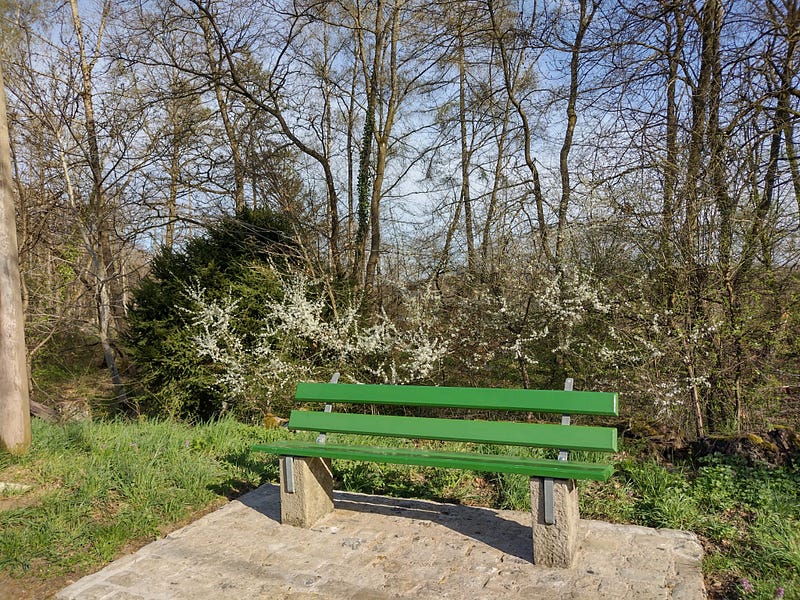
But these doing-nothing periods are important. Our subconscious minds make connections and forms new ideas during such times.
If you’re short on time, sit for five minutes with your morning coffee and stare outside.
“Sitting quietly, doing nothing, spring comes, and the grass grows by itself.” ~Buddhist proverb
To sum up, here are eight ways to sharpen your writing craft:
- Read engaging fiction.
- Go for a walk.
- Get a dog.
- Pursue a creative hobby.
- Journal regularly.
- Do a few minutes of mindfulness meditation.
- Engage in some physical movements.
- Be still for a while.
If you enjoyed this, you might also relish:
If you aren’t yet a Medium member and would love to read unlimited articles on any subject you like, please consider joining through my referral link.


