
Three Brilliant Writing Techniques to Improve Your Life and Relationships
Here are three writing techniques that have the power to improve your mental health and your relationships
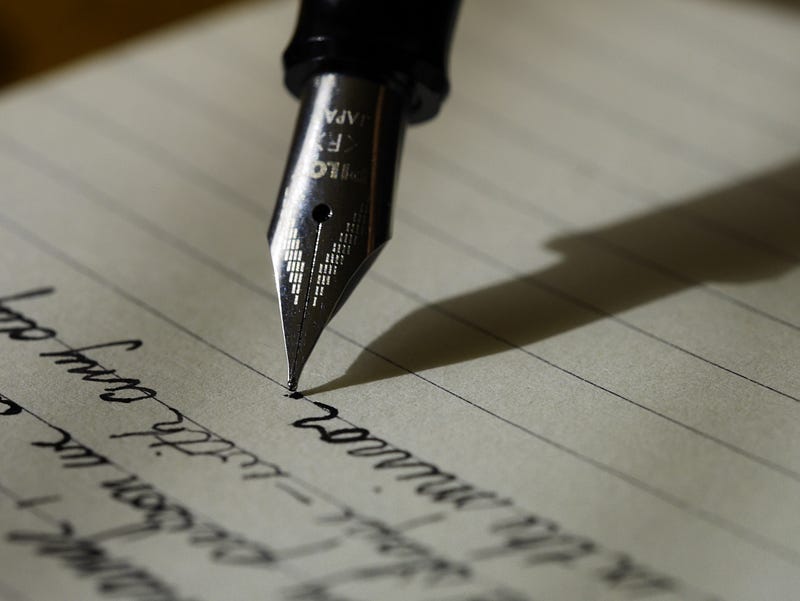
The written word is everywhere, it is what powers the modern world, it is what created the modern world. Without it, we would still be living like cavemen. But there are still many ways in which the written word can help us which we do not realise.
Here are three great writing techniques that when utilised can help to improve your mental health and your relationships.
The flip perspective writing technique
When it comes to our perspective, we tend to be good at telling it, but typically we find it very difficult to see things from the side of other people.
Even when we say, “If I was in their shoes”, what we are actually saying is if “I” was that person. Note specifically the “I.” So we take ourselves into that person rather than imagining being that person and seeing their perspective. When we do this, we make it impossible to ever know if our perspective is the right one — mainly because all we do is constantly paint ourselves as a victim.
This is where the flip perspective technique comes into play, rather than building up an argument for why your perspective is the right one, you do the opposite. You build up an argument for why the person you disagree with is in the right.
It may sound easy to do this, but a friend of mine works as a therapist and she frequently uses this technique with couples. She says that the human tendency for confirmation bias means that typically they always write the perspective in a way that makes their own one still sound like the right one.
So even when we try to write from the perspective of people we disagree with and try to make them be in the right, we still can’t escape our desire to make ourselves be in the right. That is we can’t escape our desire to portray ourselves as victims of the other person's “selfish” and “thoughtless” perspectives.
The reason for this is that we want to be right because when we are right, we get what we want but when we are wrong, we don’t. And nobody wants to not get what they want, no matter how much they may say otherwise.
Meaning most of the time neither of us is right or wrong per se, we just want to get our own way because we think doing so will benefit us. And we are angry with the other person or persons not because of their perspective per se, but because their perspective is stopping us from getting our way.
When we realise that, the game changes, and we learn the power of actually seeing reality which when we do, makes everything work better.
So if you want to know how to start getting your way more, and how to start being in the right more, start writing in the perspectives of other people.
Note: a fun way to do this with your partner is when you have a disagreement, both of you agree to write down each other’s perspective, and then mark each other’s efforts. It’s amazing the results such an activity can bring about.
The writing letters you will never send technique
Evidence has shown that spending fifteen minutes a day writing about our feelings, whether that be in regard to how we feel about ourselves, or whether that be expressing things we would like to say to people, can massively improve our mental health.
For example, if a friend or lover has hurt you or a work colleague has angered you and you can’t say anything or don’t want to say anything for whatever reason, spend fifteen minutes writing them a letter that you never intend to send, telling them how they have hurt you.
Spend fifteen minutes the next day as well, and the next day after, keep doing it until you have said all you want to say. It is amazing how therapeutic this can be. By the end, you may even have compiled your thoughts enough to decide you want to say something and how you are going to. Or you may decide that saying nothing was the right course of action.
That means this technique can help you find closure which is highly beneficial when it comes to mental health. The reason it can help us find closure is down to the fact that memories exist to teach us things. By writing down what we want to say to people, or would have liked to have said to people, by writing down things that we would have liked to have done differently, even things we would like to do, like to say, by writing thoughts about ourselves, this that, everything. Basically, by writing down any thoughts or feelings that are troubling us, whether they be about past, present, or future events, our minds start to make sense of things. Meaning we learn. When we learn, painful memories tend to become less painful and frustrations with people tend to become less frustrating — because the memories have served their purpose, they have taught us things. And so, we gain closure on them.
It can seem crazy but just writing down what you want to say, either to yourself or other people about anything and everything, then tossing it in the bin or deleting it, or locking it away in a folder never to be seen again, can be so mentally liberating. And this has been proven through countless studies. So, this is a proven technique. It really does work.
The best thing about it all, if you always first write down what you want to say to people with the intention of never sending it, normally what happens is when you come back to what you’ve written, you realise that what you have said is better not said because it isn’t in truth something that should be said, because now you know something better to say. That may be nothing, it may be something, but it is more likely to be the right course of action.
That’s why spending fifteen minutes a day writing about all the things you would like to get off your chest can greatly benefit your mental health—because it can help make all those frustrations and feelings of upset you have benefit you rather than hinder you.
Instead of talking in person when you have a disagreement, use text or email
When you have a disagreement and you are with the person you are disagreeing with, and the tension is heating up and you are both speaking faster and faster, both reacting faster and faster, you have little hope of achieving anything other than infuriating each other.
The reason for this is because neither person will be able to express their viewpoints because neither will be listening to each other because both will be too furious and so speaking too fast and thinking only about what they are going to say not what the other person is saying.
Notice how the previous paragraph had no breaks in it, and how because of that it was much harder to take in? You probably even held your breath a bit while reading it. Disagreements in person tend to go that way. The faster we speak and the swifter we react, the more difficult it becomes for the person we are speaking to to take in what we are saying.
Not just that, but the more difficult it becomes for us to take in what they are saying in response, not just because they are likely to respond in kind, but because we will be thinking too much about what we want to say rather than what they are saying. If they respond in kind, it will be the same for them.
So, take that paragraph that had no breaks in it, times it by about a hundred, then imagine two people trying to keep up and take in all that text at lightning speed while trying to respond to every part of it all at once. That’s how arguments go.
This is why solving disagreements through text message or email can be so beneficial. It forces both parties to slow down, and not only think about what they are going to say but to think about what the person they are talking to has said.
In a text/email, you have to read what the person has said, you have to take in what they have said — how else can you reply? That means when you reply, it will be in response to what they have said. And when they reply, it will be in response to what you have said.
A friend of mine frequently uses this technique to solve disagreements in the workplace. He says it’s amazing how when people are forced to slow down and think about what the other person is saying, and just as importantly think about what they themselves are saying in response, disagreements can be far more readily rectified.
This is why a great way to solve disagreements is via text message or email. Even if you are in the same house, go to a different room, and instead of shouting at each other, text each other and watch how it forces both of you to actually listen to each other.
And don’t let it turn into a swift back-and-forth, if necessary let it be spread out over a day, two days. Do whatever it takes to give yourselves time to listen to each other and think about what you are saying to each other. Because when we listen and think, it’s amazing how things become so much better.
That’s all from me, thanks for reading! If you enjoyed this post, you may also enjoy the following:
10 Interesting Facts About the English Language — Including the Longest Word
Six Interesting Theories About Sexual Desire and Relationships That You Probably Didn’t Know
Six Psychological Reasons Why The Majority Of Modern Relationships Fail
To learn more about me see this link, to support me click the link below:
