
LET GO OF THE STRESS
7 Ways for Writers to Relax and Unwind
As writers, we all want to live healthier and happier. Am I write? (I misspelled this on purpose.) Let’s take a look at seven methods to relax and unwind.
All of us believe we can do that so easily. I mean, how hard could it be to relax? It can be a lot more complicated than many think for a writer. Our minds are always running at hyper-speed and maxed out at overdrive.
Even when we try to relax, the ideas for stories and Martin Rushton challenges and Never-Ending Poems flood our minds with clips and quips.
Therefore, whether we want to or not, our minds continue the quest for better stories, perfect poems, torrid Tankas, helpful Haiku, and fantastic fiction.
And even though we are not particularly exotic or erotic, if we read a Sherry McGuinn story, our brain gets revved up and ready to out-do her.
So, what can we do to get away from the grind of writing and relax? Whether you think it a grind or a bundle of warm biscuits ready to slather with hot butter, we must unwind at times or suffer the dreaded writer’s block. I mean, after all, we can’t all write 20,000 words a day like Tim Denning, who says, “Volume of writing is a game anyone can play.”
What’s more, even if we do write like Tim, we have to turn it off and get a little enjoyment out of life afterward, write? (I misspelled this on purpose to fit the narrative.)
Your mind will answer most questions if you learn to relax and wait for the answer. –William Burroughs
OK, let’s look at those seven methods to unwind and find some answers.
#1 — Take a Walk
That’s it, push back the chair, get up, and go outside. It’s as efficient and straightforward as that. Walking will allow you to run those stories through your brain, and you could even record some of those ideas running through your mind on your phone.
However, it will allow you to unwind and release a little stress. If you absolutely feel like you cannot take the time to go out for a walk, jump on the treadmill, put on the Virtual Reality headset and your playlist, and unwind while on a 30 to 45-minute walk.
I’ve said this several times before in my VR stories, but Google Street View is an excellent way to get away while not going too far. After your walk, you will be able to concentrate on your writing tasks, relaxed and refreshed.
#2 — Read
There’s perhaps no better method of interacting with fellow Medium writers than reading and responding to their work. If you must get away from Medium for a while, choose a good fiction or nonfiction.
Reading someone else’s writing will help you forget about your writing for a while and relax.
#3 — Take Up a Hobby
I like to do watercolor when I want to unwind, and it allows me to build the story in my head while I am creating a masterpiece or as my wife calls it “making a mess.”
Video games and coloring books are not just for kids. Find something that you are passionate about besides your writing to fill your spare time. Yes, you do have spare time, you have to make it so that you will not get burnt out.
Samyu Varsh wrote a wonderful article about “…having an adult coloring book on your workspace at home? I have added a color pencil set and a coloring book to bust my stress for relief.”
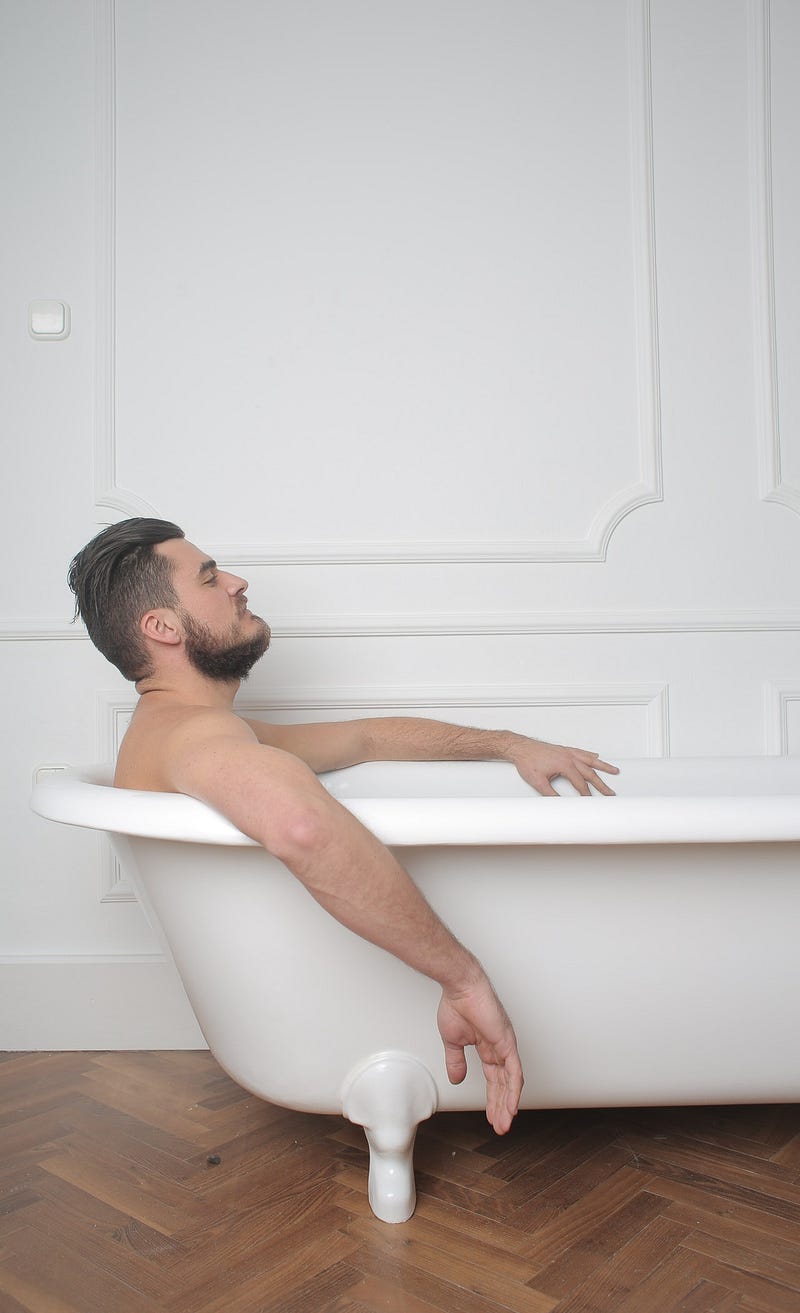
#4 — Take a Hot Bath
Light some aromatic candles, Lavender and Bergamot, are excellent for relieving stress. Grab a cup of Earl Grey tea and take a bath!
Sometimes, aromatherapy and a hot bath are just what you need to relax and unwind. When you breathe in the aroma of essential oils and drink some tea, your brain will release your anxiety and let you forget about your stressors.
#5 — Journal
Writing in your journal will allow you to relax and write without worrying whether it’s good enough to publish. This could be your chance to start that gratitude journal you’ve read about and combine it with a few wins.
#6 — Take a Nap
A quick 20-minute nap will let you recharge your battery. Experts say much longer than that will make you feel sluggish. Turn on some relaxing music and set the alarm so that you will awaken after twenty minutes. If you know it typically takes you 30 minutes to fall asleep, set your clock 50 minutes later.
#7 — Practice Yoga, Deep-Breathing Exercises, or Meditation
The University of Michigan suggests yoga as a method of muscle relaxation. Try a yoga class if you’re interested — the same with breathing exercises or meditation. However, you can discover Meditation for Beginners at Inner Peace Fellowship. Also, Gayle Kurtzer-Meyers wrote an in-depth article about meditation and its benefits.
What’s more, deep breathing exercises are something you can do anywhere, anytime. Once again, the University of Michigan has a web page for beginners.
Final Thoughts
Whether you write 20,000 words-a-day or a Haiku or two, you need to relax and unwind, and the seven ways to do that are to walk, read, journal, take up a hobby, take a nap, take a bath, or practice yoga, meditation, or deep-breathing exercises.
Another idea might be like Kevin J Ferris says in the article below, write a Haiku.
Content creation can be overwhelming given all the variables I have to think about. At the same time, stepping away from the keyboard risks breaking my momentum. I needed a constructive break that also reinforces my writing habit.
More of My Stories

Stephen Dalton is a retired US Army First Sergeant with a degree in journalism from the University of Maryland and a Certified US English Chicago Manual of Style Editor. Currently living in the Philippines, Stephen is a Top Writer in Virtual Reality.
You can see his portfolio here. Email [email protected]


