
7 Things You Need to Know About Terra (LUNA)
Algorithmic stablecoin model, staking rewards with delegation/validation, bLuna tokens, and more!
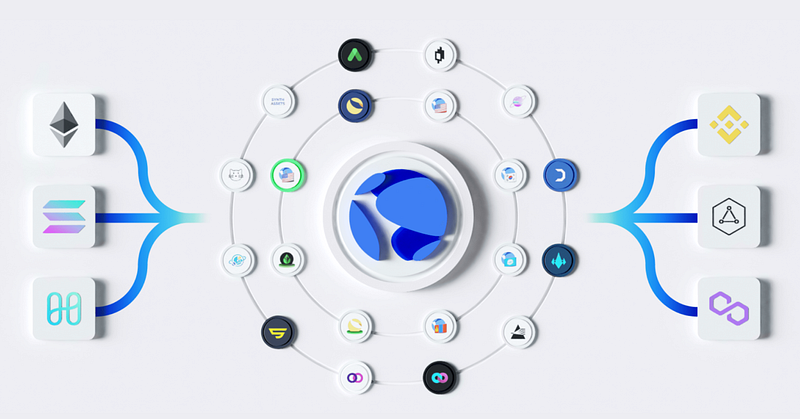
Terra is an innovative blockchain platform powering various algorithmic stablecoins such as TerraUSD (pegged to US dollar) and TerraKRW (pegged to Korean Won). It also offers LUNA tokens to its users as an stakable token to earn rewards.
Stablecoins are valuable to the end-users, if and only if they do not have any price volatility. They should be pegged completely to their underlying asset (e.g USD). Terra Blockchain uses a bunch of innovative approaches such as Market Module and Arbitrage between LUNA-Terra pairs, and PoS Consensus with Tendermint to achieve this purpose.
In this story, I am going to explain 7 things you better know about this project. For more info, you can also check the official documentation of the project here.
#1 — TerraX and LUNA Tokens
The Terra blockchain has two types of tokens:
- Stablecoins (TerraX ): are the tokens whose values are algorithmically pegged to fiat currencies. For example, TerraUSD (UST) is a stablecoin with value-pegged to the US Dollar. Another example is TerraKRW (KRT) stablecoin with value-pegged to the Korean Won.
- Staking/Governance Token (LUNA): The LUNA token is used for different purposes. First of all, the price volatility of TerraX stablecoins are adjusted by minting/burning LUNA. Secondly, LUNA is used as a staking token in the blockchain. Thirdly, LUNA is used to pay staking rewards to delegators/validators. Finally, all the governance decisions in the network needs upfront locking of LUNA tokens.
#2 — Algorithmic Stablecoins Model
The majority of the stablecoins in the market (e.g USDT, USDC) are pegged (or claim to peg) to real fiat currencies or equivalent assets in the real world. This means that for example, for minting 1 new USDC, there should be 1 USD available in treasury. This indeed guarantees the price stability of the stablecoin.
The Terra stablecoins (e.g UST) are using a complete algorithmic approach to avoid price volatility. In other words, the price of the stablecoins are completely dictated by code. The Terra developers call this approach “Market Module and Arbitrage”.
#3 — Market Module and Arbitrage between LUNA-Terra pairs
AT ANY MOMENT, you can trade 1 USD of Luna for 1 UST, and vice versa (the same thing for all other stablecoin pairs).
- 1 USD LUNA to 1 UST: the market burns the 1 USD of LUNA and mints 1 UST.
- 1 UST to 1 USD LUNA: the market burns the 1 UST and mints 1 USD LUNA.
Two scenarios are possible for the price of a stablecoin pegged to a fiat counterpart:
Scenario 1 (stablecoin price > fiat counterpart): this means low supply and high demand for that stablecoin. In other words, we need more supply of stablecoin to balance the supply and demand. For this, LUNAs are burnt and more stablecoins will be minted.
Scenario 2 (stablecoin price < fiat counterpart): this means high supply and low demand for that stablecoin. In other words, we need less supply of the stablecoin to balance the supply and demand. For this, stablecoins are burnt and more LUNAs will be minted.
In both scenarios, LUNA token is used to make the balance in the supply-demand equation. Moreover, the users doing these swaps will benefit from arbitrage possibilities of the pairs. Therefore it is a win-win situation, meaning that the stablecoin is stable in price and the users are getting rewarded for helping the network to maintain the prices stable.
#4 — Delegators & Validators
All users in the Terra blockchain are entitled to receive staking rewards in return for their loyalty and activities in the network.
In general, there are two types of users in this ecosystem:
- Validators: the users who wish to run the full nodes on the blockchain and be part of the consensus process. These users propose and add (if accepted by others) the blocks, and validate the transactions proposed by others. Moreover, they have an undeniable role in the governance decisions of the network.
- Delegators: the users who wish to receive staking rewards without running a full node by themselves.
Now, a delegator can stake her tokens to a selected validator.
- If the validator gets rewarded, part of this reward will be redistributed to the delegator.
- If for any reason the validator is getting slashed (e.g. misbehavior in the network), the delegator will also be punished to a degree.
Running a full node is a resource-intensive process. Furthermore, by design, the Terra blockchain allows 130 validators in the network. On the other hand, being a delegator is super straightforward and there is no limit to the number of delegators.
#5 — bLuna Tokens
If you (as a delegator) wish to stake some of your LUNA tokens to a validator, there are some considerations you need to take into account. The first important thing is that if you want to unbond these staked tokens from a validator, it takes 21 days to complete. During the bonding process and while it is getting unbonded, you will not be able to use LUNA tokens for any purpose other than accumulating staking rewards from validators.
However, there are some mechanisms to compensate these kind of problems.
For example, bLuna is provided by lido.fi and is a specific liquid staking token that can be used as collateral on Anchor Protocol. These tokens can be used for trading purposes. Alternatively, you can use bLuna tokens as a collateral asset in protocols such as Anchor or Mirror.
#6 —PoS Consensus with Tendermint
The Terra Blockchain uses a Proof of Stake (PoS) based consensus model powered by a verification system called Tendermint.
To propose and add new blocks into the blockchain, a proposer validator is selected first. This validator proposes a block and all other validators vote in favor or against the proposed block. If the block is getting rejected in votes, another proposer is selected and this process continues until validators vote in favor of a proposed block.
During this process, all validators and delegators are rewarded with transaction fees from the block. Furthermore, the proposer validator who successfully managed to pass her block will be rewarded extra.
Using this consensus model, batches of transactions can be validated and confirmed in a matter of seconds (approximately 6 seconds according to the official documentation).
#7 — Terra Station
Terra station is the official desktop wallet to interact with the Terra blockchain. You can do several things using this wallet:
- Creating a wallet for holding Tokens
- Moving compatible Terra tokens (e.g UST, LUNA) from exchanges to the wallet
- Sending tokens to external addresses
- Swap coins (UST-LUNA, LUNA-UST, etc.)
- Stake LUNA to validators
- Withdraw staking rewards
- Participate in governance decisions and vote on different proposals
In summary, Terra station is an all-in-one trusted solution for interacting with the Terra blockchain.
This article is for informational purposes only. It should not be considered Financial or Legal Advice. Not all information will be accurate. Consult a financial professional before making any major financial decisions.
If you enjoyed this content and feeling generous, please consider supporting me by donating to my ETH wallet:
0x1779c21F79D3F1e63960990818B5bF03e89CbfFE
If you are interested in reading my similar posts in the future, please consider joining medium with my referral link. If you sign up using my link, I’ll earn a small commission and you will have unlimited access to the content from all medium writers. That way, you will support me and your other favorite writers on the platform. Thanks.