
8 Things You Need to Know About Fantom (FTM)
Directed Acyclic Graph Model, OPERA Chain, Fantom Virtual Machine, and more!
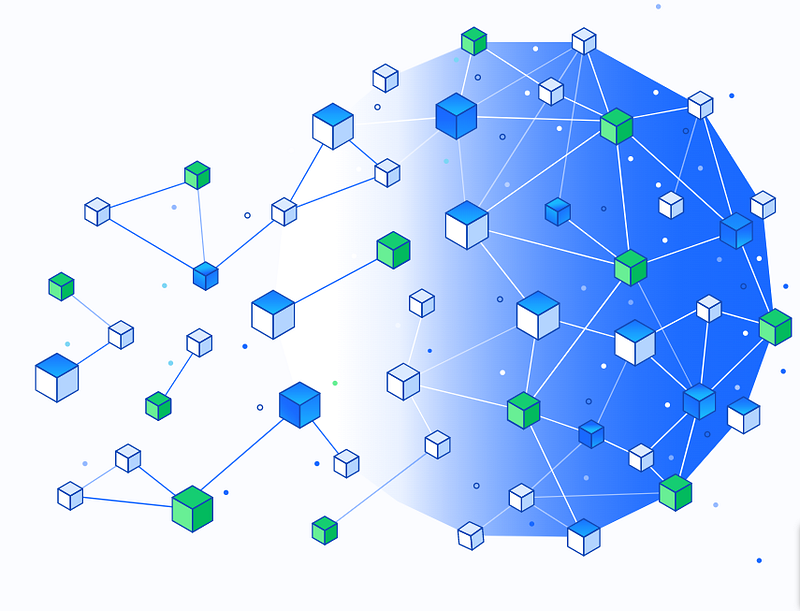
Fantom is an innovative smart-contract platform that aims to address the three main challenges in the blockchain industry:
- decentralization
- scalability
- security
For this purpose, Fantom uses a bunch of different tools and technologies such as Directed Acyclic Graph (DAG) model, lachesis consensus algorithm (LCA), and Fantom Virtual Machine (FVM).
Fantom’s native token is called FTM, and at the time of writing this story, with market cap of $5,916,318,775, it is ranked 31 in the market.
In this story, I am going to explain 8 things you better need to know about this project. For more info, you can also check the official whitepaper of the project here.
#1 — Directed Acyclic Graph (DAG) Model
Fantom is not using block-based distributed ledgers. As we know all the infrastructure and consensus algorithms in blockchains such as Bitcoin and Ethereum are based on the formation and validation of “blocks of data”. Fantom is using a new model based on the Directed Acyclic Graph (DAG) instead of this. The main reason behind such a choice is to address the scalability issues.
#2 — The OPERA Chain
The OPERA Chain is the core module of Fantom infrastructure to address the scalability issues of the traditional blockchain models. It uses Scala — a functional programming language — to generate bytecode on the FANTOM Network. The OPERA Chain has three layers:
- Core Layer: for processing transactions.
- Ware Layer: provides APIs, smart contracts production tools, wallets, etc.
- Application Layer: for third-party applications.
#3 — Lachesis Consensus Algorithm (LCA)
Fantom uses a consensus model called Lachesis Consensus Algorithm (LCA). The LCA is a Byzantine Fault Tolerant (BFT) technology, and according to the whitepaper of the project, it can guarantee processing up to 300,000 transactions per second.
The main idea behind this consensus model is to use a Directed Acyclic Graph (DAG) and event blocks. Each event block contains information about transactions, smart contracts, reputation management, stories (historical info), and values of the previous events. Moreover, it saves the signature of the user who created the event. Under such a model, LCA creates a DAG, which is essentially a set of links between event blocks. Finally, the main chain list verifies the order of the transactions in DAG. Main chain list is a set of event blocks that can check and verify event blocks created over a period of time.
#4 — Elliptic Curve Cryptosystem (ECC)
For transmitting data between nodes, FANTOM uses ECC technology. ECC has several advantages:
- highly secure.
- shorter key sizes (e.g. compared to RSA 1024-bit keys).
- high-speed computations during the signing process.
- easy to implement in hardware or software wallets
#5 — Response to Attacks
Lachesis protocol has preventive measures against different types of attacks.
Sybil Attack: OPERA chain uses a method similar to the delegated proof of stake (DPoS)to identify and punish the malicious nodes. Moreover, by design, only a single node can be created in a single computer.
Parasite Chain Attack: the main chain is responsible for verifying and validating the event blocks. Any unconnected block to the main chain will be discarded automatically.
Transaction Flooding: there is a minimal transaction fee with any requested transaction. Therefore, malicious attackers can not overload the network with transactions.
#6 — Scala Programming Language
Scala is the programming language of choice in the Fantom project for writing smart contracts. Here are some of the reasons why Fantom chose Scala:
- easy to learn
- extensive documentation
- an excellent choice for developers with different levels of experience
- object-oriented and functional coding paradigms at the same time
- allows programmers to write well-organized and clean code
- easy testing and debugging
- support for “Formal verification” (a mathematical approach used to prove the accuracy of source codes)
#7 — Fantom Virtual Machine (FVM)
In general, there are two types of virtual machines used by blockchains:
- Stack-based: all the operations are performed using the “stack” data structure and PUSH and POP instructions. Ethereum uses this type of virtual machine.
- Register-based: all the operations are performed using the “registers of the cpu” data structure. There are no PUSH and POP operations. However, names and addresses must be explicitly stated. Fantom uses this type of virtual machine.
Using register-based virtual machines OPCODE execution costs can be reduced by almost 50%. Performance capacity can be improved nearly double. Finally, unlike stack-based virtual machines, optimizations can be conducted in this model.
#8 — Fantom (FTM) Token Distribution
Here are some statistics related to the token distribution of FTM:
- Maximum Supply: 3.175 billion FTM
- Inflation: estimated to be 5% initially and decreasing as more users join the network
- Rewarding Nodes: 20% of the total inflation is used for rewarding purposes
- Token distribution: 40% public sale, 30% market development, 15% advisors/contributors (3-months lockup), 15% Fantom team and member (24 months vesting period)
This article is for informational purposes only. It should not be considered Financial or Legal Advice. Not all information will be accurate. Consult a financial professional before making any major financial decisions.
If you enjoyed this content and feeling generous, please consider supporting me by donating to my ETH wallet:
0x1779c21F79D3F1e63960990818B5bF03e89CbfFE
If you are interested in reading my similar posts in the future, please consider joining medium with my referral link. If you sign up using my link, I’ll earn a small commission and you will have unlimited access to the content from all medium writers. That way, you will support me and your other favorite writers on the platform. Thanks.
Join Coinmonks Telegram Channel and Youtube Channel learn about crypto trading and investing
Also, Read
- Best Ethereum Wallets | Cryptocurrency Bots on Telegram
- Best Exchanges to Trade Leveraged Tokens | Buy HTZ token
- 5 Best Social Trading Platforms | WazirX NFT India
- 10 Best Books on Crypto | 5 Best Crypto Bots in the UK
- Koinly Review | Binaryx Review | Hodlnaut vs CakeDefi
- Bitsler Review | WazirX vs CoinSwitch vs CoinDCX
- Earn Sign-up Bonus — 10 Best Crypto Platforms
- 7 Top Copy Trading Platforms |BuyCoins Review
- ProfitTradingApp for Binance Review | XT.COM Review
- SmithBot Review | 4 Best Free Open Source Trading Bots
- Uphold vs Coinbase | Kanga Exchange Review
- Binomo Review | Stoic vs 3Commas vs TradeSanta
- Capital.com Review | Crypto Lending Platforms in Hong Kong