
7 Rules To Plan a New Web Project
How to plan a web project?

Starting a new web project may be exciting, but at the same moment, it requires an approach right on point to make it successful.
Whether it be a simple personal portfolio or a fully functional e-commerce platform, this planning of the project should be done in the right manner. Well, here are seven essential rules guiding you through.
Let’s fid out together!

1. Define Your Purpose and Goals Clearly
Before writing a line of code or making your first mockup, understand why you are building the website in the first place: what is the objective?
Are you going to capture leads, sell products, show a portfolio, or simply publish information? This concrete purpose will guide you from the very beginning through to the end of the project.
The objectives should be SMART, meaning specific, measurable, achievable, relevant, and time-bound. In this way, one can monitor progress while acting accordingly towards one’s goals.

2. Know Your Audience
Who is this for? Well, knowing your audience is important for it’s on every single design decision and feature that should be centered around them — the masters.
Are they tech-savvy millennials, business professionals, or casual browsers? Conduct user research and create personas that outline behaviors, preferences, and pain points.
This would definitely help in establishing a website that is user-oriented, hence impressing your target audience and catching their attention by the fulfillment of their expectations.
3. Create a Detailed Project Plan
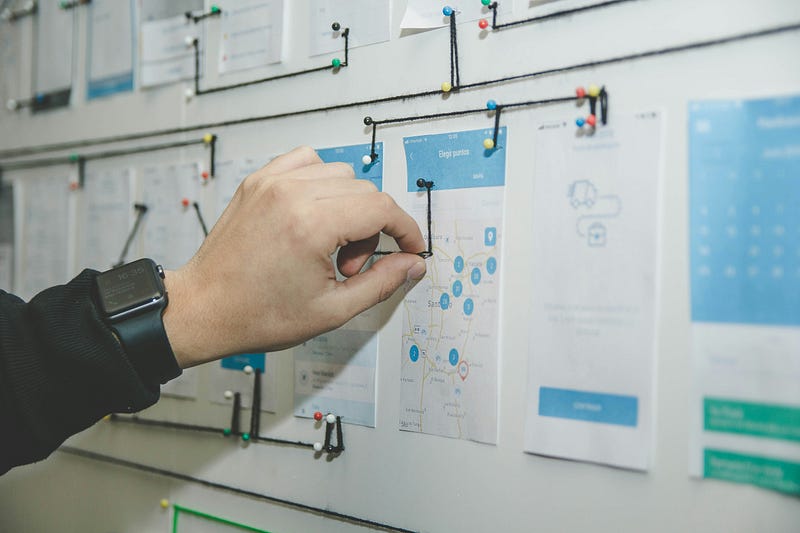
The well-articulated plan lays the foundation for the smooth running of the process. Break down your project into the main phases: research, design, development, and testing.
Identify key milestones, performers, and completion dates. A good plan will include resource allocation from who shall handle what in design and development to who decides on content creation and SEO.
You can leverage project management tools like Trello, Asana, or Jira to ensure your projects are well-managed and that everyone’s on the same page and updated with efficacy.
4. Wireframe and Prototype First
A very common mistake is going straight into designs or development without the proper wireframes.
Wireframing allows you to visualize the structure and layout of your website without the distraction of aesthetics. You are really focusing on functionality, user flow, and navigation.
Once the wireframes are approved, creating a prototype will give you an even more realistic representation of the user experience. This helps testing the interactions for early user feedback, while issues can be caught before heavy coding actually begins.
5. Ensure Scalability and Flexibility
Your web project should be developed keeping in mind future growth. Either for continuous traffic growth or for adding more features in due course of time, the website design should be scalable.
No shortcuts or quick fixes that will hamper expansion or development later on should be pursued.
Technologies, platforms, and hosting solutions should be chosen that can meet the demands of the future. For instance, the utilization of a content management system, such as WordPress or Drupal, allows ease in the addition of features to the website without having to remodel the entire website.

6. Prioritize SEO and Performance from the Start
It’s also very important to remember that SEO and performance optimisation aren’t things you should be thinking about after the site is launched — they need to form one integral part of your planning.
Good SEO habits will ensure your site shows up at the top in search engines, while performance optimisation ensures a smooth and fast experience for users.
Pay attention to things like site speed, mobile responsiveness, clean code, metadata, and sitemaps. Optimizing images, enabling browser caching, and minifying CSS and JavaScript are some of the ways to make the loading time faster.
7. Test, Iterate, and Stay Agile
No web project goes live bug-free the first time around. Rigorous testing weeds out important bugs to optimize and fine-tune performance and user experience.
Conduct usability tests, A/B tests, and performance tests before launching the site. When your site is finally live, that doesn’t mean it’s over.
Be agile in your approach, take user feedback, study the data, and be prepared to iterate in your designs. Web projects are living projects that always need to grow with the needs of users and adapt to new technologies.
Last Words
The seven steps will help you in creating a seamless, really organized web project to ensure that the initial expectations were met without losing future development prospects.
Whether it is a minor, tight-knit group or an extended development process, these principles will get you through focusing on being productive.
Stay conected, Stay online.
Have a wonderful day!
Thanks for coming this far 🎉
- 👏 Could you please clap the story to help spread the article? (50 applause).
- 📩 Also if you want to my newsletter: https://yunus-emre-adas.ck.page/c090914848
You can reach me from the links below:
To access my other articles:


