
Mental Health/Empowerment
7 Great Ways To Take Care Of Your Mental Wellness On A Budget
A resource of proven self-help techniques that you can do for free.

Erin King is the author of How To Be Wise AF: A 30-day journalling adventure to your inner Guru.
Contents:
Journaling/Breathwork/Meditation/Mindfulness/Tapping/Laughter Therapy/Practicing Gratitude
Why I Wrote This
I’ve got to be honest, the last couple of years haven’t been much fun.
The pandemic did much more than just make us sick.
It made us angry, stressed, un or underemployed, divided, and depressed and the fact is, not everyone has a supportive family, a tight-knit group of friends, or disposable income.
So you may be one of the many who find yourself trying to cope without help or resources, white-knuckling day after day, just to hold it together.
Wouldn’t it be great to have a way to take control of your stress and feel good again?
Wouldn’t it be even better to be able to do that without breaking the bank?
If you feel like there just isn’t anything you can do for yourself, don’t despair, there are abundant resources at your disposal. Things you can do when you’re feeling low to bring your well-being back into focus.
Things you can do even if you don’t have much — or any — cash.
Ways to take care of yourself without having to pay.
If you have a computer and the internet there are limitless resources you can research for free.
To save you some time and get you started on your healing journey, I’m going to share the ones that I like best.
So, for a better frame of mind in 2021 and beyond, let’s see if we can’t find a pathway to a better outlook and deeper happiness that won’t break the bank.
NOTE ***This is not a substitute for professional treatment. If you’re already on a mental health plan with a professional stay on your prescribed course. If you feel like you’re in crisis, please reach out to someone you trust or call a crisis helpline. This article is meant to be helpful and enlightening but it’s not a treatment or diagnosis.***
Having said that, there are loads of mood boosters and proven techniques you can do on your own for free. Have a look and see if one of these might just do the trick for you.
How do I know they work?
Aside from the studies and data, I’ve personally tried each one at one time or another and have found them all to be helpful.
I have my favorites as I’m sure you will too, but each is effective so all you really need to do is try some out and see which ones fit best.
There’s one in particular that I return to almost daily.
This technique works for me, no matter what frame of mind I’m in. I’ve been doing it for years — on my own, never paid money to do it — and it’s gotten me through some very tough times.
I’ll tell you more about it later.
In my opinion, that’s what you want from self-help.
A good self-help routine should:
- Be versatile enough to coast with you through life’s highs and lows.
- Ground you when you’re stressed.
- Lift you up when you’re down.
- Reinforce good feelings.
- Pull you together when you’re scattered.
- It should work as a salve, cooling and soothing your emotional burns so they can heal.
- It should fit into your life no matter where you’re at.
- Be easy and convenient to implement.
- Be something you can afford on any budget.
Luckily, all of these practices fit that bill.
So to help you feel better or keep you feeling great, these techniques have you covered and they’re only a google search away.

✨Journaling:
It’s a great way to blow off steam. You can let loose and safely say anything you want about anything.
Getting it all out onto paper (or computer screen) is cleansing and purging.
It doesn’t take much more than a pen and paper or a computer and a word document, but the results can be astonishing.
Journaling has been proven to:
- Improve your mood
- Increase feelings of well being
- Lessen symptoms of depression
- Boost your memory
It’s also been found to be especially helpful for people who have a history of trauma or suffer from PTSD.
Journaling works by acknowledging your emotions rather than shutting them down. It takes your secret shame or unvoiced trauma and gives it a voice, releasing it and setting it free.
It can also be a way to organize mental clutter.
Worries and problems set onto paper (or saved to computer) no longer need to be obsessed about and you don’t have to worry about forgetting what you’ve written down so you can clear the space in your mind and use it for better things.
Also, everything written can be revisited and reviewed.
In this way, problems reveal solutions, experience gives explanations and struggles expose strength.
Journaling gives you the power to reframe your pain and turn it into power.
Here’s some advice to jump-start your journaling habit:
- Don’t focus on spelling or grammar. Just get your thoughts and emotions out.
- Be detailed as possible.
- If you feel safe enough, try to keep your writing so you can refer to it later. Revisiting written work when you’re feeling less emotional can be a great way to gain insight. If destroying your work makes you feel more powerful, you might want to dispose of it in a ritualistic way. (I once burned my old high school diary in this way. It was very liberating. I saved one page that I thought summed up my life at the time but released the rest of the painful experiences into the ether.)
- Set aside time every day to write, especially at the beginning. Developing a writing habit is the best way to get maximum benefits.
Journaling is a healing activity you can do with no experience or training, all you need is a quiet place to collect your thoughts and a pen and paper or keyboard.
✨Breathwork:
This might seem weird, but it’s an ancient practice enjoying a massive renaissance.
Breathwork helps with everything from stress reduction and blood pressure, depression and focus.
It is straightforward, doesn’t require any special equipment, and might feel more doable than Meditation.
It is a practice that creates noticeable results quickly and can give anyone instant control over a stressful situation.
Deep breathing can help reverse the “fight or flight” response your body gets into when you’re stressed. It’s even been shown to help treat depression, anxiety, and PTSD.
Did you know:
- Exhaling longer than inhaling takes you out of the “fight or flight” response and into “rest and digest,” lowering blood pressure and cortisol (that pesky stress hormone so many of us get stuck producing when confronted with chronic stress).
- Studies show that you can decrease your symptoms of depression with “Coherent Breathing,” a type of long, slow breath.
- How you breathe can change how your body reacts to fear depending on whether you inhale or exhale and whether you breathe through the nose or mouth by creating electrical activity in the brain.
Breathwork is all about controlled breathing, not just taking in huge gulps of air. So don’t confuse breathwork with “over-breathing” which can cause you to expel too much carbon dioxide and actually reduce the blood flow to your brain.
This powerful tool is not recommended for people with:
- Cardiac arrhythmia (including very slow heart rate)
- History of heart block
- People taking certain antipsychotic medications
So as always, make sure it’s safe for you before you get started.
Breathwork is more than just physical relief. It’s a means towards greater self-understanding.
By providing mental space for self-exploration, and a deeper connection to yourself, breathwork can also lead to spiritual awakenings and greater personal insights.
✨Meditation:
This is one that people either love or hate the idea of.
When we think of Meditation, we think of Yogis with long grey beards sitting still for hours, but it’s a simple practice that anyone can do.
It’s been studied and the research shows it’s an effective practice that helps with a multitude of symptoms.
Studies show that regular meditation can:
- Decrease stress
- Manage anxiety
- Support emotional health
- Heighten self-awareness
- Increase attention span
- Reduce age-related memory loss
- Encourage kindness
- Help combat addictions
So, effectiveness isn’t an issue, it’s been proven to work. It’s just a matter of finding what works for you.
To that end, there are loads of techniques and ways to meditate.
You may have to try a few before you find one you like, but that’s okay because it won’t cost you anything.
All you need to do is:
- Find somewhere quiet.
- Sit or lie down, whichever is more comfortable.
- Close your eyes and
- Breathe slowly, inhaling and exhaling deeply.
- Focus on your breathing.
- If your mind starts to wander, just refocus on your breathing.
And don’t feel like you have to sit there like a Master for hours, you can start your practice for just a few minutes every day and work your way up.
What’s even better is that you can meditate just about anywhere — out walking, on the bus, or at your desk at work for a quiet little pick-me-up. If you have a place to sit or move safely and a few minutes to spare, you can meditate anywhere.
Here’s are some oversimplified explanations of the most popular forms of Meditation with links for further investigation:
- Mindfulness Meditation: As you get still, your thoughts become that needy friend who has to fill every quiet moment with chatter. Let them get what they need off their chest but don’t buy-in. When you notice them trying to take over your downtime, gently acknowledge them and then quietly return to the business of breathing peacefully. Don’t get mad. They can’t help it. Just accept they have something to say and be kind. They might be trying to draw attention to issues you need to address.
- Spiritual Meditation: This one takes the experience up a spiritual notch connecting you to your true self, your God, the Universe, and everything. For someone seeking deeper meaning, this might be a good place to start.
- Focused Meditation: You choose one thing to focus on, say the sound of a noise machine or the feeling of your chest rising and falling, and let it guide your intention. Unlike Mindfulness which allows you to meander leisurely, releasing thoughts and moving along unfettered, Focus Meditation requires you to coral your attention back to the focal point whenever it strays. That focal point acts as your home base, somewhere to return to after you’ve released the distraction. This method activates the anterior cingulate cortex (ACC), which is involved in self-regulation and error detection. This is a good practice to enhance your problem-solving abilities and impulse control.
- Movement Meditation: This is exactly what you think. You’re moving while meditating. So instead of sitting still and focusing on an object, you’re focusing on the movements you’re making. Have you ever seen a video of a group of people doing tai chi in the park? Or people silently walking a little circular path? Those people are doing movement meditation.
- Mantra Meditation: When you see the stereotypical new-age character in a T.V. show sitting cross-legged and repeating the word “Ooooommmmm,’ they’re doing Mantra Meditation. A mantra is a word or phrase you use to focus your attention. There are words that have been used for centuries that many people choose, each having its own spiritual meaning or you can pick a word that means something to you personally. Many people choose affirmations as their mantra.
- Transcendental Meditation: A more intense, focused version of Mantra Meditation.
- Progressive Relaxation: The idea is that mental calmness is a natural by-product of physical relaxation so that by tensing and then relaxing your muscles, you also calm your mind. Insomnia, anxiety, and even some chronic pain symptoms are proven to be managed effectively by this practice.
- Loving-Kindness Meditation: Takes all those good vibes you’re sending out and focuses them on someone in particular or yourself. You can repeat a mantra like, “I love and honor myself in every way.” Or something else meaningful to you. You might start focusing on yourself, then move the energy to someone else, and then out to the world. The idea is that loving-kindness is the energy you’re reinforcing.
- Visualization Meditation: This method combines the breathing and focus of traditional meditation with the creative energy of the imagination. As you get centered and focused through your breathing and stillness, you visualize what you want to manifest. It could be a goal, a feeling, a solution to a problem. The idea is to be as clear and distinct as possible while letting negative thoughts and feelings fall to the wayside.
So there are a few ideas to get you started if meditation appeals to you.
In reality, if you have five minutes to spare, you can get going on this age-old effective practice.
✨Mindfulness:
While this practice may have started with Buddhism, it’s also a modern technique with loads of scientific research to validate its effectiveness.
Since 1979 when the University of Massachusetts Medical School introduced the Mindfulness-Based Stress Reduction (MBSR) program, it’s been the focus of thousands of studies and found to have many benefits.
In a nutshell, mindfulness is the act of maintaining a moment-by-moment awareness of your thoughts, feelings, bodily sensations, and the surrounding environment through a kinder lens.
Many people have defined “Mindfulness,” and some of the common threads are:
- The idea of being aware of our thoughts, feelings, surroundings, and bodily sensations.
- Observation without criticism.
- Being fully present in the moment.
- Not being overly reactive to what is happening.
- Avoiding interpretation or judgment in the moment.
- Creating space for insight in everyday experiences.
- Having a clear recognition of the present moment.
This might seem almost too simple, but it’s a potent practice that allows you to be objective in the face of emotion.
It opens the door to analyzing your emotions and reactions.
For example:
You might be triggered by a situation and find yourself emotionally spiraling out of control. Through mindfulness, you learn to take a step back in your mind and observe what’s happening. Through this objective observation of the situation and your emotions, you might be able to realize what’s really happening.
If you can do this without judgment, you’ll have a better chance to pull yourself together, without shame or guilt, and move on from the experience.
You might even be able to gain some insight as to why the episode happened and move towards healing through these new insights.
When you can step back in your mind and observe yourself, it takes the emotional sting out of whatever you’re experiencing.
This creates space to start accepting and understanding yourself.
The goal with mindfulness is to tune into the present rather than the past or future.
It’s a valuable technique for learning to ground yourself emotionally.
✨Tapping:
Emotional Freedom Technique (EFT) or tapping is a powerful technique that anyone can do effectively from the comfort and safety of their own home. There are hundreds of free videos on YouTube aimed at everything from depression to self-esteem and you can get positive results just by following along.
This is my personal favorite and my go-to when I need to get grounded, work through stressful events, or just stay focused on my goals.
Tapping is exactly as it sounds — you tap on yourself.
You tap on certain areas that correspond to acupressure points while making statements out loud.
The meridian points and their corresponding organs are:
- “Karate Chop,” located on the outer side of the hand, the fleshy bit between the bottom of your baby finger and your wrist (KC) governs the small intestine meridian.
- The top of the Head (TH) is called the governing vessel.
- Inside of the Eyebrow (EB) is the bladder meridian.
- Outside of the Eye (SE) the gallbladder meridian.
- Directly under the Eye (UE) the stomach meridian.
- Under the Nose (UN) is another governing vessel.
- The middle of the Chin (Ch) is called the central vessel.
- The beginning of the Collarbone (CB) is the kidney meridian.
- Armpit, under the Arm,(UA)is the spleen meridian.
There is a sequence and a formula to how you tap on these points and the phrases you say. It’s not random so before you try this you might want to watch a few videos.
Based on the same ideas as acupuncture and acupressure, you tap on the meridian points to restore emotional balance.
Studies show tapping can:
- reduce stress
- lower cortisol
- improve sleep,
- reduce anxiety
- relieve pain
- treat PTSD
- increase productivity
I can personally attest to its effectiveness.
This technique changed my life when it was introduced to me by a hypnotherapist.
She asked if I wanted to try it and said tapping gave the same emotional release as talk therapy but with much faster results.
She was right.
During my very first session, I had a life-changing epiphany (I know that sounds dramatic, but it’s true).
Tapping is a process carried out in a specific way. There is a formula you follow and once you master it, you can use it to help with just about any problem, physical as well as emotional.
Once you get the hang of how it works, you can make your own personalized sequences.
The basic steps to follow are these (very oversimplified) to give you an idea of how it works:
- Identify the issue you want to address. It’s best to do one at a time and be as specific as possible.
- Rate the intensity of feelings around the issue. It’s easiest to rate how it’s affecting you on a 1–10 scale and then record or remember this number as a reference to compare your feelings after you go through the process.
- Do a“set-up,” which establishes a phrase addressing your issue. This phrase should acknowledge the problem while also expressing acceptance towards yourself. For example, “Even though I get triggered at family gatherings, I deeply and completely love and accept myself.”
- Do your tapping progression while stating out loud different phrases related to your issue. During your sequence, you’ll acknowledge the problem, address the pain and underlying causes, release the negative emotions and ultimately acknowledge healing. You do this by repeating the sequence as many times as needed. There are lots of free or very affordable courses you can take online to perfect your technique. ***There are NO affiliate links in this article. I’m just giving information that I think is helpful.
- After you’ve finished your sequence, take a moment to revisit your emotional rating afterward to see if it’s changed. NOTE: Sometimes, when you begin your tapping journey, one issue can bring up many other ones, so your rating can increase before it decreases because some problems are deep and complex.
It might seem a bit convoluted at first, but once you get the hang of it, you can easily create personalized sequences for yourself that you can do anywhere.
There are loads of free courses you can find online if you want to go a bit deeper in your understanding of the technique or learn to help others and if you want to take it even further, you can find many courses to become a practitioner.
It’s so straightforward, however, even a total beginner can get results.

✨Laughter Therapy:
Sometimes a little laughter can help put things into perspective.
Even better, a 2005 study showed that laughing increases blood flow similar to aerobic activity, so laughter does more than just lighten the mood.
It’s been shown to have some seriously healthy side effects.
“Laughter Yoga” is even a thing, so you know there must be something to it.
Laughing can:
- Stimulate your lungs, heart, and muscles.
- Relieve physical tension and relax your muscles.
- Increase the amount of oxygen in your blood.
- Improve vascular function.
- Release infection-fighting antibodies and neuropeptides to boost your immune system.
- Release endorphins that lower your blood pressure.
- Reduce the stress hormones that cause weight gain and burn calories.
In the book “Anatomy of an Illness as Perceived by the Patient,” Norman Cousins details his healing journey from a severe and painful illness using laughter as his most important resource.
Watching and laughing at “Candid Camera” and Marx Brothers movies actually gave him pain relief which he documented in his book.
So in theory, if you already have a device to watch your entertainment on, you should be able to find something to make you laugh, for what you’re already paying your provider.
If you want a few more ideas for excellent shows to watch for a pick-me-up, I devoted a whole article to it called, Studies Show Laughter Is Good Medicine So This Comedy Therapy Might Be Just What The Doctor Ordered — These addictive shows are just the prescription you need. The shows in this article range from wonderfully light-hearted to flat-out hilarious.
If you’re feeling really bad about the state of the world, check out the BBC series “Horrible Histories.”
It’s a comedic look at the terrible things we humans have gone through, and it reminds us that there’s always been adversity in the world.
There’s always been adversity, and we’ve always gotten through it and somehow, laughter has always been there to help us cope.
There are so many reasons to have a good laugh so go ahead and tickle that funny bone, chances are it won’t cost you a dime.
✨Practicing Gratitude:
This is possibly the simplest and most effective way to pull yourself out of a funk and get on the fast track to feeling better and it literally doesn’t cost anything.
Little things like keeping a gratitude journal, or complimenting yourself or someone else, or giving a token of appreciation to someone can instantly make you feel better.
Gratitude is so great that thanking or giving a little thank you gift to someone else, gives you a little burst of happiness as well.
You don’t need any training, you don’t need a practitioner, you don’t need a plan or even an understanding of how it works for it to be effective, all you need is to be grateful.
Not only does gratitude cause you to focus on and acknowledge the good things in your life, which makes you feel instantly happier, it actually changes your brain chemistry.
Practicing gratitude releases dopamine and serotonin, which makes you feel good. When you practice gratitude daily, you strengthen the neural pathways that release those feel-good chemicals and in turn, you actually become more positive and grateful. As you reinforce the pathways they become easier and easier to take so you change your outlook by changing your brain chemistry and vice versa.
Amazing!
It’s so powerful that people in a study who wrote gratitude letters as an augmentation to their regular therapy were happier and had better outcomes from their treatment. (In contrast, the same study had another group keep diaries of their negative experiences which caused them to have more anxiety and depression, even though they also had counseling.)
Studies have proven that gratitude is so powerful it can:
- Reduce pain
- Improve sleep quality
- Help you cope with stress
- Reduce symptoms of depression and anxiety
- Improve your interpersonal relationships
- Improve your self-esteem
- Make you more resilient
There are so many ways to practice gratitude and they’re really easy and some are quite fun.
Here are a few ideas to get you started:
- Write a gratitude journal: There’s no right or wrong way. Write down the things you’re grateful for. Do it daily, bi-weekly, less or more. You set the pace and do what feels right and what works best for you. You could start by writing 3–5 things you’re grateful for every day, either before bed or when you get up.
- Make a gratitude wall: Find a section of wall in your house and get some post-it notes. Write at least three post-its of things you are grateful for each day. Watch as the wall fills up with gratitude. You could take them down at the end of each month and put them in a special box or a scrapbook.
- Make a gratitude talisman: Find something small you can carry around in your pocket or purse. Keep it easily accessible, and every time you touch it, think of something you’re grateful for, either in the moment or in general.
- Take a gratitude walk: This is a combination of walking meditation and gratitude. As you take your walk, clear your mind of everything except what you’re grateful for and focus only on that.
- Write a letter or email to someone you’re grateful for: Write a heartfelt thank you note to someone. Maybe someone who supported you through a hard time or someone who did you a favor. Maybe make them a handmade card.
Once you get the hang of it, the possibilities are endless. As long as you’re focusing on what you’re grateful for on a regular basis you’re doing it right.
From what the data and studies say, gratitude gives you an instant burst of good feeling, long-lasting impact, relief from many negative symptoms (physical and emotional), and the more you do it, the easier it gets, there is literally no downside to it.
And it’s FREE.

Don’t Give Up
If your mental health has suffered as well as your finances, you might not feel like you have many options.
But if you’re reading this, you’re connected to wifi so you can do more research on any of these techniques.
Find something that appeals to you and give it a go because self-care has never been more important, and everything I’ve listed are techniques proven to have a positive effect on the brain and things you can get started with today — for free.
Start with this list and see if there’s something here to help you feel better.
Even if it just gets you from today to tomorrow.
If one thing doesn’t work, then try another. Don’t stop until you’ve found something that gives you some relief and peace of mind.
Taking care of your emotional well-being doesn’t necessarily have to drain your bank account. There are lots of things you can do that can provide serious, long-lasting relief for no money.
Don’t let your finances deter you from your healing path, there are loads of free resources out there just waiting for you.
Thanks so much for reading! 😊
Upgrade your free Medium membership to a paid one here and for just $5/month you’ll receive unlimited, ad-free, stories from thousands of writers on a wide variety of publications. This is an affiliate link and a portion of your membership will go directly towards supporting my endeavors. Many thanks!
✨If you’re not sure where to start, I’ve got you covered with my new book, How To Be Wise AF: 30 Day Guided Journal For Women. Available on Amazon. It’s free with KDP unlimited or download the eBook for just $2.99.
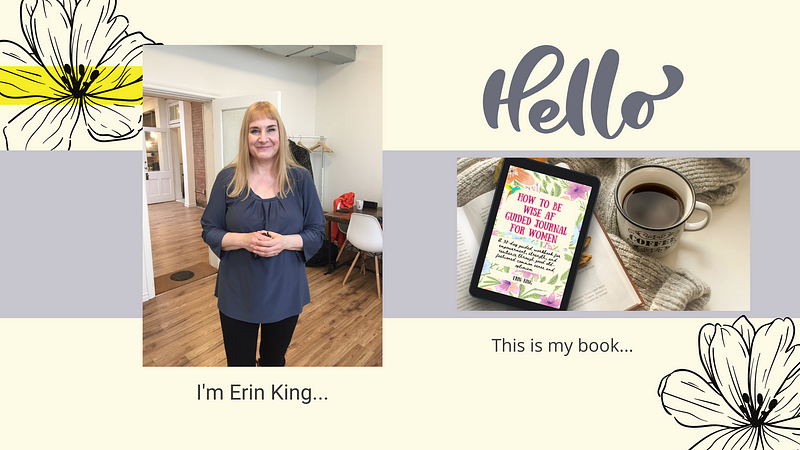
Read one short chapter every day and answer the writing prompt designed to reframe your experiences in a positive, helpful light. Delve into your past, the good, the bad, and the ugly to revisit and rewrite old narratives.
As old pain becomes helpful lessons your life’s challenges take on new purpose and meaning to shift the narrative and guide you to strength and resilience.
If you’d like to read more by me, please, give these a try:
If you’d like to read more articles that uplift and enlighten you, join us here on ILLUMINATION. Here are some more excellent writers to check out: George J. Ziogas, Madoc Maduka, Jessica Cote, Charles Roast, Chris Hedges, Dr. Mehmet Yildiz, Michael Patanella. Why not write for us? Bring your talent, courage, and insight, share your story, and let’s do something great!


