
7 Possible Scenarios For How The World Might End
The fragile planet — End of the world as we know it?
It’s a question on many people’s minds: will the world end in the next 100 years? Although it’s impossible to definitively predict the future, several potential catastrophes could bring about the end of the world as we know it.
In this article, we’ll explore seven potential ways the world might end in the next 100 years. From asteroid collisions to nuclear wars, the possibilities are both fascinating and terrifying.
Read on to learn more about these potential doomsday scenarios.
7- Gamma-Ray Burst — The Fascinating Physics
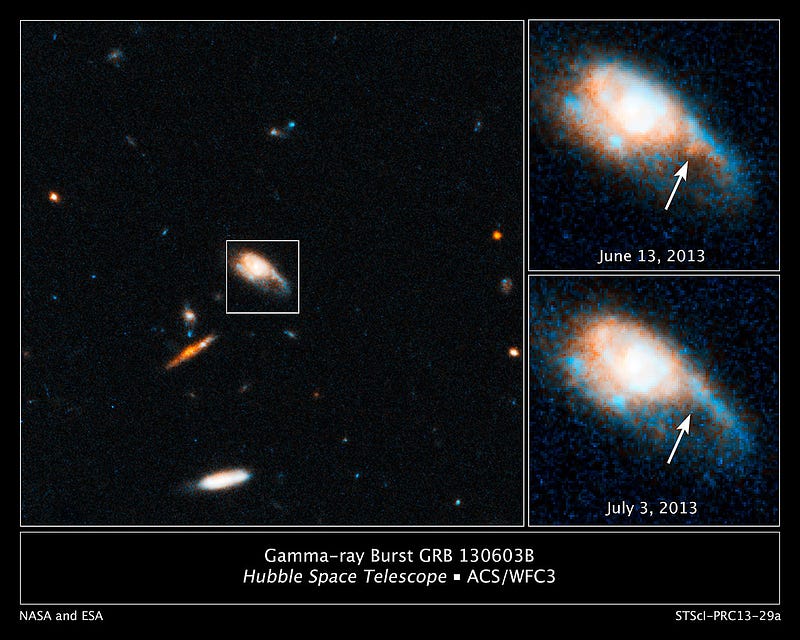
Gamma-ray bursts (GRBs) are incredibly powerful and energetic explosions that emit gamma rays, the most energetic form of light.
GRBs can last anywhere from a few milliseconds to minutes and have been detected in galaxies up to 8 billion light-years away.
While GRBs were first discovered in the 1960s, the origin of these phenomena was still unknown until the 1990s.
It is now believed that GRBs are caused by the collapse of massive stars or the merging of two neutron stars. In the event of a nearby GRB, the extreme radiation emitted could cause severe damage on a global scale.
In the next 100 years, a GRB could be catastrophic enough to end life on Earth as we know it.
6- Nuclear Holocaust — The Looming Threat Of A Global Conflict
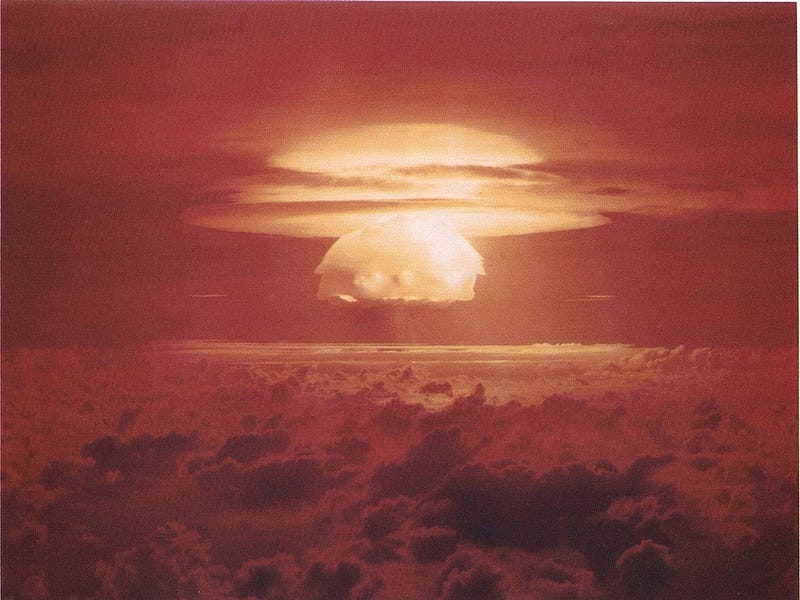
The potential for a nuclear holocaust is one of the most feared doomsday scenarios, and with good reason. In the current geopolitical climate, there are still nuclear weapons on hair-trigger alert around the world.
One nuclear exchange could easily spiral into a full-blown conflict, where multiple countries would launch nuclear weapons at each other and bring about an apocalypse.
A war between two major powers, like India and Pakistan, could cause a nuclear winter that would affect much of the globe.
The resulting environmental damage and radiation poisoning could render large areas of the planet uninhabitable, leading to the collapse of human civilization.
Even if we somehow manage to avoid a full-scale nuclear conflict, a single, catastrophic accident could still lead to the release of massive amounts of radiation, which could have disastrous repercussions for the ecosystem and human health.
5- Supervolcano — Preparing For The Worst
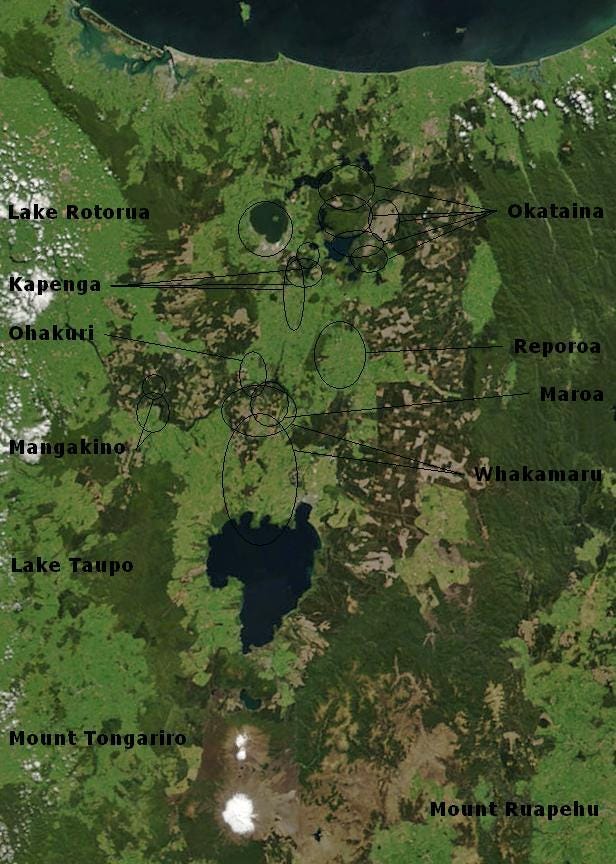
A supervolcano is an eruption of a volcano that is far more powerful than the normal kind. It is capable of ejecting huge amounts of ash, lava, and toxic gases into the atmosphere, which can spread over large distances and cause severe destruction.
Supervolcanoes have occurred in the past and could happen again in the next 100 years. The most recent supervolcano eruption occurred at Yellowstone National Park in the United States in 640,000 BCE.
It ejected 250 cubic miles of magma and ash into the atmosphere, covering half the continent in debris. If a similar eruption were to occur again shortly, it would have disastrous consequences for the planet.
Not only would it trigger a global cooling period due to the particles blocking out the sun’s rays, but also it would drastically change the landscape and force people to move away from affected areas.
Additionally, there could be further consequences such as a decrease in agricultural production, disruption of communication networks and transportation routes, and even mass starvation.
We must be aware of the potential danger posed by supervolcanoes and take necessary precautions to minimize the damage they can cause.
4- Black Hole — The Unthinkable

Black Holes are perhaps the most mysterious phenomenon in the universe. The immense gravitational pull of a Black Hole is so powerful that it can suck in anything, even light, creating an area of darkness.
In theory, if a supermassive Black Hole were to form close enough to Earth, its gravity could cause our planet to be sucked in and destroyed.
While this scenario is unlikely, the possibility remains that such an event could occur in the next 100 years. If a Black Hole does appear close to us, there is no known way to stop it from devouring the Earth.
As such, it remains one of the potential threats that could bring about the end of humanity as we know it.
3- Artificial Intelligence/ Nanotechnology —Will Robots Take Over And Destroy The World?

The advancement in the field of Artificial Intelligence (AI) and nanotechnology has been phenomenal in the last decade.
With the rise of automation and robotics, these technologies have become an integral part of our lives. The rapid development of AI and nanotechnology could have potentially catastrophic consequences for humanity in the next hundred years.
AI could be used to create autonomous weapons or machines that are programmed to think and act like humans. This could lead to a situation where humans have no control over their destinies as machines take over decision-making processes.
Similarly, nanotechnology has the potential to create self-replicating machines which could reproduce uncontrollably and create global chaos.
There is also a chance that these technologies will be used to create a new species or race of super-intelligent beings that would be far more advanced than humans, leading to a new age where humans no longer dominate the planet.
2- Climate Change — The Surprising Thing You Need To Know
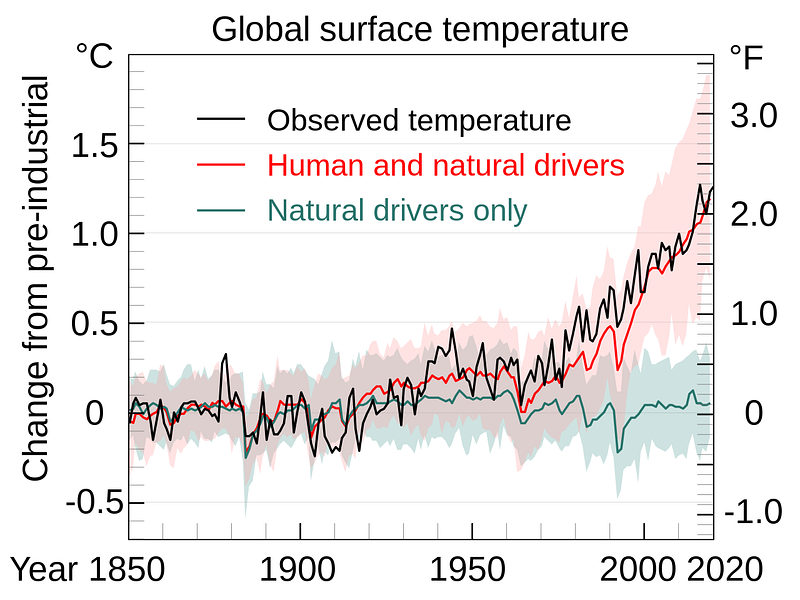
Climate change is a pressing issue that has been widely discussed in recent years. It refers to the increasing global average temperature due to an increase in greenhouse gas emissions caused by human activities such as the burning of fossil fuels, industrial processes, and deforestation.
Climate change poses a major threat to humanity and all living things on the planet. It can lead to rising sea levels, more frequent and intense storms, changes in precipitation patterns, droughts, and extreme weather events such as heat waves and floods.
These changes could lead to mass displacement, famine, and species extinction. To combat the effects of climate change, individuals and governments need to act quickly by reducing greenhouse gas emissions by investing in renewable energy sources and adopting sustainable practices.
We must take action now to ensure that future generations have the same opportunities that we have today.
1- Asteroid — Is It A Threat To Earth?
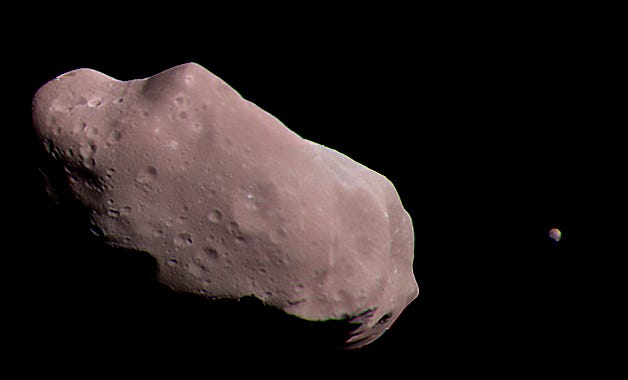
The possibility of an asteroid causing the end of the world has been around for some time. An asteroid strike is potentially one of the most devastating events that can happen in the next 100 years.
The potential destruction from an asteroid impact is far greater than any other natural disaster, as it could affect a large area and cause significant damage.
To mitigate the risk of such an event, various space programs have been launched to monitor near-Earth objects and identify any potential threats.
It is also important to be aware that while an asteroid strike is one of the most likely causes of the world ending in the next 100 years, it is still relatively unlikely to occur.
Therefore, we must not become overly concerned about this threat and should instead focus on other more pressing issues.
Points To Ponder
No one can say with certainty how the world might end in the next 100 years, but it will certainly come to an end one day.
The best thing we can do is to be aware of potential threats and to take preventative steps to ensure that our planet is safe for future generations.
We must be vigilant in addressing environmental issues, mitigating potential disasters, and protecting against potential human-caused catastrophes.
It is our collective responsibility to safeguard the future of our planet and its inhabitants.
Join Medium Today
More from the author:


.jpg)