
7 Fascinating Ways In Which Tutankhamun’s Tomb Still Resonates Today
The fate of King Tut, the world’s most famous pharaoh, and the study of ancient Egypt continue to hold discoveries, lessons — and warnings — for our time.
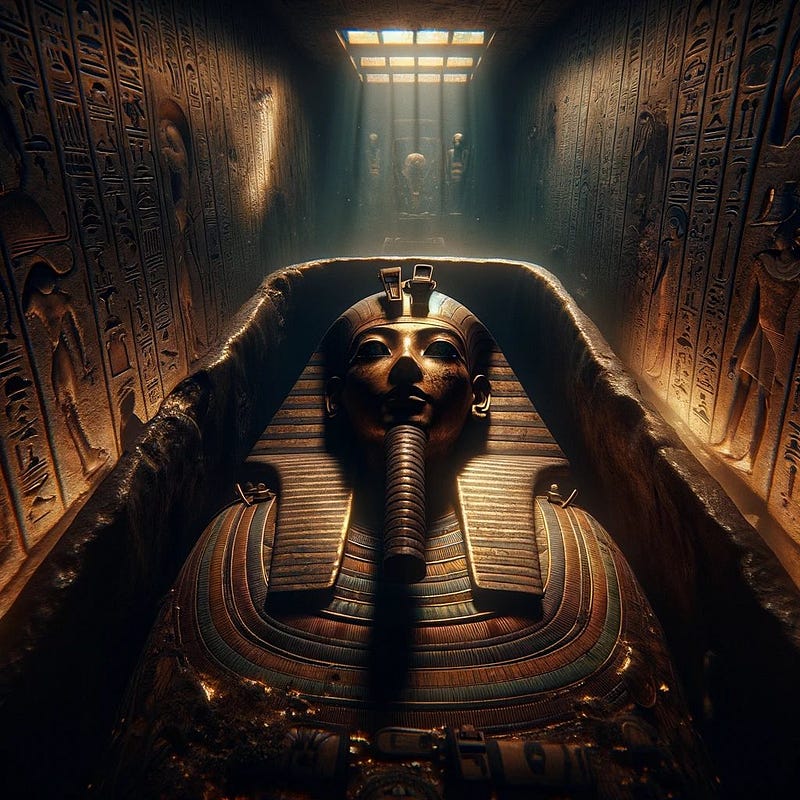
Why would anyone care about a teenage king who’s been dead for 3,347 years?
It’s been over a century since the discovery of Tutankhamun's tomb in 1922. Dead at 19, we’ve turned King Tut into the world’s most famous pharaoh since his unearthing. (Peter Preskar has made the basics of Tut’s life available here—thanks, Peter!)
Two years ago, celebrating the centennial of the tomb’s discovery, National Geographic launched the exhibition “Beyond King Tut: The Immersive Experience,” which has been circulating globally and is perhaps coming to a city near you.
However, regardless of your interest in pyramids, tomb-raiding, or Egyptian mummies, the discovery of King Tut and the ongoing efforts to preserve our shared archaeological heritage are of profound — sorry for the pun — value.
Here are seven reasons why Tutankhamun’s tomb and the preservation of our past matter more than you think.
1. A lesson in forms of government
The study of ancient Egypt and its many tombs has shed light on a deeply religious form of government: theocracy.
In it, the political leader is also the head of religion, holding rituals and ceremonies related to the “ever after” and not just the administration of the “here and now.” In Egypt, pharaohs combined both roles in a way that was unimaginable even in the European Middle Ages, when the Church anointed kings — or popes, cardinals, and bishops officiated the faith but also played political arm-wrestling across Europe.
Another close example, but not quite, is Ancient Rome. There, emperors were supposed to become gods at death, but it’s unlikely that your average Roman sincerely believed in praying to her former imperial administrators.
And hey, before you casually blurt out a “that’s cool!” to the idea of religiously themed politics, consider that under this form of government, whoever can credibly say that they’ve spoken to God, the gods, or with this or that deity has the last word in public matters — or believes he should. So, good luck having a reasonable conversation with such a neighbor or leader.
A case in point is Akhenaten, Tut’s father, who, for reasons still unknown, one happy morning decided to overturn the pantheon of Egyptian gods for the adoration of a single sun god, Aten — similar to how the Roman emperor Aurelian would try to rally up the empire, 1,600 years later, behind the cult of a single deity, Sol Invictus.
Our man in Thebes wanted a different religion, so who would argue?
Despite getting his way, Akhenaten probably ticked off most of Egypt’s priests so that when his nine-year-old son became pharaoh, they lost no time getting the young monarch to revert his father’s one-man cult to their former potpourri pantheon. They also destroyed or chipped off every single trace of Akhenaten’s face and name across the empire for good measure.
For us, Egyptian politics are a reminder of what theocracy looks like. How unjust, unpredictable, and ultimately unstable any hyper-centralized form of government that doesn’t really respond to the people — or have checks and balances to tame it — is bound to become.
2. A source of beauty and artistic value
If not for anything else, King Tut’s tomb has captured our imaginations with the sheer beauty of the decorations and objects inside.
From the incredibly preserved painted walls and golden chariots to the hundreds of precious gems that decorate his 3-in-1 jaw-droppingly beautiful sarcophagi (weighing a whopping 1.5 tons in gold, jewels, and wood), the young king’s funeral cache is full of surprises.
My favorite item? A golden dagger whose blade is made out of meteorite iron.
Composers, painters, writers, and artists have been equally shocked. Tut’s tomb hadn’t been discovered yet. Still, the findings from other excavations in the Egyptian Valley of the Kings inspired composer Giuseppe Verdi to compose Aida at the behest of his friend Auguste Mariette, a French Egyptologist.
Artistic movements, creators, and works spurred by ancient Egyptian aesthetics include:
- Art Deco (the Chrysler Building in New York — see the photo below — is chock-full of Egyptian elements),
- Paul Poiret’s fashion designs (Poiret was the maximum figure in haute couture in the early 20th century),
- Many of Agatha Christie’s novels (her second, happier marriage was to an archaeologist, no less),
- Painters such as Jean-Michel Basquiat, Leonora Carrington, and Remedios Varo,
- Contemporary musicians, such as Philip Glass, composed an opera based on the life of Tut’s father, Akhenaten.

3. An example of the power of propaganda
The Egyptian ruling class was supported not just by slaves at whip-point but also by millions of common folks and laborers who believed in the importance of upholding (sometimes literally) their political and religious institutions — or had little alternative if they didn’t.
For those of us who are a little more jaded, such a religious apparatus surrounding the pharaohs can remind us how easily figures of authority can manipulate people.
It’s been said that the measure of an ancient society’s exploitation and enforced suffering is the size of its monuments and temples (invariably built through blood, sweat, and tears.)
Pyramids, mausoleums, and monumental temples make for significant historical landmarks, but oh, if the people — and pack animals! — who perished making them could speak.
In fact, one theory about why Egyptian writing, using hieroglyphs, became so sophisticated is that it was used to keep track of the thousands of workers and resources needed to build their pyramids, sphinxes, and temples.
If the magnitude of Egyptian slave labor made complex bookkeeping necessary, now imagine the propaganda and showmanship involved as well.
4. A benchmark for our civilization
The rise and fall of past civilizations warn about the likelihood of our current global civilization rising and falling. Jared Diamond’s 2004 book Collapse covers this in fascinating detail.
If the ancient Egyptians eventually bit the desert dust, so can we.
Not all slaves or laborers in Egypt received their lashes without a fight. We know from the Old Testament that the Israelites were among Egypt’s subjugated peoples until they finally made a run for it and escaped to the desert under the lead of a charismatic fellow named Moses.
Some 300 years after the Israelis’ skedaddle, a major “labor strike” occurred. The villagers of Deir el-Medina, who were workers and artisans charged with building the tombs in the Valley of the Kings (just outside Thebes, current-day Luxor), put down their tools and marched to the Pharaoh’s palace until they received their overdue payment. They must have been difficult to replace — they weren’t used as chariot axle grease but had their demands surprisingly met.
The study of ancient Egypt also reminds us that an informed citizenry that understands its shared history is better equipped to protect democratic values and human rights and participate in civic life. Knowledge of historical struggles for rights and freedoms — even defending them by force, as many countries and resistance movements did in WWII — can motivate individuals to participate in democratic processes and advocate for justice and equality.
5. A window into many other worlds and cultures
The lapis lazuli found in several pieces of jewelry in Tutankhamun’s tomb, including his death mask, came from as far away as Afghanistan. The gold throughout his tomb came from Nubia, which was then under Egyptian control but, several centuries later, would have pharaohs of its own (!) ruling Egypt. The design of the composite or two-material bows in Tut’s tomb was taken from the neighboring Hittites. The ebony used in chairs and boxes also stored in the chamber came from tropical Africa, while ivory originated from sorrowful elephants either in the southern continent or Asia.
Our archaeological findings on ancient Egypt are a window into trade and cultural contact between the people of the Nile and dozens of other civilizations from that time — as well as the state of technology and scientific knowledge acquired across these lands.
6. A wellspring of the love of learning and multicultural appreciation
Thinking of what King Tut might need or want throughout eternity, his tomb was equipped with walking sticks (the poor guy had terrible spinal problems and a clubbed foot), board games like Senet (which I’ve written about here), and fine perfumes.
A three-thousand-year-old tomb draws attention to our differences but also to our many commonalities. We’re all just human.
As any book lover can tell you, studying history fosters curiosity, a love of learning, and a thirst for travel. Learning about the Egyptians, Persians, Minoans, Romans, and numerous Chinese dynasties — just to mention a few examples — makes us appreciate different cultures and eras and recognize how similar other people's lives and struggles were to ours.
Finally, we’ve come to my favorite:
7. “Them wily Egyptians” knew things we still haven’t figured out
The recovery of our past can also be a source of knowledge that rivals and sometimes surpasses what we know today.
The Egyptians’ water management practices, using irrigation systems, canals, and reservoirs, and their control of the periodical flooding of the Nile are still being studied — and are once again of special value. Hello, climate change!
The extremely long-lasting pigments used by the Egyptians in their wall paintings still baffle us. So do some aspects of their mummification techniques, which we can’t entirely replicate to this day (not that we’d want to — yuck.)
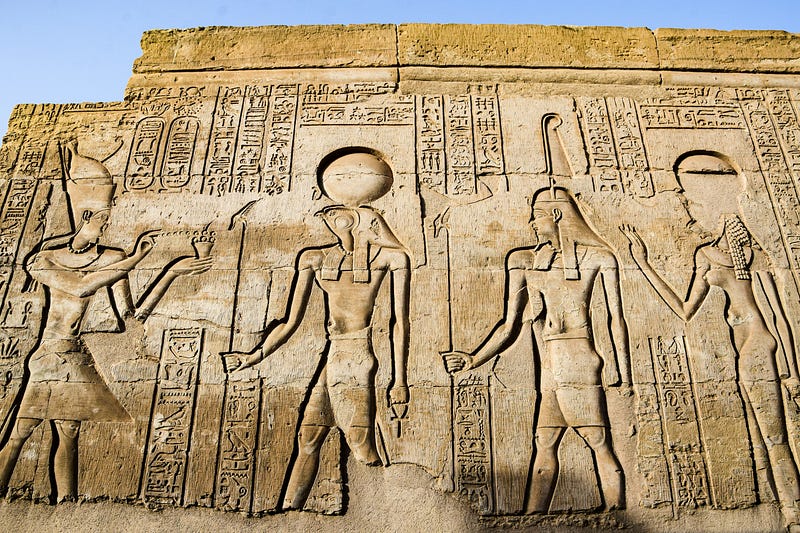
And finally, although it’s easy to brush off their convoluted and even fantastical beliefs about the afterlife, where gods had animal heads and baboons were the guardians of mystical wisdom, can we be entirely sure they weren’t on to something? 😉
Post scriptum
It’s interesting to see how the stances of governments on excavating local tombs of archaeological significance vary greatly. Egypt has no issue with the study of its pharaoh-land, which is still partly buried in sand. However, the Chinese government has prohibited almost all excavations in its own "Valley of the Kings" near the city of Xi’an, of terracotta warrior fame. It argues that the resting place of hundreds of former Chinese kings — no matter how old — should not be desecrated.
Who do you think is right?
References
- Hessler, Peter. “Meet King Tut’s Father, Egypt’s First Revolutionary.” National Geographic, May 2017. https://www.nationalgeographic.com/magazine/article/akhenaten-revolutionary-egypt-king.
- Lesko, Leonard H., ed. Pharaoh’s Workers: The Villagers of Deir el Medina. Cornell University Press, 1994. https://www.jstor.org/stable/10.7591/j.ctv2n7mrq.
- Man, John. The Terra Cotta Army: China’s First Emperor and the Birth of a Nation. Pegasus Books, 2008.
- Osborne, Charles. “The Plot of ‘Aida’.” The Musical Times 110, no. 1520 (October 1969): 1034–1036. https://www.jstor.org/stable/953418.
- Pace, Eric. “Some ‘Gems’ in Tut Tomb Are Glass.” The New York Times, July 21, 1976. https://www.nytimes.com/1976/07/21/archives/some-gems-in-tut-tomb-are-glass.html.
- Shaw, Ian, ed. The Oxford History of Ancient Egypt. Oxford University Press, 2000.