
7 Facts About The New Boeing 777–9
One of two aircraft in the 777X line. Will there be a 777–10?

Aviation geeks are an odd bunch. Most have collected every item that could be taken from an airplane with an airline’s logo.
So many tchotchkes are no longer produced — TWA and USAir had individual soaps in the lavatories. Collected. United had little portfolios onboard with paper, envelopes, and postcards. Collected. Aircraft emergency cards and barf bags? All were fair game for collectors.
It all boils down to a love for airplanes and airlines. They are sentimental and miss the old airlines that are no longer around. But take a look at eBay; these items and many more are being sold at outrageous prices. One man’s trash is another man’s treasure.
I am one of those geeks.
One of the biggest deals in our world is when a brand-new airplane rolls off the assembly line for the first time. Such is the case with the Boeing 777X line of jets. At least one prototype has been produced and tested, but the program is more than five years late due to snafus at Boeing (what else is new?) More on this below.
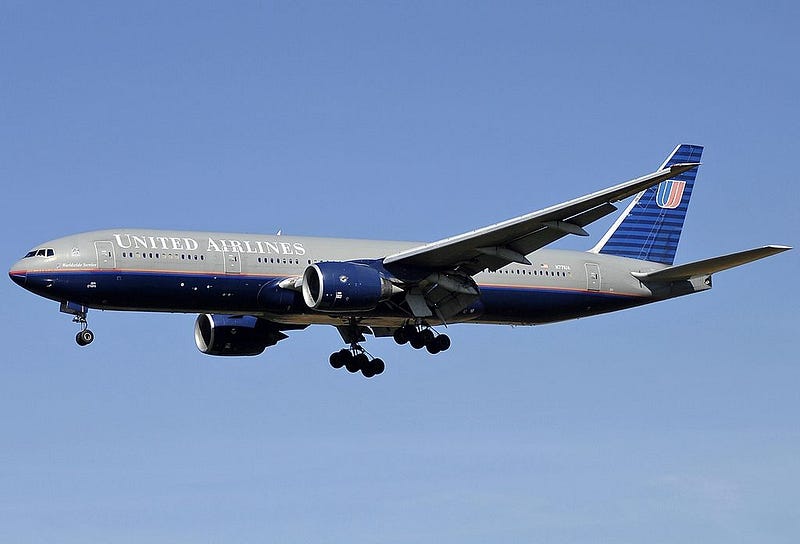
The first B-777s entered service in 1992, with United Airlines as its launch customer. It wasn’t until 1995 that I flew on one, that being from Los Angeles to Honolulu and back from Chicago.
I had earned a “free” trip through accruing loyalty points. I was a Premier Executive in United’s Mileage Plus program, which afforded me many privileges. (There was still a level above me, which I never achieved.) Imagine my delight when, on the way home, the four of us (wife and kids) were upgraded to business class!
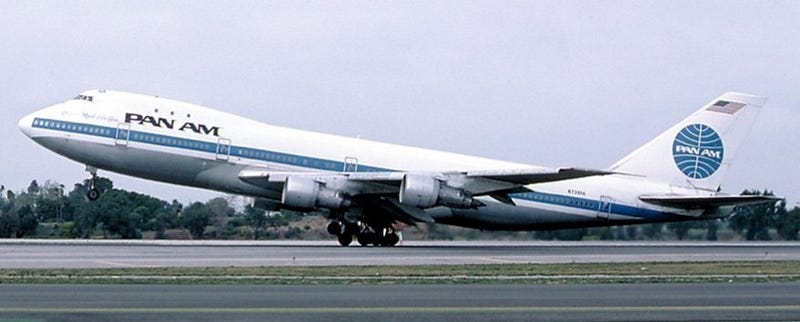
Nothing can beat the B-747 in terms of sheer beauty, but the “Queen of the Skies” is mainly replaced by jets with only two engines, which is far more economical than the four needed by the 747. What intrigued me the most about the 777 was the size of the engines. They are as big around as the cabin of the B-737. That’s a big-ass engine!
Nowadays, almost all transoceanic travel is flown by planes with just two engines. At the beginning of the jet age, four engines were required to cross the oceans. Then came the DC-10 and the L-1011 “TriStar” jets with three engines. Soon after their launch, they were approved for long “over-the-water” flights. The Boeing 767 was developed to be the first jetliner to cross the oceans with only two engines.
Between you and me, I’d rather cross the ocean on a plane with three or four engines. But the airline business is all about economy, with profit margins of only about 1.2% to 13.3%. During COVID-19, in 2020, airlines showed no profits.
Airbus has its own story, but that is another article.
In 1998, I had the privilege of landing a job with United. For an aviation geek like me, it was a dream come true. For twelve years, I did things and went places I never imagined. Presentation skills were a required part of our training, and luckily, my subject was the 777. The theme of my presentation was “Triple 7 Heaven.” It became very popular as an example in the sales training program at United!
But for now, let’s get back to the Boeing 777-9.
It is not the world’s largest jetliner. That belongs to the double-decker A380. In a high-capacity configuration, it can hold up to 853 passengers! But it is usually broken down into three or four classes of service, with a common configuration of up to 500. The aircraft is no longer being produced — it has become too big and expensive for most airlines except Emirates and a couple of others.
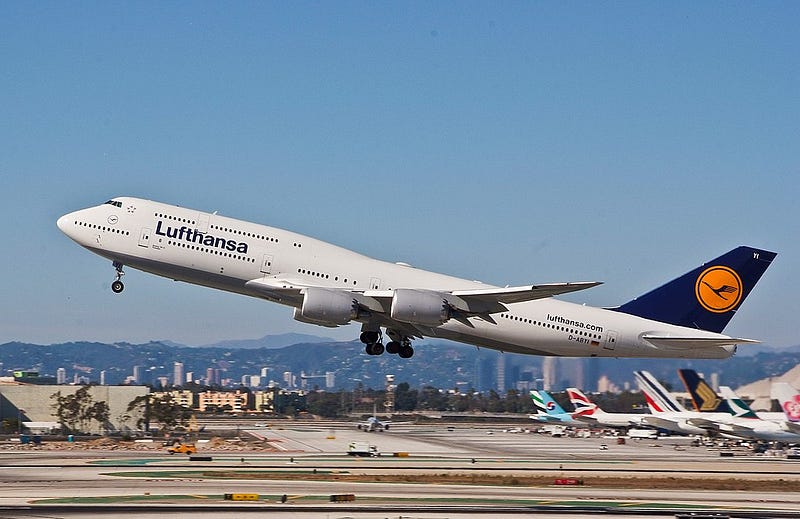
Depending on the parameters of the list, the second largest commercial jet is the Boeing 747–8. It, too, has ceased to be produced. The only carrier to still fly it is Lufthansa. It can accommodate up to 426 passengers.
Third up is the new Boeing 777X Series, with the -9 being slightly larger than the -8. Planes this big are built for long-haul international markets.
Planes are sized according to the markets they will serve. Most domestic flights are all about frequency. For instance, American might have as many as 13 flights a day from Los Angeles to Dallas/Ft. Worth, but they would all be operated on smaller, narrow-body aircraft. However, from Los Angeles to Hong Kong, there may only be enough passengers to operate one flight a day, which would be operated using a wide-body plane. The passengers per day and the distance dictate what aircraft to use, among other variables.
Today, airlines are more agile than ever to match the capacity of the aircraft with passenger demand on a given route. Technology and historical data enable them to do this, sometimes switching aircraft at a moment’s notice.
The Boeing 777X series is their newest entry into the long-haul market. With two major aircraft manufacturers, Airbus and Boeing, one always tries to outdo the other. The 777X is Boeing’s answer to Airbus’ A350 series.
While the first test flight of the 777–9 was made in 2020, production of the aircraft was paused several times due to technical glitches, FAA mandates, and COVID-19. First deliveries to the airlines are now scheduled for 2025.
Here, then, are the seven facts to remember about this aircraft:
1-Length
The -9 series is 251’9” long, while the -8 is 232’6”. It is the longest aircraft in its class, beating the B-747–8 by 1’7”.
2-Wingspan
The wingspan is 235'5". It also has the only retractable wings, enabling it to fit into narrow gates at airports. The wing’s surface has been enlarged as well for added fuel capacity.
3-Maximum Seating
Depending on the airline’s configuration, the -9 series can handle between 414 and 426 passengers. The -8 can seat up to 395.
4-Height
The -8 series is 63’11”, while the -9 is 64’7”. Compare this to the A-380, at a monstrous 79’!
5-Width
The 777-9 outside fuselage measures 20’4” wide, while the inside is 19’7” at its widest. Only 9 inches are separating you from…oblivion. Think about that!
6-Range
The range of the 777-9 is 8,383 ground miles, while the -8’s range is 10,050 miles. But the king in this category is the Airbus A350–1000ULR (ultra long range). Operated by Singapore Airlines, it flies both of the longest airline routes in the world: Singapore-New York (JFK) at 18 hours and 50 minutes and Singapore-Newark at 18 hours and 25 minutes. (You’d save so much time flying from Newark!)
7-Price Tag
Just one 777-9 has a $442–450 million price! I can’t even begin calculating how many flights it would take to break even!
You might have noticed I did not include speed as one of the seven elements. Speed is highly variable, based on weight (cargo, passengers, fuel). There are also various ways to measure speed. But with an average load factor, the B777-9 flies at about 564 miles per hour. Most aircraft, at 35,000 feet, fly between 550 and 600 mph. Depending on the headwinds or tailwinds, the planes may fly slower or a lot faster.
FUN FACT: The fastest-ever flight from New York/JFK to London was set in 2020 by a British Airways B747–400. Its maximum ground speed was 825 mph, and the flight only took four hours and fifty-six minutes!
FUN FACT 2: Boeing has had to postpone its next-generation jet, popularly known as the B-797. It was meant to offer airlines a mid-size, long-distance plane to compete with the Airbus A321-XLR.
Well, I could go on and on, but this is a good place to stop!
Author’s Note: Chances are, some aviation geeks will challenge some of the statistics in this story. That’s what we do — oneupmanship in knowledge! Like, “I know more than you do!” Based on my sources, I have given the most accurate accounting possible!
Sources include:
- “Top 10 Largest Passenger Planes” by Feross Bessadeg on travelness.com, 10/16/2023
- “The 10 Longest Nonstop Flights in the World” by Erin Miller on upgradedpoints.com, 12/20/2023
- “How Boeing names its aircraft” by Daniel Fowkes on FlightRadar24.com, 9/27/2023
- “Can the Boeing 777–10 Replace The Airbus A380?” by Daniel Fowkes on djsaviation.com, 11/19/2023
- “Jet Speeds Uncovered: How Fast Do Commercial Airplanes Fly?” by Samantha Black on thrustflight.com, 7/1/2023
- “Top 10 biggest commercial airplanes in the world in 2024” by AeroTime Team on aerotime.aero, 11/21/2023
More on aviation from Arthur Keith:
Author’s Note: I have a 280-plus story back catalog of articles dealing with subjects I like to write about, and I hope you’ll find something that piques your interest. They include aviation, music, geography, gardening, pop culture, LGBTQ culture, The Southwest/Megadrought/The Colorado River, and my late son. I often weave my journey into each. It’s worth $5/month or $50/year to read stories from all the great writers on Medium.com. Consider it like your own magazine!


.jpg)
