
7 Disturbing Historical Facts Hidden From Textbooks
Disturbing facts ignored by schools — Shedding light on the darkness.


History is full of dark and disturbing facts that are often left out of the curriculum in most schools.
From acts of genocide to events of great suffering, numerous stories from the past have been left untold.
These dark and disturbing facts can be uncomfortable to learn, but they can also give us insight into the human experience and why certain events still have a lasting impact on our society today.
In this post, we will discuss 7 of the most disturbing historical facts that you won’t learn in school.
7- The Most Stolen Artwork In History — Ghent Altar Piece
It is believed to be the oldest surviving polyptych altarpiece in the world, and its theft has had a long and complex history.
The Ghent Altar Piece was created in 1432, and it has been on display in St. Bavo Cathedral since 1515. Over the centuries, it has become one of the most revered pieces of art in all of Europe.
Unfortunately, it was not safe from thieves. The altarpiece was stolen twice: first in April 1934, and then again in April 1945.
The first theft was carried out by an unknown group of criminals who made off with the work after cutting it out of the frame and taking it away on a truck.
Fortunately, authorities were able to recover the piece before it left Belgium. The second theft was more sinister, as the piece was taken by German forces who had invaded Belgium during World War II.
It is believed that the Nazis intended to bring the altarpiece back to Germany, but their plans were foiled when Allied forces took control of the city of Ghent.
Despite being stolen twice, the Ghent Altar Piece remains a testament to artistry and resilience. It has survived centuries of turmoil, wars, and thefts and still stands as one of the most beloved works of art in all of Europe.
6- Tsutomu Yamaguchi — Survive Both The Nuclear Attacks On Hiroshima And Nagasaki


Tsutomu Yamaguchi was an engineer who had gone to Hiroshima for business on August 6th, 1945. Little did he know that his life would take a drastic turn that fateful day.
At 8:15 am, an atomic bomb exploded over the city, making him one of the few survivors of the event. Unbelievably, Tsutomu survived the attack and returned to his hometown of Nagasaki three days later.
On August 9th, another atomic bomb exploded over Nagasaki and Tsutomu was in the middle of it all again. He somehow managed to survive both bombings, though he suffered permanent injuries due to radiation.
Tsutomu Yamaguchi is now remembered as the only person to have survived both nuclear attacks. Dedicated the rest of his life to speaking out against the horror of nuclear warfare and the need for disarmament.
To honor his courage and spirit, he was posthumously awarded the Order of the Rising Sun with the Paulownia Flowers by the Japanese Government in 2010.
5- Arabic Numerical System Used In The West — The Ancient Indian Mathematicians


Contrary to popular belief, the Arabic Numerical System used in the West today was not invented by the Arabs. The system originated with the ancient Indian mathematicians, who developed a positional numbering system in the 5th century BC.
The system was later adapted by the Persian mathematician al-Khwarizmi around 825 AD and introduced to the West by the Italian mathematician Fibonacci in 1202.
The Arabic Numerals are based on ten symbols (0,1,2,3,4,5,6,7,8,9) that represent values depending on their position. This makes them incredibly versatile and allows for complex calculations to be done easily and quickly.
Despite its Indian origins, it was the Arab scholars who developed and spread it throughout the world, which is why they are known as the “Arabic Numerals” today.
Today, these numerals are used widely across the world and are essential for anyone looking to study or understand mathematics. They are often seen in everyday objects such as clocks, phones, computers, and calculators.
Without the development of this system, many of the advances in mathematics and technology we have today would simply not be possible.
4- King Of France For Less Than 20 Minutes — Duke Of Angouleme


Louis Antoine de Bourbon-Artois was the Duke of Angouleme and an unlikely candidate for King of France. He was a distant cousin to the last reigning king, Charles X, and did not expect to rule.
However, during the July Revolution of 1830, the French monarchy was overthrown, and Louis was thrust into the spotlight.
Despite his age, he was declared king on July 9th and reigned for less than 20 minutes before abdicating the throne. He lived the rest of his life in exile, leaving behind a brief moment in history that few are aware of.
3- The Misfortunes Of A French Scientist — Missed Out On The Metric System
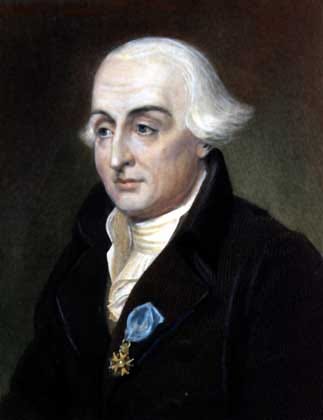
Joseph Louis Lagrange, an 18th-century mathematician, and physicist from France are largely responsible for the metric system not taking hold in the United States.
Developed the system in 1790 and proposed it to the US Congress in 1793 but it was rejected due to political and economic concerns.
Lagrange was a highly respected scientist at the time and had even been made a member of the French Academy of Sciences.
Despite his efforts, the proposal never gained traction in the US and the nation continued to rely on its existing measurement systems.
Lagrange’s work was essential to the development of the metric system but unfortunately, never got to see it adopted in the US due to the lack of political will to make the necessary changes.
2- Most Accomplished Thief — Quintus Servillus Caepio
Caepio was an officer in the Roman army, who was placed in charge of a large army detachment and was sent to plunder the ancient city of Tolosa in 106 BC.
He was successful in his mission, stealing immense amounts of gold and silver from the city. The loot was so immense that it was even commented upon by Roman historians.
However, Caepio was not content with what he had plundered. In 105 BC, he set out to steal a golden statue of the goddess Victory.
Although he was stopped in his mission, Caepio refused to give up and decided to attack another city; this time, he succeeded in stealing the statue of Victory as well as other precious items.
It is thought that Caepio’s success as a thief can be attributed to his ability to pick locks and use cunning tactics. He also had an eye for detail, which allowed him to pick out vulnerable targets.
Despite his successes, Caepio’s military career failed and he eventually retired from service. Caepio may have been a terrible general, but he certainly had a knack for thieving.
Although his actions were condemned by many, his name remains in history as one of the most accomplished thieves of all time.
1- The Oldest Existing Parliament — Iceland

The Althing, which is believed to have been founded in 930 AD, is the oldest existing parliament in the world. This legislative assembly, which is located in Iceland, is the longest-running parliament in the world and has been continuously active since its inception.
The Althing had an important role in shaping Icelandic culture, as it provided a platform for the resolution of disputes and established laws to govern the behavior of citizens.
The Althing is still operational today and serves as an advisory body to the Icelandic government. It has played an important role in Icelandic politics for centuries, and its influence can still be felt throughout the nation today.
Points To Ponder
History is a complex subject that often omits the most difficult and disturbing aspects of our past.
It is important to remember that some of the darkest periods of our history contain stories that should never be forgotten. While it can be uncomfortable to confront these truths, they are an integral part of our story.
From the immense tragedy of nuclear war to the strange misfortunes of nations and leaders, this post provides just a glimpse into some of the darker facts of history.
Whether we learn about them in school or not, it is up to us to keep their memory alive.
Join Medium Today
More from the author: