
69 years ago the first nuclear submarine was launched
The 100-meter nuclear submarine got its name after the beautiful and intriguing sea mollusks. In reality, it was a menacing machine whose design was reminiscent of Hitler’s World War II U-boats.
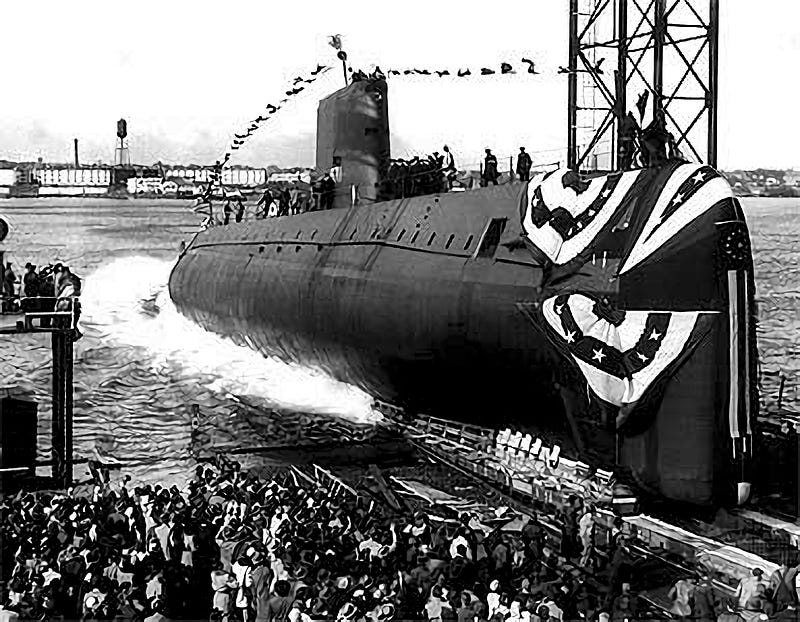

Its godmother was unusual: a bottle of champagne was smashed against the side by Mamie Eisenhower, the wife of the US president. The nearly 100-meter-long nuclear submarine had a displacement of about 4,000 tons. It was powered by a reactor of about 14,000 horsepower (10,000 kW). When submerged it reached a speed of 20 knots, when surfacing: 23 knots (43 km/hr). The crew consisted of 105 men. And although the vessel was state-of-the-art, its name — “Nautilus” — referred to the past.
Where did the ship’s name come from?
First of all, this was the name of the submarines of 1800 and 1801, which were designed for Napoleon by American engineer Robert Fulton. He used the Latin term for intriguing and beautiful marine mollusks of the boat genus in the name. Secondly, the US Navy alluded by name to the most famous submarine in the history of literature, which appeared in Julius Verne’s 19th-century novels “20,000 Miles of Undersea Navigation” and “The Mysterious Island.”
The vessel of the book’s Captain Nemo was a marvel of 19th-century technology. Powered by electricity, thickly armored, armed with a battering ram to sink enemy vessels and a long-range searchlight, the ship also had such luxuries as a saloon, library and organ on board. The 20th-century USS “Nautilus”, on the other hand, was equipped with a revolutionary atomic propulsion system, a cinema room, a Coca-Cola machine and a shipboard hi-fi system. In turn, its armament consisted of torpedoes.
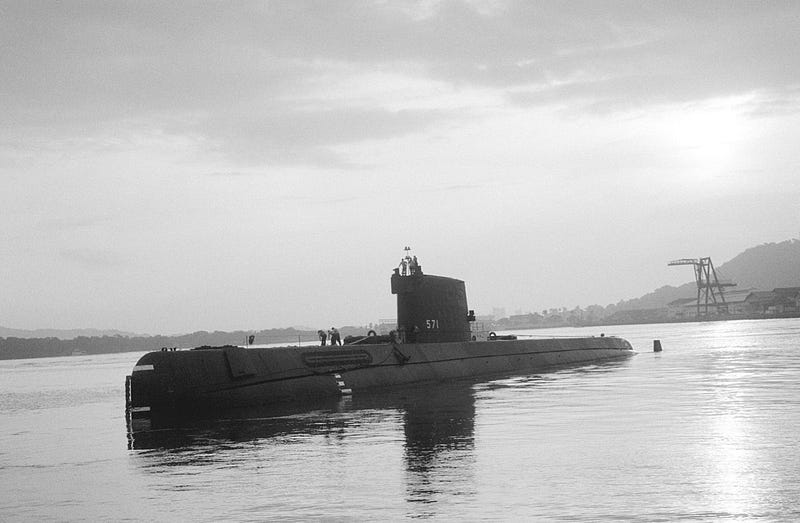
_as_it_is_towed_from_the_pier_at_US_Naval_Station_Rodman._The_NAUTILUS_is_en_route_to_its_-_DPLA_-_9c54a81f18faf29696177203078c3dfc.jpeg)
What is a submarine powered by?
Underneath the romantic and luxurious facade was a more sinister story. The very design of the American “Nautilus” alluded to Hitler’s ships. More specifically, to the ultra-modern Type XXI U-Boats, which entered service at the end of World War II.
Also, the nuclear propulsion of the “Nautilus,” while intended to give the US an advantage over the USSR during the Cold War, was still a reflection of the recent rivalry with the Third Reich. In 1938, German physicists Otto Hahn and Fritz Strassman and Austrian Lise Meitner discovered the phenomenon of nuclear fission. With this came the prospect of releasing and harnessing a gigantic amount of energy.
Initially, no one thought of a bomb. American scientists proposed that the US Navy construct a nuclear propulsion system for submarines. In the following years, however, the idea went by the wayside, as the focus was on the bomb. It was not revived until after World War II.
Atomic submarines had a much longer range than conventional submarines. They could stay submerged much longer, they did not need refueling, and they did not need to recharge their batteries — this gave them a powerful advantage. Not surprisingly, Moscow was also working on its own “nukes.” The first of these, the K-3 “Leninsky Komsomol,” was launched three and a half years after the USS “Nautilus.”

The first nuclear submarine under the pole
But the USS “Nautilus” was also useful for propaganda purposes. When the Soviets launched Sputnik 1 in 1957 and their presence in space caused shock among Americans, Washington decided to do something under the public eye. Therefore, in 1958, the USS “Nautilus” sailed under the North Pole. Quite like the book Captain Nemo, who also reached the pole, only that the South Pole. America has shown that it can still make dreams come true….
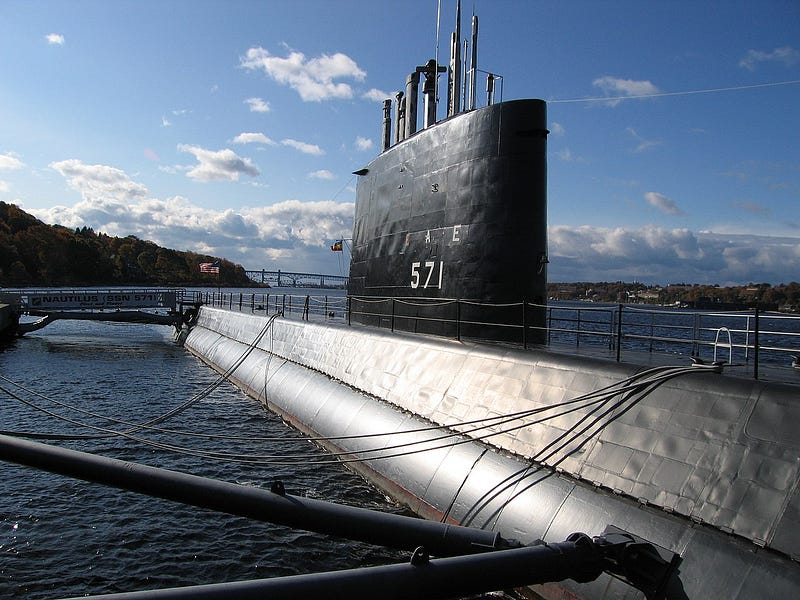
Propaganda with propaganda, but service on the USS “Nautilus” was not at all easy. The crew had to contend with tremendous noise, caused by vibrations and oscillations of the hull. It took a long study to level out the problem. Today, America’s former secret weapon can be visited by anyone. Since 1985, five years after she was withdrawn from service, the USS “Nautilus” has been an exhibit at the submarine museum in New London.
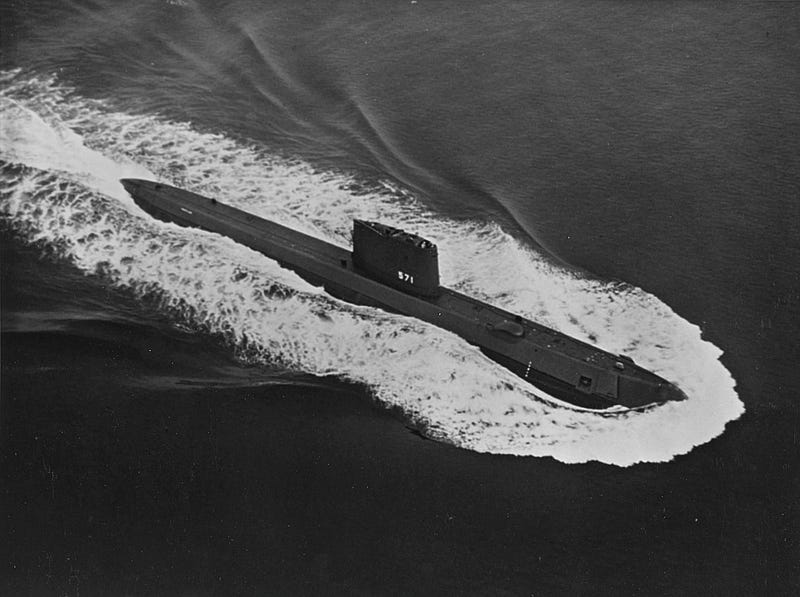
_underway_at_sea_in_June_1965.jpg)
Who owns nuclear submarines today?
Six countries currently have nuclear submarines in their fleets:
- United States,
- Russia,
- China,
- France,
- United Kingdom,
- India.
Cool that you made it to the end of this article. I will be very pleased if you appreciate the effort of creating it and leave some claps here, or maybe even start following me. It would be nice if you also left a tip! Thank you!