
6 Things You Need to Know About IOTA (MIOTA)
Tangle, Coordinator Node, Shimmer & Assembly Networks, and more!
IOTA is a distributed ledger platform powered by Directed Acyclic Graph (DAG) model. Unlike blockchains such as Bitcoin or Ethereum, IOTA does not have any miner to manage the transactions or propose the new blocks. Instead, IOTA uses its own technology called Tangle. Thanks to the innovative technology of Tangle, IOTA has leaderless consensus model, very low transaction fees, and very high throughput (tps).
In this story, I am going to explain 6 things you better need to know about this project. For more info, you can also check the official documentation of the project here.
#1 — Tangle vs. Blockchain
IOTA uses a distributed ledger technology called Tangle. The basic idea behind tangle is to use Directed Acyclic Graph (DAG) in which each message (transaction) is attached to two to eight previous ones. In that regard, there are two important differences between Tangle and Blockchain.
- Tangle does not need any miner or stacker. Unlike the blockchain model, there are no middlemen nodes to verify and propose the new blocks. All users can send their transactions to the network and these transactions will be instantly attached to the network according to some predefined rules and conditions (valid signatures / no double-spending of funds). Therefore, IOTA offers a very high throughput (transaction per second).
- In Tangle technology, there is no need to send transaction fees along with transactions because the network does not have any miner or stacker to collect them as incentives. Therefore, IOTA has very low transaction fees. The small possible fees are for spam avoiding.
Thanks to Tangle, IOTA’s distributed ledger in principle should be a leaderless protocol. However, in reality, it is not that decentralized (see the following section).
#2 — The Coordinator Node for Consensus
IOTA does not use PoW or PoS for reaching consensus between nodes. Instead, all nodes are reaching consensus by validating some milestones issued by a special network node, called “The Coordinator”.
To open the communication channel with the coordinator, all active nodes in the IOTA network register themselves with the Ed25519 signatures of a coordinator they trust. The Coordinator sends indexed milestones every 10 seconds and the nodes compare the indexes of their milestones to check whether they are synchronized with the rest of the network.
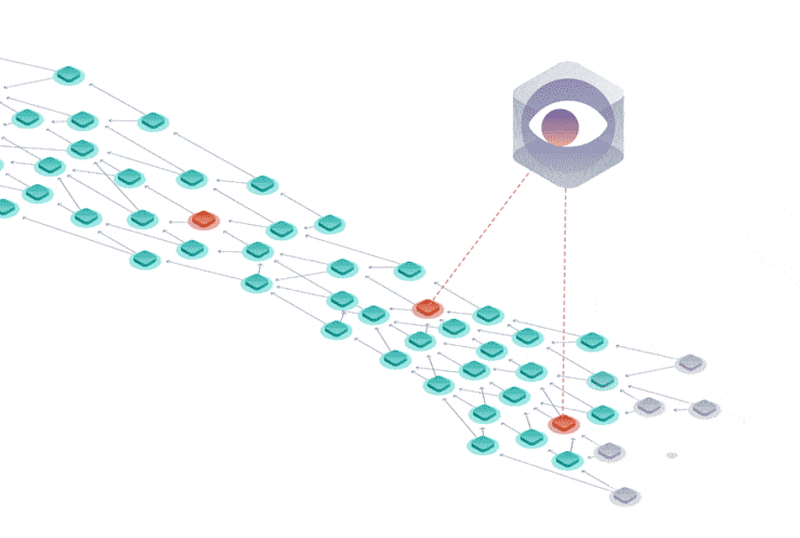
Coordinator Node is a centralized feature of the Tangle and is considered to be a temporary solution in IOTA 1.0.
#3 — IOTA Messages
All connected users to the IOTA (wallet, IoT devices, etc) can broadcast messages to the Tangle. These messages then will be received by the nodes and redistributed to the network. A gossip protocol is used for this purpose. Each node verifies incoming messages and sends them to its neighbors. This process continues until all nodes in the network sync their state with incoming messages.
Here are some interesting things you better know about these messages:
- every new message must reference 2–8 previous messages. The node selects these messages, sends them to the client, and the client will include them in part of the sent message to the node.
- messages are not allowed to have sizes of more than 32kb.
- a Proof of Work is done at the client level to avoid spam attacks. For this purpose, the client submits a nonce as part of their submitted data to the node.
- Messages may contain payloads. The three main payloads are Transaction Payload (e.g IOTA token), Milestone Payload, and Indexation Payload (any parsable data).
- Messages in the Tangle are confirmed by “milestone” messages issued by the Coordinator node.
#4 — Transactions Mechanics
In the IOTA ecosystem, there are mainly two types of players (users):
- Clients: humans or machines sending transactions to the Tangle.
- Nodes: bookkeepers of the network in charge of validating and distributing the incoming messages.
Clients and Nodes are communicating constantly with each other. Here is a summary of this communication process:
- The client prepare a signed transaction payload.
- The client connects to a node and asks the node to include valid tips in the message (to guarantee a valid ledger state).
- The Node uses an algorithm called Uniform Random Tip Selection (URTS) and selects between one and eight valid tip messages.
- The client will submit the message (with attached tips) to the node.
- The node will perform a set of verifications(readable message, a valid signature, double spending, etc.) to ensure that the incoming message has the correct format.
- The node will update its ledger state and send the update to its directly connected neighbor nodes.
- Using gossip protocol, the nodes redistribute the incoming traffic and the updated ledger state propagates in the Tangle in a few seconds.
- Once the message reaches the full confirmation, all nodes add it to their tip pool.
#5 — Shimmer & Assembly Network
In 2021, the IOTA foundation introduced two new networks in their ecosystem, called Shimmer and Assembly.
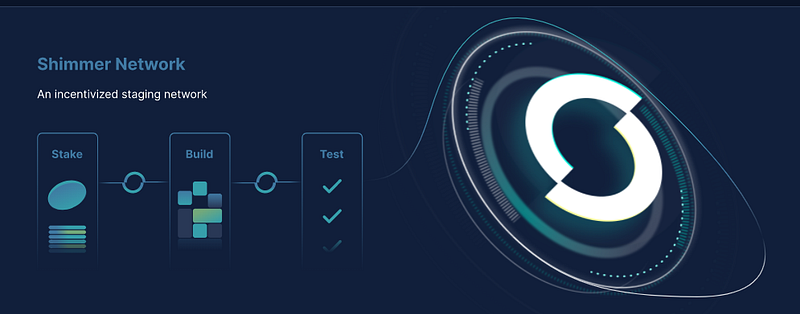
Shimmer is an incentivized staging network used mainly as a validation and staging layer for upcoming IOTA updates before they arrive on the mainnet. It has a native token called SMR. By staking IOTA on Shimmer, users can get the Shimmer Tokens.
Assembly is a permissionless Smart Contracts network. Assembly will function as an intermediate layer for permissionless and interoperable Smart Contracts. Assembly network also has its native token called ASMB. With a similar process, users can stake IOTA tokens to be eligible to receive ASMB tokens.
#6 — IOTA 2.0 (Coordicide)
At the time of writing this story, IOTA 2.0 DEVNET (Nectar Release) is live for testing purposes. IOTA 2.0 is the future of the IOTA project.
The main idea behind this release is to make the IOTA Tangle completely decentralized. As mentioned in the previous sections, the “Coordinator Node” managed by the IOTA foundation is in charge of validating the transactions in the network. This makes the tangle quite centralized.
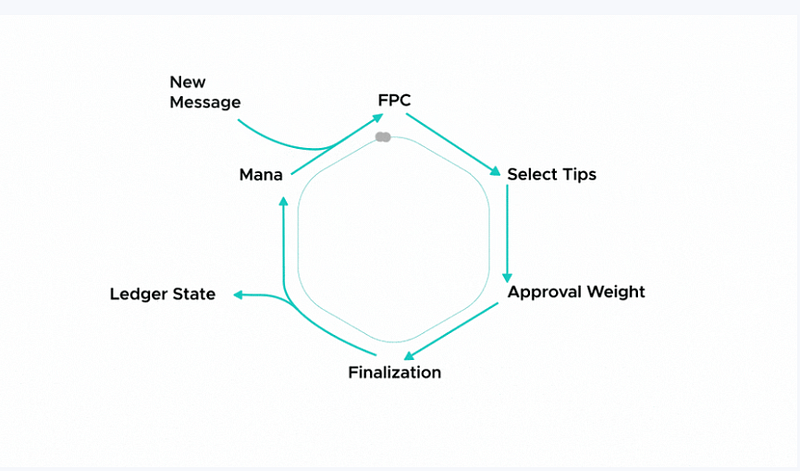
According to the official documentation of the IOTA, this is a summary of the new decentralized mechanism with IOTA 2.0:
- Messages enter the Tangle via the congestion control algorithm which manages access.
- Nodes vote on new conflicts using a voting protocol called FPC. This protocol decides which branches should be rejected. The voting process is protected from attacks by a reputation system that fairly limits the voters power (mana).
- After bad branches get rejected, tips are selected from the correct branches.
- As the correct branches gain more messages, their approval weight grows.
- Once a branch gets enough approval weight, its transactions are finalized and propagated to the ledger
- Mana is updated and determines the next FPC voters.
This article is for informational purposes only. It should not be considered Financial or Legal Advice. Not all information will be accurate. Consult a financial professional before making any major financial decisions.
If you enjoyed this content and feeling generous, please consider supporting me by donating to my ETH wallet:
0x1779c21F79D3F1e63960990818B5bF03e89CbfFE
If you are interested in reading my similar posts in the future, please consider joining medium with my referral link. If you sign up using my link, I’ll earn a small commission and you will have unlimited access to the content from all medium writers. That way, you will support me and your other favorite writers on the platform. Thanks.