
6 Things People Think Are Important in Wine But Are Actually Not
And 5 things no one cares about but definitely should
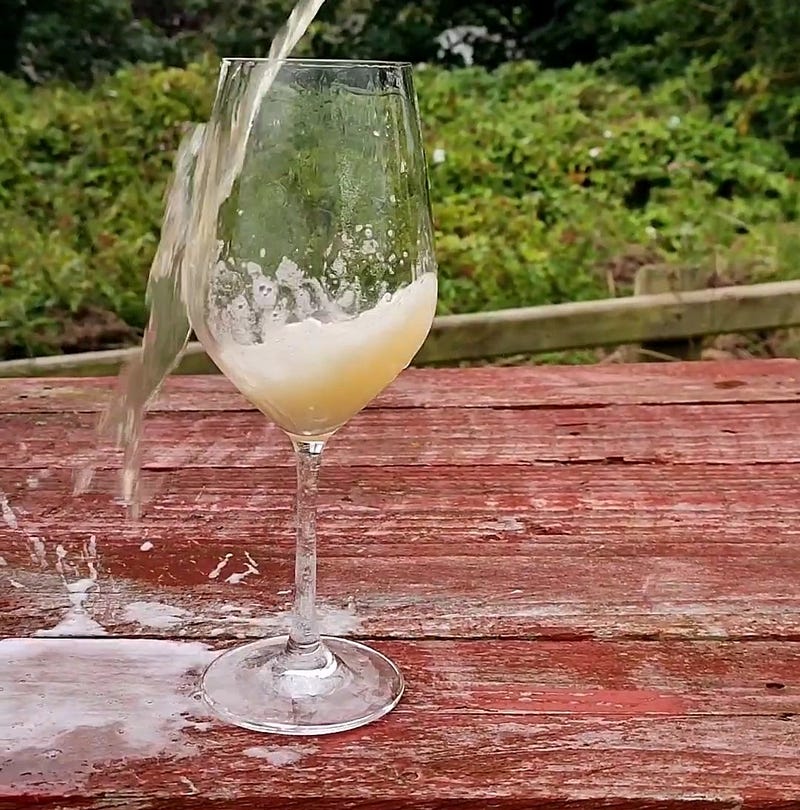
When it comes to wine, most people worry about the wrong things.
That’s not completely their fault. The wine industry is full of misinformation and clichés. And people have a very hard time letting go of snippets of information a wine pro once told them in the 1980s (times have changed, Dad, times have changed).
It’s also an incredibly complex subject which means it’s tempting to hold onto any little scrap of information that seemingly makes choosing wine easier, even when it’s false.
Then there are some incredibly important things that would make your wine-buying choices infinitely easier and better, but few people take notice.
Go figure.
Let’s sort the fake from the real.
Wine awards are not worth the tiny little sticker they’re printed on
Wine awards should be useful. The most prestigious award bodies have some of the best and most experienced wine professionals on their tasting panels. You should be able to trust them and choose bottles based on them.
You can’t. For these main reasons:
Wines are far more likely to win an award than not. Decanter World Wine awards for instance assessed 18,244 wines in 2022 and gave out 14,702 awards. An 80% award rate is not exactly discerning. And there’s a reason for this…
Many award bodies make their money selling the little stickers you see on the bottles. It’s in their interest to award as many wines as possible. Mo’ awards, mo’ money. Conflict of interest, much?
There are hundreds of awards around the world. To win one, simply play the numbers game. Enter as many as possible and someone is likely to award your wine, even if it’s terrible.
Most wines are tasted blind. I’ve been on blind wine-tasting panels and I can tell you now — they’re hard. You get palette fatigue, at which point it’s easy to be swayed by a big, explosive wine, even if it’s made terribly. Of course, you don’t know how it’s made because you know nothing about the wine apart from what it tastes like. Call me crazy but I believe there is more to wine than just taste and they should be judged accordingly.
There’s an industry joke that awardless wines are the best wines. You’ll never see a “best in show” on a bottle of Domaine Romanée-Conti (one of the most expensive wines in the world) for a reason. The best wines don’t need awards. They already have people banging down the door, desperate for a bottle.
My advice? Go to your local independent wine store instead and ask their opinion. That is worth a thousand gold medals.
Do we cork them or screw them?
Lord, please, save me from another screwcap vs. cork debate. Which one is better? was a subject of endless fascination for many of my customers and clients.
Here’s the bottom line. Whether a wine is bottled under screwcap or cork has more to do with politics and culture than anything else. For instance, Portugal is home to over a third of the world’s cork production so almost all their wines will be under cork. It’s damn near unpatriotic to choose anything else.
In some of the more prestigious wine regions of France, you’re not allowed to use anything other than cork if you want that name on your wine (Chateauneuf du Pape or Gevrey-Chambertin for instance).
Whereas in the 1970s, cork suppliers prioritised European winemakers, leaving places like Australia and New Zealand with the bad stuff that ruined their wines. They weren’t having any of it, so switched to screwcap.
Nowadays, if you are drinking young, to-be-drunk-soon wines, both cork and screwcap are fine.
And the idea that wines can’t age under screwcap is BS. Try telling that to my last few bottles of 2005 Australian Semillon. Aged by yours truly for the last 10 years…under screwcap.
Don’t worry about cork vs. screw. Worry more about the quality of the wine inside the bottle.
That’s a nice set of legs and a deep punt you’ve got there
Legs are droplets that drip down the side of a wine glass once you’ve swirled a wine. Many people think it is an indicator of quality.
Afraid not.
All legs do is give an indicator of alcohol and / or sweetness level. The higher the two, the slower the drip.
Back when poor winemaking was de rigeur, legs could indicate quality because poor quality grape growing often resulted in thin, astringent (and low alcohol) wines.
Times — and technology — have changed. Nowadays there are plenty of excellent dry, low-alcohol wines whose legs will be near to non-existent.
The same goes for the punt — the indentation on the bottom of a wine bottle. As a rule, the bigger the punt, the more expensive the glass bottle which is why it used to be reserved for the best wines.
These days, many decent winemakers are more interested in eco-friendly punt-less bottles than they are in showing off with a fancy, heavy glass bottle.
So there’s no need to worry about your legs or your punt ever again.
Repeat after me: I do not need a wine aerator
I’ve said it before, I’ll say it again. Far too many people are obsessed with wine gadgets when 99% of them are pointless.
Gadgets you shouldn’t worry about include:
- Sulphite removers
- Coravin (the expensive gadget that extracts wine without removing the cork. Only wine bars need one).
- Aerators
No wine trade professional will ever bring out any of these (except maybe a Coravin if it’s at their boss’s gaff). The only things they care about are a decent corkscrew and a nicely tapered wine glass. That’s it.
Put the rest away.
Etiquette is not a Thing
“You’re not like a normal Sommelier are you?”
So said one of my customers once as I’d ripped off the foil capsule, quickly pulled out the cork and once I’d tried a splash to assess for faults, splashed out the wine into their glass.
No. I wasn’t because, like many of my trade when they’re not on the clock, I didn’t give a fig about wine etiquette.
The difference was, I didn’t give a fig about it in front of my customers. Some of whom were rather taken aback that I didn’t pour with one hand behind my back or do some sort of fancy bottle opening. That’s what they had come to expect.
Most wine etiquette is pointless, especially if you’re drinking at home. Once you know what is truly important, you can hang the rest of it. Decant, for sure, but only if the wine needs it. Or you can pull many foils clean off bottles without having to do some sort of trickery with a foil cutter (be careful either way, folks, that shit is sharp).
The poncery of wine is debatably acceptable in fancy restaurants, but you at home with friends do not need to worry about it one jot.
If you’re still not convinced, then read on…
Decanters don’t need to look like freaking swans
When you see one of the top winemakers in the world decant a 100-year-old bottle of Port through some kitchen roll into a plastic jug, you’ll never worry about the shape or quality of your decanter (or indeed wine etiquette) ever again.
Finally, what people DON’T worry about but should
This is a whole article for another day, but here’s a quick rundown:
- Wine storage (you need a cool, dark, constant temperature)
- Red wine temperature (keep your reds cool, FFS)
- Glassware shape (tapered, never straight-edged)
- Corkscrews (always the double reach waiter’s friend)
- Conventional vs. organic winemaking (go for the latter)
Care about this stuff. Forget the rest.
Sign up for The Capsule Pantry, a Substack designed to have you eating incredibly well whilst saving money and reducing food waste through highly customizable recipes


