
6 Things I Learned About Writing From Downhill Skiing
I only cried a little.
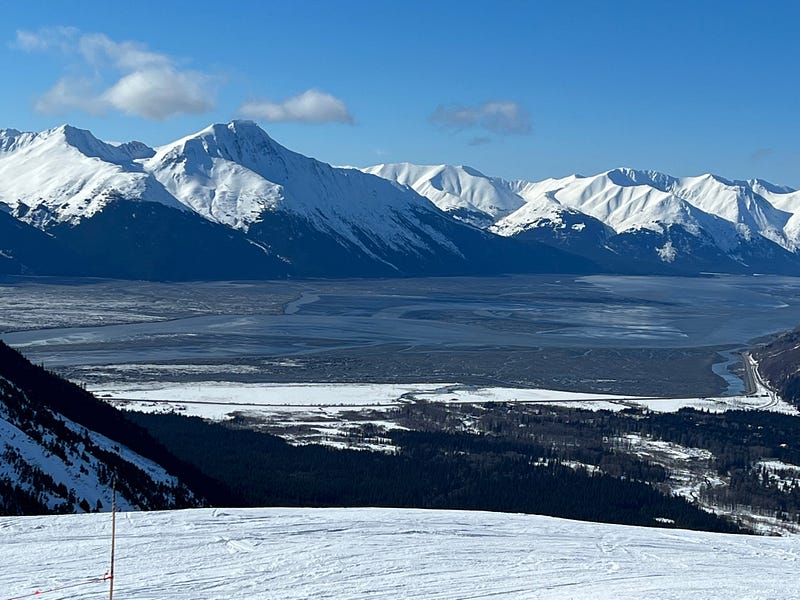
Last week, my family took a road trip to Aleyeska, Alaska’s largest downhill ski area.
My 8-year-old asked if we could go to the top of the mountain on the first run.
“Sure!” her dad responded, thrilled by her enthusiasm.
Then we were at the top of the mountain, and I was crying. Scared crying. My children, who were having the times of their lives, waited between slopes for me yelling “you can do it Mom!”
It was really steep. I wanted to change my mind.
So I coped by turning my mind to writing.
- Commitment is hard if you’re still figuring out what you’re doing. The snow was really icy. I fell a lot. My husband called out, “Commit to your turns!” He was right — only the conditions and my skill level made commitment challenging. I didn’t know how to commit, just like it’s hard to know how to commit to the blank page. Making thoughtful turns of ideas and language can be hard. But the only way through is to keep trying.
- Make it work for you. I HATED the really steep places. So I focused on traversing back and forth to make the way down less steep. I was not graceful, but I didn’t break any bones either. There are buckets of writing advice out there, but none of it is useful if it doesn’t apply to you. You can’t live another person’s writing life. Make it work for you.
- Falling isn’t as scary as you think. I’m often afraid I’ll write something that I will regret later. I’m scared that my mistake will invalidate me, or worse, cause harm. Let me tell you: I slid on my back halfway down a slope and no one got hurt, not even me. Yes, my back was cold and wet and I thanked god my knees survived, but I got back up. Not everything will be a masterpiece. Every time we start a new article or return to a creative project, it’s like standing back up to try again.
- Stop while you’re still having fun. After a while, those turns got easier. I even smiled. But then my muscles started quaking, and I still had to make it to the bottom. This writing thing is challenging, but it’s supposed to be fun too. As writers, we have to know when to take a break so we’re able to be disciplined for the long haul.
- Sometimes the best part is watching everyone else rip. I took a picture at the top while we were eating lunch and got caught up in the magnificence of it all. I ate my sandwich and enjoyed watching the thrill-seekers speed by. Read and celebrate the work of other writers. Don’t reduce writing to a competition. It’s not. It’s communication, and it’s damn thrilling to see it executed marvelously.
- Feeling out of control is scary. The only way to gain control is by practicing. But there’s this sweet spot where you’re in control, but open to possibility. As writers, we might call that “flow” and it’s the place I want to be.
The next day I bought a ski ticket for the lower half of the mountain.
It matched my abilities so much better.
As writers, how do we match our skills to the right goals?
For me, I feel lucky when I’m able to string a handful of words into a few fine sentences, and even more lucky when those sentences form into paragraphs and ideas.
More recently, I’m practicing releasing those ideas for publication. I scaffold the place I submit, including both inclusive and exclusive publications. I file away my rejection slips in an email folder, remembering the important thing is that I tried.
What is the scariest thing you’ve tried as a writer? Leave a comment below!
Want to get an email from me every time I publish? Join my email list by clicking here.
Writing and reading on Medium is fun. It’s like being part of a world-wide workshop. If you want to give it a try, use my referral link.
Thanks for reading! Here are some links to a couple more of my stories:


