
6 Golden Life Lessons From Buddha To Ignite Your Passion for Life
Soak your mind in the wisdom of Buddha’s teachings.
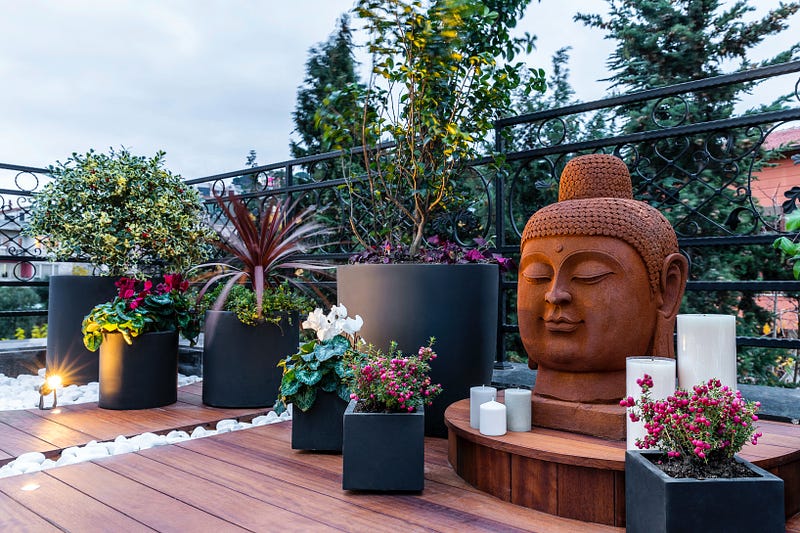
Buddha received a visitor: a young man.
The young man came with a blanket full of never-ending questions. According to him, he never uncovered answers about life. He wanted to search for his true purpose.
Buddha politely replied to the young man: “If you want answers, you must pay the price.”
The young man agreed. Buddha asked the young man to sit in silence for 2 years. After that, the Buddha will respond to every query the young man had.
Listening to these conversations, a disciple sitting under the tree began to burst into laughter.
Disciple approached the young man and said: “nothing is left to question then. Who asks questions after two years?”
After almost 2 years of silence, every question the young man had was answered.
But by whom?
The answer: himself
Silence is the best teacher. Buddha’s teaching has inspired millions of people around the globe for one sole reason: easiness.
Most solutions in our lives are complicated. In contrast, Buddha’s solutions are simple and less complex. So, let’s explore a few more teachings from Buddha.
Let’s get started.
1. Exert the full effort
Set your mind to win.
Train your mind to become happy and see good regardless of the outcome. How?
When we exert less effort, we’re disappointed with the outcomes.
Buddha says:
“If anything is worth doing, do it with all your heart.”
You’ll never be disappointed if you do everything with your heart, total effort, and complete consciousness.
We don’t realize it, but little things in our life carry the most importance. For example, when:
- Visiting an ill person, take flowers with you
- In the garden, feed some seagulls
- Listening to a friend, giving truthful advice
- See a sick person holding groceries, offer a helping hand
- Walk past a crying baby, smile
When we find “joy” in little things, our life becomes satisfied because these little things knead our day.
Start with above little moments to fill your “pot of satisfaction.”
Use one simple mantra: Kindness+ effort+ love.
2. Alter in silence
The introductory story deeply reflects this point.
Buddha once said:
“If we could see the miracle of a single flower clearly, our whole life would change.”
Have you ever noticed when flowers bloom?
When I was a kid, I spent my whole day in my garden. I wanted to see lilies grow in front of my eyes.
Result? I never saw them.
Flowers take nourishment from the sun, water, and soil but grow in the nighttime, invisible to us all.
- It was a life-changing lesson for me.
- Majority of living things grow in the darkness and silence.
However, some people have faced enough darkness in their life that they are now budding like new leaves in the spring.
One thing’s for sure, we all face problems (darkness).
Think this way: Buddha spends most of his time around nature. Because nature reminds us of growth without complaints.
Be like nature — green and prospering.
3. Take it as a daily process
After almost 6 years of searching for true purpose, Gautama found his answer under a Bodhi tree.
6 years (MY!!)
Buddha’s routine was as follows:
- Get up at 4:00 am daily
- Meditate for 1 hour
- Head out at 6:00 to feed poor people
Buddha took years to actualize this routine. It’s not a one-day process.
He once said:
“Drop by drop is the water pot filled. Likewise, the wise man, gathering it little by little, fills himself with good.”
With each day comes a new chance to prove ourselves.
It’s not something that can be achieved in a (single day).
The true spirit of life is to balance habits daily. Is he even a man if he wishes to fulfill his habits in a day?
Each new day is a blessing. Take full advantage of it.
Detach yourself from the cycle of believing that every day is slavery. It’s a day to detach from “Dukkha” and focus on improvement.
5. Master it
Karuna — compassion is a fundamental concept in Buddhism.
Buddha’s life tells us:
The fastest way to get knowledge of his world is to become an empath. Witness the world through another set of eyeballs, other people, and feel their struggles.
It’s no magic. Countless leaders are following this example daily. What do they do?
Dale Carnegie believes that we should understand people. A great influence, more than influencing, understands people.
That reminds me of a Buddha’s quote:
“Radiate boundless love towards the entire world.”
Love is an ongoing process. We reap what we sow applies to “love.”
Heather S. Lonczak, Ph.D. writes that showing compassion does all the below things:
- Helps you make friends
- Makes you happy
- Evoke satisfaction
- Buffers stress
Always be ready to show mercy.
It is impossible to melt an evil person with more evil. Instead, love and compassion do the trick.
5. Flow like water
I once asked my students:
I will give you two options — which one will you choose?
- A life filled with problems
- A life filled with blessings
Amongst 8 out of 9 preferred the second option. One student didn’t.
Upon asking, she answered me:
“If I have suffered a proportion of problems first, I can concentrate on blessings.”
According to her, our life is like a road. When we remove the blocks, we get them down with problems.
After that, we can easily walk on the road. This reminds me of a Buddha’s quote:
“She who knows life flows, feels no wear or tear, needs no mending or repair.”
Life flows with both problems and blessings.
As Buddha advised, each of us has 83 problems that we can do nothing about.
6. Live without ego
Anatman means: there is no self.
Buddhist practice a process called “egolessness.” Ego is believed to be the root of all suffering.
Buddha is known to face Mara, “An evil demon who constantly tempted Buddha to misguide from his path.”
Mara is known to:
- Send his armies to distract Buddha
- Send his daughters to seduce
- And much more
But Buddha always sat by his Bodhi tree and never feared.
Buddha realized that Mara was his inner self. He said:
“Wear your ego like a loose fitting garment.”
Buddhist believe that a true human never feeds on his ego — instead, it blends with nature.
As we belong to nature, why should we even have egos for something we do not supervise?
Fani Stipkovic, a contributor at HuffPost, proposes 5 tips to get rid of the ego completely:
- Practice forgiveness & letting go
- Be honest
- Surrender to the environment
- Enjoy silence
- Practice Gratitude
Final thoughts:
Buddha always manifested: “I am the miracle.”
We are all pixie dust of miracles.
We wake up each day, walk-in blessings, and uncover most parts of the day because each day brings us teachings.
And teaching is a “blessing in disguise.”
Join 1,100+ writers and get your next writing inspiration right now.
Or, join Medium with my referral link.