avatarJanice Harayda

Free AI web copilot to create summaries, insights and extended knowledge, download it at here

3997

Abstract

232168/women-led-protests-iran-future/">wrote</a> in <i>Time</i>.</p><blockquote id="a4be"><p>“But what began as an outpouring of grief over Amini’s death has evolved into a transformative national movement. The predominantly women- and youth-led demonstrations and their clarion call for ‘woman, life, liberty’ have touched nearly every corner of Iranian society.”</p></blockquote><p id="1067">Iran cracked down violently on the demonstrators, leading to hundreds of deaths and thousands of arrests that outraged men and women worldwide. Some of the arrested protesters had cut their hair or burned their hijabs. A bill pending in its parliament would impose even stiffer penalties for headscarf-related offenses.</p><p id="bc63">But a year after Amini’s death, many women still aren’t wearing the hijab, the Associated Press <a href="https://apnews.com/article/iran-hijab-protests-amini-anniversary-women-074977c6e3712b7c61acbe37e6f561a1">found</a> in August. A lawyer warned that the proposed law won’t work because “the majority of women do not believe in it.”</p><figure id="4f81"><img src="https://cdn-images-1.readmedium.com/v2/resize:fit:800/1*CAuvHbRgLwJyelNsJu0GWA.jpeg"><figcaption>Iranian activist Narges Mohammedi / Niklas Elmehed for the <a href="http://Niklas Elmehed © Nobel Prize Outreach">Nobel Outreach</a></figcaption></figure><p id="6d81">Beyond Iran, support for the protests has grown amid the crackdowns — most notably, when the Iranian activist Narges Mohammadi <a href="https://www.nobelprize.org/prizes/peace/2023/press-release/">won</a> the 2023 Nobel Peace Prize in October “for her fight against the oppression of women and her fight to promote human rights and freedom for all.”</p><h2 id="9a82">Active in nonviolent campaigns</h2><p id="f8cd">Women are taking the lead elsewhere, too. Among nonviolent campaigns from 2010 to 2014, about 70 percent had women involved or on the front lines, Cheotsow Tenzin <a href="https://hir.harvard.edu/women-in-political-movements/#:~:text=When%20examining%20mass%20movements%20and,changing%20their%20roles%20in%20society">wrote</a> in the <i>Harvard International Review</i>, summarizing research by Chenoweth and Marks.</p><figure id="efa8"><img src="https://cdn-images-1.readmedium.com/v2/resize:fit:800/1*osjUuzKS5SW8GnxcJ4qZbw.jpeg"><figcaption>Vancouver residents support the School Strike for Climate / <a href="https://commons.wikimedia.org/wiki/File:%22Skolstrejk_f%C3%B6r_klimatet%22_(48812129197).jpg">Wikimedia Commons</a></figcaption></figure><p id="b1a2">Around the world, women are spearheading movements devoted to some of the century’s most urgent issues.</p><ul><li><b>Climate change.</b> Swedish activist Greta Thunberg has won international fame for her “School Strike for Climate” campaign, which inspired young people worldwide to skip class to call out environmental risks.</li><li><b>Racial justice</b>. Perhaps no recent rallying cry has had more impact than #BlackLivesMatter, which sparked global protests after Alicia Garza, Patrice Cullors, and Opal Tometi used it to protest the killing of Michael Brown and other black men by white police.</li><li><b>Voting rights.</b> Politician Stacey Abrams founded Fair Fight Action to combat voter suppression, an effort that helped elect Joe Biden in 2020 along with two candidates who gave Democrats control of U.S. Senate.</li></ul><figure id="59fc"><img src="https://cdn-images-1.readmedium.com/v2/resize:fit:800/1*_hCGGrBskal8i-BYPVOMOw.jpeg"><figcaption>The “Star Trek” cast helped to fight voter suppression/ Rev. Raphael Warnock on Facebook</figcaption></figure><p id="1a66">How much difference does women’s involvement make? A lot, Serhan’s reporting for <i>Time</i> showed.</p><p id="49ce">Strong female participation tends to make mass movements “more inclusive, innovative, nonviolent, and, crucially, likely to achieve their goals.” It can also involve new forms of resistance that go beyond street protests and that bring media attention to a ca

Options

use.</p><ul><li>In <b>Iran</b>, women cut their hair and burned their headscarves after Mahsa Amini’s death in police custody.</li><li>In <b>Mexico</b>, they protested government inaction on violence against women by staying away from schools, workplaces and social events during a one-day wildcat strike known as “a day without us.”</li><li>In the U.S., Abrams fought voter suppression in creative ways intended to appeal to the disenfranchised. Among them: She recruited 18 “Star Trek” stars for a virtual event called “Star Trek: The Next Election.”</li></ul><p id="60ba">Why are protests by women succeeding? Harvard’s Marks <a href="https://time.com/6232168/women-led-protests-iran-future/">told Time</a>:</p><blockquote id="6f72"><p>“It’s the ordinariness of women’s participation that has all of these knock-on effects.”</p></blockquote><p id="93ab">Marks added that women may help movements gain sympathy and retain the loyalty of supporters. They may also limit police brutality: Nobody really wants to arrest a pregnant woman who might deliver in a jail cell or a frail elderly protester who looks like your grandmother.</p><p id="033e">Given that the trend is so wide-ranging, you might wonder why more people don’t recognize it as relatively new and valuable.</p><p id="9d78">Perhaps it’s because female leaders “never seem to receive as much attention as their<b> </b>male counterparts,” Tenzin suggested in the <i>Harvard International Review. </i>Even today, “male figures dominate the conversation and news stories” about political protests.</p><p id="bb20">That may change as female voices grow more vocal. In the meantime, there’s a risk of greater pushback against them, or more of the kind of repressive legislation that’s been introduced in Iran.</p><p id="dd0f">When movements don’t achieve their main objective after extensive women’s participation, Marks says, “there’s almost always a regression or a backlash in gender equity and democracy after the movement ends.”</p><p id="fed2">Neither Marks nor <i>Time</i> says so, but you could argue that the overturning of <i>Roe v. Wade </i>represents such regression. If so, there’s a two-fold lesson in the surging protests led by women: Celebrate the successes — but be ready for the backlash.</p><p id="4c76"><b><i>@JaniceHarayda is an award-winning critic and journalist who has been a writer and editor for </i>Glamour<i> and the book editor of Ohio’s largest newspaper. Her work has appeared in many major print and online media.</i></b></p><p id="3bab"><b><i>You might like another of my stories on politics and protests:</i></b></p><div id="28a3" class="link-block"> <a href="https://readmedium.com/ukraines-heroism-through-the-eyes-of-its-most-popular-poet-bfcce76716c0"> <div> <div> <h2>Ukraine’s Heroism Through The Eyes Of Its Most Popular Poet</h2> <div><h3>An activist writer tells why he began taking bulletproof vests to the front in his new book, ‘Sky Above Kharkiv’</h3></div> <div><p>medium.com</p></div> </div> <div> <div style="background-image: url(https://miro.readmedium.com/v2/resize:fit:320/1*tsehXBFSyGDEQCv-vDoTCQ.jpeg)"></div> </div> </div> </a> </div><div id="a771" class="link-block"> <a href="https://fanfare.pub/why-proud-trekker-stacey-abrams-loves-star-trek-c11e1f080f9d"> <div> <div> <h2>Why Proud Trekker Stacey Abrams Loves ‘Star Trek’</h2> <div><h3>The Georgia politician values its lesson: Focus on survival, not quick victories</h3></div> <div><p>fanfare.pub</p></div> </div> <div> <div style="background-image: url(https://miro.readmedium.com/v2/resize:fit:320/1*sIYFUoNSOrvibuqCEApPvw.jpeg)"></div> </div> </div> </a> </div></article></body>

NOT JUST MAKING COFFEE

Why Protests Succeed When Women Lead

A remarkable trend is flying above the radar — and we’re missing its vital lessons
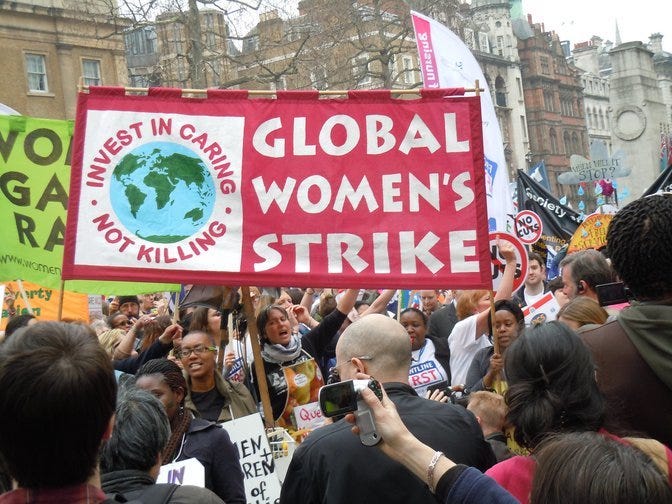
An International Women’s Day strike for human rights in 2020 / Quisnovus for OpenDemocracy CC

Some trends lie so low they fly under the radar. Others soar so high they fly above it.

Take a remarkable trend by described in a recent story in Time magazine, “Why Women-led Protests Are More Successful.”

Your first reaction to that article might have been similar to mine: Come on! The most successful political protests have been led by men ever since patriots like Sam Adams dumped British tea into Boston Harbor to protest their “taxation without representation” by King George III.

Yes, women have led efforts focused on their rights, such as the suffrage and feminist movements.

But no American protest of the modern era has had more benefits for more people than the civil rights movement, which has brought vastly greater legal rights not just to black Americans but for women, minorities, and other groups. And who led the civil rights movement?
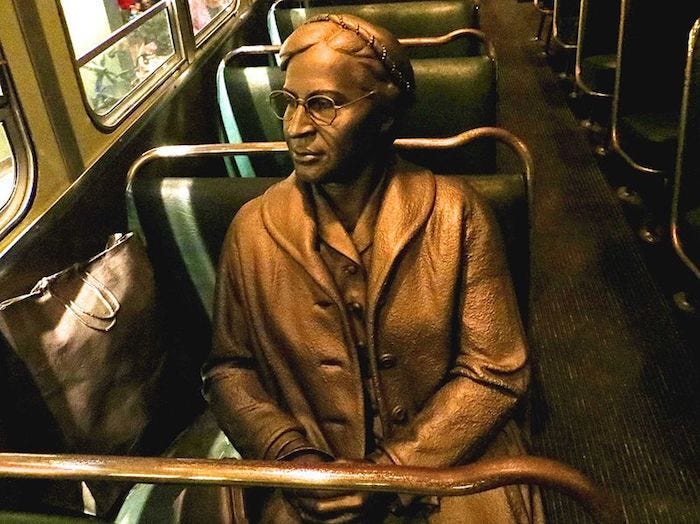
Statue of Rosa Parks riding an Alabama bus / National Civil Rights Museum CC

You might say: Obviously, Martin Luther King Jr. and other men, including Roy Wilkins, head of the NAACP. The arrest of Rosa Parks sparked the Montgomery Bus Boycott, which led the Supreme Court to find segregated buses unconstitutional, but male leaders of the NAACP chose Parks to take her famous stand against the discrimination.

That, at least, was how I saw it until I dug into the research behind the Time story, which drew on work by Erica Chenoweth and Zoe Marks of Harvard’s Kennedy School of Government. A cross-national study by Chenoweth found that women’s participation really does increase the chances that a resistance movement will succeed.

That’s true, in part, because more women typically means more participants, from more social groups. But something more complex is also going on: Women are getting bolder, and joining political protests they used to sit out.

Female activists used to complain that men stole the limelight while expecting them to make coffee and fetch the doughnuts. While that may still be true in some movements, women are increasingly claiming their place on the front lines even in ultra-conservative countries.
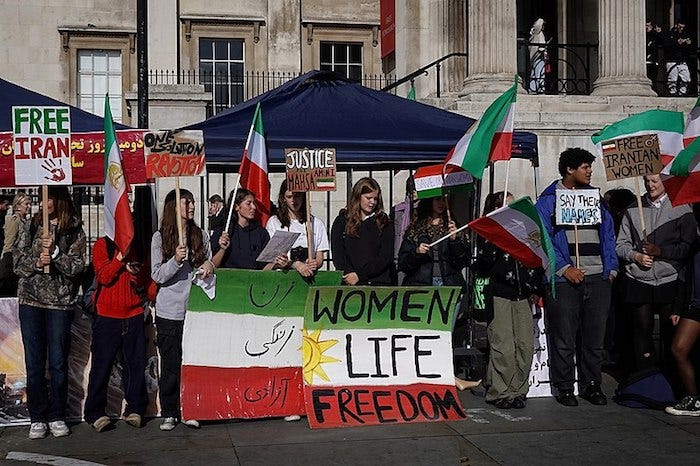
Londoners support Iranian women after the death of Mahsa Amini / Wikimedia Commons CC

An example involves the fury that erupted in Iran after the young protester Mahsa Amini died in custody of Iran’s morality police. Her alleged crime? Failing to cover her hair properly with her hijab. The usual mourning period in Iran is 40 days, the journalist Yasmeen Serhan wrote in Time.

“But what began as an outpouring of grief over Amini’s death has evolved into a transformative national movement. The predominantly women- and youth-led demonstrations and their clarion call for ‘woman, life, liberty’ have touched nearly every corner of Iranian society.”

Iran cracked down violently on the demonstrators, leading to hundreds of deaths and thousands of arrests that outraged men and women worldwide. Some of the arrested protesters had cut their hair or burned their hijabs. A bill pending in its parliament would impose even stiffer penalties for headscarf-related offenses.

But a year after Amini’s death, many women still aren’t wearing the hijab, the Associated Press found in August. A lawyer warned that the proposed law won’t work because “the majority of women do not believe in it.”
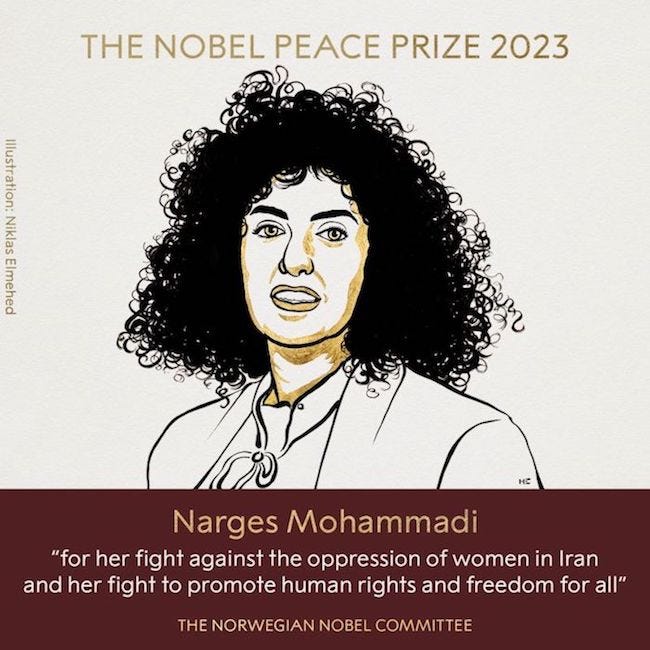
Iranian activist Narges Mohammedi / Niklas Elmehed for the Nobel Outreach

Beyond Iran, support for the protests has grown amid the crackdowns — most notably, when the Iranian activist Narges Mohammadi won the 2023 Nobel Peace Prize in October “for her fight against the oppression of women and her fight to promote human rights and freedom for all.”

Active in nonviolent campaigns

Women are taking the lead elsewhere, too. Among nonviolent campaigns from 2010 to 2014, about 70 percent had women involved or on the front lines, Cheotsow Tenzin wrote in the Harvard International Review, summarizing research by Chenoweth and Marks.
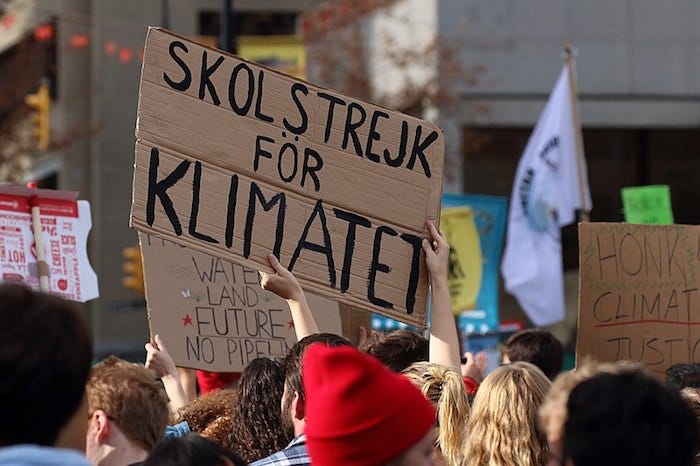
Vancouver residents support the School Strike for Climate / Wikimedia Commons

Around the world, women are spearheading movements devoted to some of the century’s most urgent issues.

  • Climate change. Swedish activist Greta Thunberg has won international fame for her “School Strike for Climate” campaign, which inspired young people worldwide to skip class to call out environmental risks.
  • Racial justice. Perhaps no recent rallying cry has had more impact than #BlackLivesMatter, which sparked global protests after Alicia Garza, Patrice Cullors, and Opal Tometi used it to protest the killing of Michael Brown and other black men by white police.
  • Voting rights. Politician Stacey Abrams founded Fair Fight Action to combat voter suppression, an effort that helped elect Joe Biden in 2020 along with two candidates who gave Democrats control of U.S. Senate.

The “Star Trek” cast helped to fight voter suppression/ Rev. Raphael Warnock on Facebook

How much difference does women’s involvement make? A lot, Serhan’s reporting for Time showed.

Strong female participation tends to make mass movements “more inclusive, innovative, nonviolent, and, crucially, likely to achieve their goals.” It can also involve new forms of resistance that go beyond street protests and that bring media attention to a cause.

  • In Iran, women cut their hair and burned their headscarves after Mahsa Amini’s death in police custody.
  • In Mexico, they protested government inaction on violence against women by staying away from schools, workplaces and social events during a one-day wildcat strike known as “a day without us.”
  • In the U.S., Abrams fought voter suppression in creative ways intended to appeal to the disenfranchised. Among them: She recruited 18 “Star Trek” stars for a virtual event called “Star Trek: The Next Election.”

Why are protests by women succeeding? Harvard’s Marks told Time:

“It’s the ordinariness of women’s participation that has all of these knock-on effects.”

Marks added that women may help movements gain sympathy and retain the loyalty of supporters. They may also limit police brutality: Nobody really wants to arrest a pregnant woman who might deliver in a jail cell or a frail elderly protester who looks like your grandmother.

Given that the trend is so wide-ranging, you might wonder why more people don’t recognize it as relatively new and valuable.

Perhaps it’s because female leaders “never seem to receive as much attention as their male counterparts,” Tenzin suggested in the Harvard International Review. Even today, “male figures dominate the conversation and news stories” about political protests.

That may change as female voices grow more vocal. In the meantime, there’s a risk of greater pushback against them, or more of the kind of repressive legislation that’s been introduced in Iran.

When movements don’t achieve their main objective after extensive women’s participation, Marks says, “there’s almost always a regression or a backlash in gender equity and democracy after the movement ends.”

Neither Marks nor Time says so, but you could argue that the overturning of Roe v. Wade represents such regression. If so, there’s a two-fold lesson in the surging protests led by women: Celebrate the successes — but be ready for the backlash.

@JaniceHarayda is an award-winning critic and journalist who has been a writer and editor for Glamour and the book editor of Ohio’s largest newspaper. Her work has appeared in many major print and online media.

You might like another of my stories on politics and protests:

Politics
Women
Trends
Feminism
News
Recommended from ReadMedium