
50 or Older? Get the Shingles Vaccine
You don’t want to get Shingles. You don’t.
You do not want to get Shingles. Don’t argue with me on this. You do NOT want to get Shingles.
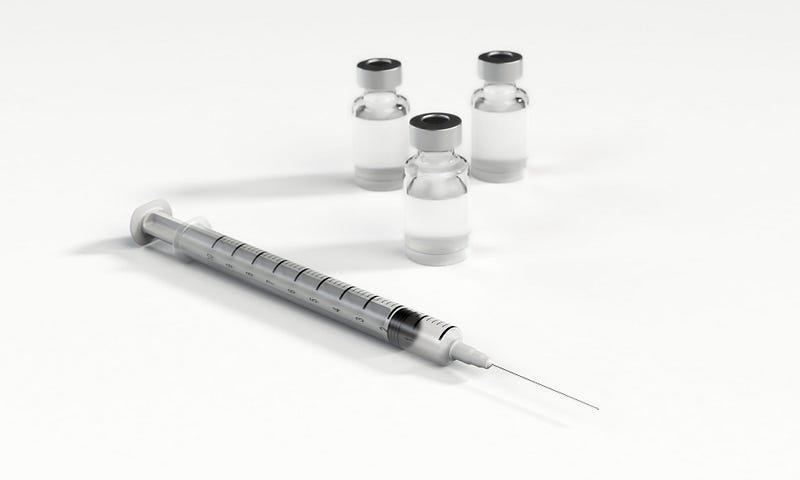
There is a vaccine available if you are 50 or older. I highly recommend you ask your doctor about it.
My husband came down with Shingles a few months after we moved into a comfortable house together.
I didn’t know much about Shingles. What was it? Wasn’t it something old and chronically ill people got?
Time to visit the CDC website:
Shingles is a painful rash that develops on one side of the face or body. The rash consists of blisters that typically scab over in 7 to 10 days and fully clears up within 2 to 4 weeks. About Shingles CDC
The assumption seems to be that only people 50 and older get Shingles. That is not true although the odds are with that belief. Neither Shingles vaccine is authorized for anyone under 50.
This seemed like something you just lived through.
My then-boyfriend was 42 years old at the time. His doctor prescribed a steroid, an anti-viral and suggested taking Advil. My future husband’s reaction to the steroid was not good. He described an “ants crawling under his skin” feeling.
“Do you feel like you want to claw your way out of your skin? Everything gets on your nerves?” I asked.
“Yes. That’s exactly it.”
I looked at him, restraining my laughter, “Congratulations, Honey. You have PMS.”
Instead of laughing, he looked at me very seriously, “Is this what it is like? I am so sorry.”
I instantly felt terrible. Between the steroids and not being able to stand the feel of cloth against the rash on his chest, he was miserable. Now was not the time to make fun of him.
He stopped taking the steroid, kept taking the anti-viral and stuck with the Advil. None of it seemed to do any good. This seemed like something you just lived through.
He worked from home. Once he felt a little better, he could work in his home office on software design without a shirt on. After a month he was better. He had no residual nerve pain.
Not too long after this, my youngest daughter came down with Chickenpox.
My daughter had gotten the very first Chickenpox vaccine.
An active Shingles infection can transmit Chickenpox to someone at risk for it. Since their two illnesses weren’t in the same exact timeframe, there seemed to be no connection.
My daughter had gotten the very first Chickenpox vaccine. It turned out not to be as effective as the next (and current) version but I didn’t realize that. Her bout with Chickenpox was very light and she didn’t seem to be bothered by it. She was seven.
Three years later, she had an odd rash on her back. It went in a line, seeming to follow a nerve. I had a bad feeling about the blisters. Sure enough: she had Shingles.
The risk of shingles increases with age.
I had never heard of a 10-year-old with Shingles. Again, I turn to Google. From what I can determine, it is unlikely a child her age would get Shingles.
Shingles in children are not common. A child is more at risk for shingles if either of these is true:
· He or she had chickenpox before age 1.
· The child’s mother had chickenpox very late in pregnancy.
Children who get the chickenpox vaccine still have a small risk for shingles. But it may be a lower risk than after a chickenpox infection. And the symptoms may be less severe. The risk of shingles increases with age. A child with a weak immune system may have the same, or more severe, symptoms as an adult.
University of Rochester Medical Center Health Encyclopedia
My daughter didn’t have any of those risk factors. It is a mystery. It was a light case. She wasn’t bothered too much. This was either because she was young or due to the vaccine. No way to tell.
Years went by. We were married and our two oldest children were grown and out of high school. My degenerative disc disease came in with a roar and I had a double fusion.
A year after my back surgery, a burning began on one side of my scalp.
Brushing my hair was painful. It felt a lot like the way my hair felt a couple of decades before. When I had mononucleosis, the low-grade fever caused my hair to hurt. This felt the same, but it was confined to a small area of my scalp.
Looking in the mirror was a shock. A rash with clear blisters had popped up on my forehead above my left eye. The blisters stretched into my hairline. That was the burning sensation. The eyelid was very swollen, but my eyesight seemed unchanged.
I was sure it was Shingles. I felt like an expert by now. My doctor confirmed it, gave me the same meds my now husband had been given years before, and sent me to my eye doctor.
The eye doctor checked everything out and said it hadn’t spread into my actual eye. If anything changed, I was to call him at once, but he thought I was going to be fine. He did warn me not to scratch. The blisters in my eyebrow looked bad and he knew I would want to.
I went home, looking at the bright side. I didn’t have to worry about cloth touching my skin. I just needed to be careful with my hairbrush. I was 48 years old.
This means that out of five household family members, three of us had Shingles before the age of 50.
One at age 10, one at 42, and another at 48. My family is either blowing the statistics out of the water or there is something wrong with their information gathering.
I am the only one of my family who has ended up with a little nerve pain after the rash disappeared. This type of post-Shingles pain is called postherpetic neuroglia (PHN).
PHN occurs in the areas where the shingles rash was, even after the rash clears up. It can last for months or years after the rash goes away. The pain from PHN can be so severe and debilitating that it interferes with daily life. About Shingles CDC
Mine isn’t that bad. I had a little tingling and numbness in my eyebrow. I was lucky. Sort of. I still contracted Shingles before my 50th birthday. That isn’t lucky.
Most people who develop shingles have only one episode during their lifetime. However, you can get the disease more than once. About Shingles CDC
This is terrible news. My doctor has advised I get the new shingles vaccination. Yes, there are two.
Two vaccines are licensed and recommended to prevent shingles in the U.S.. Zoster vaccine live (ZVL, Zostavax) has been in use since 2006. Recombinant zoster vaccine (RZV, Shingrix), has been in use since 2017 and is recommended by ACIP as the preferred shingles vaccine. Shingles Vaccine CDC
My doctor recommended the Shingrix vaccine.
CDC recommends that healthy adults 50 years and older get two doses of the shingles vaccine called Shingrix (recombinant zoster vaccine), separated by 2 to 6 months, to prevent shingles and the complications from the disease. Your doctor or pharmacist can give you Shingrix as a shot in your upper arm. Shingles Vaccine CDC
If you are 50 or older and enjoy burning nerve pain, don’t bother with the vaccine. If you are 50 or older and burning nerve pain is something you’d like to avoid, consider getting the vaccine.
There has been a waiting list for the vaccine at my local pharmacy. Every time I pop by to get my monthly prescriptions, I ask if any is in stock. Today, after months of asking, they said they did. I immediately asked for the first dose.
Possible side effects include pain, redness or swelling at the injection site, a sore arm or tiredness. Discussing your concerns with your doctor or pharmacist is a good idea. Visiting the Shingrix website will also provide more information.
Let me leave you with one final thought. The same thought I have tried to thread through this entire piece: you do not want to get Shingles.

If you liked this, you may like: