
5 Tips From Epicurus to Help You Live a Happier Life
Simplicity is the key to joy.
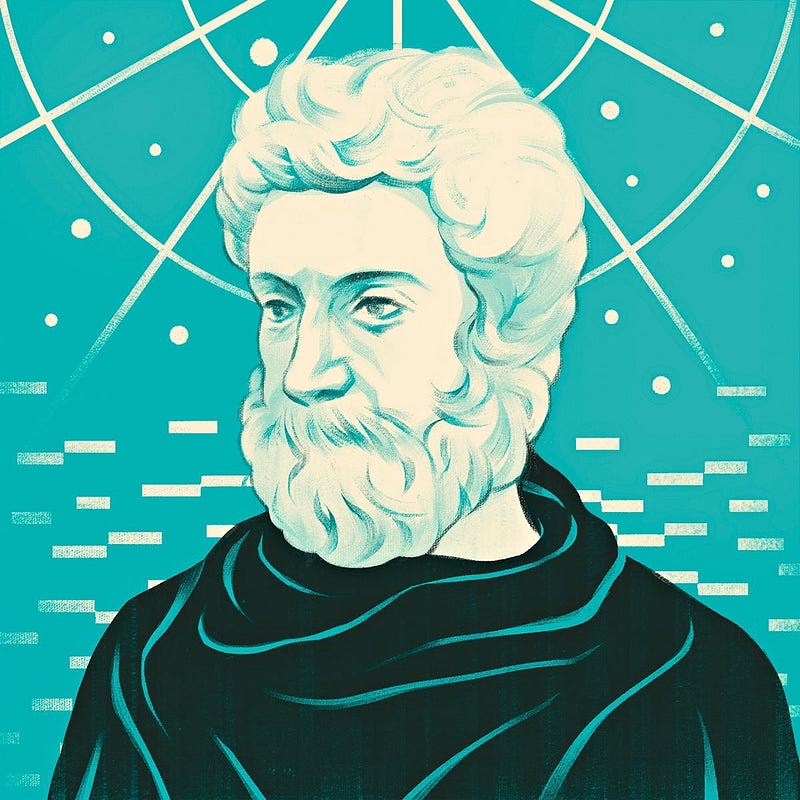
Epicurus was a philosopher obsessed with human happiness. Unlike his contemporaries in Athens, who were concerned with high-brow concepts like the meaning of being good or the nature of wisdom, Epicurus spent his time contemplating how to live a pleasurable life.
His teachings were very popular, and like all popular things, they attracted a ton of criticism. His peers went as far as to accuse him of being a hedonist masquerading as a philosopher. You see, Epicurus’s school was open to women — something virtually unheard of in ancient Greece. Thus, rumors naturally abounded of him throwing lavish parties and hosting wild orgies.
But these rumors are unfounded. Contrary to criticism, the premier philosopher of pleasure actually lived a fairly humble life. His home was a simple cottage he shared with his friends. There, they grew, harvested, and cooked their own food. Their spare time was spent pursuing their individual artistic and philosophical interests. Epicurus was also:
- A vegetarian
- Not wealthy in the material sense
- Most likely celibate
Epicurus would die painfully of kidney stones in 270 BC, laughing and lecturing till the very end. He had, you see, discovered the secret of human happiness, and it can be best summed up with this quote:
“Do not spoil what you have by desiring what you have not; remember that what you now have was once among the things you only hoped for…
Nothing is enough to the man for whom enough is too little.”
I have distilled 5 key takeaways from Epicurus’s teachings, and have taken the liberty to include them here. These tips, if applied, will help you see through the illusion of excessive materialism, and help you live a happier life with less.
Avoid Needless Suffering
Epicurus thought that pleasure can be separated into two different subtypes: kinetic and katastemic — or active and static pleasure. The first is felt while you are actively engaging in an activity, whereas the latter is felt when you are at rest. Of the two, Epicurus thought that static pleasure was more important.
The ancient philosopher's idea is supported by the modern Maslow’s Hierarchy of Needs, which states that before grand concepts like self-actualization can occur, we have to first fulfill basic needs such as food, water, and shelter. We have to, in short, stop suffering before we can start being happy.
Now, this does not mean that you should avoid doing difficult things. The overcoming of challenges is essential for growth. Rather, it means we should steer clear of what actively makes us feel bad. This sounds like common sense, but you’ll be surprised how people mistake agony for development. To paraphrase Tim Ferris, “Poisonous things do not deserve your time. To think otherwise is masochistic.”
Before you embark on the pursuit of happiness, first seek to remove the pain points in your life. Cut off false friends, toxic relationships or a disempowering workplace like you would a gangrenous sore. Like Muhammad Ali said,
“It isn’t the mountains ahead that wear you out, it’s the pebble in your shoe.”
Eradicate your everyday annoyances, the distracting pebble in your shoe. This is the first step you can take to turn that frown upside down.
Be Content With Simple Fare
Epicurus was a simple eater. His opponents spread smear stories saying he was a wanton glutton, but that could not be further from the truth. Not only was Epicurus a vegetarian, he actively extolled the virtues of simple eating. He once wrote to his student to:
“…send me a small pot of cheese, so that I may be able to indulge myself whenever I wish.”
His daily diet consisted of bread, olives, and the occasional cheesy extravaganza. As mentioned before, Epicurus believed that pleasure can only be achieved in the absence of pain, and he saw little point in spending precious time, effort, and money in the preparation of intricate meals that will be eaten and forgotten in minutes.
He was also an opponent of overindulgence, believing that excess brings about more pain than pleasure. And in the 21st century, where diseases of overindulgence such as obesity, gout, and diabetes are more of a problem than starvation, it’s hard to argue against his logic.
Epicurus was so dismissive regarding food that he went as far as to say that it was not what you ate that matters, but the company in which you dine in. Which brings us to our next point…
Seek True Friendships
Epicurus placed the value of friendship so highly that he wrote, “We should look for someone to eat and drink with before looking for something to eat and drink… To eat and drink without a friend is to devour like the lion and the wolf.”
We all know that friendships are an important part of a happy life. Only recently did we know how much. An unprecedented 80-year-old study tracking the lives of 286 Harvard sophomores discovered that close relationships are the single most important factor required for a happy life, trumping other points such as money, recognition, and fame.
As a matter of fact, the study discovered that relationships were so important that people’s level of satisfaction with their relationships at age 50 was a better predictor of physical health than their cholesterol levels. This validates what Epicurus said,
“Of all the means to ensure happiness throughout the whole life, by far the most important is the acquisition of friends…
It is not so much our friends’ help that helps us as the confident knowledge that they will help us.”
There is no need to retire from real life and start living in a compound with your friends as Epicurus did — although that certainly won’t hurt! What you can do is the little things; things like organizing weekly meet-ups with your friends, ringing them out of the blue to share some laughs and banter and arranging a night of dinner, games, and beers with your mates just for the hell of it.
This is doubly true if these are friends you share a common goal with. My 9 years of experience in the martial arts and my stint at a writing retreat in Bali both taught me that that warm fuzzy feeling of camaraderie is a veritable superpower; it has the dual benefit of spurring you on to higher heights while making you feel a keen sense of belonging.
Remember, there is a good reason why they say your tribe is your might. That’s because true friendships are worth their weight in gold, and good relations with your fellow men are, according to Epicurus and science, the very foundation of a life well-lived.
Death is Nothing to Be Feared
Epicurus believed in peace of mind, or ataraxia. This includes peace of mind from Daddy Death, perhaps mankind’s greatest and oldest fear of all. Epicurus wrote,
“Why should I fear death? If I am, then death is not. If Death is, then I am not. Why should I fear that which can only exist when I do not?
The art of living well and the art of dying well are one.”
Death and change are the two ultimate constants of life. And to struggle against the inevitable is like attempting to beat back the waves with a sword or trying to win a shouting match with a hurricane — an exercise in futility, one that if engaged in, will doom you to struggle needlessly and in vain.
Epicurus instead teaches to accept the coming of death, writing: “When you die, your mind will be gone even faster than your body…Therefore, foolish is the man who says that he fears death, not because it will cause pain when it arrives but because the anticipation of it is painful.”
Epicurus wasn’t all talk, either. He was content till his dying day, writing to his friend Laertius that he was “experiencing a blessedly happy day, and at the same time the last day of my life. Urinary blockages and dysenteric discomforts afflict me, which could not be surpassed for their intensity. But against all these things are ranged the joy in my soul produced by the recollection of the discussions we have had.”
He, therefore, died in a way that was consistent with his teachings. The foremost philosopher of happiness passed into the void with a distinct absence of fear and with the cherished memories of his friends on his mind, cheerful and preaching till the end.
And if that isn’t a mark of the efficiency of his teachings, I don’t know what is.
Be Grateful With What You Have
This is perhaps the most important point of this article.
In fact, I think it’s so important that I decided to close off this story with the same quote I started it off with: “Do not spoil what you have by desiring what you have not; remember that what you now have was once among the things you only hoped for…Nothing is enough to the man for whom enough is too little.”
In the capitalistic society we live in, we often think that more will make us happier. More wealth, more fame, more things, more, more, more. It’s not until we take a step back and think logically that we find the fallacy in this point of view — namely, if poor people can be happy, then happiness isn’t from money alone, but from a life well-lived.
During my travels, I have often observed that people living in developing countries seem to be happier than those living in affluent ones. They possess a kind of grateful grace, a sort of living-in-the-moment that many of their moneyed overseas contemporaries seem to lack.
And a global study backed up my observations. A survey from MTVNI discovered that young people in developing countries are twice as likely to feel happier about their lives than their richer counterparts. Of course, as we mentioned in point one, this is taking into account that their basic needs of food and shelter are met.
Like Epicurus said all along, we don’t really need that much to be happy. He wrote, “The things you really need are few and easy to come by; but the things you can imagine you need are infinite, and you will never be satisfied.” In his view, it is in the pursuit of the things we think we need to be happy that ironically prevents us from being truly happy.
Think about it; do you really need a Rolex watch, an Armani shirt or that million-dollar Ferrari to be happy? Or are you seeking validation through accomplishment, contentment through luxurious spending, your 15-minutes of fame through your exploits? Take care, for to walk this path is to be blinded by fool’s gold. They are the very things that will distract you from living a life of genuine pleasure in the first place. Like Epicurus wrote,
“It is better for you to be free of fear lying upon a pallet, than to have a golden couch and a rich table and be full of trouble…
Not what we have, but what we enjoy, constitutes our abundance.”
I’m not trying to knock on the merit of accomplishing great things. I’m trying to say that you don’t need to jump through a bunch of self-imposed hoops to feel good about yourself. Because your accomplishment, your accolades, your achievements; all of those don’t define you. They are icing on the cake.
Ultimately, what you own doesn’t matter. What you feel does. So choose to feel good. Choose to open your eyes, and see the truth of what you truly need versus what you think you need. Choose to escape the endless hedonic cycle of wanting more, and be grateful for what you already have.
That is the secret to living a fuller life with less.
In Summary
I could have included many more points in this article — what comes to mind is the importance of doing meaningful work you care about and bettering your community. But if there’s one thing I took away from studying Epicurus, it’s that simplicity is the key to joy.
So I leave you these five points. Five points that I believe are the cornerstone of a happier life. They are:
- Avoid Needless Suffering
- Be Content With Simple Fare
- Seek True Friendships
- Do Not Fear Death
- Be Grateful For What You Have
Happiness, true happiness, is within reach of each and every one of us. All we have to do is open our eyes, acknowledge what’s truly important, and have the courage to eliminate the rest.
For happiness, much like greatness, cannot be pursued; it must ensue. So stop chasing. Stop lusting. Stop being blinded by the material mind games too many of us are maze-trapped by.
This is how you live a simple life of genuine pleasure.
Mind Cafe’s Reset Your Mind: A Free 10-Day Email Course
We’re offering a free course to all of our new subscribers as a thank you for your continued support. When you sign up using this link, we’ll send you tips on how to boost mental clarity and focus every two days.


