
9 Life-Changing Lessons I Learned From 9 Years In Martial Arts
From a shy kid to a confident entrepreneur.

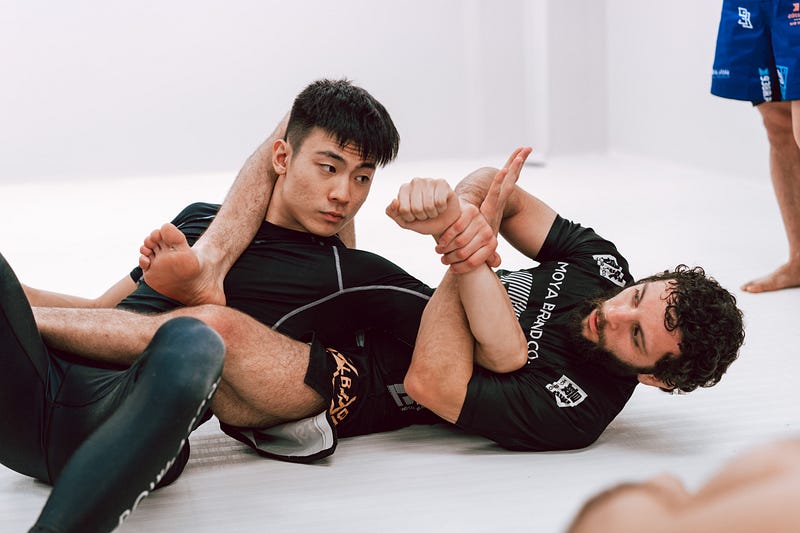
The picture of me on the left was taken when I was 15 years old.
I led what is best described as an aimless existence. Most of my early teenage years were spent lounging around with boys as lost and as I was. We had nothing in mind aside from a vague desire to fritter away the hours till the next day begins anew.
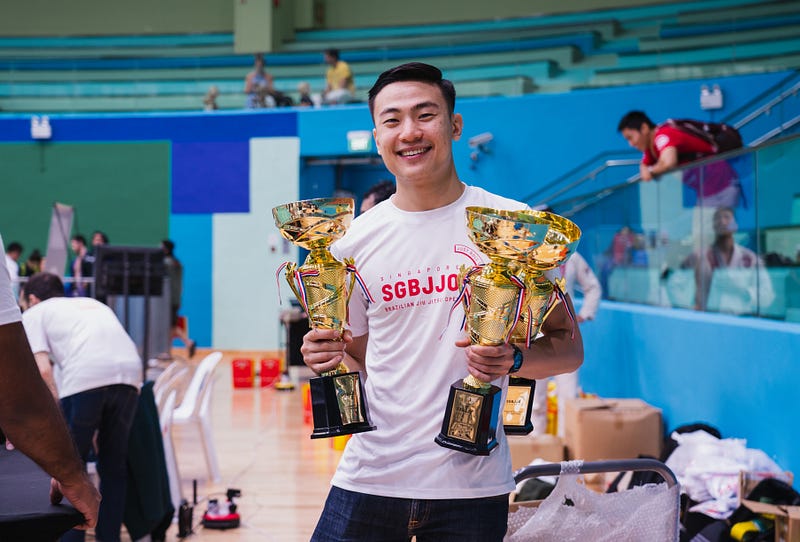
The picture of me on the right was taken when I turned 20.
I had just won my second mixed-martial-arts fight, and I celebrated by vacationing in northern Malaysia for a week. I met a beautiful, doe-eyed girl during my stay and promptly fell in love. We would be in a committed long-distance relationship for years.
2020 marks the 9th year since I picked up martial arts.
I can hardly remember what it felt like to be me pre-martial arts. I can recall some facts:
- I was a shy kid more comfortable reading books and playing video games than chasing girls or playing sports.
- I didn’t click with most of my peers.
- I hated school — and maths class in particular, with a passion. I didn’t understand the logic of suffering through years of rote memorization for the sake of a piece of paper.
These recollections are dreamlike and half-remembered. They almost feel like they happened to another person!
That’s because martial arts completely changed the way I live and view life.
Here are some lessons martial arts taught me.
- Smart work plus hard work equals sure-fire success.
- Stepping outside your comfort zone and embracing the truth can be painful, but it is also the fastest way to grow.
- True joy doesn’t come from external factors such as wealth or achievement, but from embracing oneself and being embraced in return by a supportive community.
- And so much more.
When I look back at these lessons, the predominant feeling I feel is an overwhelming sense of gratitude. Joe Rogan once said that,
“Martial arts is a vehicle to unlock human potential.”
I couldn’t agree more. Martial arts taught me that we are tougher than we think. That the human spirit, in its purest form, can be likened to an unforged sword. Seen in that lens, the inevitable fires and tribulations of life serve only to polish us into better weapons.
I have taken the liberty to compile 9 of the most life-changing lessons I learned from my 9 years of martial arts. If applied, they won’t just help you become a better version of yourself.
They will help you achieve your full human potential.
1. A small decision can profoundly alter the course of your life.
When I first discovered martial arts, I fell in love.
It wasn’t your usual summer infatuation, either. It was an obsessive, all-consuming love, the kind of love only a teenager is capable of. To quote Bukowski, I loved martial arts: “Like a man loves a woman he never touches, only writes to, keeps little photographs of.”
This love would spur me to become a serious competitor and win medals in several countries. I even fought in four mixed-martial-arts bouts because I wanted to test my skills in a real fight!
Martial arts would overhaul my entire personality and change my career trajectory. It’s crazy to think that this level of improvement can ultimately be traced back to one seemingly inconsequential act.
That of 16-year-old me, quivering in my slippers but still mustering up enough courage to walk alone into a grungy fight gym and sign up.
2. You can only be brave if you’re afraid.
“Fear is like fire. You can make it work for you: it can warm you in the winter, cook your food when you’re hungry, give you light when you are in the dark, and produce energy. Let it go out of control and it can hurt you, even kill you…
Fear is a friend of exceptional people.” – Cus D’Amato
I’ll let you in on a secret.
See those big, tough fighters on TV? The tattoo-ed UFC athletes with the gnarly ears and the seasoned, stone-faced boxers your old uncle Bob the barber grew up watching?
The tough guy look is nothing but a facade. Deep down, everyone is scared to death before they step in the ring. I know because I’ve been in their shoes, and let me tell you something: The fear never goes away. It’s part of the trade, something you learn to deal with purposeful practice and the passing of time.
Mike Tyson’s legendary trainer, Cus Dámato, often remarked that if you’re not afraid to step into the ring, you’re either a madman or a liar. He elaborates,
“The hero and the coward both feel the same thing, but the hero uses his fear, projects it onto his opponent, while the coward runs. It’s the same thing, fear, but it’s what you do with it that matters.”
Fighting, like all high-level public performances, is a game of conquering fear. To win the game, don’t pretend that fear doesn’t exist. Instead, seek to make it your friend.
Remember, the only time a man can be brave is if he’s afraid. Thus, a courageous man is not someone who is fearless. A courageous man is someone who accepts his fear, confronts it, and eventually learns to become the master of his dread rather than remain forever its servant.
That is the true meaning of valour.
3. Unwavering consistency is the key to accelerated growth.
Upon reflecting on my 9-year journey, I realized that my dramatic leaps in progress were always precluded by something less obvious and sexy: consistent, focused practice.
- I won the most medals in Jiu-Jitsu when I would train twice a day, every day.
- I grew the most as a writer when I adopted Julia Cameron’s routine of journalling three pages, longhand, first thing in the morning.
- I became a far better entrepreneur when I challenged myself to read a business book a week and apply its lessons to my startup.
Unwavering practice, especially in the age of distraction known as the 21st century, is no easy feat. It requires a rare alloy of patience, discipline and undeniable passion for your craft.
But the rewards are worth it.
No matter how untalented you are, committed effort over a prolonged period of time always leads to growth. It won’t be easy — few things worth doing are, but as Tolstoy said,
“The two most powerful warriors are Patience and Time.”
Practise long enough, and your improvements will compound upon themselves. Like a blacksmith folding red-hot layers of steel into a sword, consistent practise will reforge you into a better human being.
Consistency is the secret to become a master of any craft.
4. It’s not about what you want to achieve. It’s about what you’re willing to sacrifice to reach those ends.
Everyone has lofty dreams.
As the old Scottish saying goes, “If wishes were horses even beggars would ride.” Mark Manson wrote in his bestselling The Subtle Art of Not Giving a F*ck that the key to realizing your dreams is to think about the extent you’re willing to sacrifice and suffer to make those dreams come true.
I agree. Here are some of the things I gave up to lead the life of a competitive martial artist.
- Partying on the weekends. Friday was sparring day, and while everyone was out getting sloshed, I was in trading fisticuffs. It didn’t improve my social life or chances of getting laid, but it did sharpen my skills to a razor-sharp edge — which to 19-year-old me, was all that mattered.
- Romantic relationships. It’s difficult to explain to a girl why you’d rather be throwing down in a gym with a group of sweaty men than watching Netflix in bed with her. Trust me on this.
- A normal life in general. To be outstanding, you have to give up being ordinary. This was something that took me years to understand.
I could go on and on.
My point is that while it’s commendable to have grand goals and lofty visions, the only way to materialize your dreams is with action. So stop lying in bed with your masturbatory imaginations. Sit up, look in the mirror and ask yourself frankly, “What am I willing to give up in order to become the person I most desire to be?”
Remember, you can have anything you want in life…as long as you are willing to sacrifice everything for it.
5. Simple things go a long way towards happiness
Ah, happiness.
The holy grail of life, an idea perenially lusted after but rarely attained. The hunters of happiness put on telescopic lens and peer over the horizon, their search is far, wide — and ultimately fruitless.
That’s because true happiness is found within.
Though external factors like money are important, you don’t need a billion dollars and cherry red Ferrari to be happy. Martial arts taught me that the greatest joys in life are often also the simplest.
One of my favourite things to do is grabbing dinner and some drinks with my martial arts buddies after training. We don’t have to eat anywhere fancy. It’s less about the food and more about the laughs, the camaraderie and the unreserved company that can only be found among men who have fought in the trenches together.
Exercise is a balm for the soul, and good friends are worth their weight in gold. A good workout, a hot meal and some great banter — these seemingly small things have done wonders for my mental health. Throw in a good night’s sleep and you’ll wake up ready to take on the world.
Viktor Frankl wrote that,
“…happiness cannot be pursued, it must ensue.”
Happiness, like a gorgeous woman or a heroin high, is not meant to be chased. Remember, if you have a full belly and good friends you can have a laugh with, objectively speaking, your life is good!
Learn to live vicariously, laugh uproariously and love lustily. And above all, be grateful for the little things in life.
And let happiness ensue.
6. Curate your inner circle with care.
Fighting is often seen as a solitary endeavour, but nothing can be further from the truth.
Behind every fighter is a team of coaches and training partners. Thus, it goes without saying that for optimal growth, it is best to surround yourself with experts of the craft who also care about you as a person.
Unfortunately, there is often a weird, almost cult-like social component in martial arts. Words like loyalty and tradition are often bandied around to protect fragile egos, and when you leave one team for another, feelings often get hurt.
Never forget your roots, but keep in mind that sometimes, you’ve got to go to grow. Like how a hermit crab swaps out a shell it has become too big for, humans too must continuously expand their horizons in order to achieve their maximum potential.
If your friends are true friends, they would want the best for you. If they’re not, then it’s best to leave them behind for greener pastures. Like Sun Tzu wrote in his Art of War,
“Even the finest sword plunged into salt water will eventually rust.”
So surround yourself with people that strengthen you, friends that empower your dreams and elevate you to higher heights. Far from being a solitary endeavour, martial arts, just like life, is a team sport.
Curate your teammates wisely.
7. You can make a decent living doing anything — as long as you have the support of a community.
Some years ago, Kevin Kelly wrote a now-legendary article where he posits you only need 1,000 true fans to make a good living.
In my experience, I have found this to be very true. I host martial arts events in my home country. The company isn’t making Lamborghini money, but I manage to earn a liveable wage doing what I love, a fact which never ceases to amaze me.
Find the golden intersection between what you love and what your community needs, then use your skills to serve them. Give them much and more without asking anything in return.
That’s how you earn their trust. That’s how you provide a much-needed service to make a bigger impact and bigger bucks down the line. That’s how you make your 1,000 true fans.
As long as you have the support of a strong community, you will never go hungry.
8. External achievements like wealth, names and titles are illusions.
When you’re younger, your achievements can fool you.
It sure as hell fooled me. I was addicted to the rush of winning tournaments, in love with the heady congratulations from friends and strangers whenever I made it to the top of the podium.
It all came crashing down when I lost an MMA fight for the first time. Being the clever fighter that I am, I somehow managed to dislocate my shoulder in the process of getting knocked out, so I couldn’t hop back in the gym immediately to stage a comeback.
For the first time years, I was forced to stay home and rest. During those weeks of enforced introspection, I would end up asking myself a question that would change the course of my life.
“Who am I, as a person, without martial arts?”
My martial arts journey started out full of joy and wide-eyed wonder. When I first walked onto the mats, I sought only to satiate my curiosity, but in the process, I discovered so much more. I found an accepting community, a sport I enjoyed and a way of life I loved.
Somehow, somewhere beneath the bright tournaments lights, I lost sight of my original viewpoint. Slowly but surely, martial arts became less of a journey of self-discovery and more about the endless collection of shiny trinkets. In aspiring to become the best at what I loved, I had inadvertently confused myself for my mask.
So I stopped.
I stopped competing altogether and even stopped training for an extended period of time. I took some much-needed time off to re-evaluate my relationship with martial arts.
As a result, I am far happier now as a writer and entrepreneur than I ever was as a serious competitor. Paradoxically, without the stress to impress, training for me now is actually fun — the way it was supposed to be.
That loss and ensuing shoulder injury ended up being the thing that happened to me.
I learned the hard way that external validation is a false high. No matter how badly you wish it were so, it is not true contentment, and it never will be.
Take care not to lose yourself in pursuit of what you love.
9. The ultimate aim of martial arts is being able to apply its teachings in your everyday life.
I consider this last point the most important lesson of all.
Throughout my 9 years of training, I have had the rare opportunity to meet and interact with some tremendously skilled exponents of human combat. I’m talking black belts and world champions, high-level pugilists that everyone looks up to.
These are people who have dedicated their entire lives to the craft. They eat, breathe and live martial arts. I used to think it was cool that specialists like that existed — until I took a closer look.
Upon scrutiny, I realised that many of these successful martial artists aren’t doing so well in other, more vital, aspects of life. These people are beasts on the mat, but off the mats, their personal lives are oftentimes a mess.
- They might have multiple failed relationships.
- Serious financial problems.
- And sometimes even issues with integrity or just being a good person in general.
In my native mandarin, we have a saying: 走火入魔. It roughly translates to “walk through the fire and a demon will enter.”
This phrase is used to describe someone who descends into madness due to being overly obsessed with an idealogy or craft. It is a perfect analogy for some of the martial arts fanatics I know.
In any endeavour, there comes a point where less is more. Over obsession can be as damaging as apatheia. What’s the point of being great at an aspect of life if the trade-off is being terrible at life as a whole?
This is what Miyamoto Musashi meant when wrote,
“The true science of martial arts means practicing them in such a way that they will be useful at any time, and to teach them in such a way that they will be useful in all things.”
Whatever you’re practising, be it business, sports or the arts, always keep in mind that true success isn’t sacrificing your life for the single-minded pursuit of an arbitrary goal.
Art is meant to be a platform for which we use to enrich our lives. The spiral to the abyss begins when you forget that fact, and seek instead to use your life as a platform to further your art.
Enlightenment lies not in the destruction of the self to become the best at a craft. It lies in using the deep practice of a craft to become the best person you can be.
That is the true meaning of mastery.