
5 Things You Need to Know About yearn.finance (YFI)
YFI governance token, vaults, Iron Bank, Partnership Program, and more.
yearn.finance is a yield aggregator DeFi protocol launched in 2020. To optimize the profits on the yield farming process, yearn.finance navigates through different protocols (e.g Curve, Aave, Compound) and automatically redistributes the investments. As a result, the investors do not need to worry about researching the market and finding the best opportunities. As a yield aggregator, yearn.finance helps users to maximize their profits.
In this story, I am going to explain 5 things you better need to know about this project. For more info, you can also check the official documentation of the project here.
#1 — YFI as the Governance Token
YFI is the native token of the yearn.finance protocol and is used as the governance token in the platform. Any future changes in the network are governed using this token.
The governance process is as follows:
- The needed changes in the protocol are discussed on social media such as Governance Forum, Discord, or Telegram.
- Proposals are submitted to the forum.
- After at least 3 days, if at least 25% vote in favor of the change, the user who proposed the change can pass the proposal into Snapshot. She needs 1 YFI in possession to submit to snapshot.
- Users vote in favor or against the change. For voting, they need to hold or stake YFI in one of the supported platforms.
- 5 day snapshot with over 50% passing votes will be passed to the final step.
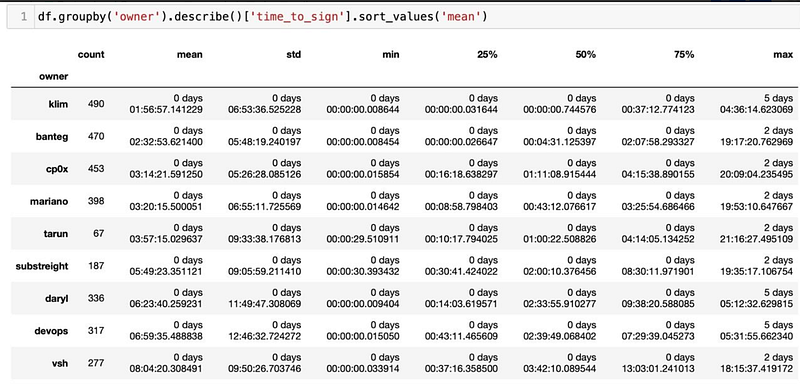
- A 9 member multi-signature wallet decides about the implementation. If 6 out of the 9 wallet users sign the proposal, this change will be passed into the implementation phase.
#2 — Vaults
Vaults are the main product of the yearn.finance DeFi protocol. Using Vaults, users can lock their assets in the pools, and earn interest automatically. According to the official documentation of yearn:
Vaults benefit users by socializing gas costs, automating the yield generation and rebalancing process, and automatically shifting capital as opportunities arise. End users also do not need to have a proficient knowledge of the underlying protocols involved or DeFi, thus the Vaults represent a passive-investing strategy.
In order to use Vaults:
- Connect your Wallet (e.g Metamask) to yearn.finance.
- Select the Network (Ethereum or Fantom).
- Select the Vault you want to provide liquidity.
- Enter the amount you want to deposit.
- Deposit.
yearn.finance offers lots of Vaults on different tokens.
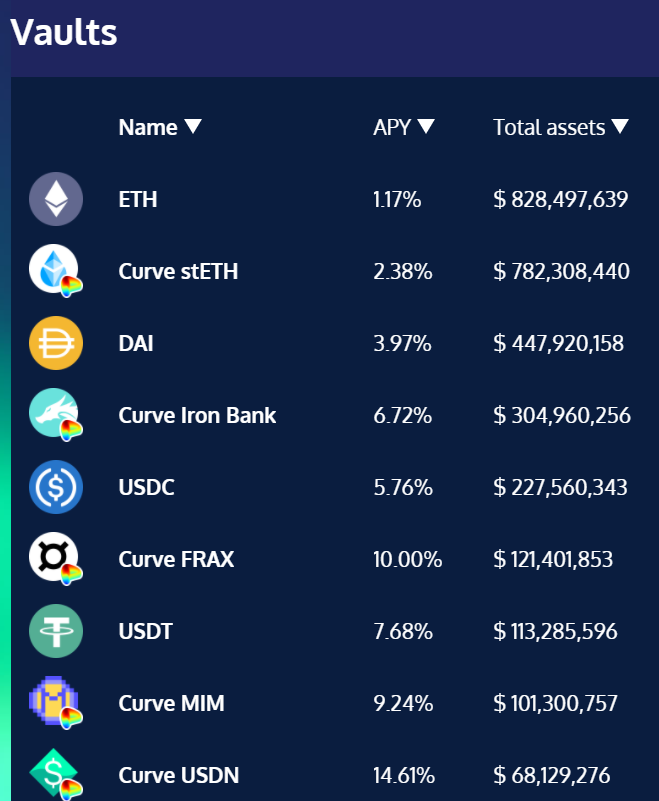
Most of the Vaults are related to Curve LP tokens. If you do not have those tokens in your wallet, you need to swap your token using the “Zap” feature of the platform.
Finally, for monitoring the holdings and returns in the Vaults, you can use Zapper, Zerion, yVault ROI, or Trackavault.
#3 — Iron Bank
“Iron Bank” is the name of the borrowing/lending solution on yearn.finance DeFi protocol.
Users and Protocols can use this service to borrow or lend different assets.
Users can get overcalletelized loans. Protocols normally should be whitelisted in order to receive undercollateralized or zero-collateralized loans. For this, factors such as reputation, track record, smart contract audits, insurance coverage, and treasury value and liquidity are considered.
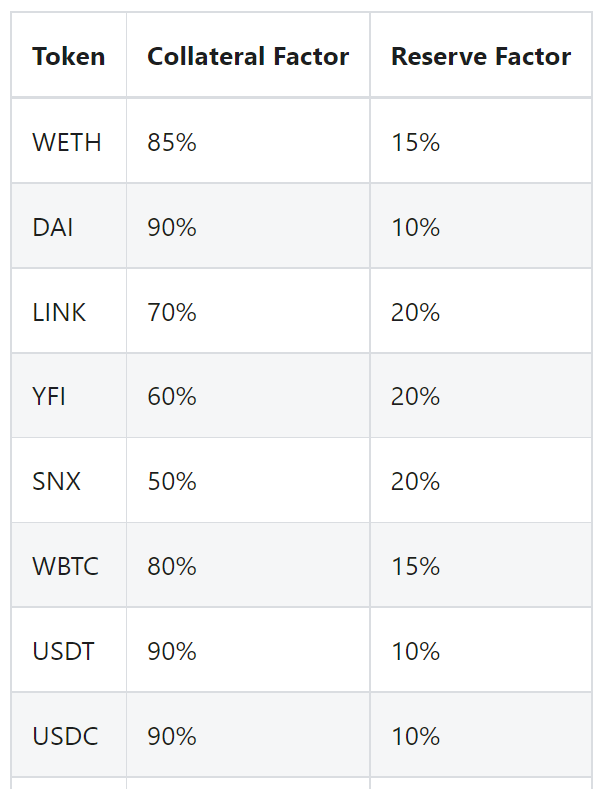
To receive loans, there are two important factors defined in the protocol:
- The Reserve Factor: the percentage of fee paid to the Iron Bank.
- Collateral Factor: the maximum you can borrow on a particular asset.
Iron Bank smart contracts use Chainlink oracle to get updated prices of the different assets. For wrapped tokens, they use the price of the pegged asset instead, and for stable coins, the related fiat currency price is used.
Finally, if a token has low supply (less than $50k USD value), low collateral value and borrowing (less than $50k collateral and $50k borrowing in USD value), or security issues in the past 30 days, it will be delisted.
#4 — Partnership Program
The partnership program is a new feature currently under the test phase on yearn.finance protocol. The main idea behind this program is to let partners to contribute TVL of different vaults. In return, yearn redistributes a percentage of profits to the partners.
To understand the profit share of partners under this program, first you have to check the following table in the platform.
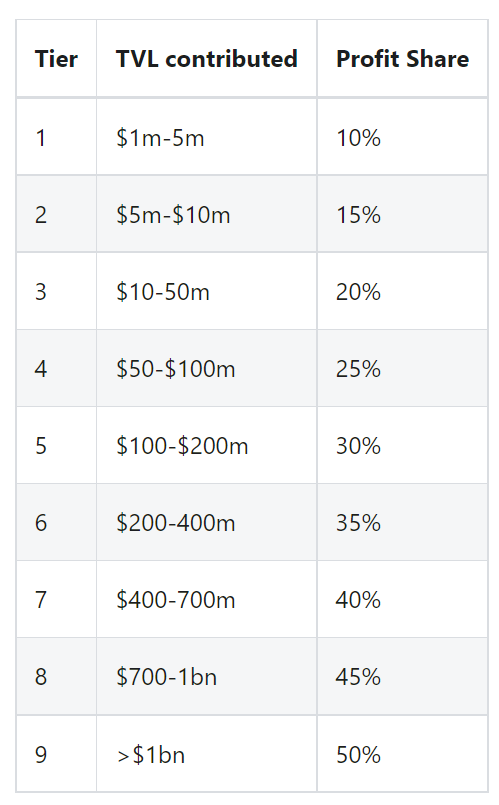
Now, the formula for calculating the final profit is this:
[Partner’s Tier]% of 65% of 10% of annual yield.
For example:
if a partner contributes $10m TVL in a vault, then she belongs to tier 3. Therefore her Partners Tier % is 20%.
Final Profit of Partner = 20% of 65% of 10% of annual yield.
Now if the annual yield is $1.000.000:
Final Profit of Partner = 0.2 * 0.65 * 0.1 * 1.000.000 = $39,000
At the moment of writing this story, the processes for evaluating partners’ eligibility and distribution of profits are completely manual and managed by the yearn team.
#5 — Yearn’s Stack & Modules
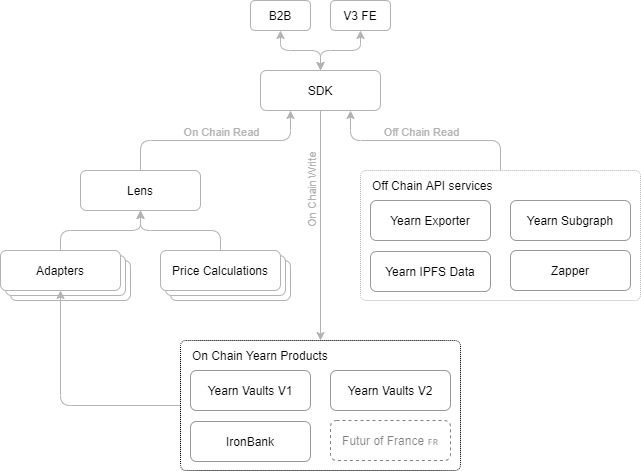
Yearn SDK includes different on-chain and off-chain modules. Here is a brief description of some of them:
- Yearn Metadata: lightweight storage for keeping frontend related data (e.g custom messages).
- Yearn Exporter: stores and displays stats about yearn assets (e.g Historical TVL and APY).
- Yearn Subgraph: stores all historical data for users and leverages the graph to store historical user data that can be aggregated to display historical earnings.
- Yearn IPFS Data: saves and retrievess critical data (assets, positions, vault deprecations).
- Yearn Exporter: provides a simple backend solution for storing real-time stats from yearn products.
- Yearn Lens: a series of smart contracts that aggregate and format Yearn family protocol data into standardized interfaces.
This article is for informational purposes only. It should not be considered Financial or Legal Advice. Not all information will be accurate. Consult a financial professional before making any major financial decisions.
If you enjoyed this content and feeling generous, please consider supporting me by donating to my ETH wallet:
0x1779c21F79D3F1e63960990818B5bF03e89CbfFE
If you are interested in reading my similar posts in the future, please consider joining medium with my referral link. If you sign up using my link, I’ll earn a small commission and you will have unlimited access to the content from all medium writers. That way, you will support me and your other favorite writers on the platform. Thanks.