
5 Things Parents Could Do To Help Their Child Learns Better Online
#5: Be there for them
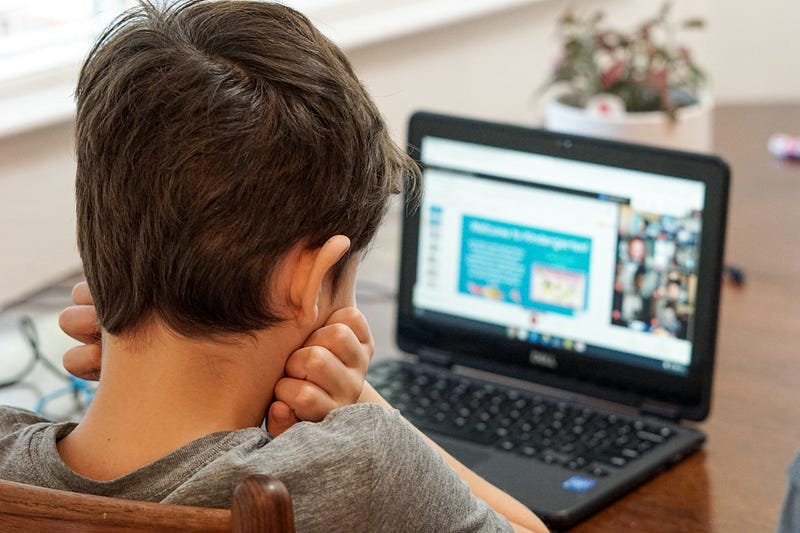
New variants of Corona virus that are highly contagious and deadly would keep our children from school for a longer time than we expected. Many countries would revert to online learning to protect our children from the deadly virus.
While staying at home and learn through online platforms has been said to be a failure, parents could do these 5 things to help their children to thrive in online classes.
#1: Dedicated Study Space
Never allow children to study on their bed, or you will risk wrecking both their study and sleep habits. Set up a study space only for learning is the foremost task we need to do.
You don’t need to set up a study room for them, just a table away from the distractions like the TV or game console. Avoid setting the desk near the walkway because the teacher and classmates would not enjoy watching you moving in the background.
A specially dedicated space for learning could prime our children’s minds in preparing for learning once they sit at the desk. It will help them get into the focused mode a lot easier.
#2: Set A Learning Plan
“If you fail to plan, you are planning to fail”, a quote by Benjamin Franklin, is well known by many, but most of us fail to make a plan that works.
If we need a plan to succeed in our life, our children will need the same for their learning. Most parents make a plan without their children's participation, and that’s another plan that would, most likely, fail.
Participating in the planning stage could create a sense of accountability in children. They will be more likely to take responsibility in learning. Save you some energy chasing behind them for homework and practices.
A plan does not guarantee success, of course. Review the plan and make adjustments along the way would increase the chance of achieving the result you and your child aspire for.
#3: Set Realistic Learning Expectations
Despite clocking in at work for eight hours, we are only productive for about three hours. If we can’t be productive for eight hours straight, how would our children stay productive at learning for hours?
Our children are not passive information recipients because learning poses a high demand for their cognitive resources. It was not an exaggerated response when they said they were hungry and tired after the math class.
Always include short breaks between learning sessions to ensure they have enough rest to rejuvenate before diving back into the ocean of knowledge.
#4: Provide Them with The Learning Tools
The helplessness in learning could kill learning enthusiasm. They are not a sponge that will absorb everything around them. Instead, they need the right tools to learn effectively.
“If a craftsman wants to do good work, he must first sharpen his tools.”
― Confucius, The Analects
Anything that could help our children learn is the right learning tools. One might need the latest software, while others might need a new geometric set for learning. Find out what helps our children learn best is an inevitable parental responsibility.
#5: Be There For Them
No, you don’t have to crack your head to solve that algebra equation that you learned over 20 years ago. Being with your child is showing your support in their learning process.
Unless you have preschoolers at home, you don’t have to sit by your child during their online classes. Instead, accompany them when they are working on their homework, asking if they need your help. Even when you can’t answer what they are asking, you could offer to look for answers online. Besides that, discussing their problems could already help direct their mind towards finding the answer.
Parents' involvement has been proven to have positive impacts on children’s learning. Your presence in their learning process has a profound impact, of course, not so much when you get hooked on your device when they were working hard on the math problems.
Everything has been made formidable by the pandemic. As a teacher, I could say that teaching has been really challenging in the midst of the pandemic, and I am sure some goes to our children’s learning. Parents could elevate the learning by setting up a study space, planning the learning process together to create a sense of accountability, and being realistic in expecting their performance.
Besides putting food on the table, parents are expected to provide the right tools for learning and be present in their learning process to help evade the sense of helplessness in learning.


