
5 Profound Shifts That Happen When You Practice Buddhism
A journey of self-transformation and wisdom
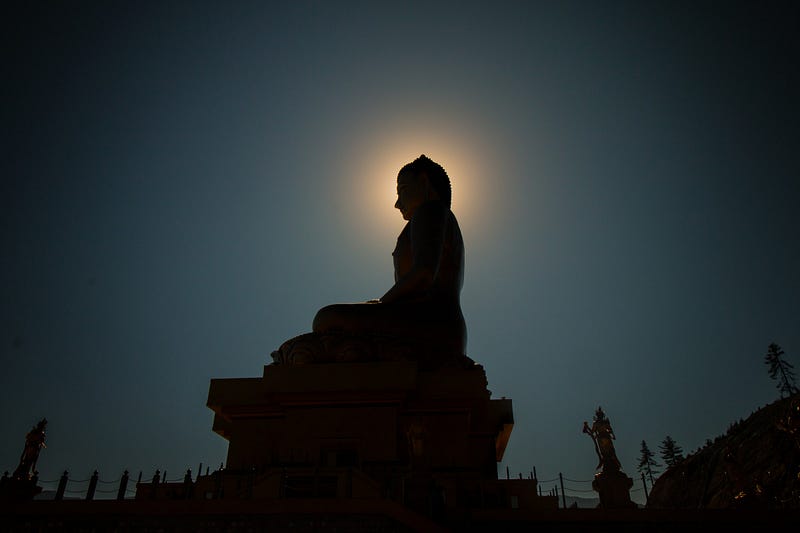
After practicing Buddhism for 23 years, I consider it a way of life rather than a religion. Unlike most religions that expect you to walk in through their door with faith, Buddhism says — practice first, faith will follow.
Meaning as you practice the Buddhist teachings, the intrinsic changes that occur within you, and in your environment will naturally help you develop faith.
The form of Buddhism I follow, called Nichiren Daishonon’s Buddhism is based on the Lotus Sutra, Shakyamuni’s (Siddharth Gautam Buddha’s) highest and final teachings from the last 8 years of his life. He summed it as the middle way of achieving enlightenment, just as you are.
In its simplest form, a Buddha means “Awakened One” and the practice of Buddhism aims to awaken us to the true meaning of life and our existence. It declares that we are all Buddhas without exception, the only difference is not everyone chooses to believe in it.
“We ordinary people can see neither our own eyelashes, which are so close nor the heavens in the distance. Likewise, we do not see that the Buddha exists in our own hearts. ” — The Writings of Nichiren Daishonin Vol 1: New Year’s Gosho , p 1137
On the path of Buddhism, 5 fundamental changes occur within you.
1. You become more conscious of your actions
Karma matters.
As Buddhists, you are taught that everything you experience in life is a result of your own actions from the past (including past lives). The causes you make, manifest in the effects you experience, now and in the future. So, if you want to change your current and future circumstances then alter your actions now. Action includes your thoughts and words, not just physical actions.
That’s where it gets tricky.
For example, suppose you have a long-standing rift with a family member, and you are invited to attend a family event where they are present. Although you may act Buddhist in your outward actions toward this person, if your thoughts and words are negative, then the manifesting effect from the interaction will be negative. Buddhism teaches us to be conscious of every action (word, thought, and deed) that we put out in the environment.
2. You stop blaming others
The environment and you are one.
“If the minds of living beings are impure, their land is also impure, but if their minds are pure, so is their land. There are not two lands, pure or impure in themselves. The difference lies solely in the good or evil of our minds. ” — The Writings of Nichiren Daishonin Vol 1, P4
Buddhism proclaims the oneness between ourselves and the environment. No matter where or who we’re with, our surroundings mirror the person we are inside. So, if you tend to lean towards negativity and pessimism, you will attract similar people into your life. While their expression of negativity may differ from yours, regardless of the form, they will reflect the same tendencies as you.
When you recognize that your environment mirrors you, then you begin to work on your own attitude before pointing fingers at others.
When you change, your environment changes.
3. You feel hopeful and not a victim of destiny
You can change your life.
“Those who believe in the Lotus Sutra are as if in winter, but winter always turns to spring. Never, from ancient times on, has anyone seen or heard of winter turning back to autumn. Nor have we ever heard of a believer in the Lotus Sutra who turned into an ordinary person.” — The writings of Nichiren Daishonin, Vol 1, P 536
The best part of practicing Buddhism is the boundless hope it gives you to change your life at any given moment- in this lifetime. Buddhists create their ideal life through thoughts, actions, and words, not some predetermined cosmic revelations cemented as our fate. In other words, you’re not a victim of destiny.
The Buddhist theory of karma is divided into mutable and immutable karma. For example, the family you’re born into is immutable karma that cannot be changed but poor health, lack of finances, or bad relationships are mutable and changeable with Buddhist practice. If you are suffering in any mutable area of your life, Buddhism gives you the tools to change these karmic retributions. This ability to change any suffering or lack into happiness and positivity is the ultimate goal and promise of Buddhism.
4. You consciously avoid violence and negativity
Peace begins with you.
“The essence of Buddhism is not to seek the placid existence of a still pond but to establish a towering state of happiness that not even the stormiest seas can destroy.” — May 201 Living Buddhism P10
Peace is the central message of Buddhism. Before you point fingers at others, Buddhism teaches you to self-reflect on your own actions and thoughts, positive or negative, in any situation. This is not an overnight shift and takes diligent and sincere practice. With time, you start disassociating yourself from events and people that disturb your inner tranquility. You dislike and no longer tolerate, being around abusive or negative influences in your life. The more peaceful you become within, the more peace you find around you.
5. You look for the hidden lesson in everything
There are no coincidences.
Buddhism puts an end to the blame games most of us play. The constant urge to pity ourselves by saying that our unhappiness, misery, and failures stem from the behavior or actions of others. We’re all guilty of this drama.
When you practice Buddhism, a mirror illuminates your true self. It’s no longer about what others do to you, it’s about what you did to invite the negative effects into your life (from current or past lives). The solution to every problem is found in altering your own behavior and actions. When you view life from this vantage point, you begin to look for hidden lessons in every incident — no matter how negative. The question becomes, “What actions of mine led to this situation? What can I do to correct it?”
The Buddhist self-transformation journey entails taking complete responsibility for our part in all life situations — good or bad. When you live life from a causal perspective, the emanating wisdom moves your life towards a positive and happy outcome in all areas.
This is the enlightened way of living — the ultimate goal of Buddhism, is to awaken each one of us to our highest potential.
**************************************************************