
5 Rare Heartbreaking Photos Of Slavery
Compelling slavery stories that will horrify you.
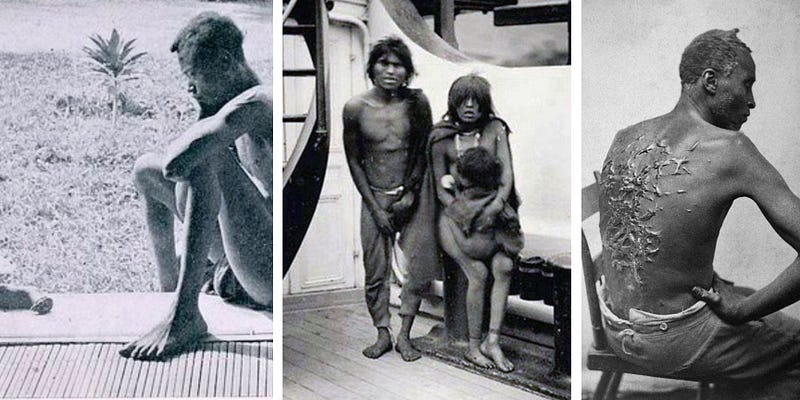
Life in 1700 till slavery was abolished was extremely difficult for the people who were enslaved, and it is from those times that we find extremely disturbing stories related to slavery.
Below, you will find some of the most heartbreaking pictures and stories that really helped in abolishing slavery itself.
1. Scars Of Gordon, A Whipped Slave From Louisiana, 1863
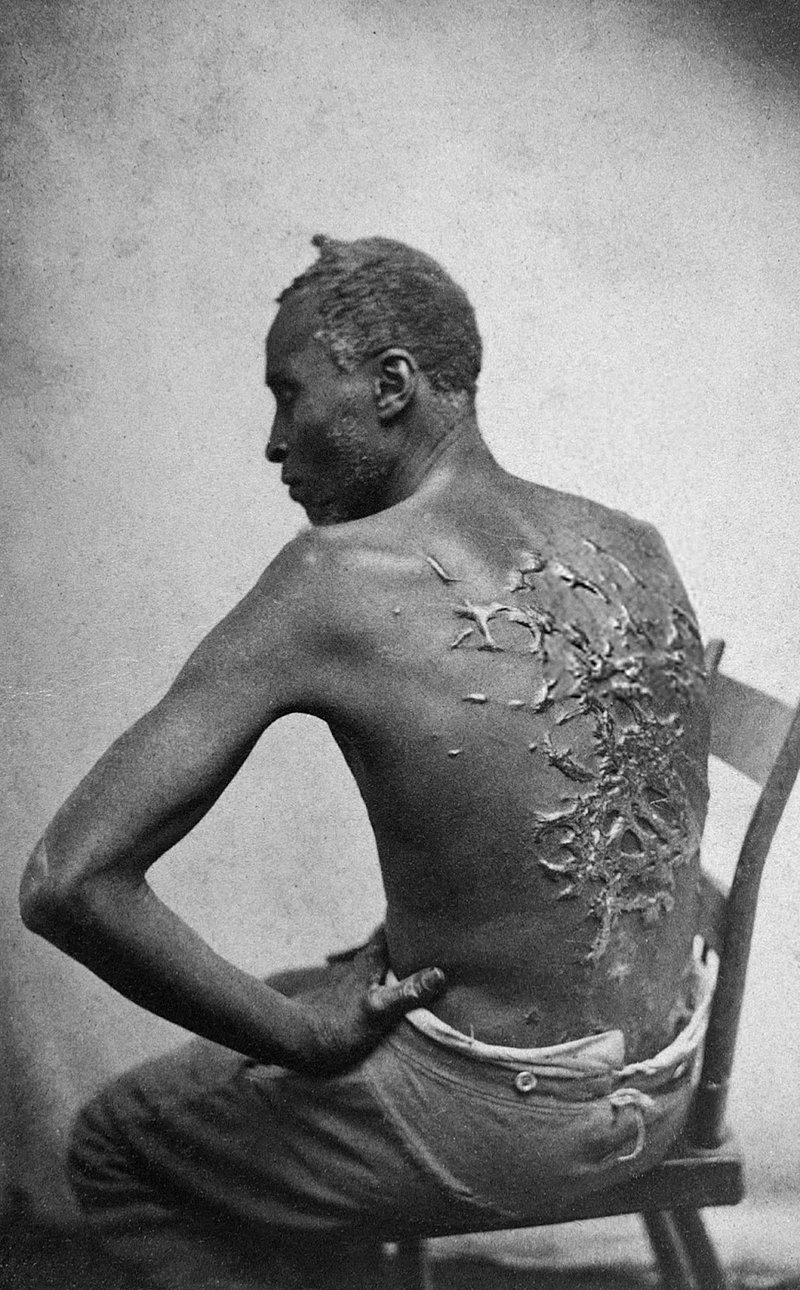
Gordon, a slave from Louisiana, received severe punishment by his masters for reasons he preferred keeping to himself.
This whipping left his back with horrible marks on most of his back surface. Gordon’s claim of being severely beaten couldn’t be denied because of all the visible reasons — his back of healed tissue proved the whole story.
Gordon escaped from 3000 acres of John and Bridget Lyons plantation in March of 1863, where he was held slave with 4 others.
His master pursued Gordon along with several others and a pack of bloodhounds. However, Gordon knew before leaving that he would be hunted, so he carried onions, which he rubbed all over his body to throw the dogs off his scent.
After covering more than eighty miles in the period of ten days, Gordon finally reached Baton Rouge with all his clothes torn up and full of mud, and this was the place where the famous photograph of his was captured.
The photo of Gordon’s back helped change people’s opinion during the time when there were several uprisings in the country and as for Gordon joined the Union Army, where he served as a guide.
2. Selknam Natives On Their Way To Europe To Be Displayed At Human Zoo, 1899
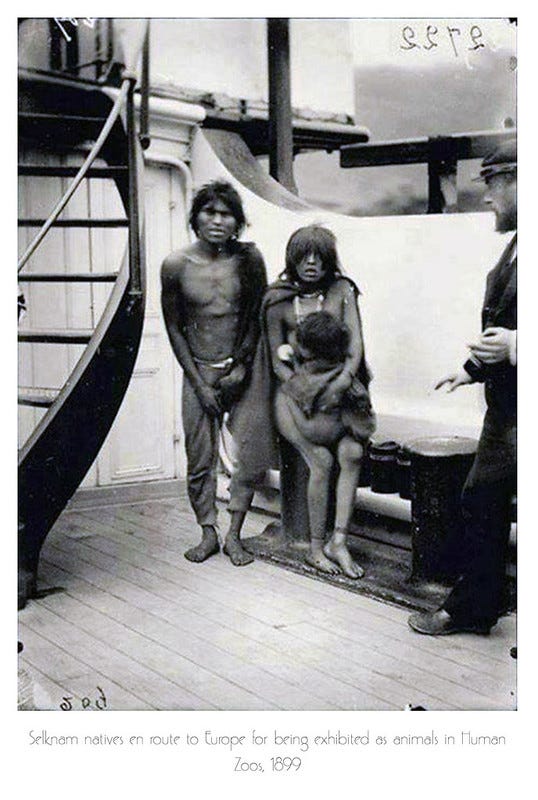
In those early days of our modernization, we humans have done some extremely horrendous things, and one of them was indeed making a Human Zoo.
In 1889 the Europeans, with the permission of the Chilean government, took eleven Selk’nam Native, which included an eight-year-old boy; these natives were taken to be displayed at the Human Zoo.
The decision to display this indigenous group was taken because Selk’nam Native was already very low in numbers, and they were like no other tribe which made them really unique.
Regardless of this, these natives were treated like animals; they were expected to perform more than 8 times a day every day.
Furthermore, the care that was given to them was not adequate, and because of this, most of these natives never made it back to their lands, and some didn’t even make it to Europe.
There were more than 3,000 Selk’nam Natives in 1896 before they were allowed to be shipped like animals, and by the end of 1974, the last of pure blood Selk’nam died.
It took only 75 years to wipe them off the planet, and all that for what? Just for some cheap entertainment. Today the Selk’nam Natives and their language has been declared extinct.
3. Father Staring At The Hand And A Foot Of His Daughter, 1904
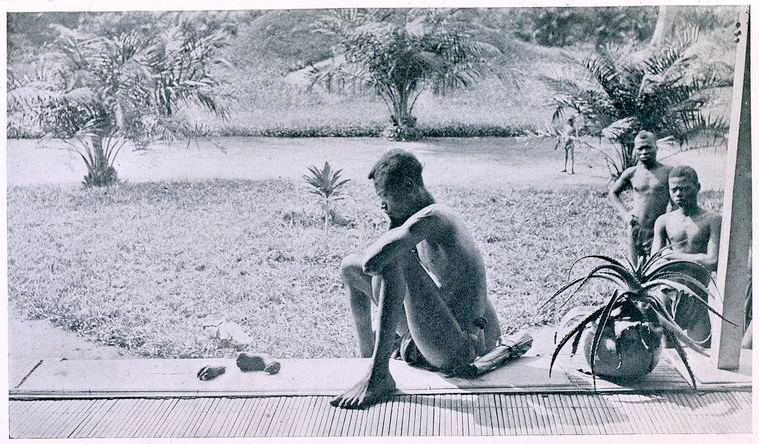
The image above captures a father staring at the severed foot and hand of his daughter, which was brought to him by the soldiers as a punishment.
This is by far the most heartbreaking of all the slavery-related photographs that were ever taken — exactly shows how much slaves had to suffer on day to day basis and how helpless they were.
The photo was taken in Belgian Congo in which a man by the name of Nsala can be seen sitting in absolute trauma while staring at the chopped-off hand and foot of his daughter; the reason for such barbarism?
Nsala didn’t collect enough rubber.
Furthermore, these savages didn’t stop after cutting off the hand and foot of this five-year-old.
They killed her, that wasn’t enough for them, so they cannibalized and sent the hand and foot to the father, destroying this individual’s life.
All this oppression was done because of one man who was sitting thousands of miles away and not even once came to these lands, the sickest king of all, King Leopold II.
4. Rescued Slaves On The Deck Of HMS Daphne, 1868
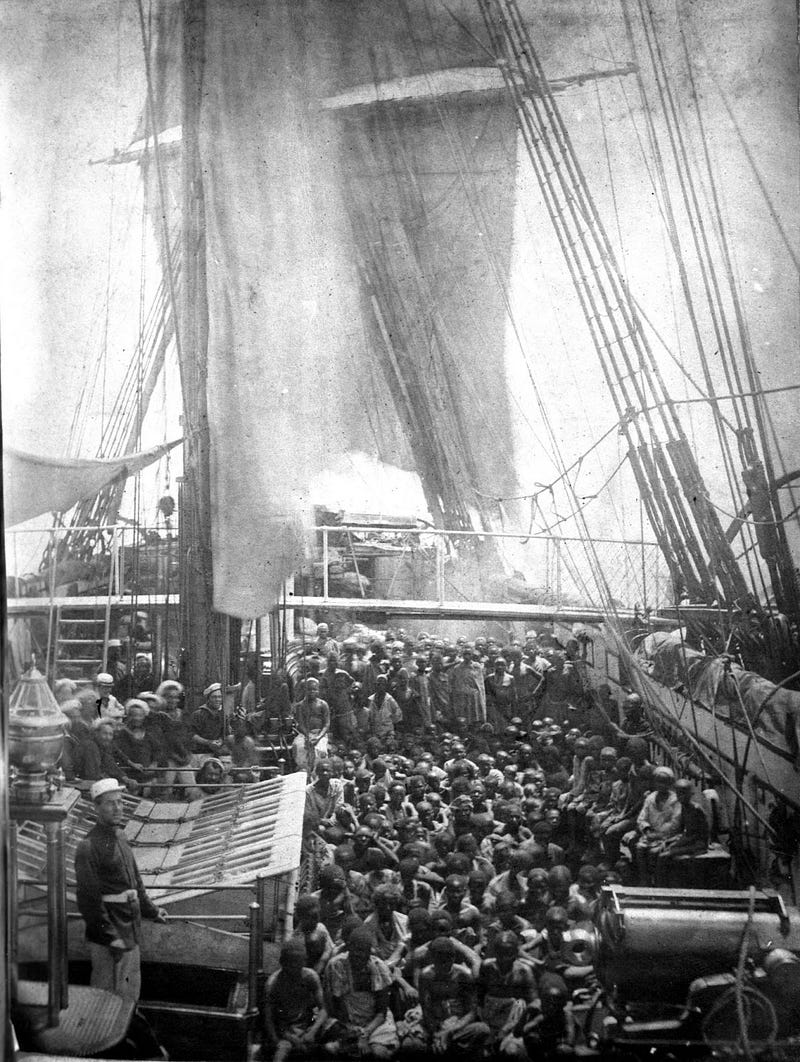
These East African slaves were rescued from an Arab slave trader in November 1868 — they were rescued by the British Navy along the coast of Zanzibar.
The HMS Daphne was there to enforce a treaty that was signed between the Brits and the Sultan of Zanzibar that stated all kind of slave trading would be taken care of.
The Sultan was trying to play on both sides just to make some extra bucks for himself.
However, after The Slavery Abolition Act of 1833, the British started doing anti-slavery operations, and this was one of those operations in which a ship full of people was rescued.
5. Lady Being Carried By Her Manumitted Slaves, 1860
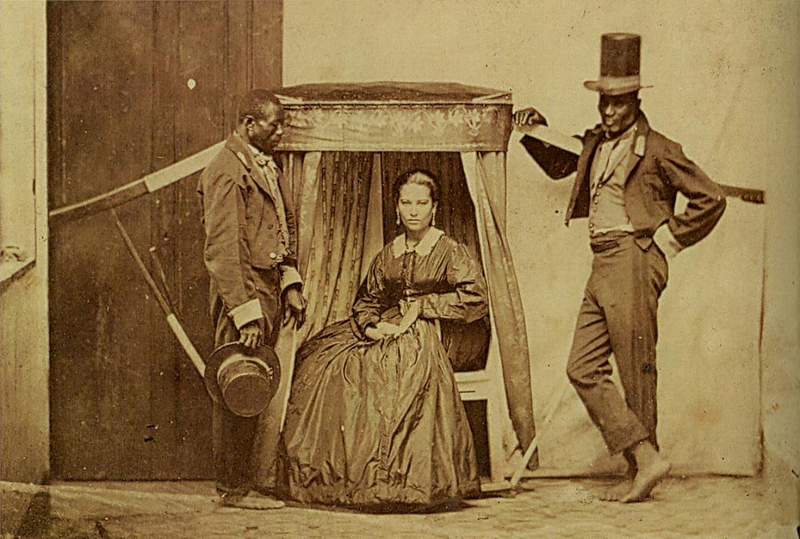
This is not a picture of a woman trying to pose with her slave; instead, this is a picture that was captured to show how she is being manumitted.
Manumission was an act where the masters set their slaves free, and to prove; a photo was taken in which the slaves wore clothes that were borrowed just for the picture.
This manumission could be taken back if the slave being free went and started to disrespect or malign the owners; they were to be declared void and sent back to being slaves.
However, the part where the picture of manumission was taken really was a painful one because, after all they had, they were still being treated as a lower kind.
This can be seen by the slaves being barefooted, as in those early days wearing shoes showed ones wealth, status and class which they believed no slave should ever have.
Being free was never easy for any slave, and to be free, they had to go through a lot; perhaps the most common was that the slave was really close to their master, and they were set free as a gesture of benevolence.
Other criteria were where the owner had a sexual relationship with their slave, and all the kids and their women were manumitted.
Final Words
We should be thankful that the days in which slavery was legal are long gone.
We are born in a world free from most of historical problems that most of our ancestors had to face — whether it be wars, rights, and what not.
More from the author:


