
5 Questions to Get You Closer to Your “Ideal Ordinary Week”
#3: Is this a love- or fear-based decision?
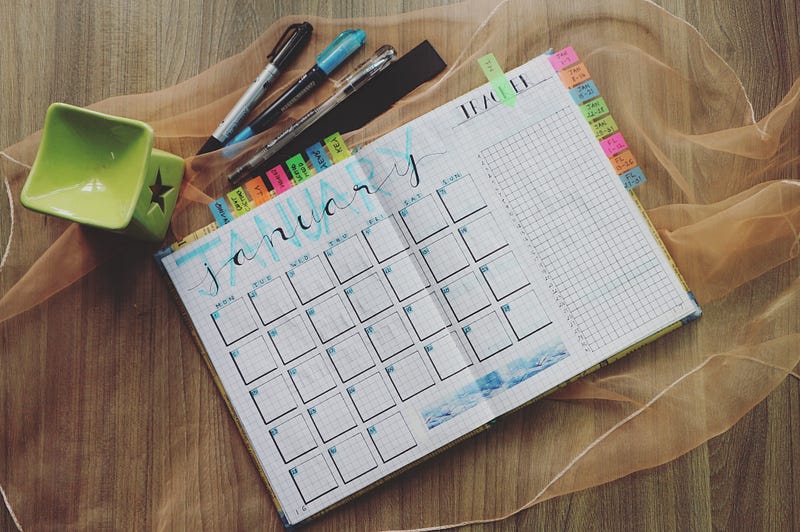
Ali Abdaal introduced me to the “ideal ordinary week”. He’s a YouTuber who loves self-improvement.
The concept is simple. You look a couple of years into the future and start planning your week. It’s ideal because it’s your choice. It’s ordinary because it’s boring.
Before you start plotting, though, it’s helpful to experiment. Which activities do you want to include?
As my nan used to ask me, how do you know you hate tomatoes if you’ve never tried them?
Here are five questions I’ve used to navigate the taste-testing. I believe they can help you get closer to your ideal ordinary week, as they’ve done for me.
#1: Is this giving or taking energy?
I started coaching by accident.
One of my friends owns an agency. He also hosts a daily room on Clubhouse. Because potential customers flank him on all sides, he turned to me for help.
This was last April. Now, I spend 3–4 hours a week helping his clients launch their podcasts. I get paid to jump on calls during lunch breaks and it’s really fun!
Or at least, it used to be. My friend and talented writer, May, helped me realise the calls are draining me. She told me about her “energy audit”.
“Once a month, I ask myself which activities give me energy and which ones take it away?” — May Pang
The podcasting calls suck my energy. I have to prepare for each one and send follow-up emails. For these reasons, I’m walking away.
Using energy as my reference point, rather than time, makes it easier to decide which activities I should be doing more of. I structure my week around these.
#2: Can I find the answer quickly?
My grandad’s one of my favourite people in the world.
Since the early 2000s, he’s been putting together a scrapbook. It contains random facts about things he’s found interesting.
Olympic world records, breeds of dog, questions from quiz shows — you name it. Looking through it is like looking back in time.
Whenever he shows me the book, I haven’t got the heart to tell him:
“Grandad, I love what you’re doing, but you can find all these facts on Google. Why do you learn them?”
I’m missing the point. I think my grandad gets joy from the act of creation rather than the end result. Still, it gets me thinking. Are there areas in my life where I try to remember things that aren’t important? Can I outsource these thoughts?
This is where my “second brain” comes in. Instead of remembering content ideas, they’re stored in Notion.
By freeing up mental space, I’m able to do more of what matters each week. I also feel more productive. David Allen, the author of Gettings Things Done, has this to say:
“Your mind is for having ideas, not holding them.” — David Allen
#3: Is this a love- or fear-based decision?
In May 2020, when I was jobless, I spent £1,000 on an online course. I thought it was a good investment and I’d enjoy the materials. Making money online would also get me closer to my ideal ordinary week.
Seeing my bank balance dwindle made me fearful, though. What if I run out of money? What if I can’t pay my bills? Will I be on the streets?
Of course, these fears were completely unfounded. On the same day I bought the course, I was offered a job. Call it coincidence, call it the Universe — whatever. Time and time again, I’ve found the best outcomes come after conquering my fears.
May told me about this question. To her mind, we should lean into the choices that make our hearts sing and avoid fear-induced decisions.
A love-based decision trumps a fear-based one every single time.
#4: Am I inventing things to avoid the important?
I feel overwhelmed if I have a long to-do list. This happens most days. Rather than chop it down, I prioritise.
Question #4 calls out my bullsh*t. Am I inventing things to avoid the important?
I ask myself this question three times a day. Once at 09:00, once after lunch, and once after dinner.
I tie it to one of my favourite questions:
“What’s the ONE Thing I can do today such that by doing it, everything else will be easier or unnecessary?” — Gary Keller, the author of The ONE Thing
By doing this ‘one thing’ early in the morning, I’m able to glide through the rest of my day.
Seven productive days equals an ideal ordinary week.
#5: If I had to pay money to see this person, would I spent it?
As Steven Bartlett points out, time is our most precious resource. We should spend it wisely.
Using my time efficiently is a constant back and forth. Before this question, I wasn’t sure which relationships I should pour energy into. Now, it’s crystal clear.
As well as thinking about money, I ask myself this question popularised by Derek Sivers. It’s helped me free up more of my time for the people who are important.
“Is this a hell yes?” — Derek Sivers
It’s my belief many of us are planning for the highlight reels rather than the day-to-day grind. Sure, that music festival will be epic, but will you be in love with Monday?
“The professional cannot allow the actions of others to define his reality. Tomorrow morning the critic will be gone, but the writer will still be there facing the blank page.” — Steven Pressfield
I’m by no means perfect. My ordinary week isn’t ideal yet. However, with the five questions above, I’m getting closer. You can too.
Here’s a quick summary:
#1: Is this giving or taking energy? A once-a-month audit can help you assess activities.
#2: Can I find the answer quickly? It’s possible to outsource your thoughts using tools like Notion.
#3: Is this a love- or fear-based decision? I’ve found the best outcomes come when I lean into love.
#4: Am I inventing things to avoid the important? Doing the “one thing” before lunch helps me glide through the day.
#5: If I had to spend money to see this person, would I spent it? If the answer’s not “hell yes”, it’s no.
read our print magazine for free
when you sign up to mind cafe’s newsletter, you’ll gain instant access to four articles from mind cafe’s gorgeous print magazine totally for free. click here to join.


