
Six Creative “Systems” I’ve Used to 10X My Output
With a little help from my friends

Everything in Its Right Place.
What can I say? The first track on Kid A is a masterpiece.
Take the structure. Using 10/4 as a time signature is f*cking mental. Then there’s the ghostly repetition of “Kid A” at the start — a backward loop taken from the end of the song.
All this is to say, I love this track.
I also like everything in its right place. For this reason, I’ve developed systems.
I say systems. Really they’re just habits.
These “systems” have helped me 10X my creative output in the last year. They’ve also helped me make four figures a month through courses, coaching, and writing.
Oh, and like Radiohead’s songs, they wouldn’t be possible without a collective effort.
#1: Outsource My Worries
My mate suggested this.
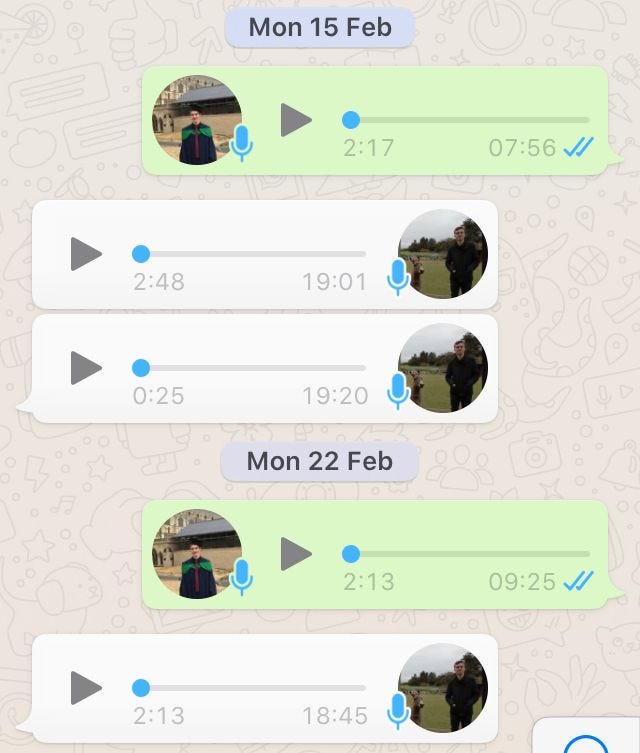
Every Monday morning, I drop him a voice message. It usually lasts 2–3 minutes. I’ll detail three goals for the week and one worry.
The worry can be big or small. Sometimes I can’t think of one. It doesn’t matter.
I’ll also reflect back on his goals from the past week. Did he complete X, Y, and Z? If not, why not? He then replies with his goals and worries, and checks I completed last week’s goals.
It’s a simple practice that’s made me realise 90% of worries are ignorable. If they’re not worth sharing, they’re not worth having.
When I do have a worry, sharing lifts the burden.
Win-win.
How it’s increased my output: By clearing my brain’s gunk, I’m more efficient in the hours I work.
#2: Accountability Swap
One of my friends is completing #75Hard. It’s a “mental toughness program” started by Andy Frisella in 2019. The basic principles include the following:
- Follow a diet. This includes no alcohol or “cheat meals.”
- Work out twice a day for at least 45 minutes. One of these workouts must be an outdoor session.
- Drink four litres of water per day.
- Read ten pages of nonfiction a day.
- Take a five-minute cold shower.
- Take progress photos every day.
As this Cosmo article points out, it may not be suitable for everyone. But my friend wanted to give it a go, so she asked me for help.
“I’m not doing it too if that’s what you’re thinking!”
She laughed. “No, don’t worry! I want to do an accountability swap.”
“What the hell’s that?!”
“Simple. You hold me accountable to this challenge and I’ll hold you accountable to something else.”
So that’s what we’ve done. She sends me two workout pictures a day — either in the gym or outside. I then send her five ideas I’ve typed into a Google doc.
Five ideas a day was inspired by James Altucher. He claims by building your “idea muscle”, you’ll become an “idea machine”.
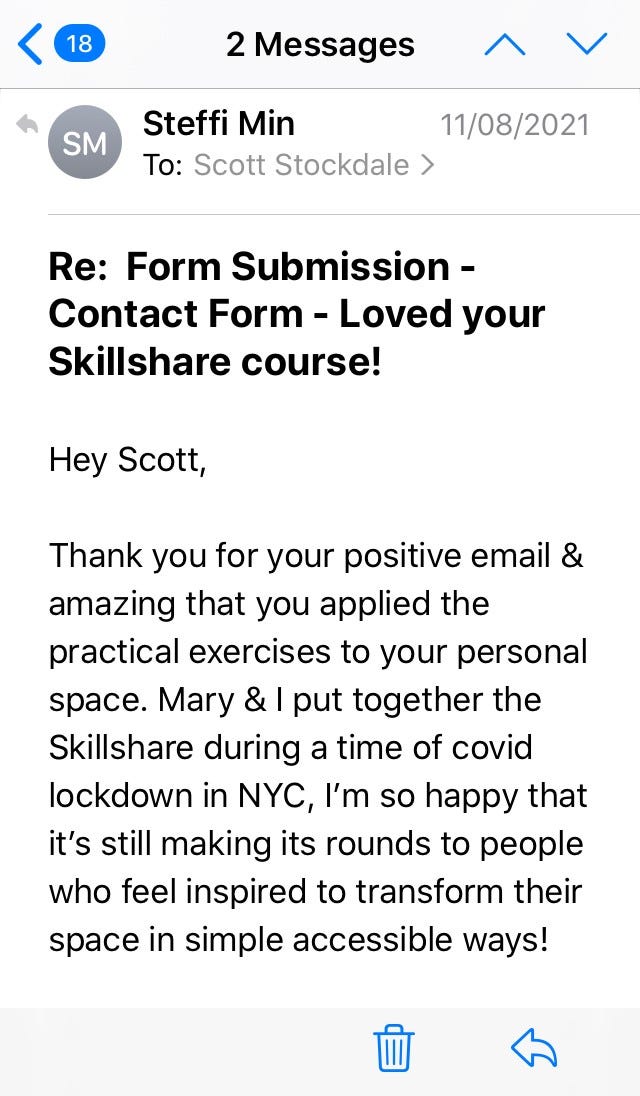
We’re nearly at the end of the challenge and I’ve amassed over 300 ideas in my Google doc. I’ve been sending these ideas off to companies.
Here’s a kind response from Clear Studios NYC:
I’m planning on sharing the document with my email list at the end of August. (There’s a link in my bio if you want to join.)
How it’s increased my output: I wouldn’t have stuck to five ideas a day without the swap. I know because I’ve tried it before.
#3: Work with a Virtual Assistant
I outsourced to a virtual assistant in April 2020. Her name’s Lou and I pay her to produce podcasts, email guests, and complete other tasks. We’ve been working together ever since.
She easily saves me 10 hours a week, and we spend less than one hour a week communicating.
Best of all? Because she lives in Vietnam, I wake up to an email detailing the tasks she’s done. I’m effectively working in my sleep!
I know it can seem intimidating. That’s why I’ve written a number of articles on this topic. These include:
- 50 Things I’ve Learned Working With a Virtual Assistant for 15 Months
- How to Save Over 10 Hours a Week by Outsourcing to a Virtual Assistant
- How I Doubled My Income and Saved 520+ Hours a Year
How it’s increased my output: With the extra ten hours a week, I’ve been able to create multiple income streams.
#4: Perfume Prizes
My mum likes perfume. However, she’ll never buy it for herself, particularly expensive stuff.
So when she asked me if I could help her lose weight, I suggested the following:
“I have no idea how to lose weight but Google will show you. Once you have a plan, I’ll incentivise you with a reward. If you can achieve your target weight, I’ll buy you your favorite perfume.”
The result? Six months later, she attended Google University, followed a plan, and lost over a stone.
She comfortably beat her goal.
It made me realise how powerful incentives can be. As such, I’ve applied them to my own life. Here’s an example.
After completing a workout, I move a marble into a glass jar. Each marble is worth £2. At the end of the week, I reward myself with the money — usually a book.
How it’s increased my output: Working for mini-rewards has instilled discipline. This has spilled into other areas, such as writing content.
#5: Build a Second Brain
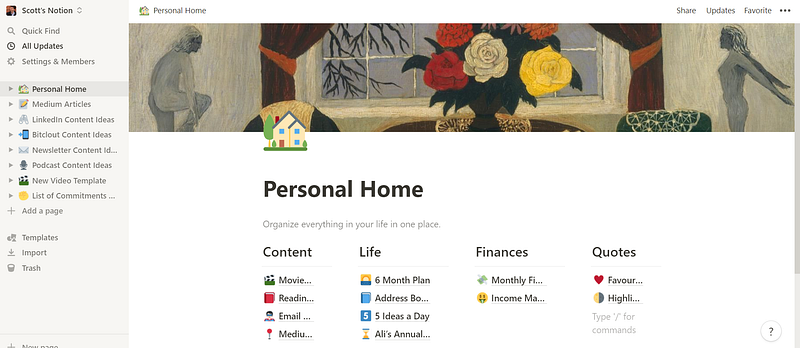
I was first introduced to this concept by Elizabeth Filips. Like many YouTubers, she spins lots of plates. This is why she uses Notion to store content ideas.
I started using the productivity app last month. Instead of storing ideas on random devices, they’re all in one place.
This second brain has helped reduce overwhelm. It’s also fun to use. I actually want to be productive now!
How it’s increased my output: I don’t waste time trying to remember ideas. They’re also easy to find.
#6: Automate Good Habits
How?
I know it’s refreshing. I know I’d be dead without it. And yet, I constantly forget to drink water.
The following rule has changed the game:
Whenever I walk into a room, drink.
Here’s how it looks.
Before I go to bed, I fill up my one-gallon bottle. As soon as I wake up, I reach for the bottle and take a few gulps.
After hitting the gym, I fill three water bottles and place them around my flat. One in my bedroom, one in the living room, and one in the kitchen.
Whenever I walk into these rooms, I follow the rule.
Drink.
This is one example of how I’ve applied James Clear’s four laws of behavioural change. They go as follows:
- Make the habit obvious
- Make the habit attractive
- Make the habit easy
- Make the habit satisfying
I’ve implemented a similar rule for writing. Every morning at 08:00, I’ll take my laptop to bed and start typing. This lasts for an hour. I’ve done this since November 2020.
The habit is obvious. My brain knows when I’m on my laptop in bed, it’s time to start writing.
It’s also easy. I use Ali Abdaal’s parallel processing technique. This means I never start from a blank screen.
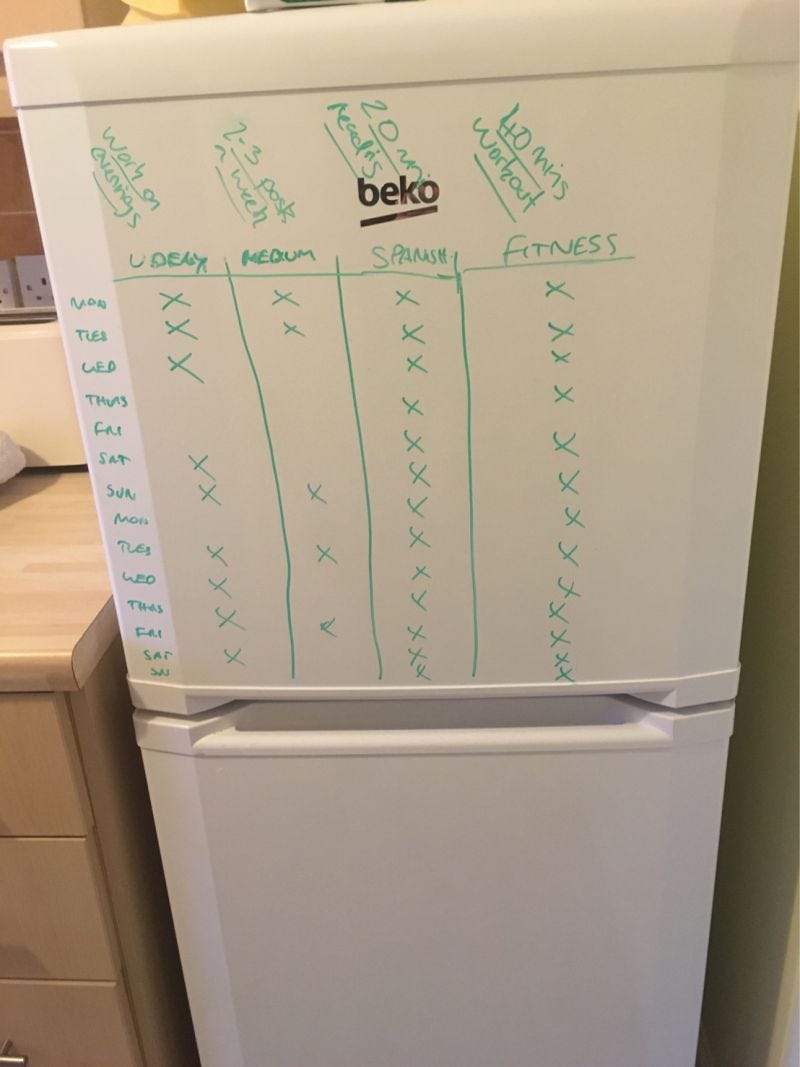
Finally, it’s attractive and satisfying. As soon as I submit an article, I mark a cross on my fridge. My aim is to publish at least two articles a week.
It boils down to this. It’s easier to give 100% than 90%. Once you turn practices into habits, they take care of themselves.
How it’s increased my output: Creating content is on autopilot.
Takeaways
These “systems” might not work for everyone. Personally, I wouldn’t be leaving my 9–5 without them.
Here’s a quick summary:
- #1: Outsource my weekly worries and goals by sending voice messages.
- #2: An accountability swap has helped me list five ideas a day. I now have over 300 in my Google doc.
- #3: Working with a virtual assistant has helped me save over 10 hours a week. This is time I’ve been able to spend making money online.
- #4: Rewarding myself with gifts has made unappealing habits more attractive.
- #5: Building a second brain with Notion means I don’t have to remember ideas. “Your mind is for having ideas, not holding them.” — David Allen, Author of Getting Things Done
- #6: Automating habits I want to stick to means I don’t have to think about them. They just happen.


