
5 Questions To Consider When Taking Control of Your Life
Taking hold of life’s rudder and picking a direction.

We all feel stuck sometimes. We feel like we’re going backward or — even worse — in a hundred directions all at once while never actually going anyplace.
Sound familiar at all?
It can be frustrating. It can be disheartening. But taking control of your life is not an impossible task. It’s not even all that hard.
Take some time to ask yourself some authentic questions, and do yourself the favor of working on some real answers.
You’ll be well on your way.
How invested are you in the status quo?
Are you satisfied or happy with your life right now? Are you really okay with things continuing as they are? Do you want more?
Sometimes we choose not to grow further because the answer is, yes, everything is pretty much as perfect as you’d like. It’s a rare satisfaction, but I’ve known more than one person who was just fine where they were in life and had no good reason to be anything or anyone else.
Good for them.
However, for most people, it’s more a fear of the unknown, or of risk, or of upsetting the old apple cart that keeps them from exploring growth and improving their lot in life.
Which one are you? Be honest. Are you really okay with everything as it is? Or are you afraid you might fail at trying to take more control of your life? Or feel it’s more work than you can handle?
What are your goals?
Let’s assume you’re not satisfied with your life as it stands right now. What do you want to change? Where do you want to be?
I warned you this piece was going to be asking a lot of questions.
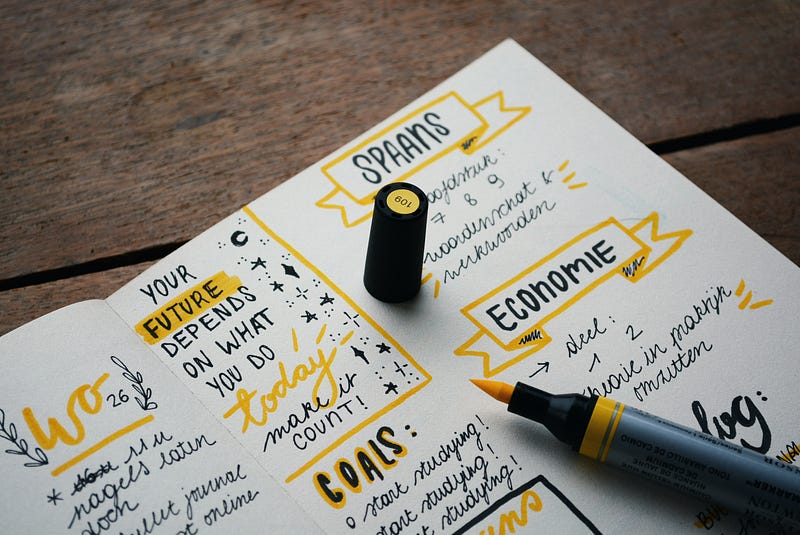
You can write down your goals — this is the recommended method. You could have an interior dialogue with yourself about identifying those goals. You could talk with a trusted friend or relative.
The point is that having a goal gives you a focus to change and take control. It gives you something to aim for. I won’t tell you that there are goals too small or too big. Goals can change over time.
But you need to start someplace.
What do you see as your weaknesses?
What are your weaknesses? For me, it was booze. I’ll get more into that a little further down. It was also a bit of laziness. Maybe some fear. A lot of things, when I really think about it.
I’ll let you in on a secret. Weaknesses don’t really matter. They’re things that can be overcome and ignored more easily than you think.
We’re often told that having any kind of problem is a weakness and that weakness is bad. That it’s something to be ashamed of.
I say weakness isn’t a thing at all. It’s a fraud we can choose to no longer believe in. We shouldn’t fear failure because failure is part of learning. We shouldn’t worry about what other people think of us because, in the end, it’s what we think of ourselves that matters. Is it a substance you think you have a weakness for? Addiction can be beaten.
Suffering from depression? You can get help with that. You should get help with that. I’m not talking that “just take a walk in the woods” nonsense. I mean, some professionals can do a lot of good, whether it be through listening, discussing, or medication. Whatever works. And if you look around, none of that help is as out of reach as you might think.
What can you do to regain control?
So you’ve identified a problem. Maybe not all of the problems, but you have to start somewhere, and taking issues on one at a time is more manageable than all at once.
What do you need to do?
Do you need to break a habit such as smoking or excess alcohol? Do you need to be better at managing your money? Would you benefit from professional help — even if it’s just to have a good listener in your corner?
These are questions to ask yourself during the quiet times. These are the perfect sort of questions to attempt to write out the answers to in a journal. Handwritten or typed — it doesn’t matter. If you feel self-conscious about keeping a journal, or are worried someone else might come across it, feel free to destroy it afterward.
It’s the act of writing out answers that help you find those answers and internalize them enough to take action.

What are you willing to do?
How’s the time to put up or shut up. I’ll share a personal story.
All my life, I had wanted to be a writer and to be part of that world. I grew up in a bookstore and was surrounded by books throughout my childhood.
Instead, I ended up an alcoholic who spent his nights at a bar or drinking home alone in front of the TV. I read a lot and continued to feel that yearning to be a writer, but I was stuck in a world of 12 beers a night minimum.
Then I read a book — it doesn’t matter what book or by whom — and felt inspired to write a fan letter. The Internet was a thing by this time, and the author was active online. The book itself wasn’t all that special — a science fiction mystery hybrid — but I really enjoyed it.
I dropped the author a line expressing my admiration. He invited me to join his mailing list, which was quite active. I also learned the author had a habit of mentoring wannabe authors. I could be one of those he would mentor if I was willing to put in the effort.
Maybe that was what spurred me to change. I hated my life at that time. Literally didn’t care if I lived or died. But I then found myself wanting to change and identifying what needed to change and what I needed to do.
Without going into all of the gory details, I managed to get sober within the year, sold my first professional story about six months after that, and my second one a few months later.

Part of the journey involved changing my environment — no more bars. Another was starting a journal (kept secure on a remote, encrypted VAX server). And I got involved with learning how to write and learning about that world. And making new friends in that world.
While my fiction career never took off, I eventually found a career in publishing and become a good enough nonfiction writer to the point where, combined, I do reasonably well.
Over the years, after finding the will to make an actual change, I met someone, fell in love, got married, bought a house, had a kid, and all that neat stuff.
But I had to change. I had to decide what was important to me and decide what I was willing to do to make it happen.
As any addict could tell you, kicking a habit isn’t easy. Alcoholism can be particularly tricky, given so many social events include it. Each day I had to say to myself that if I wanted a better life, I couldn’t go back to the old one. Not even for a day.
Twenty years later, I still miss booze — whiskey in particular. The smell alone is enough to make my hand tremble a little. But, hey — I’m very happy where I am now.
Your story might be similar. More likely, it will be different. But when it comes to the challenge of taking control of your life, the steps are pretty familiar.
Finding happiness, a conclusion?
Here’s a puzzler. Does taking control of your life automatically lead to happiness?
Maybe. Probably.
You won’t know for sure until you try.
Don’t you think you owe it to yourself to do what you want to do and be who you want to be?
A few questions, and a few answers, can go a long way.
Cheers!
Thank you for reading. I’d love to share more with you via my Bi-Weekly Word Roundup newsletter sent to subscribers every other Sunday. It will feature news, productivity tips, life hacks, and links to top stories making the rounds on the Internet. You can unsubscribe at any time.


