

9 Useful Things I Learned From 100 Side Hustles
Lessons taken from the author of The $100 Startup
I’ve been interested in side hustles lately. They’ve served me well in the past — for the most part. Some I’ve engaged in were more successful than others. Some lasted longer than others. But each one was fun, and each one seemed like a good idea at the time.
Given everything going on in the world today and how it affects the economy, the time seems ripe to consider a new side hustle. I’ve some ideas — some of them I’m more than intrigued by. But that said, I thought that instead of just diving headlong into a new side venture that I’d see what advice an expert could provide.
I stumbled across Chris Guillebeau almost by accident. I was browsing the audiobooks available on my library app when I saw titles like The $100 Startup and 100 Side Hustles: Unexpected Ideas for Making Extra Money Without Quitting Your Day Job. The former wasn’t available for lending, but the latter was. I borrowed it, listened to it, and came away with a lot of thoughts about the nature of side hustles, how to make the most of them, and how to find success.
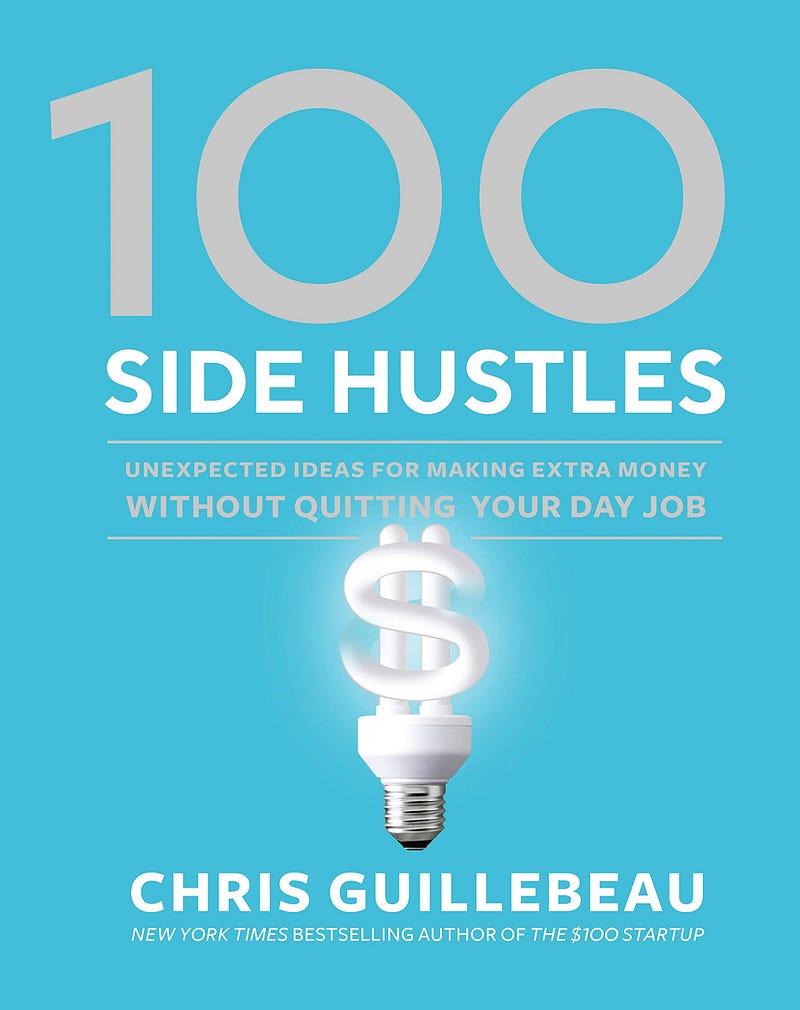
Ask me in a year how it went, but as of today (when I finished the audiobook and the notes I’ve been taking along the way), here are nine takeaways you may find useful in your own exploration of successful side hustles.
Come up with a creative answer to a problem
There’s always a way to improve upon an idea.
It might be identifying a product or service and realizing there is a better way to market it to specific customers. It might be an innovative solution to an old problem that takes advantage of new technology or supply chains.
The point is that you don’t necessarily have to come up with something entirely new. If you can come up with a new or unique way to present a pre-existing product or service, you can make that profit.
Don’t wait for conditions to be perfect
Is there ever a perfect time to start anything? There will always be questions. There will always be room for improvement or refinement. There will always seem to be a moment when you don’t think people are ready for your idea.
The problem is that if you keep waiting for conditions to be perfect, you’ll never get your side hustle launched.
Once you have your product or service in a position to be sold — even imperfectly — pull that trigger. You can always fix things or fill in the gaps along the way. An imperfect launch is better than no launch at all.
Be passionate about your side hustle
If you don’t believe in your product or service, how can you expect anyone else to?
I’m not saying you need to be obsessed, but you need to feel strongly about what you have to offer and what you think you can accomplish.
Don’t take on a side hustle as just a cynical cash grab. Success doesn’t come that way. It comes from feeling a bit of passion about what you’re doing. Even if the end goal is a big stack of cash, you need to believe in the product or service you expect people to pay for.
Leverage all the tools, especially the Internet
We’re living in a time our parents and grandparents could only dream of when it comes to creating and selling a product or service with ease. Print on demand makes anyone a small publisher. Other advances in print technology mean anyone can afford to create the next hot boardgame. 3-D printing, laser etching, metal cutting, and efficient but inexpensive production lines have brought many costs down to a level where you don’t need to mortgage a house to get a prototype out.
And of all one hundred side hustles in Chris’s book, I can’t recall one that didn’t take advantage of the Internet, whether it be for promotions, communication with customers and vendors, collaboration with partners, processing payments, or just staying on top of the bookkeeping.
There were even some examples in which a computer and an Internet connection were all it took to have a successful side hustle.

Be willing to take risks
Nothing ventured, nothing gained, right?
Starting a side hustle means you’re already not risk-averse. Carry that forward as your side hustle gets underway. Some side hustlers have been tempted to go for a quick, big payoff instead of risking a more long-term bigger payout.
Go with your gut. If a risk excites you, maybe you should go for it. Half measures only give you half results — or less. Full measures can pay off repeatedly.
Understand supply chains and shipping
Several examples in the book make mention of issues side hustlers had with fulfilling orders. Sometimes the problem was finding the right supplier or manufacturer. Sometimes it was issues involved with shipping — particularly international shipping.
Ideas are easy. Implementation is hard.
Hard, but not impossible. While you shouldn’t delay too long waiting for that “perfect time,” do try to consider any issues that may come up in maintaining your supplies, selling a product, and getting it to your customers, whether they be individuals or big box stores.
You’ll save yourself a lot of headaches.
Never stop learning
There is always something to learn when it comes to managing a side hustle. It might be a better way to handle payments. It might be a better approach to social media and online marketing. It might even be learning better ways to handle stock or supplies.
Just because you’ve started a side hustle one way doesn’t mean it needs to stay that way. The whole process is a learning experience, and you can improve things and your knowledge along the way.
Be patient, be patient
Not every idea takes off right away. Chris mentions a few examples of this. Ones that stood out for me were a couple of people who took a whack at affiliate marketing. In the end, they were successful (otherwise, they wouldn’t have appeared in the book), but both also took more than a year to yield any significant results.
Sometimes it just comes down to timing. Early winter can be a tricky time to market a product or service generally associated with summer, for instance.
That said, when is it time to pack it in? This is a balance that the author doesn’t go into much, but he does acknowledge that if a side hustle is not paying off after a certain amount of time, it may be time to cut your losses.
Based on the 100 stories in the book, if you’re not making a worthwhile profit after a year and you’ve lost your passion, try something else. But until then, be patient and see what happens.

Choose your definition of success
Not every side hustle has to end with a million dollars.
Not every side hustle has to become a replacement for your day job. It’s perfectly fine if all you want to do is earn some pin money. It’s perfectly fine if your side hustle is merely a creative outlet or a way to enjoy your downtime.
Be as big or as small or as in-between as you wish. It’s your side hustle. The only real investor is you, so you get to decide the scope of your venture.
Bonus takeaway: Have fun
It’s not just about the money. If you’re not having any fun, then what’s the point?
People who are successful in their side hustles enjoy what they do. It’s as simple as that. Yes, a side hustle is a lot of work. There is a lot to learn. There is a bit of a risk.
That’s what makes it fun.
Creative Collaboration With Imaginary Friends
Always ready to hear your ideas
writingcooperative.com
Thank you for reading. I’d love to share more with you via my Bi-Weekly Word Roundup newsletter sent to subscribers every other Sunday. It will feature news, productivity tips, life hacks, and links to top stories making the rounds on the Internet. You can unsubscribe at any time!


