
5 Non-Meaningless Quotes About Writing From Charles Bukowski
Inspiration comes where you’re willing to find it. Even the gutter.
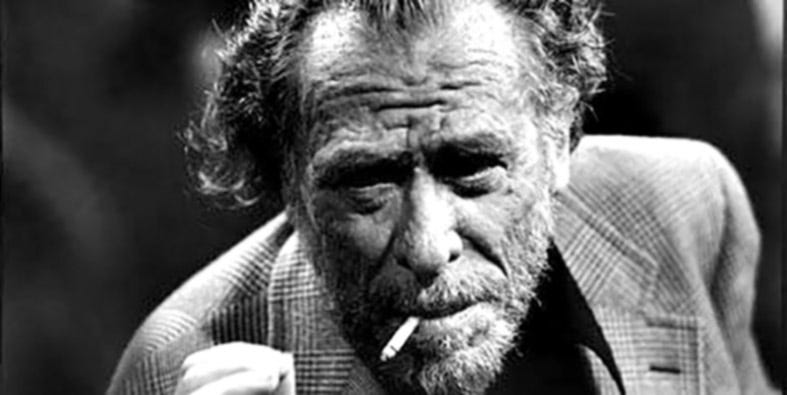
What can one say about the poet Charles Bukowski (1920–1994) that hasn’t already been written on a dirty bathroom wall?
Not much.
He was an unapologetic drunk, womanizer, bum, barfly, brawler, occasional petty thief, gambler, and bad with money.
If you were to point this out to him, he’d probably add a few more things and spit in your mouth — if he cared enough.
Which he probably wouldn’t. He was a fairly unpleasant person in real life. When he attained success and recognition and went on speaking tours, he was often drunk and abusive to much of his audience. He seemed to hate other poets.
Given that many people who went to see him were expecting a spectacle, I’d say Bukowski and his poetry reading audiences deserved each other.
Hey…whatever makes people happy.
All that said, over decades — mostly while existing in itinerant hotels and obscurity — Bukowski produced massive amounts of some of the very best American poetry.
Sure, he wasn’t to everyone’s taste. His work was highly transgressive in parts. It was sexist, violent, unsettling, unashamedly autobiographical, and generally unsuitable for polite company.
But his poems resonated with a lot of readers just the same.
I think it was my own past as a practicing alcoholic (I got real good at it — with all that practice) and as someone who existed on the edges of uncertain existence for a number of years that made me connect with his work. Decades later, in a very different and improved situation, I still read his poetry.
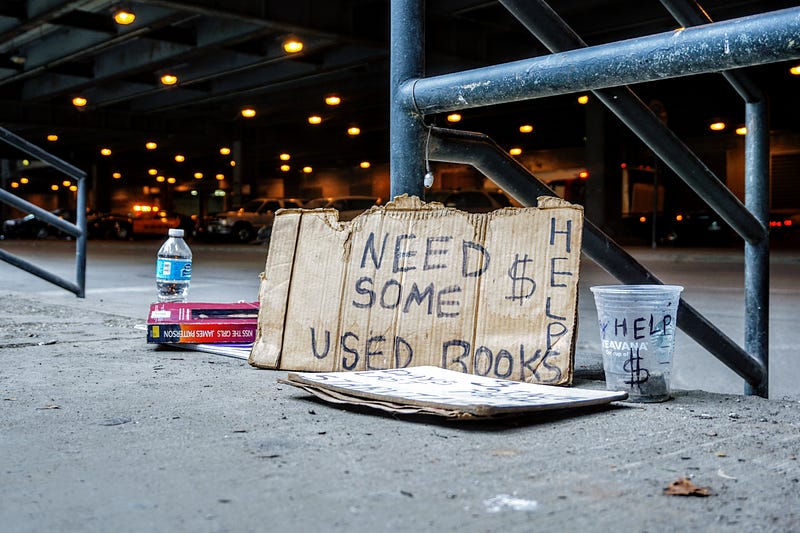
There is a weird nostalgia among those of us who survived bad times. I can’t explain it more than that.
Bukowski is also a favorite poet among those poets who mistake suffering for talent. You know the type.
You can safely ignore them.
But you can’t ignore Bukowski’s large body of work, nor his commitment to writing.
5 Quotes That Could Mean Something, Maybe
Here we go…
“Do some living and get yourself a typewriter.”
Bukowski mainly wrote in notebooks and on a typewriter. Much depended on what he could afford or have access to. In 1990 he received a Mac IIsi computer for Christmas and took to it quite well. Judging from his poem “16-bit Intel 8088 chip,” he had no problem embrace new technology — even if it didn’t always work right.
As for you — and me — do some living and write. Do some writing and live.
It can be on a typewriter if you feel like going all hipster. I’m not going to judge. I’m more of a journal-or-computer person. Either way, just write.
“When I begin to doubt my ability to work the word, I simply read another writer and know I have nothing to worry about. My contest is only with myself, to do it right, with power, and force, and delight, and gamble.”
This quote seems to both talk about how comparing yourself with other writers can help (especially if they suck) and not comparing yourself to anyone but yourself.
I can think of many writers deemed successful that I believe I’m better than, but that’s not the point, is it?
The only writer I need to get better than is myself. It’ll take a lot of work (I’m… I’m not that great), but it’ll be worth it.

“There is a time to stop reading, there is a time to STOP trying to WRITE, there is a time to kick the whole bloated sensation of ART out on its whore-ass.”
Here’s a weird thing. I wanted to be a writer for a long, long time. Since I was a child, I’ve been writing off and on but never stuck with it until recent years. I think because I had bigger expectations for myself than I actually felt equal to.
Along the way, I read hundreds of books on writing. I read all the right authors. I even got to know some of them.
But what made a difference is when I stopped trying to be what I was convinced was what others defined as successful and just did it my way instead.
I make a living, but I hesitate to call myself a great artist or anything. Maybe one day, but I’m easing up on myself and just writing instead. No more Writers Digest Book Club for me.
“I write as a function. Without it, I would fall ill and die. It’s as much a part of one as the liver or intestine and just about as glamorous.”
If I won Powerball today, would I be a writer tomorrow?
Wow. Maybe? Probably.
I think once I got done filling my mansion with gold furniture, yeah… I’d probably do some more writing. Actually, if I were honest, I’d be writing every day. The only real difference would be I wouldn’t be doing it for money.
For the life of me, I don’t know if that would be better or worse.
But, yeah… I’d still be writing.
“Writing about a writer’s block is better than not writing at all.”
Yeah, when in doubt, I crank out another piece on creativity, productivity, or writing. When things get desperate, I find some writing legend and exploit a few quotes. It’s pretty shameless, actually, but at least I’m writing.
Right?
What Have We Learned?
That’s up to you. Bukowski was a writer who really didn’t give a duck. (I think that’s a typo.)
I could go on and try to analyze Bukowski as a person or poet or something, but he’s really someone who didn’t have a lot of hidden layers.
Your takeaway can be whatever you’d like it to be.
The perspectives and advice of other writers can be a valuable thing if for no other reason than it offers us an alternative view of what we do.
Personally, I find a lot of quotes aspirational and inspirational.
But I don’t let myself be ruled by them.
I’ll take what I take and leave the rest.
And just keep writing.
Or whatever it is you call what I do.
Cheers!
About John Teehan
John lives in Rhode Island with his wife, son, and dog. He specializes in tech, health, business, parenting, pop culture, and gaming. Visit wordsbyjohn.net for more info and rates. Twitter: @WordsByJohn2


