
Taking On 7 Quotes By Writers Writing About Writer’s Block
It’s a monster, but it’s a tiny monster. You can squash it quickly enough.

Writer’s block can be a hell of a thing.
No question.
Different people deal with it in different ways.
I looked for ways various writers dealt with the issue and lifted some quotes to share and comment on. My hope is that you can take away some new strategies and perspectives on the subject.
And write on.
Writers on writer’s block
“I write like I talk, and I don’t get talker’s block.” — Seth Godin
I love Seth’s writing. He has a great talent for being both concise and evocative. His books aren’t necessarily quick and easy reads, even though they’re often broken up into little one or two-page chunks. Why? Because a lot of what he says is both thoughtful and thought-provoking. I can usually only read a few pages before putting the book down and really thinking about what I just read.
On top of all that, his style is pretty conversational and easy-going. And he writes just like he talks on all those podcasts he shows up in.
If you’re dealing with some writer’s block, try taking it out and transcribing your talking.
It certainly couldn’t hurt and just might be what you need to jumpstart your writing.
“I don’t believe in ‘writer’s block.’ I try and deal with getting stuck by having more than one thing to work on at a time. And by knowing that even a hundred bad words that didn’t exist before is forward progress.” — Neil Gaiman
While researching this piece, I came across many writers who claimed writer’s block didn’t exist — that it was an excuse for laziness or lack of passion or some such. Frankly, I find that attitude dismissive of real issues creative people deal with every day.
But Neil’s a nice guy and a talented fellow. I’ll forgive his dismissive opening and, instead, ask you to focus on the helpful part, i.e., the part about having more than one thing to work on at a time.
I rarely work on one single piece, although I tend to focus on one project more than others. Like Neil, I’ve found that if I’m stuck or less-than-inspired to continue the current piece, I can switch to something else. A short story project gets exchanged for a poem. Or a poem gets traded for a book about writing (for example).
So long as something was written before I move on to a different project, then I’ve succeeded.
“You can’t wait for inspiration. You have to go after it with a club.” — Jack London
Sometimes you have to push yourself.
Ol’ Jack doesn’t offer any specific advice in this quote. My reading of his statement would be if you’ve run into a block in creating something, take some proactive steps to nurture your inspiration.
Visit a museum. Talk with friends. Shout and shake your fist at enemies. Become a hobo and ride the rails. That sort of thing.
“Professional writers don’t have muses; they have mortgages.” — Larry Kahaner
I don’t follow Larry’s work closely, although he’s written some interesting books I may check out one day. Still, it’s the quote itself that gets my attention as it’s akin to something I’ve pointed out several times.
If you don’t do the work, you don’t get paid. If you don’t get paid, they shut off your lights, take your house, and shoot your dog.
I like my dog, so I keep writing.
“Pretend that you’re writing not to your editor or to an audience or to a readership, but to someone close, like your sister, or your mother, or someone that you like.” — John Steinbeck
This is pretty sound advice. Sometimes, we write with a specific audience in mind, and we find that audience intimidating. It could be a professor in a creative writing class. It could be the unnamed future fans of your novel.
Lighten up.
Reimagine your audience and write to them personally. That last word is critical. If you make your target audience both personal and specific, you can block out the idea of other audiences and feel less stressed by the idea of writing for them.
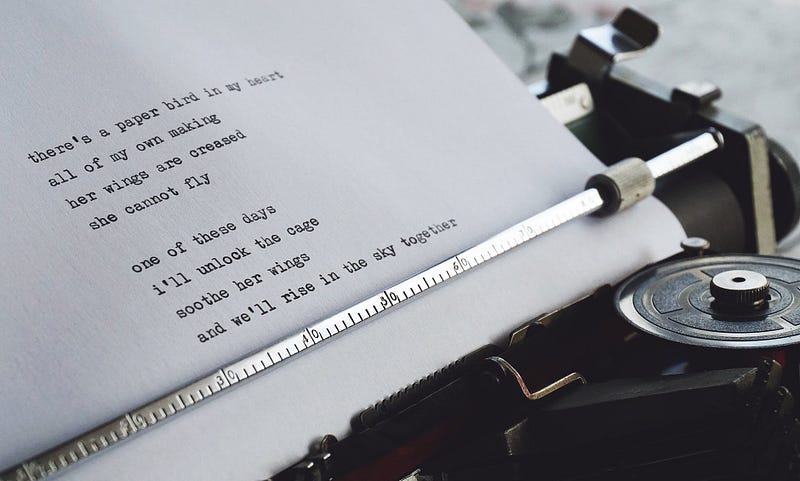
“Writing about a writer’s block is better than not writing at all.” — Charles Bukowski
To me, Hank (I call him Hank) was one of the most significant poets of the 20th century. People usually try to lump him in with the Beat poets, but in truth, Hank was one of a kind and a voice unto himself. That voice was often unpleasant, and he was a bit of an ass, but he had a lyrical hand when he wanted to, and much of his work spoke to me during my more unsavory, self-destructive younger years.
In any case, he’s got my number with this quote. And your takeaway could be to simply write about your writer’s block.
Seriously.
Write about it for a few paragraphs, then go back to what you were working on. If that doesn’t work, try it again.
It’s better than not writing at all.
The closing quote
I’m closing with another Bukowski quote. In this, I don’t believe he is specifically talking about writing or dealing with writer’s block. It’s more an attitude to adopt — particularly when times get tough. Ol’ Hank knew about tough times.
If you’re a writer, you may have an inkling as well.
Anyway… our second Charles Bukowski quote.
“Sometimes you climb out of bed in the morning and you think, I’m not going to make it, but you laugh inside — remembering all the times you’ve felt that way.”
Words to survive by.
Cheers!
Thank you for reading. I’d love to share more with you via my Bi-Weekly Word Roundup newsletter sent to subscribers every other Sunday. It will feature news, productivity tips, life hacks, and links to top stories making the rounds on the Internet. You can unsubscribe at any time.


