
5 Most Shockingly Successful Cases of Historical Fraud
Surprising frauds that you didn’t know exist.

Contrary to what you might expect, historical frauds are often quite successful in terms of money gained and even more so in terms of damage done.
The most shocking thing about these frauds isn’t the amount they managed to steal or their ingenious schemes, but rather the simple fact that they even worked!
Read on to discover five of the most astonishing cases of historical fraud. For almost as long as human beings have been around, plenty of people have been willing to take advantage of others to gain power or wealth.
Although these are traits we’ve been trying to eradicate since the dawn of civilization, there are still plenty of causes of historical fraud today.
However, you probably aren’t familiar with the 5 most shocking cases of historical fraud that worked and transformed the world.
These cases illustrate how easily people can be taken in by charismatic leaders who promise much but deliver little or who claim to know something they don’t know at all.
5- Piltdown Man — Man’s And Ape’s Lost Link


The Piltdown Man was one of the most infamous cases of historical fraud that transformed the world.
In 1912, British paleontologist Charles Dawson announced the recognition of a missing link between man and ape, which he had found in a pit in England.
It wasn’t until 1953 that it was revealed to be an elaborate hoax; pieces of a human skull and animal bones were artificially aged and combined to make it appear that they came from the same creature.
The implications of this hoax were enormous. Some used it as proof that humans evolved from apes and encouraged other scientific frauds.
It also led to many prominent scientists wasting time and resources trying to understand the creature when it didn’t exist.
Fortunately, science has moved past the Piltdown Man hoax.
However, it serves as an important reminder of the consequences of fraudulent claims and why we should always approach discoveries with a healthy dose of skepticism.
4- The Hitler Diaries — The Nazi Leader’s Life


One of the most notorious cases of historical fraud is the Hitler Diaries, which claimed to be the personal journals of Adolf Hitler.
The diaries were discovered by journalist Gerd Heidemann and his partner Hugh Trevor-Roper in 1983 and were purchased by Stern magazine for 9 million German Marks (approximately $5.8 million in 2020).
The diaries contained over 60 volumes and appeared to cover the period between 1932 and 1945, providing an intimate insight into the Nazi leader’s life.
Unfortunately, it was soon revealed that the diaries were forgeries crafted by a former Nazi soldier named Konrad Kujau.
Despite the forgery being exposed, the scandal hugely impacted global media and provided an exciting insight into how fraud can transform history.
3- I, Claudius — Infamous Historical Fraud
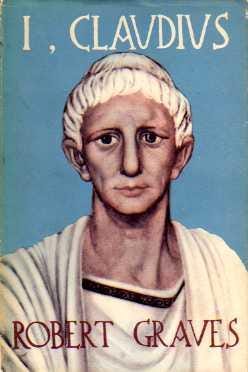

The story of I, Claudius, is one of the most infamous cases of historical fraud. During the Roman Empire, Claudius was a member of the imperial family and a distant relative of Emperor Augustus.
Despite being sickly and weak since birth, Claudius outlived all his siblings and ascended to the throne.
It has been suggested that Claudius achieved this feat through fraud.
He allegedly wrote a series of books under the pseudonym I, Claudius, which described Augustus as an incompetent ruler and portrayed himself as the rightful heir to the throne.
This enabled him to gain support from the Senate and eventually gain the throne. The impact of this fraud was enormous.
It led to a massive shift in power within the Roman Empire and was responsible for the rise of the Julio-Claudian dynasty, which would rule Rome for over a century.
The I, Claudius books also remain influential today, having been adapted into a popular BBC miniseries and inspiring many novels and plays.
The case of I, Claudius, remains a powerful example of how even seemingly small acts of fraud can have far-reaching consequences.
It’s a reminder that small but significant acts of deception often shape history.
2- The Protocols Of The Elders Of Zion — Anti-Semitism
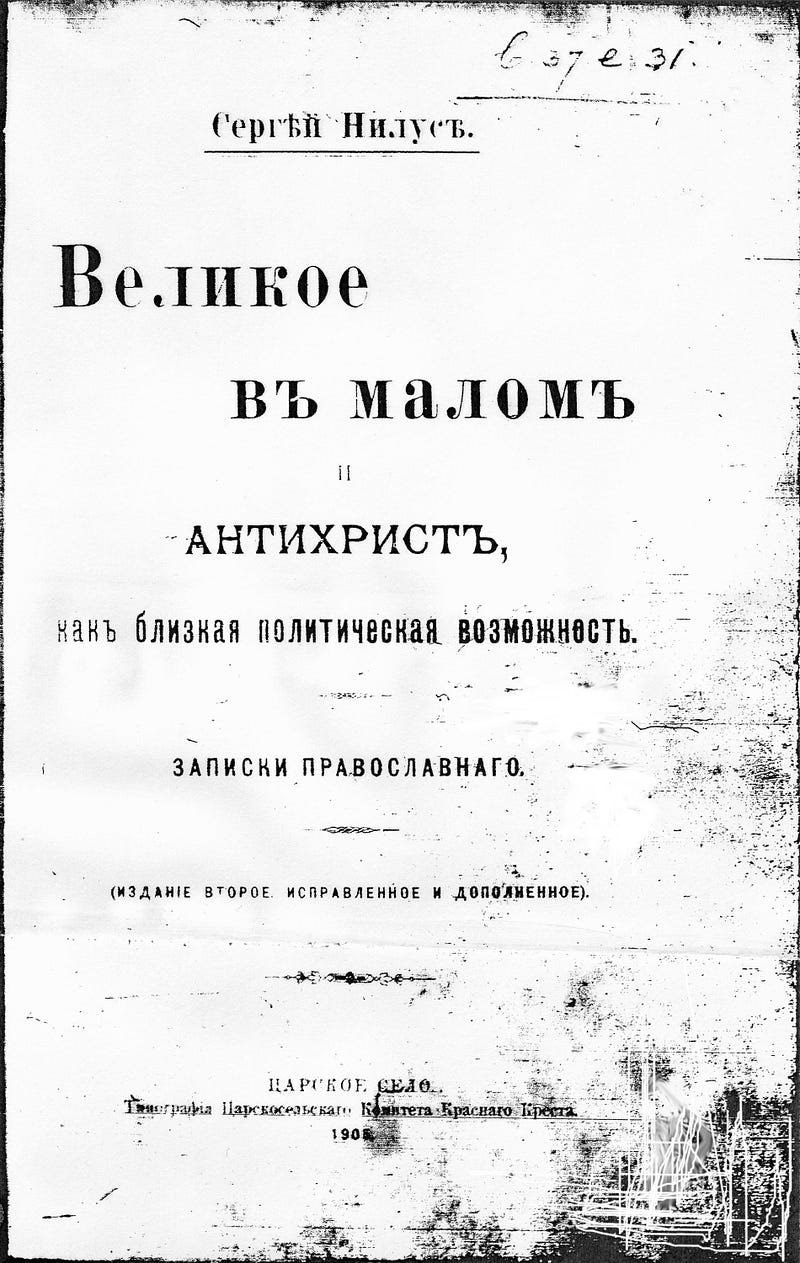

Despite being entirely fabricated, the Protocols were taken seriously by anti-Semites, who used them to justify their hatred of Jews.
They spread rapidly across Europe and America and were used to fan the flames of anti-Semitism in Germany in the lead-up to World War II.
The documents are still widely read today, with numerous translations available online.
The Protocols are one of the clearest examples of how fraud can manipulate people and sow hatred, resulting in real-world consequences.
The Protocols’ power lies in how they tapped into existing prejudices and exploited them for political gain.
Although we know the documents were entirely false, their impact cannot be overstated.
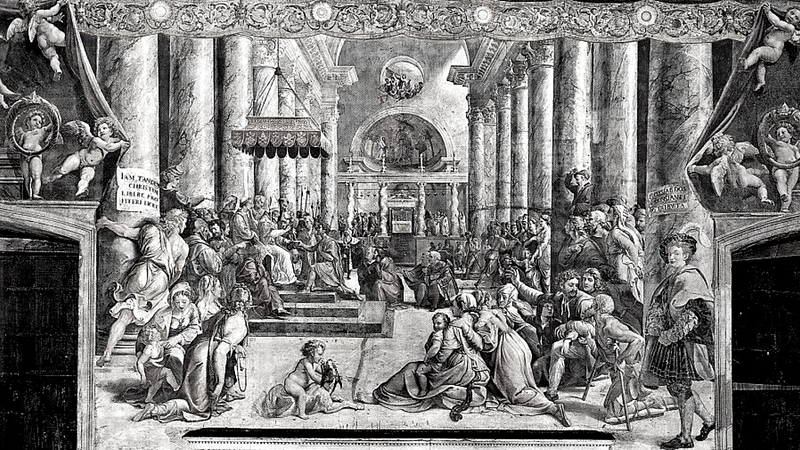
1- The Donation Of Constantine — Paved The Way For Christianity

The fraudulent nature of this document was eventually discovered in 1440, but not before it had irrevocably altered the course of history.
The Donation of Constantine stands out as one of the most influential pieces of fraud in history, with far-reaching implications that are still felt today.
It resulted in centuries of Western Europe being ruled by a single religious institution, and it paved the way for Christianity to become the state religion of Europe.
Furthermore, it enabled the Catholic Church to claim power over many aspects of medieval life.
They wielded significant influence through the legal enforcement of contracts and ecclesiastical courts subject only to canon law.
In effect, they became an authority above all others. Ultimately, the Pope could call on these civil powers anytime he saw fit, from pardoning criminals to levying taxes or conducting wars.
Points To Ponder
Throughout history, there have been many cases of fraud that have changed the course of world events.
From wealthy financiers to political figures, fraudsters have used deceit and deception to manipulate entire economies, alter the outcomes of elections, and even bring down entire empires.
The five examples featured here demonstrate how powerful historical fraud can be and illustrate its devastating impact on individuals and entire societies.
Despite the extreme costs of such actions, they remain a temptation for those seeking financial gain or political power.
The importance of proper checks and balances in modern society cannot be overstated.
A society that can identify and stop fraud before it takes hold has a much better chance of achieving lasting success than one unprepared for it.
By being aware of the potential for fraud, we can work together to ensure that it doesn’t happen again.
More from the author: