
Developing resilience is the key to building any skill.
5 Habits Proven to Build Mental Toughness
“It is the power of the mind to be unconquerable.” — Seneca
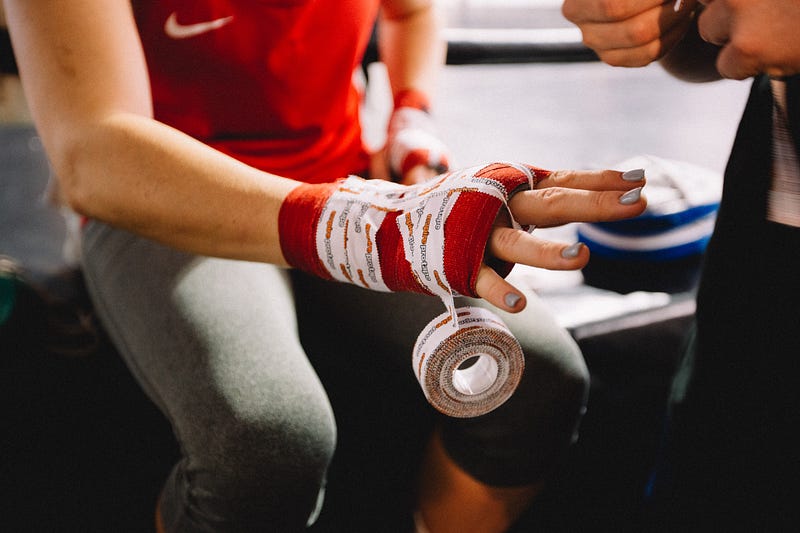
In competition, mental toughness is what separates the good from the great.
Psychologist Angela Duckworth calls it “grit”, but it goes by other names like drive, perseverance, or hustle. There’s a lot of research on the benefits of grit, but there’s much debate as to the best way to build this trait in yourself.
One thing is for sure: whether it’s sports, life, or business, your mental state is one of the most important factors in determining success.
My competition anxiety for Brazilian Jiu-Jitsu matches is the biggest obstacle that I face when I step on the mat. Over the course of hundreds of matches I’ve had in my career, I’ve never felt not anxious.
As a result of that anxiety, however, I have tested countless practices to make my nerves more manageable.
I’ve become obsessed with finding habits that decrease the anxiety that I feel when I’m trying to pursue my goals. I’m in a position where I have to train my mind. If I don’t, my performance suffers. It’s as simple as that.
Though I found most of these habits on my own, I’m not a revolutionary. These practices all have research that backs up the benefits that they can have when it comes to the development of mental well-being and in turn, mental toughness.
Mental training is just like physical training. It requires discipline, hard work, and embracing discomfort. To truly optimize your physical training, you need to perfect your mental game.
It’s more than just having a “growth mindset”, it’s creating a daily practice that over years and years will lead to improved results and confidence. Your mind is a muscle, and you have to train it. The longer you train your mind, the less heavy the burden of anxiety will feel.
These are 5 of the habits that I use to manage my mind on a daily basis for optimal athletic performance and mental toughness. They can also be applied to business or any other endeavor that can elicit performance anxiety, like acting or public speaking.
1. Journaling
I’ve had a journal that I write in daily since the end of 2018.
Okay, I’ll be honest, it’s more of a diary.
I write about my training, how my body feels, how my mind feels, really just whatever comes to my mind. Sometimes, I’m just complaining. I whine in my diary so I can whine less in real life.
I also have a strength and conditioning log in my phone that goes all the way back to early 2017. At the very least, it’s motivating to see your progress over years of training.
Many of the top athletes in the world keep training journals as well. Serena Williams, Michael Phelps, and Katie Ledecky are just a few examples of the many world-class athletes who monitor their progress and keep themselves accountable through journals.
This study in which registered nurses suggested that journaling can improve your decision making, stress management, and self-awareness.
If you’re serious about taking your game to the next level, you need to be monitoring your progress down to the minutiae.
2. Meditation
Meditation is a cornerstone practice in any mental pursuit. It’s been repeated millions of times in millions of articles, but that doesn’t take away its importance.
This study suggests that meditation can improve resilience due to changes that occur in the resting brain.
To improve your skills in sport, you need to be clear-minded. It’s not enough to manage your mind on the day of the tournament or match. Improving your mental game is a daily practice, just like physical training.
That doesn’t mean that you have to spend hours every day doing transcendental meditation, but even as little as 5 minutes a day has helped me in the past.
I’m not a monk and I haven’t achieved Nirvana, but I have substantially decreased my social and competition anxiety through a daily meditation practice that takes just 10–15 minutes.
It’s also helped relieve some of my ADHD symptoms as well.
3. Visualization
Visualization is commonly preached by coaches around the world in just about every sport. I first started hearing about visualization from my wrestling coach in 7th grade. Some of the best Olympians of all time also use visualization as a core practice.
Visualizing success is not uncommon, but also it’s not as simple as sitting back and thinking you’re amazing. That’s called fantasizing.
Visualizing is similar to meditating, but it’s way more exciting.
Instead of sitting alone with your breath and trying to think about nothing, visualization is creating the emotions that you will feel and imagining yourself achieving your goal. There are many studies that back the power that visualizing your future can have on your life.
One study even suggested that three days of mental practice can lead to performance improvements.
Visualizing yourself doing something before you do it will also decrease the unfamiliarity and discomfort that you feel when you step out onto the stage to perform. It won’t make your anxiety go away, but it will help you deal with it better.
When I visualize myself competing in jiu-jitsu, I create the feelings of anxiety that I know I’m going to have. As a result, I’m no longer surprised by physical symptoms of anxiety such as sweating palms, frequent urination, or muscle twitches.
Because I’m no longer startled by the symptoms, they’ve become more manageable and easier to dissipate. I recognize them as symptoms, not a sign that I’m going crazy. I’m comfortable with my own anxiety because I’ve experienced it countless times, both in my head and in reality.
4. Simulate Mentally Stressful Environments
You can’t compete in the world championship every day, so how do world-class athletes prepare to compete at that level?
To build grit, you have to expose yourself to stressful stimuli often. Whether that’s physical training, simulations, or other stressors, you have to constantly expose yourself to acute stressors that will build your tolerance to the stress of gameday.
For example, if you’re afraid of public speaking, this means doing your speech for your parents or your stuffed animals.
In sports, it means putting yourself in stressful training environments. It means seeking out the best training possible and exposing yourself to it day after day.
Training at a high level prepares you to perform at a high level because it whips your body into shape, but it also gives you the belief that you can succeed. After hard physical training, you have evidence that your mental training worked too.
Exposure therapy is one of the best treatments to decrease anxiety and build resilience.
For me, I try to expose myself to some sort of discomfort in every training session to improve my mental game. Whether that’s intense cardio, an impromptu strength test, or changing up my training program to increase shock the system, I force my mind to always be adapting to new stimuli.
This is why past generations of wrestlers were known to practice in sweatsuits or
“We love being mentally strong, but we hate situations that allow us to put our mental strength to good use.” — Mokokoma Mokhonoana
There’s a difference between just showing up to train and trying to make yourself more mentally tough. Mental toughness is built on exposure to new stressors, whereas daily training can often become monotonous. Both are required to become successful, but exposure to stress is what builds grit.
5. Take a Break
In order to build real mental toughness, you need to allow your body and mind time to recover from the onslaught of stressors that you’ve put it through.
If you get to the end of training feel like you don’t need rest, you’re probably not pushing yourself very hard. If you are pushing yourself hard but don’t rest, you’re on a path to burnout. It’s a balancing act.
After all, self-care is part of developing resilience.
At the same time, “rest” doesn’t just mean lying on the couch watching Netflix for hours on end.
Okay, don’t get me wrong, acting like a potato helps your recovery. But proper rest is also about doing the physical and mental practices that make your body and mind feel more at ease.
Taking a break leads to mental toughness because when you take that break, you eventually have to get back up and hit your stressors again to sustain progress over time. You have to build discipline.
I like to give myself a small reward at the end of each successful day of work if I feel like I’ve made progress toward my goals. At night I’ll put my phone away and put on an episode of Seinfeld or some other mindless television that helps me relax. I also take one day completely off of physical training and work per week and act like a potato. It really helps.
In Conclusion
Mental toughness training is a physical AND mental endeavor, and most people quit. To develop grit, you have to habituate the behaviors that mentally tough people practice day in and day out.
If you do all of the things I listed above, you might not reach Navy SEAL level toughness by next week, but you’ll be on the path to becoming a tougher, stronger, version of yourself.
Toughness is not about removing your emotions, it’s about teaching yourself to manage them despite their efforts to control your behavior. Toughness is about not letting your fears hold you back from being the best version of yourself.
You don’t stop feeling fear, you just get better at overcoming it.
“Successful people have fear, successful people have doubts, and successful people have worries. They just don’t let these feelings stop them.” — T. Harv Eker

You just read another post from In Fitness And In Health: a health and fitness community dedicated to sharing knowledge, lessons, and suggestions to living happier, healthier lives.
If you’d like to join our newsletter and receive more stories like this one, tap here.