
What I Learned in 22 Years of Having ADHD
ADHD is really funny. Until it just isn’t.
When you say you have ADHD, people are quick to throw out comparisons to the dog from Up who is easily distracted by the “Squirrel!”, or Tigger, from Winnie the Pooh.
You’re the funny kid with a fidget spinner or stress ball, and it’s great, but it’s not because you want to be.
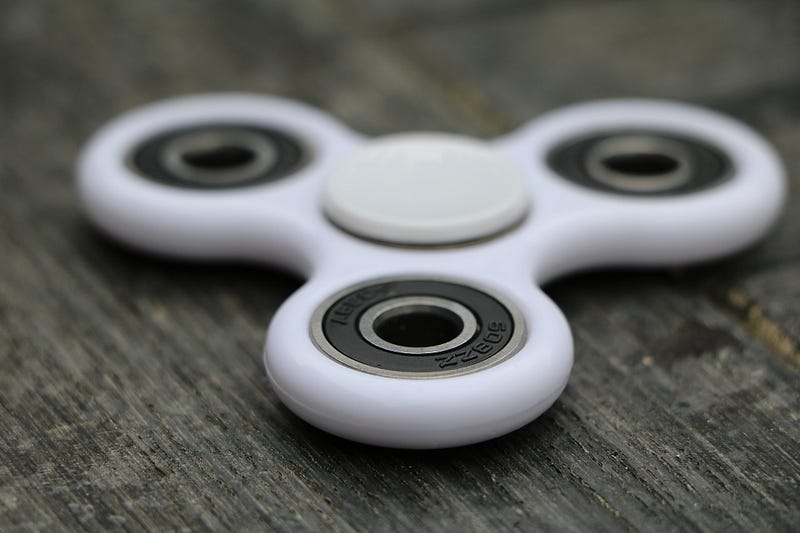
Sure, ADHD is funny, but it’s only funny when humor is convenient. In school, ADHD students are often “class clowns”, but being a class clown also means you are unintelligent, disobedient, and lazy.
The lack of ability to sit still or pay attention to details is perceived as angst and a lack of self-control. Yet, when ADHDers are exceptionally good at something they like, they’re considered “gifted”, “special”, or “hyperfocused”. The question then becomes: why can you _____ like you do _____?
Why can’t you perform normally?
My Experience with ADHD: The Long Story Short
I’ve had symptoms of ADHD for my entire life, but I wasn’t actually diagnosed until I was 22.
That was a mindfuck, but it explained a lot.
When I was 4 years old, I stood up in front of my entire preschool and put my fists up to fight the principal who was giving a speech. Why? I just didn’t want to sit down anymore.
In middle school, I was a C student who couldn’t resist the urge to shout out random thoughts that popped in my head. When I started playing sports for several hours every day after school, I became an A and B student, but I still couldn’t sit still or pay attention properly.
However, because my grades were decent, there was no worry that I had ADHD. I just figured that I had to work twice as hard academically as my classmates. I figured I was kind of dumb and began to resent school.
In high school and college, the only way I was able to maintain any sort of academic performance was because of the intense time commitments required by wrestling and jiu-jitsu. The busier I was, the more I thrived.
In high school, I was an All-Conference wrestler, made the honor roll, and had an active social life as well. I still had to dull out my character to avoid getting noticed as inattentive or fidgety.
In college, I got my bachelor’s degree while training and teaching jiu-jitsu 2–3 times per day and competing all over the country (I even won a world championship in 2019), and holding a remote internship. I never let my busy schedule be an excuse for a lack of success.
In circumstances that would make most people distracted and tired, the rigid structure of multiple workouts per day plus studying and attending classes was what fueled me to achieve my goals while still getting a degree.
That said, ADHD has still dictated my life without my knowledge or control.
When I went to college, I was overwhelmed with choice.
How could I sit in a classroom when there was adventure out there? I felt compelled to create and work hard, but I was stuck in a classroom. I felt betrayed by the academic system that told me to “sit down and shut up”.
I began to resent education, but through school, I also learned the most important lesson I’ve ever learned in life: you don’t have to live the life that everyone tells you to live.
Getting a Diagnosis
Despite a silver lining that I had become a decent athlete and was going to graduate, my academics became a tumultuous ride. I transferred twice and changed my major 5 times, switching to Journalism my senior year because my credits aligned closely with that program. I was lost and confused.
Finally, halfway through my senior year of college, I was diagnosed with ADHD by a psychologist after taking a 9-hour test that involved hundreds of questions, performance tests, and even an interview about my life.
It was bizarre to suddenly have an explanation for 22 years of confusion, but it answered a lot of questions about my mind. It also gave me a lot of new questions:
Was the doctor wrong?
Can I just outwork this?
Am I a diagnosed stupid person now?
What do I do with my life?
Getting diagnosed with ADHD didn’t make me feel better about struggling to make grades or keep appointments, but it forced me to look at myself differently. It also taught me a lot of lessons.
Here’s what I learned in 22 years of having ADHD and 1 year of knowing that I have ADHD.
ADHD has nothing to do with intelligence.
I have ADHD, and I’m not dumb.
I’m not Einstein, but I have the ability to articulate complex ideas, hold deep conversations, and a strong ability to read people and help them through difficult situations. If I’m interested, I can always think of a new way to look at things.
I’m also easily excited and very easily distracted.
I can’t focus on normal day-to-day tasks like my life depends on it because I have new ideas every day that lead me in creative and exciting directions. If something doesn’t interest me, it’s like it doesn’t exist.
Typically, I need to exercise for 2–3 hours every day just to maintain focus on work, friends, and conversations. It helps that I have the pursuit of Brazilian Jiu-Jitsu world championships and the support of great people to keep me going.
I’m nothing without my support system and the people around me who say “take a break” when it’s clear that I need one.
My motor is so all over the place that when I experienced depression symptoms in the past, the psychologist tested me to see if I was bipolar. Turns out I’m not, but I’m quite hyperactive.
Also, I can’t sit still. Did I mention that? That’s a big one. How can I possibly sit still when I have a million ideas exploding in my brain at once?
ADHD is pretty funny, but it’s also ironic.
I have countless ideas, but I lack the attention span to execute them.
Sure, when I fidget and knock over a glass, can’t stop myself from blurting out random ideas, or lose my wallet in every city I visit, it’s pretty funny.
It makes for some funny stories, amazing memories, and if I do say so myself, some interesting tweets. It makes people laugh and it makes me “me”.
But there’s a line.
It’s funny to experience fidgeting and hyperactivity until you’re missing appointments and forgetting to check in with loved ones because you’ve hyper fixated on your latest obsession for hours at a time.
“I was distracted,” is a bad excuse, no matter what your diagnosis is.
The fact that I have to physically train and overtrain my body just to keep my sanity is funny (and even helpful for success) until my motor drives me to the point of exhaustion, burnout, and physical injury. All of my injuries from my grappling career are overuse injuries.
“Just take a break.” feels like a pipe dream. Most of the time, I’m not running on motivation or discipline, I’m just trying to tire myself out enough so that I can sleep that night.
There comes a time when ADHD goes from a funny reason that you accidentally lit your homework on fire because it was covered in spilled wine to a serious problem because your grades aren’t good enough and your lack of self-control and discipline is an indicator of weakness.
Your hypersensitivity to sound and stimuli becomes a mental weakness, annoyance, and insecurity, not a cute reason that you’re introverted or anxious at a party.
The quirks that at first make you interesting to people become tiresome because, after all this time, you still can’t pay attention.
All we ADHDers really ask for is Patience.
I have ADHD, and I really don’t want anyone to tell me I’m special anymore.
I know there’s something different in my brain; something “unique” or “odd”. That’s one thing that’s been clear to me since I was 6. I don’t need validation that I’m a little itty-bitty snowflake or that I’m an ugly duckling who’s going to become a beautiful swan.
I don’t need to be medicated to get my work done and I’d rather not be labeled as “lazy” or as someone with an irreversible disorder.
ADHD is as much of a “disorder” as it is a personality trait. I’m not defined by a diagnosis, but this trait affects me 24 hours a day.
It doesn’t just mean I could have used extra time on the ACT or that I need to make more to-do lists, it also means that I’m obsessed with adventure, physically daring, and I feel emotions on a deeper and more sensitive level than most.
Hence the times I cried from The Lego Movie, jumped off a cliff in Hawaii, and competed in jiu-jitsu in the most random cities in America.
If that’s a “disorder”, it’s one I’m pretty okay with.
All I want is patience, but I’m terribly afraid to ask for it.
When you’re thrust into life with an inattentive and hyperactive mind are and expected to conform to the standards of your peers with genetically different brains, you already feel plenty unique. The last thing you want to do is ask for help.
That’s why when someone offers you patience or support, it can change your life.
Letting you ask those silly questions that might seem useless to the main point, or allowing you to take a few minutes to process what was just said to you. My mind makes rapid associations, but with time I always find my way to the point.
I’m not stupid, I’m inattentive.
I’m not disobedient, I’m hyperactive.
Sometimes, I need help.
In Conclusion
When someone you love has ADHD, it’s like there’s a giant elephant in the room, and that elephant won’t stop moving or thinking. Imagine Dumbo on cocaine trying to sit in biology class, and you’ll have an idea of what’s happening in my head.
If you nurture and love that cracked out elephant, the worst parts of it will shrink and the best parts will thrive. Hell, it might even fly.
Post inspired by The ADHD Advantage by Dale Archer.


