
5 Famous Historical Events That Actually Never Happened
Major events that we got wrong.
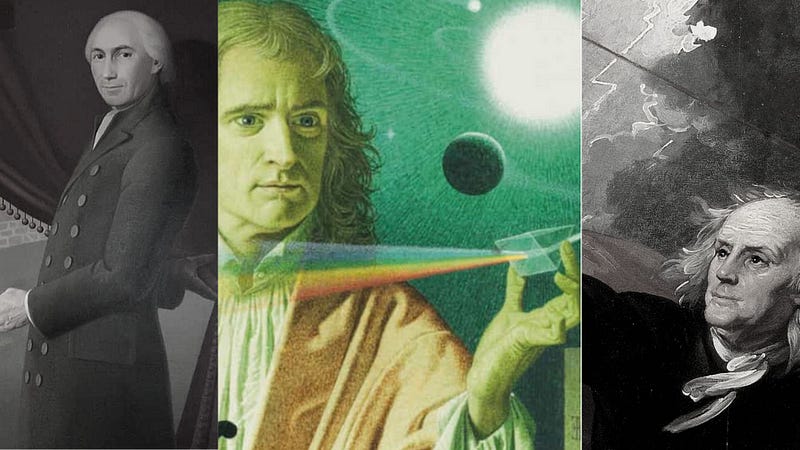
Throughout history, several events have caught the imagination of people all throughout the world despite never actually occurring.
These occurrences could be the consequence of folklore, legends, hoax, and even deliberate deception.
Even when their authenticity is next to none, these events have captivated and captured the public’s attention and held a position in mainstream culture.
All these incidents and legends have even inspired works of art, literature, and in some cases, movies.
1. George Washington And The Incident Of Cherry Tree

Majority of people are aware that George Washington served as the first president of the United States of America
He is also famous for having his image on a US dollar bill and for the cherry tree incident, and this is the one we are interested in.
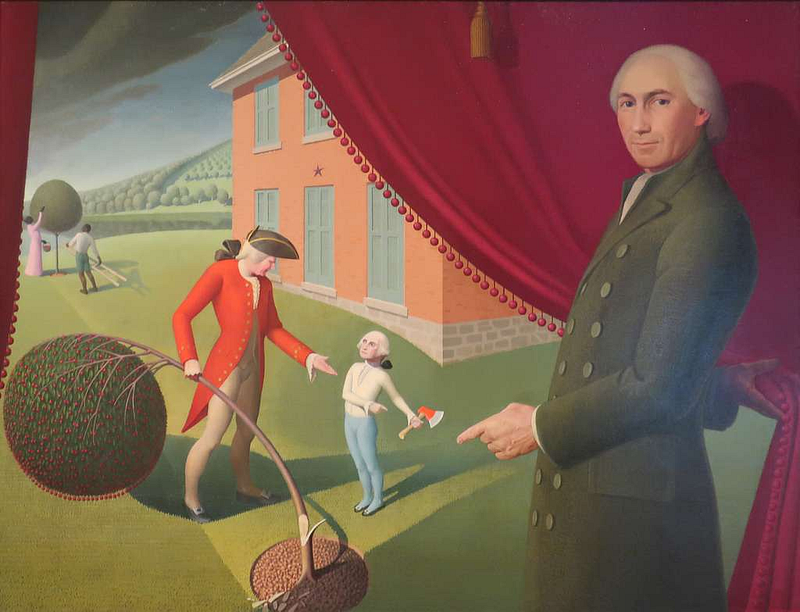
The cherry tree story is one which involves George Washington confessing to his father about chopping down a cherry tree with his newly gifted hatchet.
This incident is often regarded as one of the most significant events in his life.
However, the story is nothing more than a lie, and the credit goes to Mason Locke Weems, who fabricated the cherry tree story and added it to Washington’s biography in 1806.
Weems, who wrote the fifth edition of Washington’s biography, intended to use the incident to highlight the significance of honesty in Washington’s life and establish a link between the two — the famous incident and his political success.
Weems’ story became popular worldwide, and the book became a bestseller.
The Irony is that Weems was using a false and made-up story to uphold the importance of honesty.
2. No Witch Was Ever Burned At The Stake In Salem
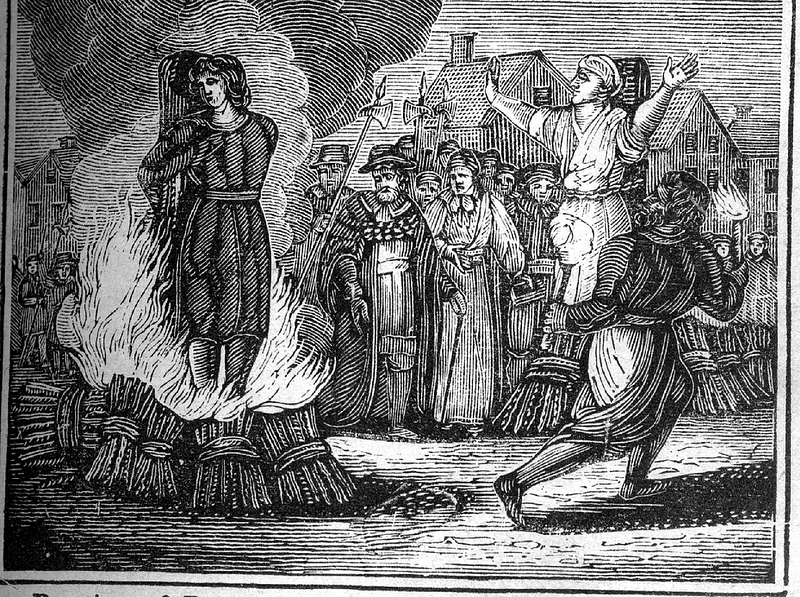

None of the accused witches in the infamous Salem witch trials were burned at the stake. Instead, nineteen were hanged, one was pressed to death, and four others died while in prison.
It is important to note that the witch trials in Salem were not unique to America as similar trials occurred internationally during the Early Modern period.
So while the trials are the basis for Arthur Miller’s play “The Crucible,” it is a work of fiction and not a true reenactment of what really transpired.
Furthermore, it is a popular misconception among the people — that Joan of Arc was burned to death for performing witchcraft; but in reality, she was put to death for breaking the law that forbade women from dressing like men.
3. Benjamin Franklin And His Famous Kite
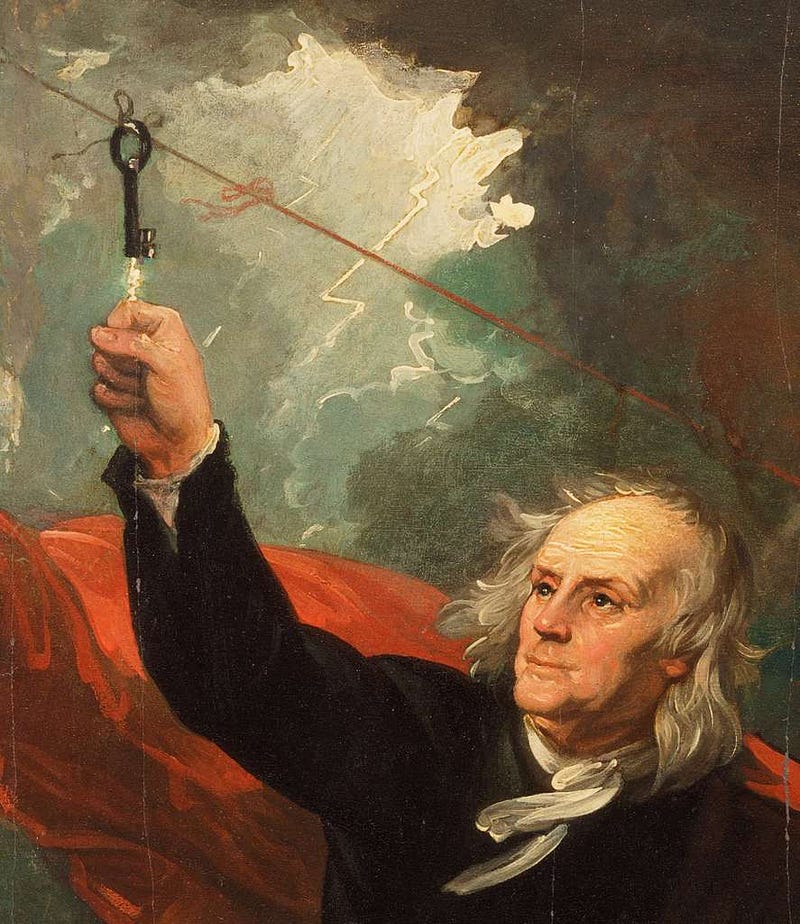
It is a well-known story that Benjamin Franklin, a Founding Father and accomplished Renaissance man, reportedly flew a silk kite with a house key attached to the string in a Leyden jar during a lightning storm.
According to the legend, after the kite was struck by lightning, Franklin received a shock when he touched the key — which proved the electrical nature of lightning.
Franklin conducted a variety of experiments, and this is undoubtedly one of the most famous out of all of those; however, it is highly unlikely to be true.
In fact, most historians agree that Franklin never actually flew his kite, despite proposing the experiment as a possible way to test the nature of electricity in a published paper in 1752.
The reason for this is that a lightning bolt can carry several hundred million volts, and even a tiny fraction of this electricity stored in the key could have been fatal to Franklin upon contact.
Thus, while the story remains deeply ingrained in popular consciousness, there are even laws in some places prohibiting people from attempting to recreate this potentially deadly experiment.
4. It Was Not The Apple Which Made Newton Realize Gravity
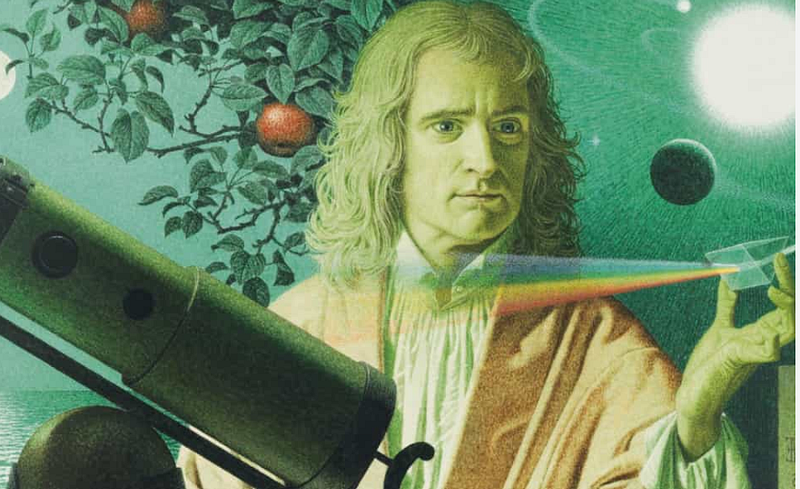
The popular myth that a famous mathematician suddenly realized gravity after being struck in the head by a fruit is likely an embellishment of what actually happened.
The story of the apple was first recounted in a biography of Newton authored by his companion William Stukeley in 1792.
According to the biography, Newton’s contemplation was provoked by “the fall of an apple” which caused him to conceive of the idea of gravitation.
Although it is possible that Newton witnessed an apple falling and began to contemplate the reason behind it, there is no mention in any historical records of the fruit actually hitting him on the head.
5. Nero Fiddling Around While Rome Was Burning
A devastating fire that ravaged Rome for six days in 64 CE during the early days of the Roman Empire destroyed 70% of the city and made half of its residents homeless.
According to popular legend, Emperor Nero, who considered himself a talented artist. Nero spent his time playing music and singing about — while the fire was devouring Rome.
His dying words are believed to be Qualis artifex pereo, which literally translates to. What an artist dies in me.
This legend gave rise to the expression “Nero fiddled while Rome burned,” which is used to describe someone who acts ineffectually during a crisis.
But given that the fiddle didn’t exist until a thousand years later, this adage is easily refuted.
If Nero was playing any instrument at all, it would have been a cithara, a lyre-like instrument whose name is the origin of the word “guitar.”
Nevertheless, there is no evidence that Nero played music during the fire.
The closest report comes from the Roman historian Tacitus, who claimed that Nero sang about the destruction of Troy during the fire, but even Tacitus regarded this story as dubious.
In any case, Nero’s behavior during and after the fire was not admirable.
He unjustly blamed the fire on the little-known religious group called Christians and then built a luxurious palace for himself on the ruins.
Final Words
The idea of legendary occurrences that never happened emphasizes how important imagination and narrative are in forming our collective consciousness.
Even when none of these or many other things ever happened and have nothing to do with reality — they still had a significant impact on modern culture and society, proving the power of the human imagination to persist even in the face of overwhelming odds.
More from the author: