avatarChristine Vann, MSc.

Free AI web copilot to create summaries, insights and extended knowledge, download it at here

3841

Abstract

id="ff83">Indeed, comparing nations is like comparing bananas and bicycles, as economic and social conditions and cultural attitudes differ. But habits are transferable, and I believe any parent can apply them.</p><p id="d227">Here are five key areas to focus on:</p><h2 id="db09">Parents prioritize family</h2><p id="4264">Dutch parents put family first, making time to eat breakfast together and share dinner. With part-time work on offer in most organizations and a ‘papadag’ once a week (a legally allowed but unpaid day for fathers), parents have the luxury to be present in their children’s lives.</p><h2 id="fd8b">Parents respect kids</h2><p id="6b95">Being there allows for plenty of conversations, which our small nation excels in. Dutch people love sharing opinions due to parents listening to their toddler’s views and beyond.</p><p id="443b">Anything is up for discussion, and parents don’t shun topics like sexuality, creating an environment where children feel safe to discuss anything.</p><p id="57b5">With <a href="https://hollandinternationaldistributioncouncil.com/en/blog-dutch-children-happiest-world/">91.7 % of Dutch kids</a> feeling like it’s easy to talk to their mum (and <a href="https://hollandinternationaldistributioncouncil.com/en/blog-dutch-children-happiest-world/">81.4%</a> to their dads), kids feel respected and listened to, allowing them to grow into confident teenagers.</p><h2 id="7253">Schools and parents place low pressure on children to perform</h2><p id="6865">The education system takes the pressure off parents and children by doing things like not giving homework until kids enter second-level education or making it easy for teens to switch from academic to vocational education.</p><p id="9af7">Ruut Veenhoven, a professor of happiness at Erasmus University, <a href="https://www.cnbc.com/2019/06/06/dutch-parenting-secrets-to-raising-the-happiest-kids-in-the-world.html.html">says</a>:</p><blockquote id="f981"><p>“Achievement is what French and English schools focus on, but our research has shown that social skills are instrumental to happiness. They are much more important than a person’s IQ.”</p></blockquote><p id="6ded">Cycling past a Dutch high school, I discovered their mantra: Learning, Laughing, Growing, Discovering, perfectly encapsulating the Dutch approach to education.</p><p id="cd11">Also, Dutch parents tend to have realistic expectations, viewing kids as individuals rather than extensions of themselves. Keeping activities to a minimum allows plenty of time to play.</p><h2 id="2e9b">Kids cycle everywhere</h2><p id="619d">Thanks to a flat country, and an excellent infrastructure, it’s safe for children to cycle to school, sports clubs, and, yes, grandparents. Biking gives kids exercise and freedom, and like me as a child, it gives them independence. It also means they spend a lot of time outside and in all kinds of weather.</p><h2 id="c881">Chocolate sprinkles for breakfast</h2><p id="8060">Yes, kids enjoy these on their bread, as I did. As we say, everything in moderation is good for you.</p><figure id="4703"><img src="https://cdn-images-1.readmedium.com/v2/resize:fit:800/1*5sZSV42I0tVB49M5iXY1Nw.jpeg"><figcaption>Image by <a href="https://depositphotos.com/">Depositphotos.com</a></figcaption></figure><h2 id="ba1e">What can parents learn from the Dutch?</h2><ul><li>Try to prioritize mealtimes - a shared breakfast is a perfect start to the day.</li><li>Listen to your children and value their opinions; you will reap the benefits when they become teens.</li><li>Keep expectations realistic, and let your kids have fun.</li><li>Get your kids out on bikes, wherever it’s safe.</li><li>Food: give them a little of what they like.</li></ul><h2 id="c490">Final thoughts</h2><p id="ec4a"><a href="https://www.unicef.nl/files/Report%20Card%2016%20UNICEF_3%20s

Options

ept_2020.pdf">Unicef report cards</a> show that the Netherlands has it sussed when it comes to raising happy children.</p><p id="ce69">While a healthy economy and a healthy equality situation certainly help, there are five easy habits caregivers anywhere can learn from Dutch parents.</p><p id="9f3e">By sharing meals, listening to and respecting your kids, easing off on the pressure to perform, letting them cycle, and providing chocolate, you can create an environment for your child to thrive.</p><p id="3096">Trust me, as someone who benefited from a Dutch childhood but who is raising her children abroad, I feel societies from all corners of the world can benefit from our simple secrets to happiness.</p><p id="813d"><b>More from this author:</b></p><div id="cfa9" class="link-block"> <a href="https://readmedium.com/the-quickest-way-to-boost-your-child-in-a-competitive-world-according-to-dolly-parton-390327e4383d"> <div> <div> <h2>The Quickest Way to Boost your Child in a Competitive World According to Dolly Parton</h2> <div><h3>Trust me: your child will love you for this.</h3></div> <div><p>medium.com</p></div> </div> <div> <div style="background-image: url(https://miro.readmedium.com/v2/resize:fit:320/1*oAjw-PQt8SbCWmN9tWUngA.jpeg)"></div> </div> </div> </a> </div><div id="d665" class="link-block"> <a href="https://readmedium.com/he-is-mean-because-he-likes-you-17b94f9a3505"> <div> <div> <h2>“He is mean because he likes you”</h2> <div><h3>And one other phrase to never say to your child</h3></div> <div><p>medium.com</p></div> </div> <div> <div style="background-image: url(https://miro.readmedium.com/v2/resize:fit:320/1*gOP-GjEYxqUIHSHyL8K98g.jpeg)"></div> </div> </div> </a> </div><div id="49e2" class="link-block"> <a href="https://readmedium.com/how-this-simple-chart-made-a-massive-difference-in-our-house-24b5befe1e38"> <div> <div> <h2>How This Simple Chart Made a Massive Difference in Our House</h2> <div><h3>Focus on green time rather than screentime and watch your children thrive.</h3></div> <div><p>medium.com</p></div> </div> <div> <div style="background-image: url(https://miro.readmedium.com/v2/resize:fit:320/1*3fFYejmaTgu6ZeMKMsZ0Vg.jpeg)"></div> </div> </div> </a> </div><div id="a766"><pre><span class="hljs-attribute">Further reading</span><span class="hljs-punctuation">:</span></pre></div><div id="72fa"><pre>https:<span class="hljs-regexp">//</span>www.unicef.nl/files/Report%20Card%2016%20UNICEF_3%20sept_2020.pdf</pre></div><div id="0a1f"><pre><span class="hljs-symbol">https:</span>//tradingeconomics.com/netherlands/competitiveness-rank#:~:text<span class="hljs-operator">=</span>Competitiveness<span class="hljs-variable">%20</span>Rank<span class="hljs-variable">%20</span>in<span class="hljs-variable">%20</span>Netherlands<span class="hljs-variable">%20</span>is<span class="hljs-punctuation">,</span>according<span class="hljs-variable">%20</span><span class="hljs-keyword">to</span><span class="hljs-variable">%20</span>our<span class="hljs-variable">%20</span>econometric<span class="hljs-variable">%20</span>models.</pre></div><div id="ba78"><pre>https:<span class="hljs-regexp">//</span>worldhappiness.report<span class="hljs-regexp">/ed/</span><span class="hljs-number">2013</span>/<span class="hljs-comment">#appendices-and-data</span></pre></div></article></body>

5 Smart Habits Parents Can Learn From the World’s Happiest Kids

Small changes will reap big results.
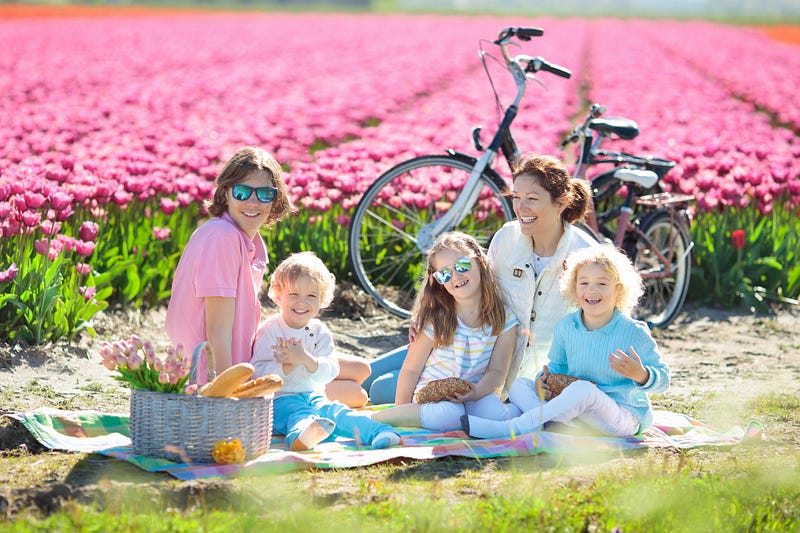
Image by Depositphotos.com

It’s funny how small things make you happy when you’re young.

From age eight, I was allowed to cycle to my grandparents’ on my own. To me, happiness was eating chocolate sprinkles on a slice of bread while telling my ‘oma and ‘opaall my secrets.

I didn’t appreciate then how extraordinary the ordinary was. Only now, when raising my kids abroad, can I see that my normal Dutch childhood was pretty unique.

And it looks like I’m not the only one.

Happiest kids in the world?

A 2020 Unicef study shows the Netherlands is the best place to raise a child, with Dutch children ranking the highest for happiness. The report card investigated the mental and physical health and academic and social skills of kids aged 0–18 in the world’s 41 wealthiest nations.

The Netherlands even outrank famously happy countries like Denmark, Norway, and Finland. Sadly, children in the UK and US have less to smile about with a 27th and 36th spot, respectively.

The teens are alright too

Dr. Simone de Roos, working as a researcher at the Netherlands Institute for Social Research (SCP), tells the Guardian life satisfaction among teens has not declined since 2013.

“They have a supportive environment at home, with friends, and also at school. Dutch parents give a lot of support and have mild control. There’s an egalitarian climate, teachers are not authoritarian but accept the feelings of pupils, and pupils trust teachers.”

And it shows, with 93% of Dutch 15-year-olds reporting they are satisfied with life, compared to 61% for British teens and 74% for teenagers Stateside.

A 2013 Unicef report gave top marks for Dutch teens’ material well-being, educational well-being, and behaviors and risks. It concluded Dutch teenagers are least likely to engage in risky behavior (think drinking alcohol and getting pregnant.)

The Netherlands — a utopia?

The Guardian argues that the Netherlands’ low unemployment rate (4.09 % in 2020), healthy economy, and low inequality contribute to fertile ground for happy residents.

Obviously, wealth and high equality make things easier, but I feel it’s the parents’ no-nonsense mindset that means our children have high mental well-being.

So what are the secrets to Dutch happiness, and can we learn from it?

Indeed, comparing nations is like comparing bananas and bicycles, as economic and social conditions and cultural attitudes differ. But habits are transferable, and I believe any parent can apply them.

Here are five key areas to focus on:

Parents prioritize family

Dutch parents put family first, making time to eat breakfast together and share dinner. With part-time work on offer in most organizations and a ‘papadag’ once a week (a legally allowed but unpaid day for fathers), parents have the luxury to be present in their children’s lives.

Parents respect kids

Being there allows for plenty of conversations, which our small nation excels in. Dutch people love sharing opinions due to parents listening to their toddler’s views and beyond.

Anything is up for discussion, and parents don’t shun topics like sexuality, creating an environment where children feel safe to discuss anything.

With 91.7 % of Dutch kids feeling like it’s easy to talk to their mum (and 81.4% to their dads), kids feel respected and listened to, allowing them to grow into confident teenagers.

Schools and parents place low pressure on children to perform

The education system takes the pressure off parents and children by doing things like not giving homework until kids enter second-level education or making it easy for teens to switch from academic to vocational education.

Ruut Veenhoven, a professor of happiness at Erasmus University, says:

“Achievement is what French and English schools focus on, but our research has shown that social skills are instrumental to happiness. They are much more important than a person’s IQ.”

Cycling past a Dutch high school, I discovered their mantra: Learning, Laughing, Growing, Discovering, perfectly encapsulating the Dutch approach to education.

Also, Dutch parents tend to have realistic expectations, viewing kids as individuals rather than extensions of themselves. Keeping activities to a minimum allows plenty of time to play.

Kids cycle everywhere

Thanks to a flat country, and an excellent infrastructure, it’s safe for children to cycle to school, sports clubs, and, yes, grandparents. Biking gives kids exercise and freedom, and like me as a child, it gives them independence. It also means they spend a lot of time outside and in all kinds of weather.

Chocolate sprinkles for breakfast

Yes, kids enjoy these on their bread, as I did. As we say, everything in moderation is good for you.
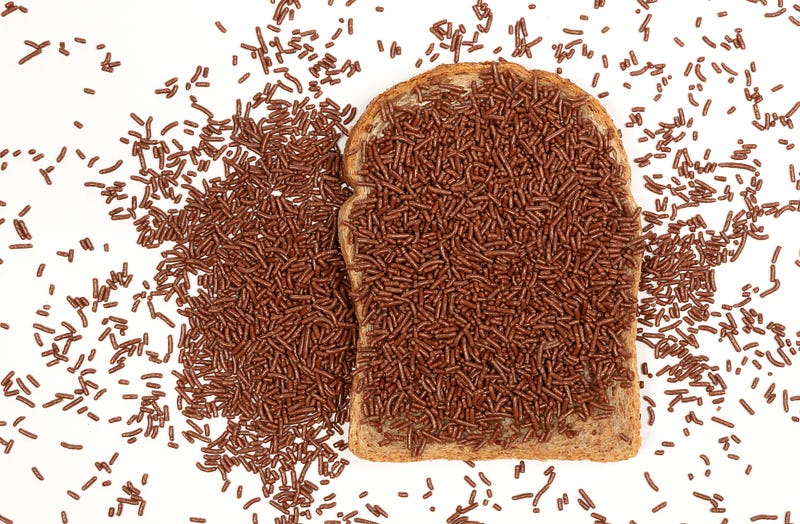
Image by Depositphotos.com

What can parents learn from the Dutch?

  • Try to prioritize mealtimes - a shared breakfast is a perfect start to the day.
  • Listen to your children and value their opinions; you will reap the benefits when they become teens.
  • Keep expectations realistic, and let your kids have fun.
  • Get your kids out on bikes, wherever it’s safe.
  • Food: give them a little of what they like.

Final thoughts

Unicef report cards show that the Netherlands has it sussed when it comes to raising happy children.

While a healthy economy and a healthy equality situation certainly help, there are five easy habits caregivers anywhere can learn from Dutch parents.

By sharing meals, listening to and respecting your kids, easing off on the pressure to perform, letting them cycle, and providing chocolate, you can create an environment for your child to thrive.

Trust me, as someone who benefited from a Dutch childhood but who is raising her children abroad, I feel societies from all corners of the world can benefit from our simple secrets to happiness.

More from this author:

Further reading:
https://www.unicef.nl/files/Report%20Card%2016%20UNICEF_3%20sept_2020.pdf
https://tradingeconomics.com/netherlands/competitiveness-rank#:~:text=Competitiveness%20Rank%20in%20Netherlands%20is,according%20to%20our%20econometric%20models.
https://worldhappiness.report/ed/2013/#appendices-and-data
Parenting
Family
Happiness
Relationships
Advice
Recommended from ReadMedium