
5 Brutal Medieval Inventions You Didn’t Know About
Violent inventions that you wouldn’t believe existed.
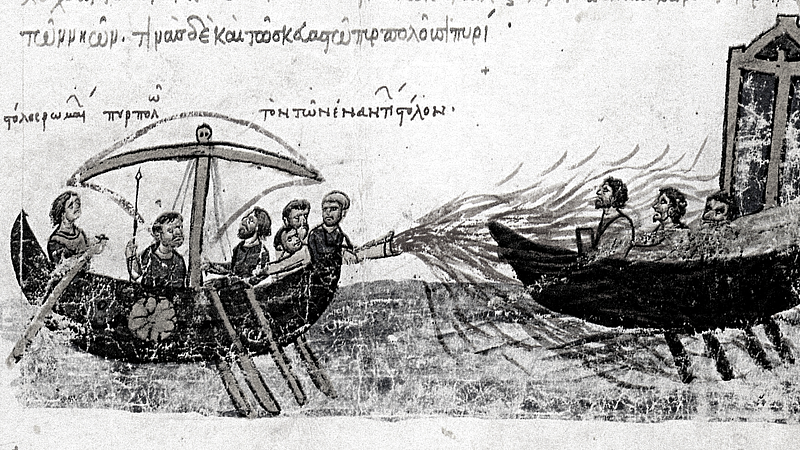
We often perceive the Middle Ages period as a time of kings, knights, and chivalry.
However, many people are unaware of the darker side of the medieval period, which included some of the most brutal and violent inventions ever created.
From crude torture devices to primitive weapons of war, these inventions are a testament to humanity’s capacity for violence.
This article will briefly examine five of the most violent medieval inventions you won’t believe existed.
The Middle Ages are widely known as a time of violence and terror, but the weapons and inventions of the era were indeed something to behold.
This article will explore the five most violent medieval inventions you won’t believe existed.
These inventions range from gruesome torture devices to deadly weapons used in battle. Prepare to be amazed and appalled as we take a look at the most violent medieval inventions that you won’t believe once existed.
5- The Ballista
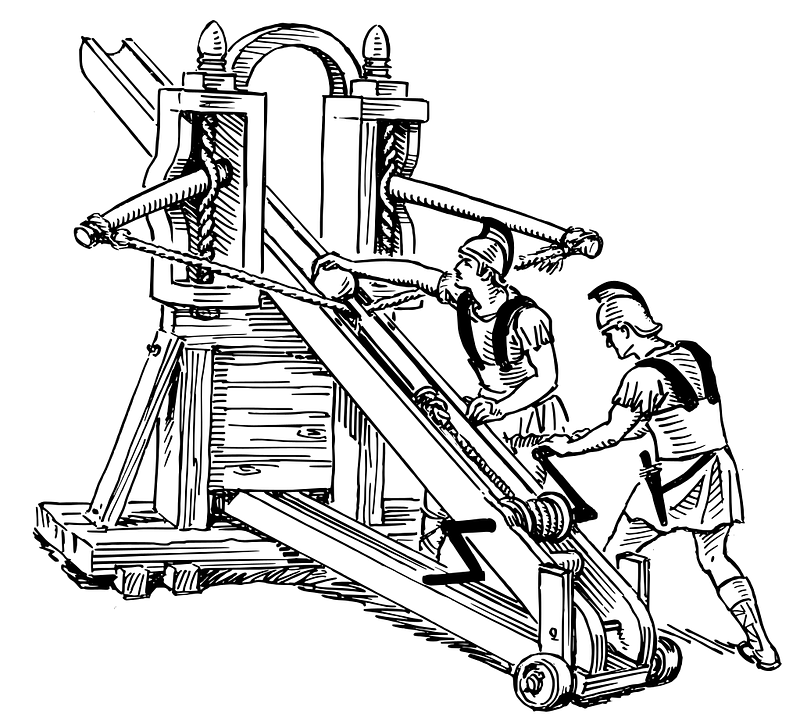
This destructive weapon was used during the Middle Ages to defend castles from sieges, break through walls, and wreak havoc on enemies from afar.
While it wasn’t as powerful as catapults or trebuchets, it had a longer range and more accuracy.
As a result, the Ballista was a popular siege weapon for centuries and remained a great example of Medieval engineering.
It’s also worth noting that not all medieval inventions were violent. Consider how closely our modern timeshares with this period in history when you look at these other inventors who have made an impact.
Gutenberg-creator of movable type printing; Leonardo da Vinci-pioneer in painting, sculpture, architecture, science, and engineering; Christopher Columbus-explorer of America and Eastern Europe; Galileo Galilei-inventor of experimental method and law of pendulum motion; William Shakespeare-author who revolutionized dramatic arts in England.
4- The Battering Ram
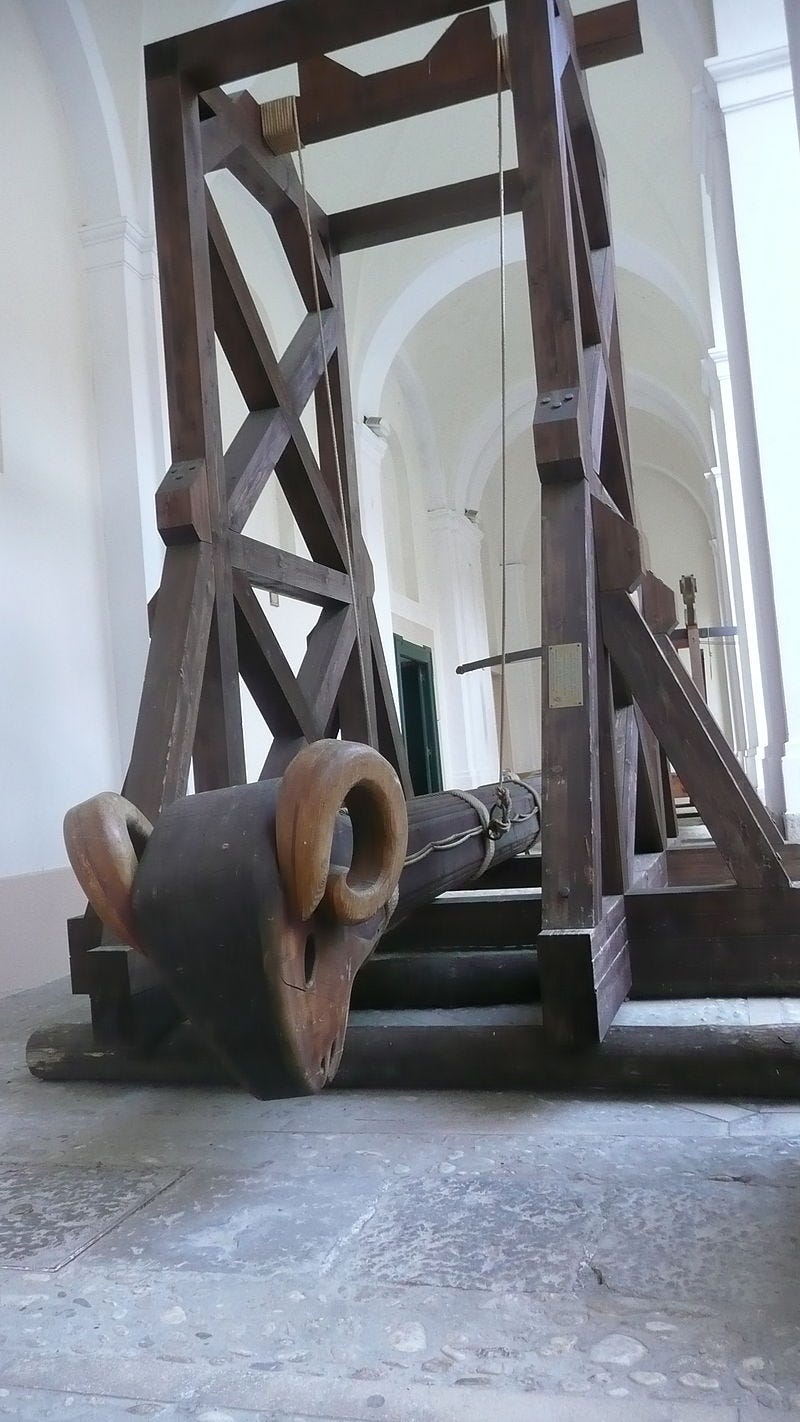
The ram could be effective in its own right, but its true power came from its psychological effects; the pounding sound alone could be enough to demoralize defenders and cause them to abandon their posts.
In the Middle Ages, when walls were still made of wood or mud, a battering ram could effectively break through them, making this invention terrifying.
There are stories of rams being used by Vikings against Irish monasteries during raids in the 9th century AD, where they are said to have caused such fear that many priests chose death over capture by jumping off cliffs rather than surrendering.
Hammer-Tongue: Used in medieval China, this was an extra-long spike attached to the end of a pole which would then be hammered into the ground with one hand while using your other hand to pull it out quickly.
These spikes were often left sticking up after battles as a sign that no enemy would want to cross their path again. Fauchard: A pole weapon consisting of a blade on top and two sharp blades below; it looks like something out of Dante’s Inferno.
However, these weapons date back to Roman times, when similar weapons existed for thrusting instead of slashing.
3- The Catapult
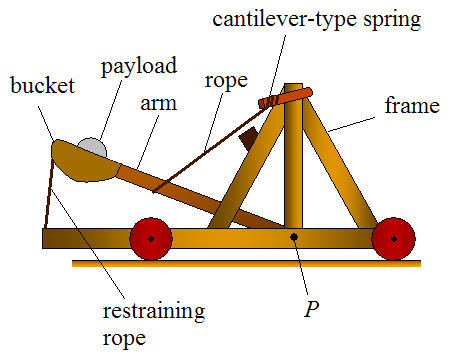
Catapults could launch large rocks and other objects, such as Greek fire — a combustible mixture of materials like oil, resin, and sulfur.
Catapults aimed to breach enemy walls or create chaos within an enemy camp by launching these projectiles high into the air. The size and range of catapults varied, but some could hurl stones over 400 yards away.
Using catapults in medieval warfare provided soldiers with a powerful weapon that could cause massive destruction and damage to enemies.
It was a standard weapon used by armies during the Middle Ages and allowed greater battle mobility.
Although its effectiveness has been debated, the catapult still stands as one of the most violent medieval inventions that shaped warfare in the Middle Ages.
2- Trebuchets
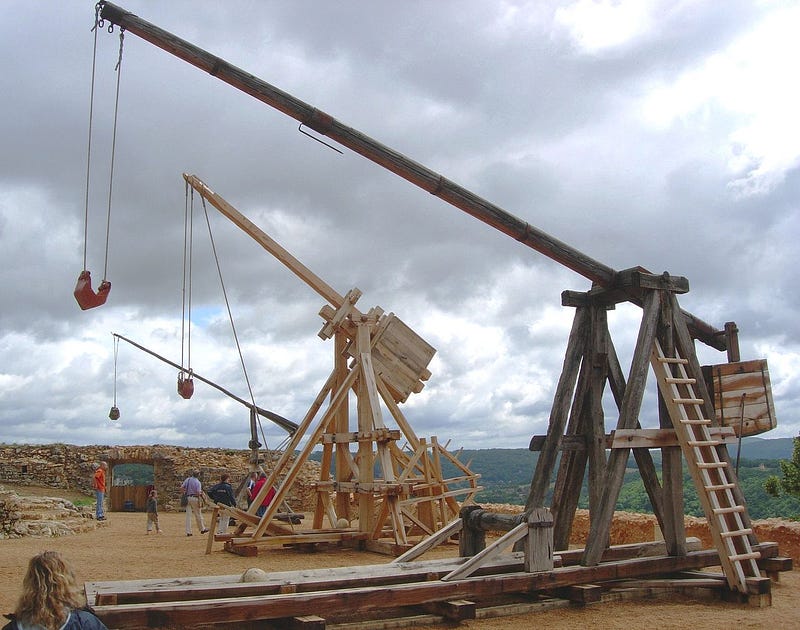
The trebuchet was one of the most violent inventions of the Medieval period.
This destructive war machine was used to launch projectiles with great force, making it a formidable weapon in siege warfare.
Trebuchets were invented in the 12th century; trebuchets were usually operated by two or three men who used a heavy counterweight to fling stones and other large objects at enemy walls and fortifications.
These powerful siege weapons could hurl huge stones and other projectiles at distances up to 500 yards and break down even the strongest fortifications.
In addition to stones and boulders, trebuchets were sometimes loaded with pots of burning pitch, boiling oil, and even dead animals to spread disease among their enemies.
The violence and destruction these weapons could cause were staggering. Today, trebuchets are mainly used for recreation and competitive events.
Although they are no longer used as military weapons, their legacy remains a reminder of the violence of the Medieval period.
1- Greek Fire
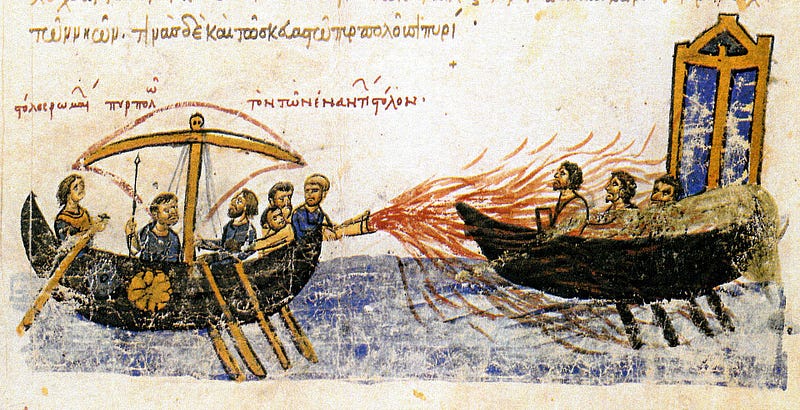
The ancient Greeks had a weapon so destructive and powerful it was said to be a gift from the gods.
It was called Greek fire, and its mysterious formula was kept so secret that enemies never replicated it.
The Byzantine Empire used Greek fire to significant effect, repelling many invasions.
The first recorded use of Greek fire was in 673 CE when it was used to save Constantinople from a fleet of Arab attackers.
Many details about how Greek fire was made have been lost to history. We know that this weapon was incredibly deadly and helped the Byzantine Empire protect their lands for centuries.
Points To Ponder
The Middle Ages inventions certainly have left us with a lasting impression.
From siege towers and ballistae to boiling oil and the trebuchet, the violence and destruction of these weapons were unparalleled at the time.
Though they may seem brutal and terrifying to us today, they did play an essential role in shaping the world we live in now.
The fascinating history of these Medieval inventions is an important reminder that progress is rarely ever easy and often comes with significant risk and cost.
We can only hope that our present-day and future inventions are used for more peaceful purposes.
More from the author:


