
5 Big Differences I’ve Noticed Between Atomic Newsletters and Story-Based Emails
Is one better than the other?

I sent my first marketing email in 2007.
Since then, I’ve sold everything from:
- Baby carriers,
- BBQ supplies,
- Tactical pens,
- Fidget spinners,
- Coffee mugs,
- And more.
I even helped a relationship coach launch a digital course via email to the tune of six figures.
Yep.
I love everything about email marketing.
I can’t get enough of the stuff.
So…
In January 2021, I decided I was going to slowly step away from freelancing and build my own thing.
That’s when I decided to start a Twitter 𝕏 account, toss up a lead magnet, and build my very own email list.
And…
For the better part of three years…
I stuck with what I knew: Daily story-based emails.
But recently, I changed my strategy.
Not on the advice of any wannabe marketing guru or because of any profound realization.
No.
I did it strictly out of necessity.
I don’t have time for anything else.
During the past few months, I have noticed 5 big differences between sending a daily atomic newsletter and a daily story-based email.
For better or worse, here they are:
Higher Open Rates
20%
That’s the industry standard for open rates among email marketers.
Luckily, I’ve always managed to land somewhere around 30% with my story-based emails. So I never scoffed at the number too much.
However, since switching to my atomic newsletter format, I’ve seen a steady increase in my open rates.
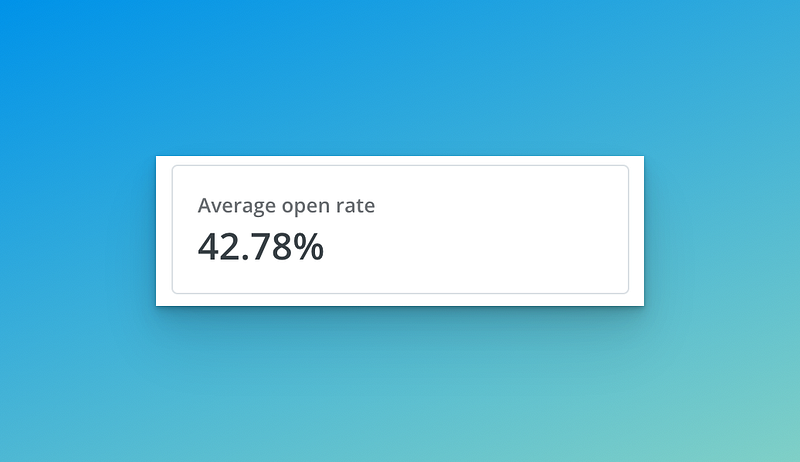
I think the reason for this is two-fold:
- The short length of an atomic newsletter makes opening the email less of a hassle. If you know you’re not going to be bombarded with a 500-word sales email disguised as content, you’re more inclined to open it up and see what the fuss is about.
- It’s a small time investment for your subscriber. This makes it easy for them to open, inspect, and make a decision regarding if they wish to click and keep reading.
So far the approach has been positive in terms of increasing my open rates, and I’m hoping to crack 50% by the end of the year.
Higher Click-Through Rate
Like my open rate, my CTR has also seen a jump.
The industry standard for CTR hovers between 2–3% and I’m pleased to say I’ve always been average in that department.
However, since starting my atomic newsletter, I’ve also seen a nice jump in the number of people who click through to read the content I’m sharing.
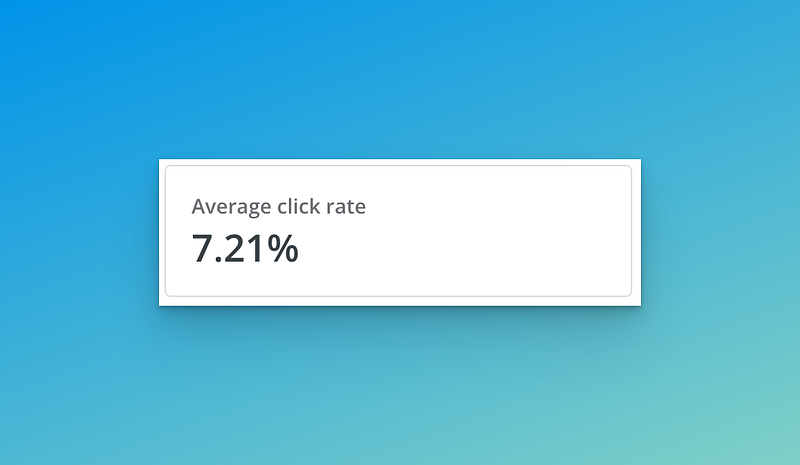
Over the past few weeks, I’ve seen my CTR crack 12% and typically land around between 8–10%, so I fully expect this number to continue to increase as well.
More Audience Engagement
While this article isn’t about the difference between the quality of readers on Medium vs. Twitter 𝕏, I can say — unequivocally — that Medium is superior in terms of audience growth, engagement, and subscriber growth.
As if that isn’t enough of a bonus, I’m also noticing far more subscribers replying to my emails, asking questions, and generally just being cool.
This extra engagement has helped tremendously with respect to generating content ideas, building my network, and refinding my overall strategy.
Lower Course Sales
The downside to not writing a daily sales email is that I’m not making as many sales of my digital product.
I would typically expect to generate around $500 USD per week by promoting my own courses or affiliate offers via story-based emails, but this number has decreased dramatically.
Now I usually earn between $100-$200 USD weekly via my digital product.
I believe this is due to a few reasons:
- I stopped selling TWO of my courses.
- My one course is now promoted without any benefit-driven copy.
- I’m not promoting as many affiliate offers.
I fully expect this to change in the near future as I’m in the process of updating my course, tripling the price, and building out a more benefit-rich sales funnel.
I’m also going to slather on some juicy copywriting for good measure.
More Revenue
Despite killing two of my digital products and having lower sales on my remaining course, I’ve managed to bounce back in terms of overall earnings.
This can be attributed to several things:
- My 6-step atomic newsletter funnel.
- Sparkloop earnings
- Sponsorship slots
- Recurring affiliate earnings
- Medium earnings
- Digital course sales (mostly via affiliates)
Judging from what I’ve written above, you might conclude that atomic newsletters are more profitable than story-based emails.
But, I think it’s important to consider the context.
If you’re building a business entirely around information products, sending a daily story-based email might be a better fit.
You should, at the very least, write an automated sales sequence that promotes your offer in a persuasive way.
On the other hand, if you’re a writer who is exploring your passions, interests, and natural curiosities — and you also happen to be crunched for time — choosing the atomic lifestyle may be exactly what you’re looking for.
It works for me!
About the Author
My name is Evan. I’m a happily married father of three boys who likes to drink black coffee and read Jack Reacher novels. I also love everything about newsletters!