
5 Common-Yet-Mistaken Beliefs That Keep Most Women From Achieving a Leaner Physique
The mental barriers I had to overcome to achieve a low body-fat percentage
Achieving my “dream bod” took many years of trial and error.
On and on, I fell prey to widespread beliefs that kept me from getting the lean, athletic physique I wanted. Worse, many of these beliefs — beliefs about what fitness should be like for women — made me sick and exhausted.
It wasn’t until I broke through these mental barriers that I made real progress.
Flash forward to today, I’ve achieved and maintained a low body-fat percentage for 4 years. Better yet, my health has never been better, as evidenced by my insanely fast hair growth, stellar blood analysis results, and how strong and vital I feel every day.
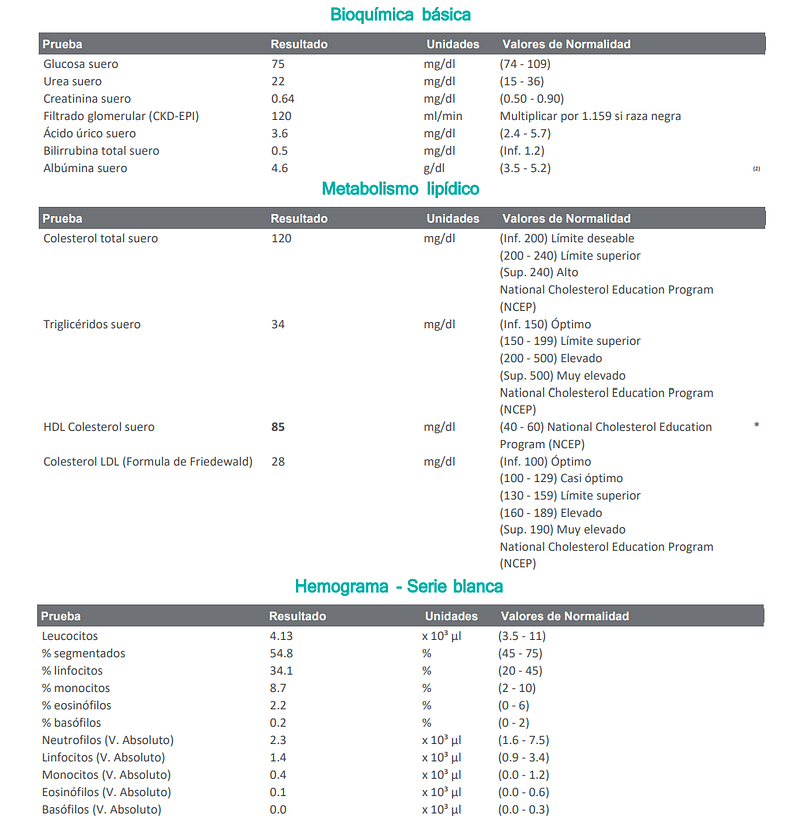
Now, I’m not saying these beliefs are always wrong. I hope that by sharing what didn’t work for me, other women will be inspired to question their beliefs and find what brings them closer to their goals.
Without further ado, here are 5 common-yet-mistaken beliefs that keep most women from achieving a leaner physique:
#1. Exercising This Way Will Make You Look Like a Female Arnold Schwarzenegger
Like many other women, I used to fear lifting heavy.
In the gym, you’d see me taking all the “toning” classes, doing a thousand reps with one-pound dumbells, and praying this would magically give me the desired “toned look.” Most importantly, I avoided machines and free weights at all costs. I didn’t want to look like a female Arnold Schwarzenegger.
I didn’t want to look “bulky.”
Sigh.
This belief has two main problems:
- To get the “toned look,” you need to combine muscle gain and fat loss. And though some women — usually newbies — can build a decent amount of muscle with little weight, most of us need a bigger challenge.
- Women have around ten times less testosterone than men, which means it’s way harder for us to build big, puffy muscles. Unless you have an underlying hormonal condition like PCOS or you’re taking anabolics to magnify your results, it’s unlikely you’ll ever get the “bulky” look.
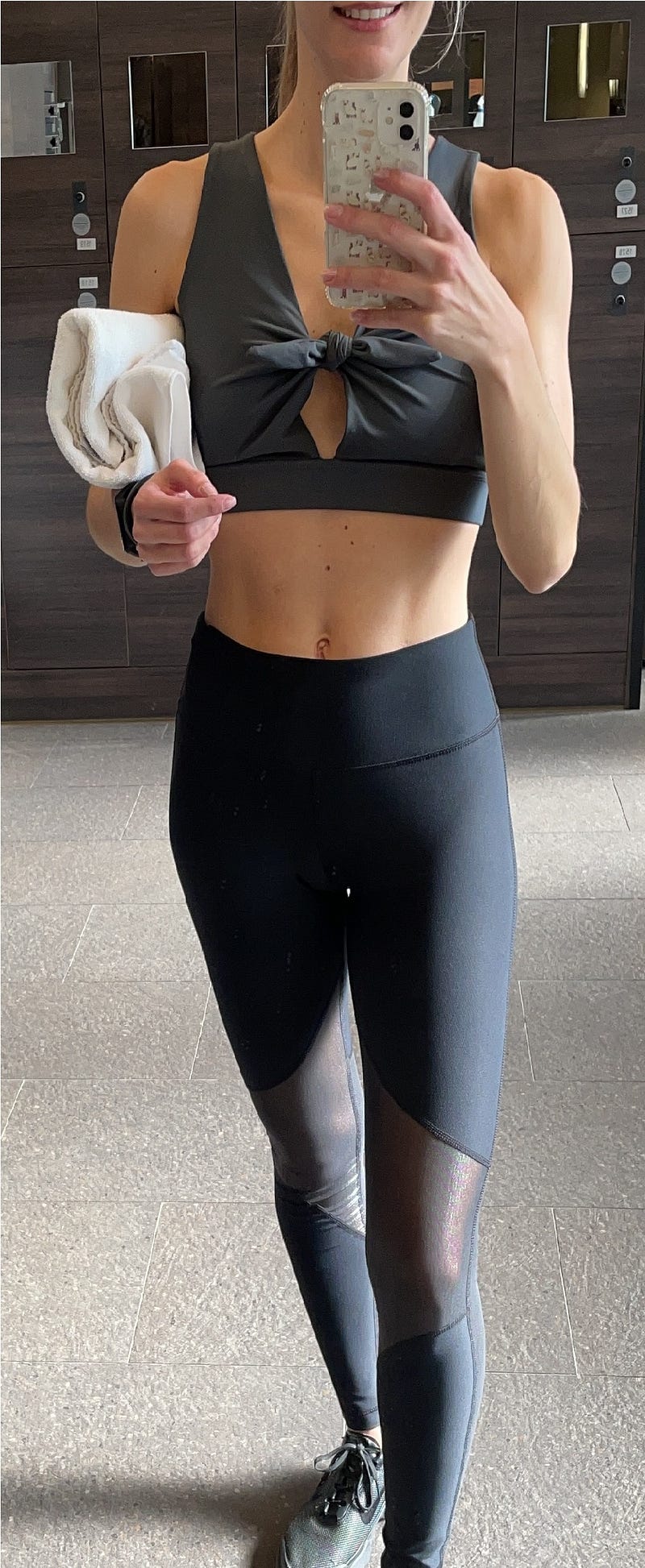
Take me as an example. The picture in the intro shows how I look after many years of progressively harder resistance training (more weight, reps, or shorter rest times).
Do I look bulky?
Perhaps someone thinks so; bulkiness is subjective. But I’m thrilled with where I’m at — and that’s what matters.
Moreover, lifting heavy hasn’t only been a hack to getting the physique I wanted. It’s made me feel stronger and more confident. It’s allowed me to eat more than before. Not to mention that maintaining your muscle mass throughout your life is a great predictor of longevity.
Besides, if for some reason you start to look “bulky” — whatever this means to you— simply reduce the weight you’re lifting. Your muscles will adapt.
Don’t let a silly fear of looking “Bulky” keep you from becoming healthier and stronger.
#2. “I’m Too Busy”
Most of us women put our health and fitness goals on hold because we’re “too busy.” We can’t find the time.
“I’ll get to it,” we say to others and ourselves, “once this project or situation is resolved.”
Yeah right.
But I don’t blame you. I was like that before. Work, social gatherings — there was always something that kept me from exercising.
Then I heard an influencer (I don’t remember whom) say it’s not about having the time; it’s about making the time. After all, if your A/C fails, won’t you find the time to call a technician?
Inspired, I took a long, hard look at what I did every week and realized I spent 2–3 hours watching Netflix every evening. It turns out I wasn’t that busy. All I had to do was carve out the time to exercise.
But I’m not the best example here. I’m not a mother. I don’t yet know how parenting complicates your pursuit of health and fitness goals.
But my sister-in-law does… And she’s my inspiration.
A mother of two young children (a two-year-old and a six-month-old), she works full-time as a registered dietitian, handles half of the housework, and is one of the fittest women I know.
Unlike me, she can’t fit a few hour-long workouts into her week. Most parents can’t. So instead, she likes to do “exercise snacking.”
When her baby is napping and the eldest is at daycare, she does a quick 15-minute ab workout. When her husband takes care of the children, she goes out for a quick jog.
No matter what, my sister-in-law makes the time to work out because it’s a priority for her.
And so should we.
#3. Intense Cardio Gets You Results
When trying to lose fat, most of us women go all in on cardio. We spend countless hours on the treadmill or in HIIT classes, heaving, sweating — wondering when this torture will end.
Some women see excellent results this way; intense cardio gets them the body they crave.
But this isn’t the case for many of us. Despite our best efforts, our results are lackluster at best.
Why am I not losing fat if I’m burning so many calories?
This question pounds against our frustrated skulls. Regardless of how many hours we spend doing intense cardio, we can’t seem to get our desired physique. If anything, it seems that going harder makes things worse.
This happened to me at the beginning of my fitness journey. I started doing resistance training and intense cardio to do a body recomposition (increase muscle while losing fat).
Though I gained some muscle, my fat loss percentage barely lowered, and my nights… They became hellish. I’d wake up at 3 AM for no apparent reason. Between the intense cardio and my attempts at a calorie restriction, I was subjecting my body to crazy amounts of stress.
That’s when I learned that managing your stress levels is vital when trying to lose fat.
Excessive cardio raises our cortisol levels — the stress hormone — which makes us hungrier and makes our bodies hold on to fat. Reducing our stress levels, then, is even more critical to long-lasting fat loss than cardio.
In my case, this has proven true. I finally saw progress once I traded intense cardio for walking.
Every day, I would walk — and still do — around 10k steps. This significantly reduced my intense sugar cravings and sleepless nights, two obstacles hindering my fat loss journey.
That said, if you enjoy intense cardio and experience no stress-related drawbacks, go at it. I even go to Zumba classes or hike from time to time.
Intense cardio has many benefits, such as improving cardiovascular health and mood. But if fat loss is your goal and you feel stuck, try lowering the intensity and focus on walking more.
#4. Thermodynamics Is All That Matters To Achieve a Low-Fat Percentage
As I talked about this in a recent post, I’ll be brief:
Though eating fewer calories than you burn is the key to losing weight (basic thermodynamics), what you eat determines whether you’ll be mainly losing muscle or fat.
If you don’t prioritize protein-rich, nutritious foods, your body will tear down its muscle, and your health will likely worsen.
Conversely, if you opt for a diet rich in protein, fiber, and healthy fats, you’ll lose more fat than muscle during a deficit while preserving your health.
This is especially true for women, as a nutrient-deficient diet can wreak havoc on our hormones, a massive obstacle when trying to lose fat.
This is why I recommend to:
- Ensure 85% of your meals are on point (half of the plate should be veggies, a quarter protein, another quarter a complex carbohydrate like sweet potato or quinoa, and add a sprinkle of some healthy fat like extra-virgin olive oil).
- The other 15% is for enjoying life, so if you have 21 meals per week (3 per day), 3 can be whatever you want.
Balancing how much you eat with what you eat will help you achieve your dream physique.
#5. You Need To Eat Less
A friend of mine recently made a significant breakthrough in her fitness journey.
Everything started in her late thirties when she began exercising and restricting calories. She went a little further whenever she reached a plateau, increasing her activity level and eating less.
At the end of last year, at 43, she was practicing OMAD (One Meal A Day), which usually consisted of a big salad. She was eating around 800 calories per day, based on her calculations.
Yikes.
Seven months ago, though, she said enough was enough. She was miserable. She could barely eat anything, and when she indulged, she gained back all the weight she’d lost.
Desperate, she reached out to a registered dietitian and a fitness instructor. She wanted to know if she was condemned to eating a salad for lunch for the rest of her life.
Both the dietitian and the fitness instructor were appalled at what she was doing (me too, when I learned how little she was eating). They told her that due to her age, weight, and activity level, she should be consuming around 2,000 calories per day and that they would get her there.
After that fateful day, my friend slowly increased her calories — around 50 to 100 per week — while doing resistance training and following a specific meal plan.
Today, she eats 2,000 calories per day and is leaner than ever.
I cried with her when she told me her story. I could relate so much.
If there’s one fitness-and-health myth I wish would die is that you need to drastically cut your calories to get results.
Yes, you need to be in a calorie deficit to lose fat. But going as deep as my friend, eating less than half of your body’s needs only makes you feel starved. It subjects you to insane levels of stress, which we’ve already established hinder fat loss.
Moreover, several studies show that extreme calorie restriction decreases your metabolism by as much as 23%, a reduction that can last even after you’ve stopped dieting.
Coupled with the muscle loss experienced in extreme diets, this is one of the main reasons women — and people in general — regain the weight they lose after dieting or reach insurmountable plateaus.
Worse, extreme diets also affect your health. Eating too little makes it nearly impossible for you to consume the nutrients your body needs.
So… What should my friend have done instead?
As she was drastically increasing her activity level by adding resistance training and walking, she could’ve just eaten what she’d always eaten (there would already be a deficit) or even increased how much she ate until her deficit was at around 10%.
If she hadn’t increased her activity level, she could’ve eaten less, but just a little less. Smaller deficits are more sustainable, even if they make our journey longer.
However, if you want to boost your metabolism and preserve muscle mass, resistance training, and a protein-rich diet are a must. Now that my friend is taking this approach, she’s healthier, stronger, leaner, and, most importantly, happier.
Remember: It’s called a fitness journey — not a sprint. So take things slowly and eat.
How To Get a Leaner Physique
By challenging common beliefs that weren’t working for me, I found a way to get the leaner physique I wanted.
It helped me understand that to lower our body fat percentage, we should:
- Lift weights to build the muscle necessary for a “toned” look.
- Make the time to workout regularly and try incorporating “exercise snacks” throughout the day.
- Trade intense cardio for something gentler, like walking, if we feel too hungry and stressed.
- Prioritize protein-rich, nutritious meals that fuel the change we want to see.
- Eat the same as we’ve been eating or stick to a small 10% calorie deficit when increasing our activity level.
Following these tips made a world of difference in my journey, so why not give them a try?
At worst, you’ll figure out what works for you and what doesn’t.
At best, you’ll finally get the results you want.


