41 creativity lessons I have learned as I have entered my 41st age
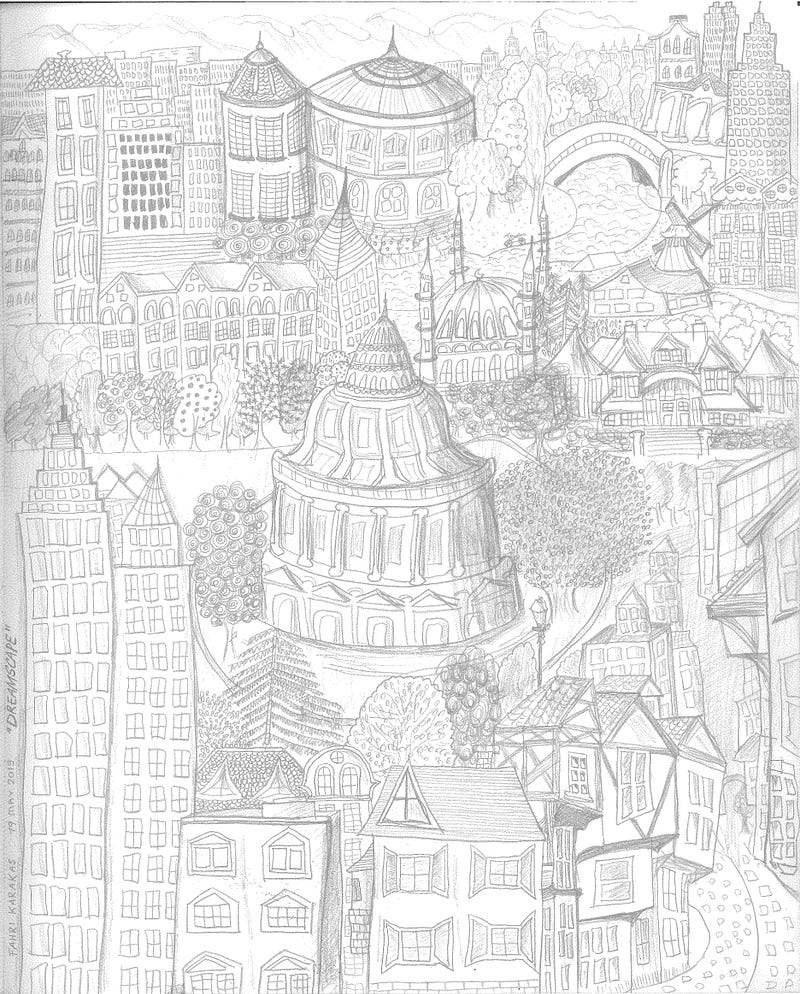
In this article, I will outline creativity lessons and perspectives that have recently shaped my thinking on life, learning, and development.
In my previous 40 years of life, I always defined success as academic achievement.
I wanted to be the best in my classes. I wanted to become the best student.
I wanted to graduate with distinction. I focused on getting academic medals and achievements. I wanted to be the best academic.
I wanted to be successful in the mainstream and traditional way — I cared a lot about how other people thought of me.
I am not happy with these definitions of success anymore.
As I am 41 years old, I realise that I need a new way of defining my success.
For the sake of achieving one academic goal after another, I forgot how I played, how I had hobbies, how creative I was as a child.
I was creating and playing every day when I was a child.
I had my games on everything. I built worlds, characters, sketches, and scenarios.
I was not conscious about what I was doing, but I was being a dreamer, writer, doodler, curator, storyteller, a comic artist, a designer, and an actor at the same time.
After I started school, I gradually abandoned all these games and creative projects. I thought I have to be serious in adult life and always focus on achieving one goal after another.
It was all studying, hustling, and hard work. For example, in order to get into the best universities in Turkey, I had to enter two nation-wide university exams (OSS and OYS) and compete with 1.5 million other students in these exams. This meant studying for 16 hours a day, finishing a book every few days, and solving millions of questions during this process.
The same story continued when I was a university student, a graduate student, and started working as an academic in a business school.
Work, work, work.
Endless goals to conquer.
Impossibly long checklists to go through.
There was no time for play.
There was no compartment for games.
I neglected and suppressed my creative side for years….
Until now.
I do not want to do that anymore. This makes me bitter — I feel like an artist who has never practised their own craft.
I want to change my life.
I want to challenge and develop myself as an artist and as an entrepreneur.
If you share similar feelings and if you are yearning for more creativity and play in your life, then my manifesto below will resonate with you.
It will also hopefully provide you a lot of ideas and strategies to develop your own creativity.
In Turkish, there is a saying “41 times Maşallah” (41 times Maasallah) which expresses gratefulness and wishing good luck.
So, I am very thankful that I have become 41 and learned a lot in my life.
Here are the 41 creativity lessons I have learned recently:
1. When you look back on your life, you should be able to tell yourself that you lived life as the best version of yourself.
A great life requires a radical, fresh, courageous, new approach. It is different from surviving from day to day.
I decided that I will aspire to a new level of greatness and creativity in my own life.
It all starts with a decision.
2. You need to be very bold and courageous in your imaginations. Where do you want to be in 10 years?
I have begun to take this question very seriously.
I am focused and intentional about who I want to become in the long term.
In ten years, I imagine myself as a playful and creative artist who has made a positive impact on a lot of lives.
This means I need to act from that future vision every day.
I need to start acting like that artist today and every day.
I will take a small step every day in this direction — however small that step may be.
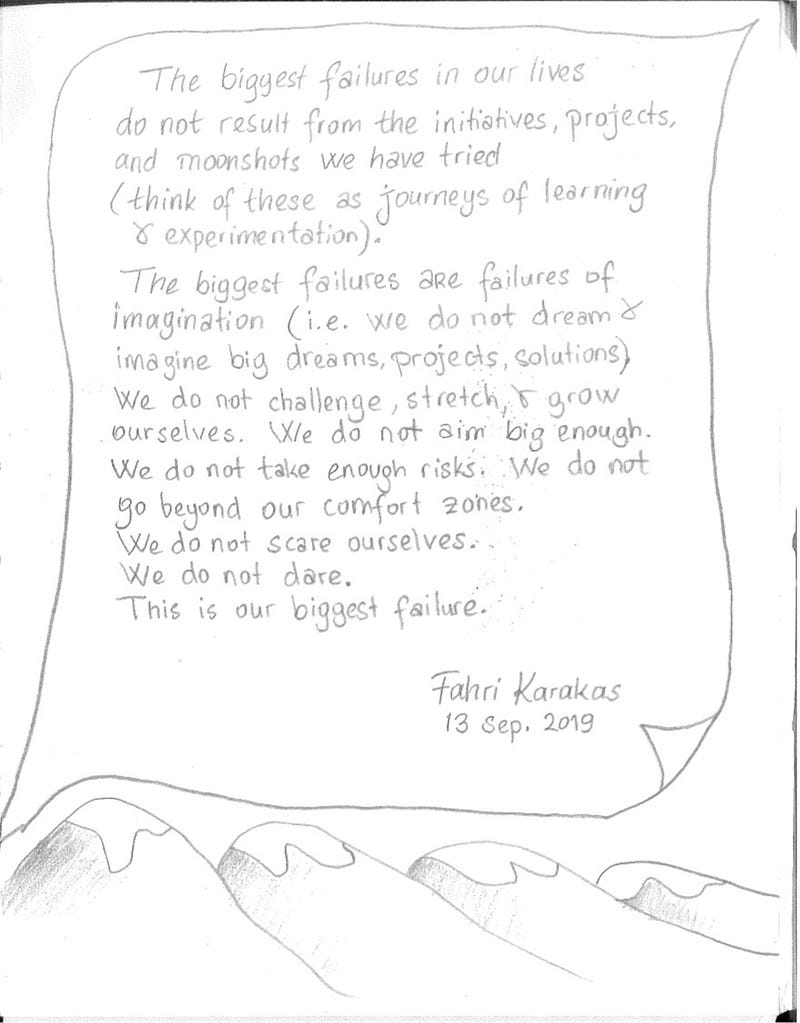
“Creativity is no longer a luxury. It is a critical survival skill that we need to adapt to rapid changes, solve complex problems, imagine new possibilities, and navigate uncharted waters ahead of us.” Fahri Karakas
3. To live a remarkable life, you need to continuously improvise your life. I define “improvised lives” as lives defined by a sense of adventure, curiosity, exploration, and spontaneity. Improvised living requires a playful mode of:
- continuous learning, - intense curiosity, - embracing chaos and uncertainty, - thinking and problem solving beyond borders, - experimenting and making mistakes, and - entrepreneurial acting.
I have decided to pursue an improvised life from now on. This means I will be more open to adventure and learning every day. It also means I will focus on creative asset creation every day in my life.
4. To find meaning in your work, you need to transform your everyday work experience and try to design it such that you are in search of excitement, wonder, and enjoyment.
To do this, I have changed my approach to work.
I have moved away from mindlessly checking more boxes to improve my productivity.
I re-define work as my platform for imagination, value creation, and self-expression.
I am asking myself:
What can I learn and discover today that will excite me?
How can I create more value in the world for other people?
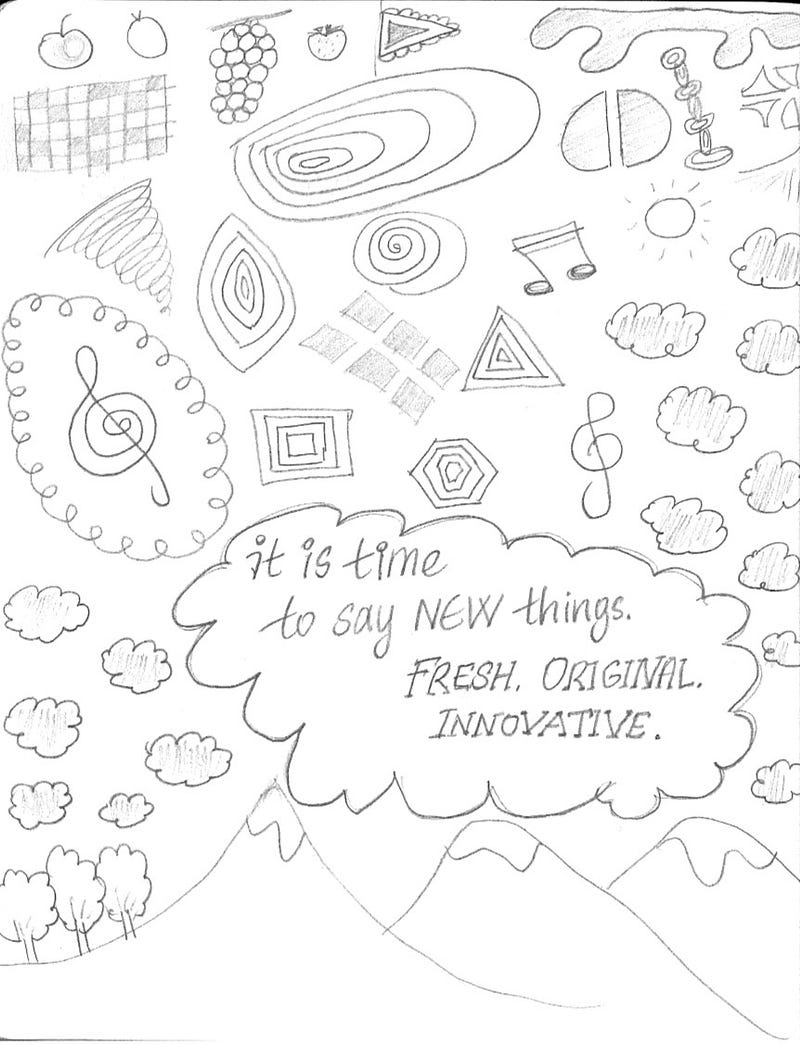
5. You cannot learn and grow if you try to be clever all the time. It is much better to be naïve, hungry, foolish, playful, and curious.
To this end, I have stopped taking myself so seriously.
In my teaching, I have started experimenting with humor and self-deprecation.
When I visited Rome last year, I just lied on the floor for a stupid photo (Do you remember #fallingstars challenge, anyone?) and my wife Sertac captured this beautiful moment:
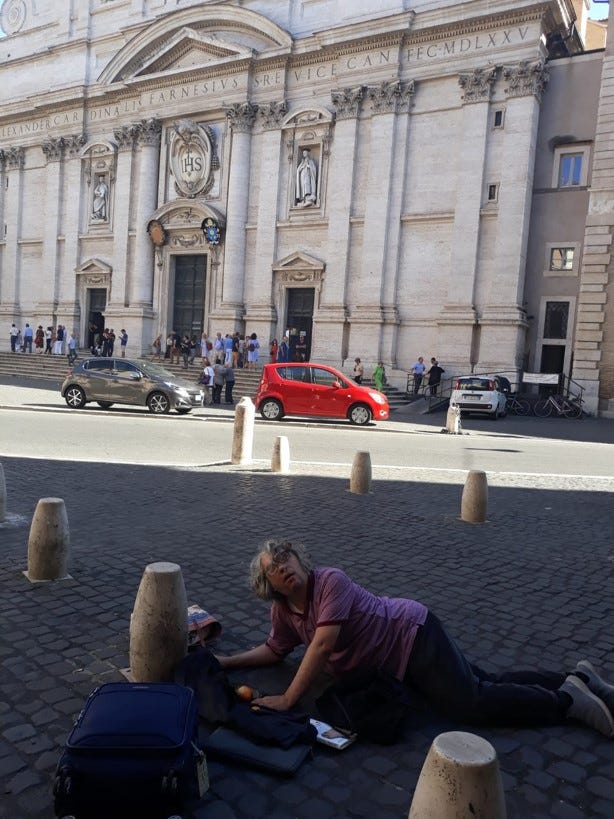
I proudly share this picture with the world — this is who I am, people!
When you do not take yourself seriously, this opens up a whole universe of freedom and flexibility for you.
You take all that serious baggage (you have accumulated over decades) off your shoulders.
Our lives are full of too much serious business.
You need more spaces and moments for pure-play, foolish dances, horrible singing, and naive discovery.
It is your task to open up these spaces and moments in your life.
6. It is not easy to scare yourself and set yourself new challenges and adventures. But if you do it, you will be rewarded. You will be happier.
I realized that I do not feel really creative and happy in my academic career. I feel a bit trapped by bureaucratic obligations, grading deadlines, article rejections, meetings, and never-ending tasks.
Whenever I feel trapped, I know that this is a signal for me:
I need to make changes in my work and in my life.
It means I need more pockets for joy in my daily schedule.
How can I find more joy and meaning in my work?
This question requires me to think and act differently.
I decided to allocate more time to follow my curiosities, passions, and interests.
7. You need a healthy dose of self-confidence and independence to pursue your ambitions and dreams.
You need to stop trying to pleasing others. Taking societal expectations seriously (and worrying about how others will think and talk about you) is a recipe for mediocrity.
You need to go out of the box and swim-up against currents of mediocrity.
Do not be trapped by your ego — this will make you mediocre.
Do not take yourself seriously. Take your work seriously.
In order to avoid mediocrity, you need to focus on your unique strengths and skills. You need to amplify them and build on them to figure out your own legacy and contribution to this world.
8. To be creative, you sometimes need to waste some time and it is OK.
You are not a machine.
You are a curious, striving human being.
Life is not only about the next goal to be captured. There is more to life than that.
We are not robots. We need adventures.
Sometimes, we need to relax, breathe, loosen up — just be.
A wandering mind is not lazy — it is curious and exploring.
We need more imagination and leisure in our lives to revitalize and refresh ourselves.
Therefore, I started to waste more time for exploring just for the sake of exploring.
Time spent doodling or writing or dreaming or watching a great movie is never wasted.
Whether I realize it or not, I am making progress whenever I learn, reflect, dream, or create.
9. To be creative, you need to appreciate and embrace a bit of chaos and ambiguity in your life.
Creativity emerges from chaos. You need to embrace that chaos.
You can then look for patterns among the chaos and start from those patterns to create something new and exciting.
Surprises, adventures, puzzles, exciting ventures, new projects, artistic pursuits are good for your health.
You need a bit more chaos, randomness, dance, singing, independent learning, writing, and creating in your life.
Improvisation is magic — it improves your life instantly.
10. When you are facing uncertainty and chaos, you need to be aware that this might create negative emotions.
You will probably feel lost and frustrated. You are navigating uncharted territories and this means risk.
When you go out of your comfort zone, you will feel scared and stressed out. That type of fear is good for your learning and development. You will eventually grow more resilient and stronger.
Therefore, you need to take one small action every day that puts you outside of your usual zone of comfort.
When you are outside your comfort zone, you should feel great fear and great excitement at the same time.
Mel Robbins, the author of “The 5 Second Rule: Transform your Life, Work, and Confidence with Everyday Courage” calls the principle of taking immediate action ‘the five-second rule’.
“The moment you have an instinct to act on a goal you must count from 5 downwards and physically move towards that goal and take a small action. If you do not take immediate action, your brain will stop you.”
Your brain will always resist, come up with 100 excuses, and 100 ways of why it will not work.
You should nevertheless move and take action. The action might be small, but make it a habit to take action.
11. You need to stop chasing success to become happy. You can be happy right now. Success will probably follow your happiness.
It seems I have been chasing success all my life, and the satisfaction I get when I become successful is too ephemeral and too brief to make a difference.
It is also exhausting to depend on external factors (such as promotion, raise, profit, etc.) for your happiness.
Happiness is deeply personal and internal.
You can control your mood, your emotions, and your reactions to events.
You can be present and grateful in the moment that you are living in.
You can be an optimist.
This is one of the wisest lessons I have learned in my life.
12. You need to see problems as challenges for growth and learning.
Your attitudes are key to your prospects of success and happiness in your life.
When I stop seeing problems as threats, but as signals that I need to change and improve myself, then the whole situation will improve.
All challenges are actually invitations for me to change.
I will open up and learn. I will challenge myself and try out different methods. I will approach the problem from multiple fresh angles.
In the process, I will learn new things that I have never considered or realized or known before.
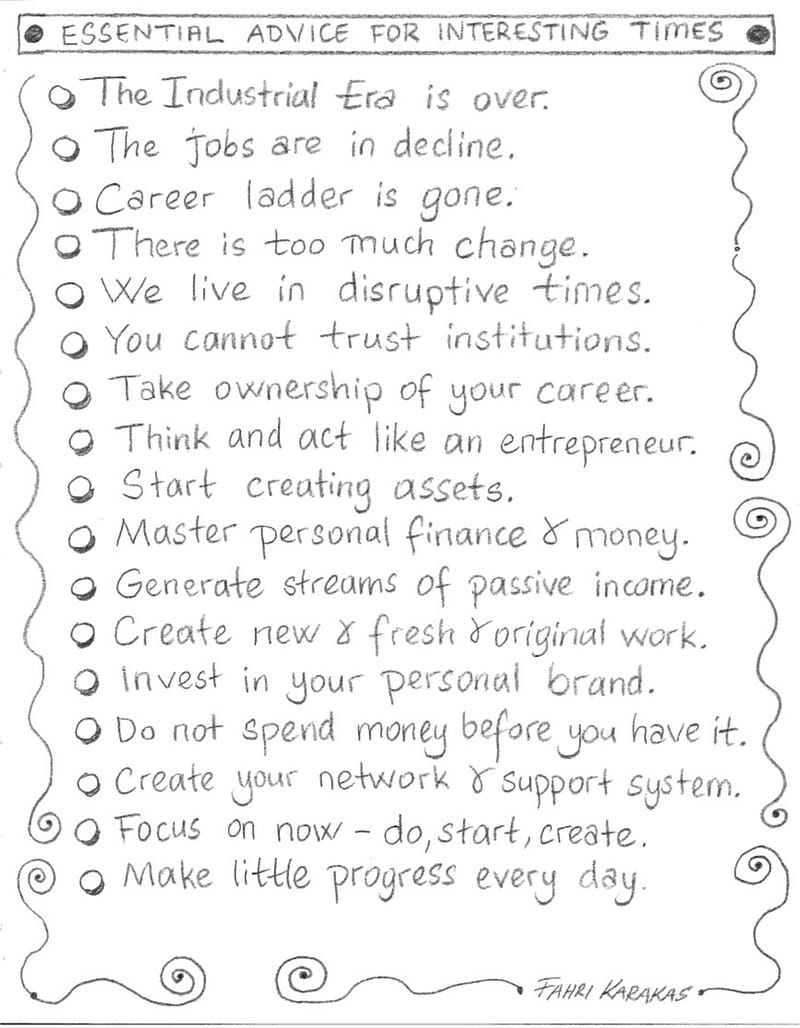
13. Instead of relying on organizations to ‘save’ you, you need to take initiative and take control of your life and career.
The best way to do this is to build your assets for the long term. That should be your personal and professional dream (alongside your day job).
You can have a secret creative side or an entrepreneurial career alongside your day job. Actually, you need to have it. This will be your secret hero identity.
Your most crucial task is: Create your own creative assets. Start now!
Use multiple projects as an opportunity to create your own intellectual and creative assets.
Asset creation is a long term strategic game.
You need to create and schedule a lot of time for this in your calendar.
You need to invest in time and effort in creating assets that will generate ongoing value or rewards in the future.
You should start your asset creation game now. This is not only about your finances or career (although they are also important).
Provide yourself more opportunities for creativity, excitement, and adventure.
This will help you find your own voice and share your voice with the world.
14. If you want to live a happy, productive, and fulfilled life, you need to provide yourself more opportunities for:
-Imagination and creativity -Curiosity, play, fun, and entertainment -Problem solving and idea creation -Reflection, note-taking, diary-keeping -Asset Creation activities
In other words, you need to scare yourself and challenge yourself each day.
Every day is an adventure.
You can perhaps start a small creative project that you have always wanted to do, but you were terrified.
You can perhaps start composing music, drawing, singing, dancing, or creating your own fashion line.
What does your heart desire? Go for it.
15. After completion of your creative project, you should share it with the world, so that everyone will see your work and enjoy it.
Creating new things and sharing it with the world is not easy of course. You might feel anxious and stressed out about potential criticisms.
Still, it is a good idea to share your creations with the world.
It is very satisfying to share your passions and artwork, to put them out there for enjoyment and benefit of others.
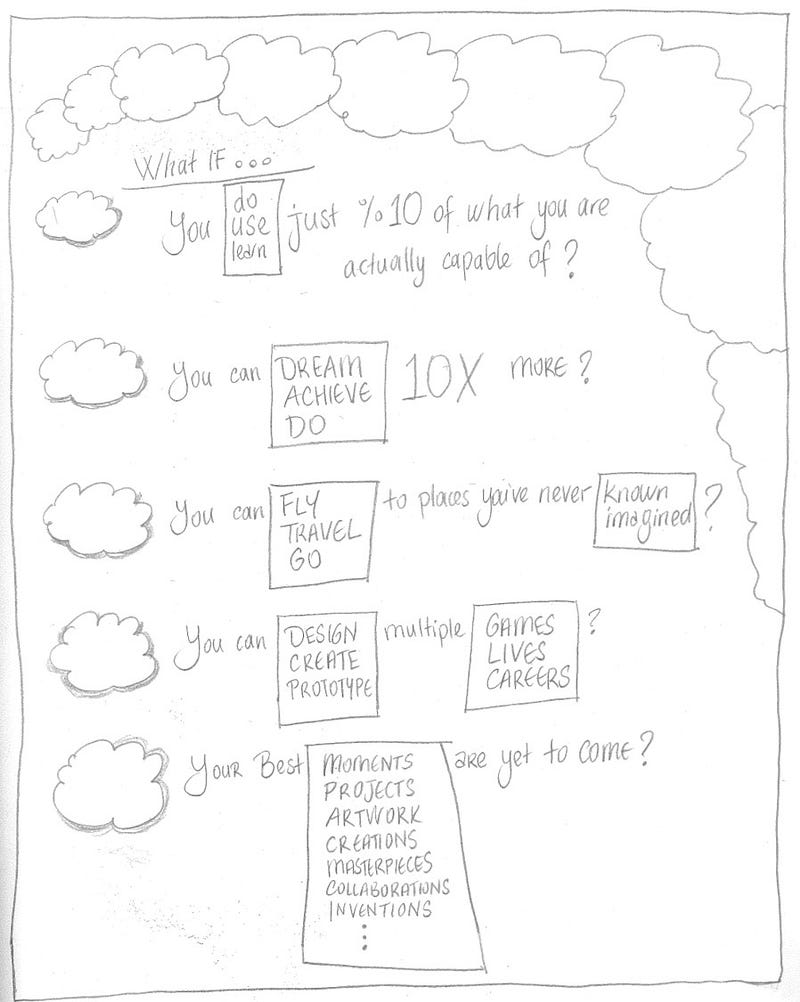
16. Your diary is your best friend. Your diary is a seed catalog of all your ideas. Write, draw, reflect, capture your ideas every day.
We live in an imagination economy. Ideas are the new currency. Your attention (i.e. your time) is the most precious thing in the world.
To manage yourself and your energy, write down your ideas, and keep a journal.
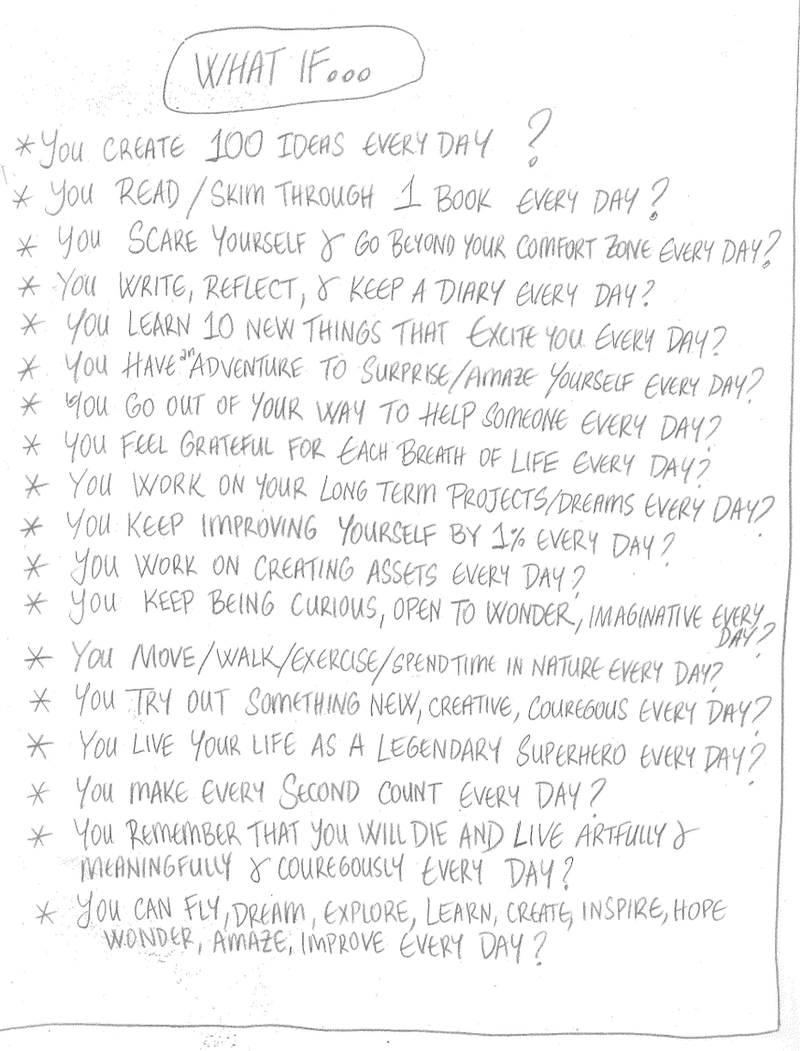
Imagine fresh possibilities. Create a lot of ideas. Record your emerging ideas, thoughts, and reflections. Iterate your ideas and solutions.
You need to work as an idea generation machine. What if you make a habit of creating a minimum of 20–30 ideas every day?
The sheer volume of what you create matters.
For example, if you are passionate about creating doodles, try to create hundreds of them.
Sharpen your skillset and keep experimenting. Keep producing the best work you can.
And then, keep creating. Work hard. Be consistent. Repeat.
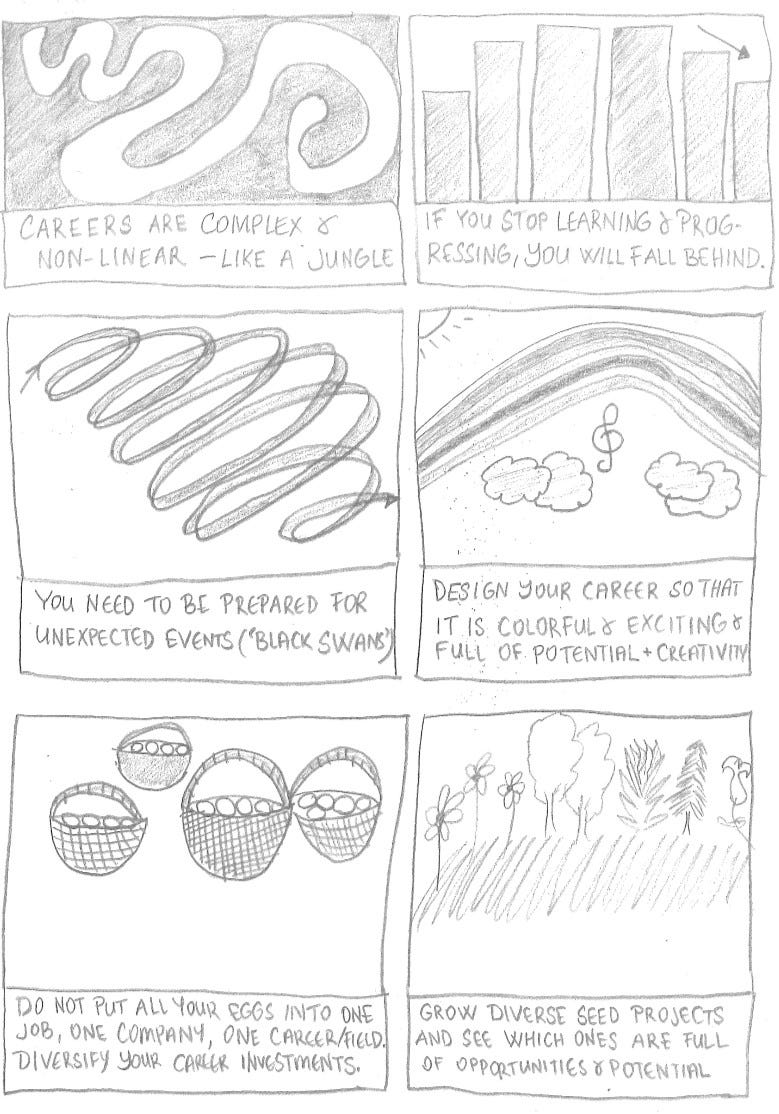
16. You can get inspiration from 100 different people and 100 different fields. And then imagine you are a farmer and you are growing 100 creative projects: Let 100 flowers bloom!
You need sheer volume and sheer diversity in your ideas. In order to achieve this, you need to read hundreds of books and articles beyond your narrow domain.
Aim for fruitfulness and abundance. Produce more ideas than you need. And then share your ideas with the world.
What if you had quadruple lives — wouldn’t this enrich you as a person?
Think and act beyond borders.
Eradicate walls between disciplines and professions.
The best innovations always come from the outside, not inside a discipline.
The best ideas always come from the outside of your organization, not inside.
Build new bridges and imagine new connections.
To keep doing this, you need to keep learning new things every day.
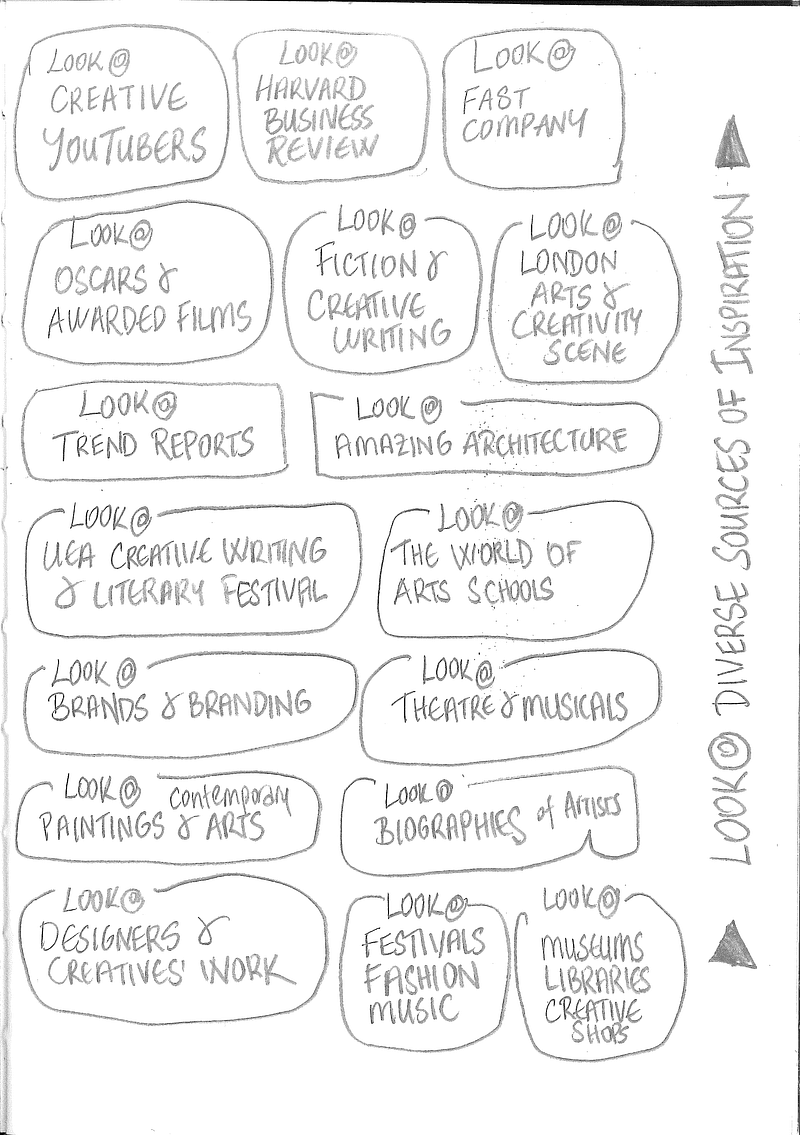
You will tap into diverse sources of inspiration:
Books, movies, arts, theatre, design, sports, fashion, pop culture, entrepreneurship, economics, politics, brands, magazines, trend reports, emerging lifestyles, philosophy, religion, spirituality, history, science fiction, start-ups, innovators, and technology.
17. Your creativity is shy and gentle. You need to provide your inner child and creativity ample opportunities and space to thrive.
You need to be gentle, generous, and patient with it.
Like plants, your creativity needs time to grow up.
How dare you expect it to emerge, develop, and grow suddenly?
You can trick yourself into imagination. In order to do it, you need to refrain from listening to your inner voice that is constantly criticizing everything you are in the process of creating.
18. In order to develop creativity as an everyday habit, you need to start improvising. To start improvising, you can use automated writing, doodling, drawing, ideating, imagining, and creating techniques.
You can practice automatic drawing and doodling by closing your eyes, holding your pencil, and moving it randomly on paper.
Do this when your eyes are closed. Just let your hand do the job. Do not worry about the end product. Attend to the creative process.
Do this again with your left hand (or the hand that you do not usually use).
Embrace the chaos and the unknown — they are your friend. Trust the process. You have got nothing to lose.
Losing yourself is one of the best ways to get more creative.
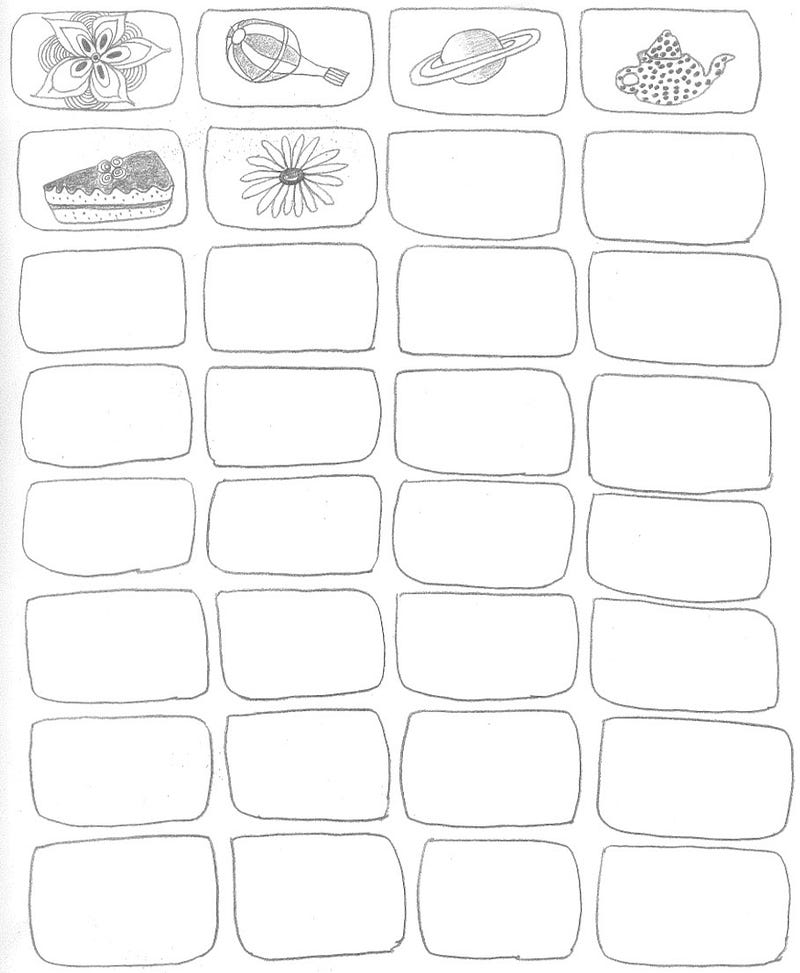
19. In order to be more creative and happy, you should buy experiences, not goods. Avoid impulsive buying and clutter. Go on holiday and see new places. Go out for a meal and see a movie or theatre. Learn how to dance. Attend a course for improvisation.
You need to design new challenges and new adventures.
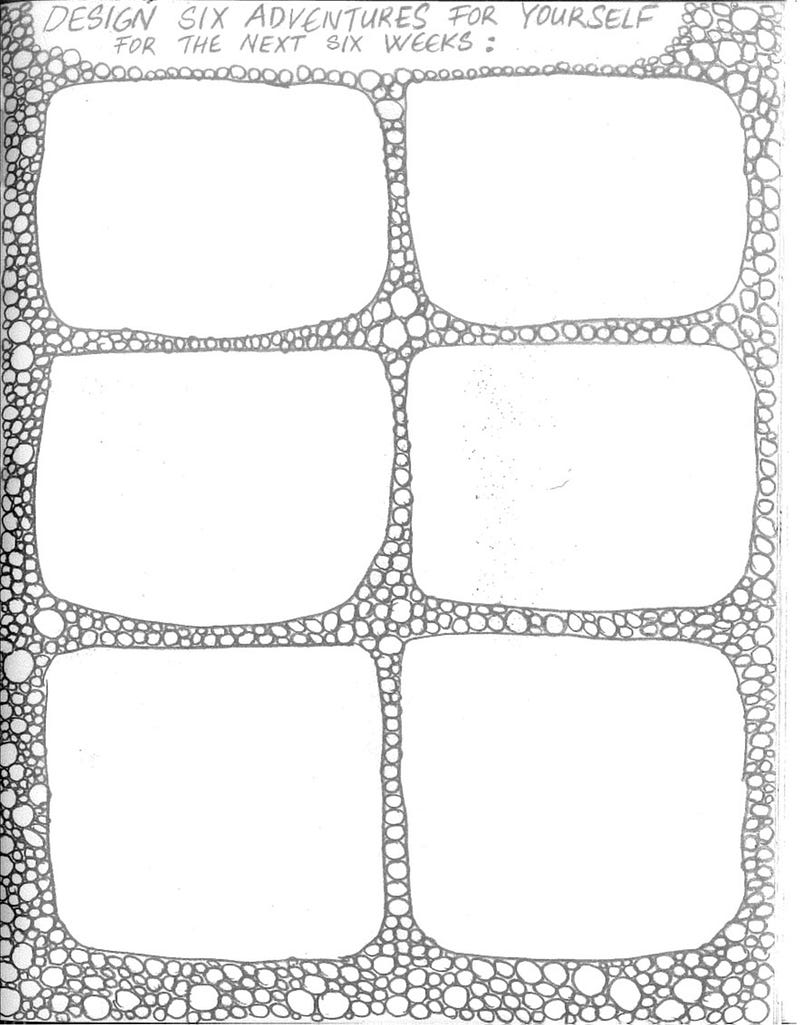
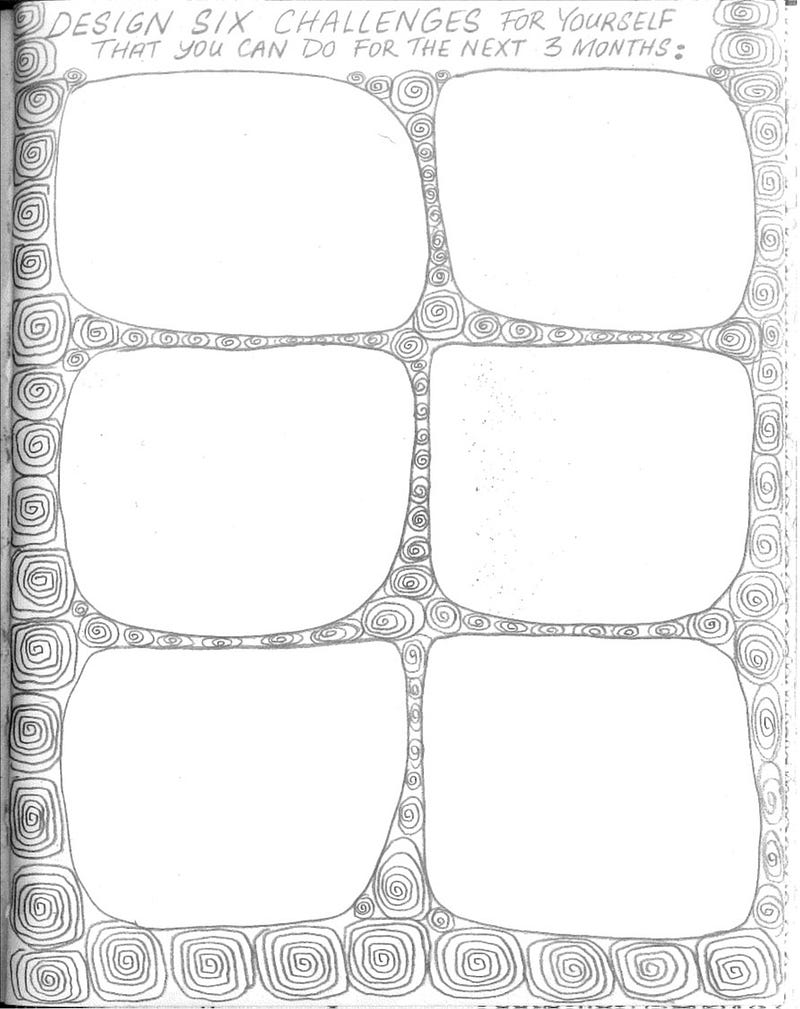
20. Imagination is a real game-changer in your life. If you want to level up your game, you need to learn, read, imagine, and create wildly.
In order to create the habit of imagination, you can carry out a series of creative challenges and imagination experiments.
Here are two of my favorite ones you can try out:
A) “Connecting Dots and Storytelling”: Please write a story using the following words:
· Pepper
· Fashion
· Journey
· Chaos
· Lawyer
· Bird
· Disgust
· Dancing
Please illustrate this story. You can doodle or draw in any way that you like. You can create a storyboard or a comic story. Do as you wish!
B) “Your Secret Gift: The Eighth Day of the Week”
Imagine that you are given the 8th day every week. This day will be your secret gift. However, this cannot be just another day. You have to do something unusual or remarkable on this day.
A) Please design this day as your ideal day. How would you make these 8th days memorable, creative, and full of adventure? You can write or draw or doodle on this as you wish.
B) This will also be a day where you have an artist’s date with yourself (See Julia Cameron’s “The Artist’s Way” to learn more about this method). Fill your day with lots of inspiration. Get inspiration from lots of sources. What could be some of these sources? Brainstorm below. You can consider places, people, films, books, artwork, travel, hobbies, theatre, museums, cafes, nature, and more.
“The most valuable asset that we have is our boundless imagination.” Fahri Karakas
21. Everything good in your life starts with your imagination. Every great achievement begins in your mind.
Dare to dream big dreams. Make them really specific. Write them down. Draw and doodle them.
Do not let your inner resistance or judgment to discourage you.
You need to live exponentially and avoid mediocrity.
Life is short and you are the hero. You need to make your life count. Make a difference.
Define your own definition of success (what others think is irrelevant).
Create your own category and be the owner of that category.
22. In this day and age, you need to disrupt yourself and push yourself out of your comfort zone.
We live in an uncertain and unpredictable world. This is not going to change any time soon. We simply do not know how the future will turn out. The best way to predict the future is to create it ourselves.
We live in interesting times — a perfect storm of technology is shifting the landscape we are working in.
Multidimensional technological forces involving automation, 3D printing, augmented reality, machine learning, Industry 4.0, internet of things, and blockchain are rapidly transforming the future of our work, organisations, and jobs.
We live in a disruptive era. However, our brains are not wired for change.
The most common addiction in the world today is the draw of comfort. The Comfort zone literally kills you and your spirit — slowly.
Worse, our organizational systems are still largely stuck within the industrial paradigm. Universities and educational systems still prepare students for large organizations and bureaucratic systems, which are struggling to cope with change and to survive. Students are still taught and prepared for jobs that are becoming obsolete and replaced by automation and machine learning.
To create the future that you want and to avoid becoming vulnerable, you need to establish your own game instead of playing the game of others (i.e. your organization, your institution, your university, etc.).
Playing your own game means you need to create your own assets for the long term.
23. In the next decade, you need new ways of thinking about your career and investing in yourself.
You need to disrupt and re-invent yourself and compound yourself through investing in continuous learning and new skill development.
You need to become self-directed learners who take responsibility for your own learning and work effectively with others.
You need to solve complex problems through higher-order thinking and creativity in domains you find interesting and compelling.
You need to develop ‘new era’ skills for future jobs that are yet to be created, including:
-self-directed learning, - cognitive flexibility to handle complexity and ambiguity, - transdisciplinary sense-making, - creativity, imagination, and design thinking, - innovation and experimentation skills, - entrepreneurial skills and practice, - virtual collaboration skills, - openness for change and adaptive skills, - cognitive stamina and resilience to deal with failures and mistakes, - skills for crowdfunding, self-employment, and sharing economy, - investments and personal finance, - cross-cultural competences, - digital skills and new media literacy.
24. Creativity involves shifting your mindset from scarcity to abundance. You need to shift away from a mindset of fear and limitations. You will embrace a life rich with new and fresh possibilities.
You can construct your own belief system. And your beliefs are very powerful — as they turn into reality.
Each moment, you are creating your own assumptions and your own reality. Make sure it is a positive one.
Create a positive story for yourself based on hope, courage, empowerment, abundance, and self-confidence.
Move away from excuses.
Move away from negativity.
Move away from negative friends.
Move towards creative and optimistic people who challenge you and help you to be better. Move towards people whom you admire and respect.
Surround yourself with great people — remember the common-sense advice: “You are the average of the five people you spend the most time with.”
25. Using props and humor can improve your creativity.
For example, I brought a squash to my class and it transformed my teaching. I used it as a prop for improvisation.
We ended up creating hundreds of ideas around the squash (to increase its value).
It is not about the squash — it is about your way of thinking.
It is a story about creating possibilities and an imagination space.
26. Develop small positive habits and do them consistently every day.
For example, we are currently reading a book every day with my wife Sertac. We called it “30 Days, 30 Books” challenge.
Many of our friends have now joined the challenge and it is now bigger than us.
Another example: I love doodling and I started doodling every day. As I have done this every day over one year, the journey enabled me to create an inspiration book based on doodle exercises to increase self-awareness and creativity.
If I had started with an ambitious goal of writing a book, I would have never achieved finishing this book.
However, I tricked myself into creating consistently and moving with very small steps.
If you want to write a book, write one page every day. You will have your book ready in less than one year.
The secret is in one line. One sentence at a time. One doodle at a time. One drawing at a time. One small step at a time.
27. Do not deny yourself of exciting activities, experiences, and opportunities.
You can attract more opportunities and success if you are constantly open to learning and experimentation.
You can invest in yourself, your skills, your knowledge, and your assets to become a more interesting and attractive person.
You need to see yourself as worthy of love, attention, care, and happiness. This means taking care of yourself and your inner child.
You need to invest in your character and yourself, your health, your relationships, your networks, and your learning.
You can increase the quality of your life by incorporating more color and diversity into your experiences.
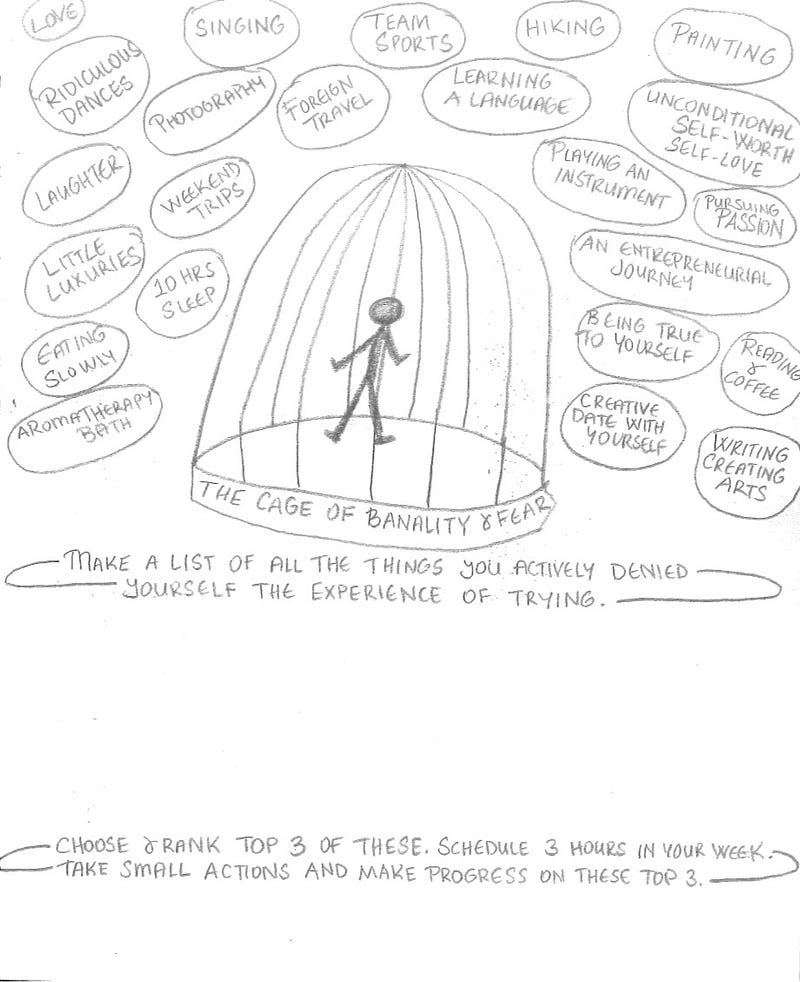
28. You need to celebrate your failures. If you really want to get lucky in the long term, give yourself more opportunities for failure.
Fail early, fail often, fail again.
Failures are merely stopping points along the bigger journey.
Celebrate your failures. Use them as learning opportunities.
Develop more grit and resilience to get back up after a failure. If it does not kill you, it makes you stronger. It will be all right after all.
No matter what you decide to do in your life, there will be things that will be torturous, boring, annoying, and frustrating.
Things will suck.
You will have to deal with them and continue your journey.
29. You are as big as your dreams. When you are dreaming, you should let yourself free to dream big dreams.
Our dreams are powerful because of their boundlessness — they embody our creative spirits and best talents.
Dreaming, like flying, is an art and skill that can be nurtured in ourselves.
However, it is fragile like a bird and bounded by the iron cage.
The iron cage represents all the voices that prevent us from dreaming freely — whether rationality or feasibility or organizational constraints.
We should create more space and freedom for ourselves to fly beyond the iron cage; which will result in more freedom, risk-taking, and courage to dream big dreams.
30. The future is unpredictable and weird. You can learn a lot about the future by reading and watching science fiction. This will tremendously improve your creativity.
Science fiction books and movies expand your mind into the future and into new possibilities. Learning about the future is weird and fun.
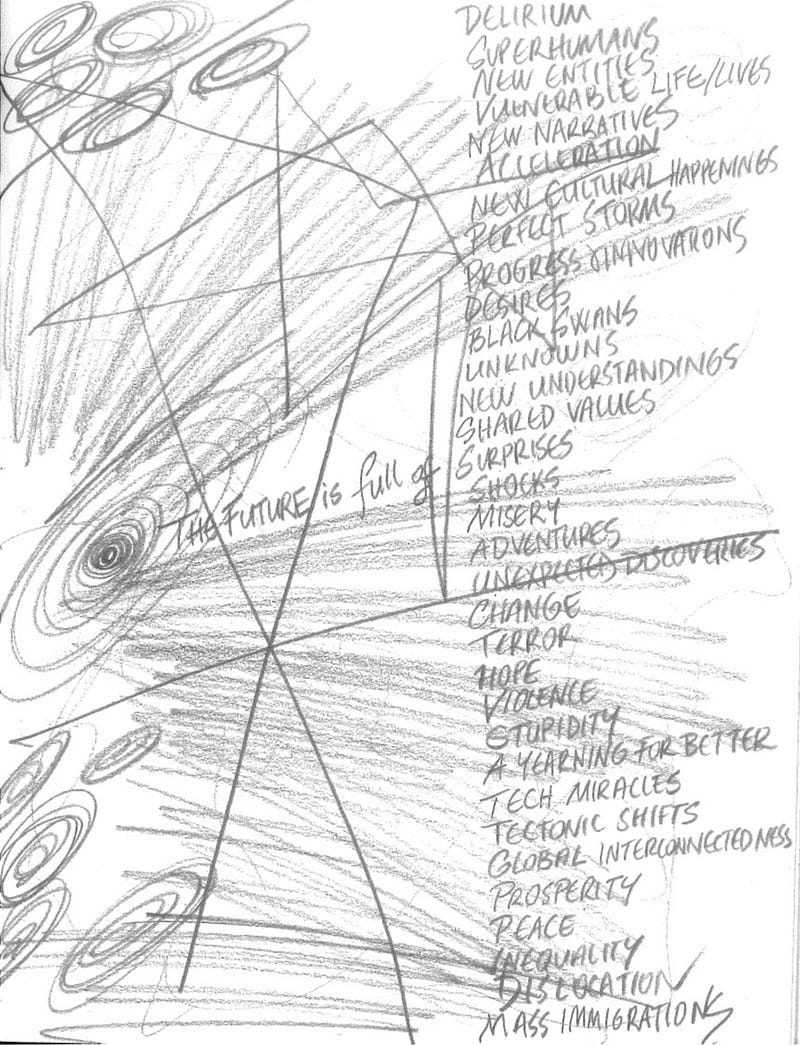
What if you think and act like a science fiction character in your life (go freak, go geek, go for it)?
Here is a wonderful thought-provoking blog piece by Tiago Forte on learning from science fiction books.
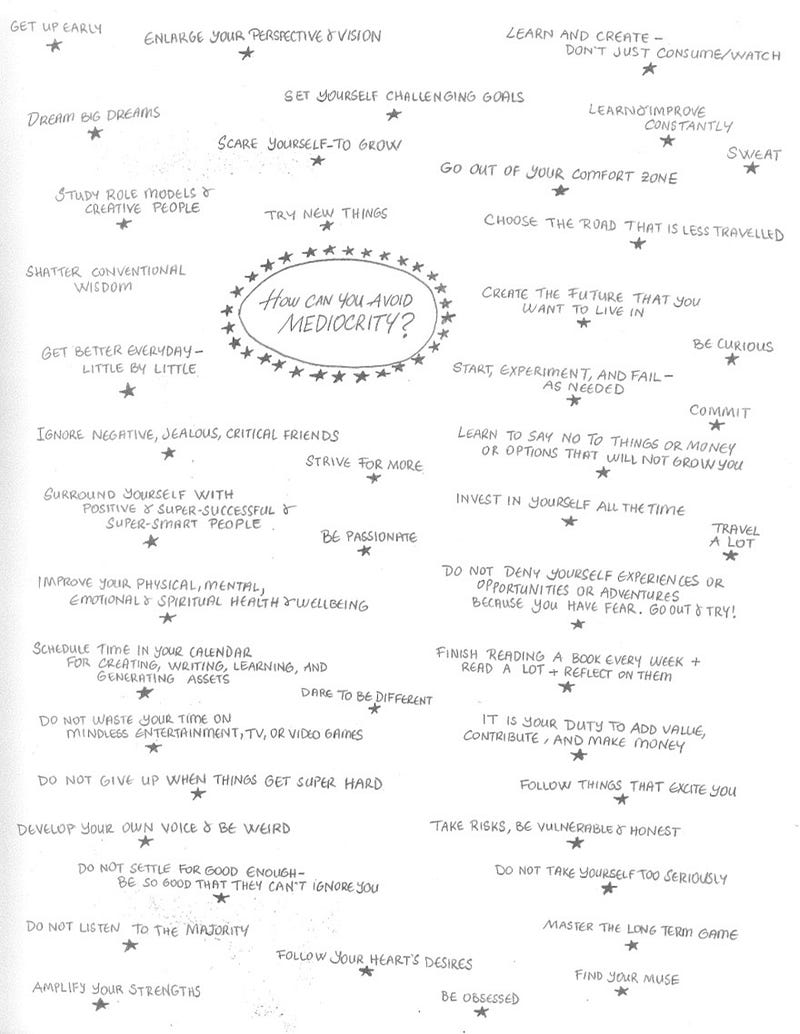
31. Life is too short for mediocrity. Go for crazy.
How can you avoid mediocrity and embrace a more crazy and adventurous life?
My strategies are below — you can also choose and apply your favorite ones.
32. Give yourself ample opportunities for play, fun, joy, and pure challenge.
Instead of giving yourself excuses for keeping the status quo, give yourself challenges and stretch yourself.
These challenges might be professional, physical, mental, emotional, spiritual, or creative challenges.
Think of this as pure play and adventure to excite yourself. Take stock, learn, pivot, act, experiment, and improve.
To get inspired, I suggest that you check out 65 fascinating challenges Richard Branson set himself for his 65th age.
33. Try to reinvent yourself constantly.
Do not ever be satisfied. Get out of your mental comfort zone and always stay eager to challenge yourself.
Even if you have no idea on how to solve a problem, you can still figure out what to do and improvise. You may not know how to go forward, but you can always learn, figure out a strategy, iterate, develop, practice, and improve.
Even after you achieve a goal, do not stop there. Do not get complacent and lazy. Continue renewing and pushing yourself.
Focus on re-designing and improving your life and your career. Sharpen your skills and expand your knowledge. Read new books, listen to podcasts, keep a diary, create lots of ideas, and follow up on your curiosities and hobbies.
34. Take more risks — it is OK to look stupid and try out new things.
The world needs interesting, unique, weird people — like you!
Pursue new experiences and incorporate adventure, change, and variety into your life.
Change is always frustrating and uncomfortable, but it is the only way forward.
Treat every experience as a learning experience.
Go out there and start again. Perhaps you will suck and that is fine — stop taking yourself so seriously.
35. Life is much more creative, meaningful, and exciting if you help other people.
You need to think of adding value to other people. Life rewards generosity and kindness. The more you are generous with your time, ideas, contribution, and money, the more you will end up with.
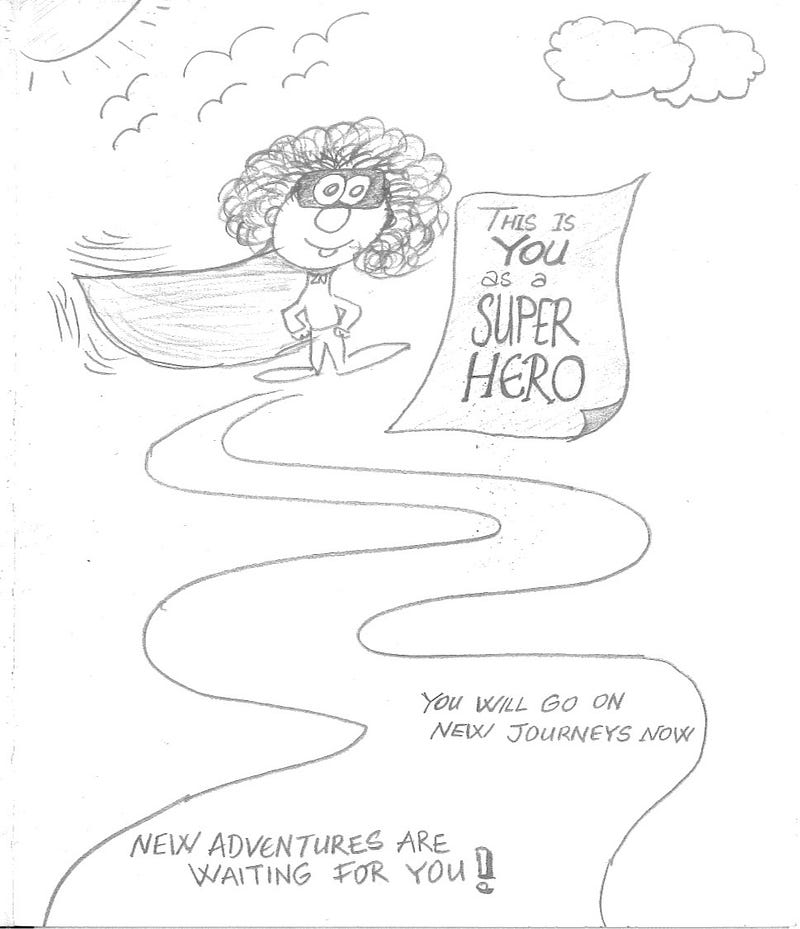
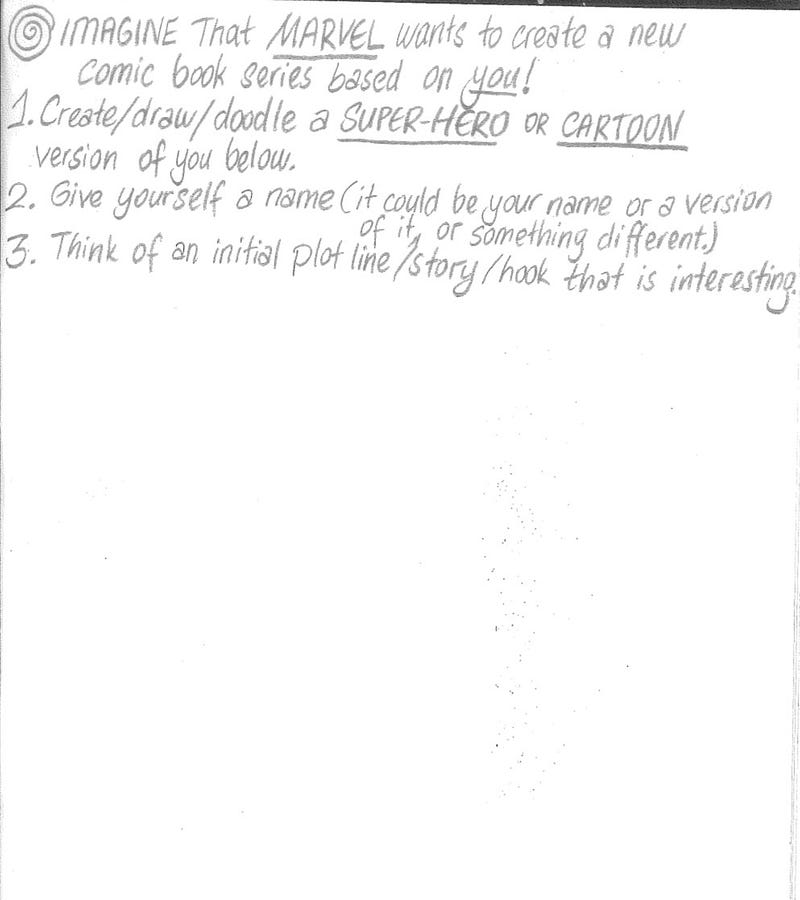
What kind of a super-hero are you? How will you help other people?
36. You can be more creative if you focus on the present moment you are living in.
Life is all about presence. Take a deep breath. Take it one slice at a time.
Do not think about the past or the future. Try to be more present and attentive.
Think about what you need to do right now and in the next few minutes.
Even if you are facing an enormous challenge or you are working on a very difficult project, you can break it down into small pieces.
Focus on what you can do right now and start by tackling the smallest task in front of you.
After you start, focus on the critical few tasks that really matter.
If you survive today, then celebrate yourself and start again tomorrow.
37. You need to create reflective spaces and time for yourself to grow.
Too much action without thinking is not good. You will benefit from a principled and thoughtful stance.
You need spaces and time for reading, reflecting, and looking into yourself.
Try to move, walk, meditate, run, and spend more time in nature.
Try to place inspirational items, colours, posters, icons in your office.
You also need more time and space to:
- Listen to your heart
- Clear away negative thoughts
- Discover your strengths
- Cultivate inner peace and joy
- Appreciate the value of your life
- Listen to your body
- Look and plan ahead
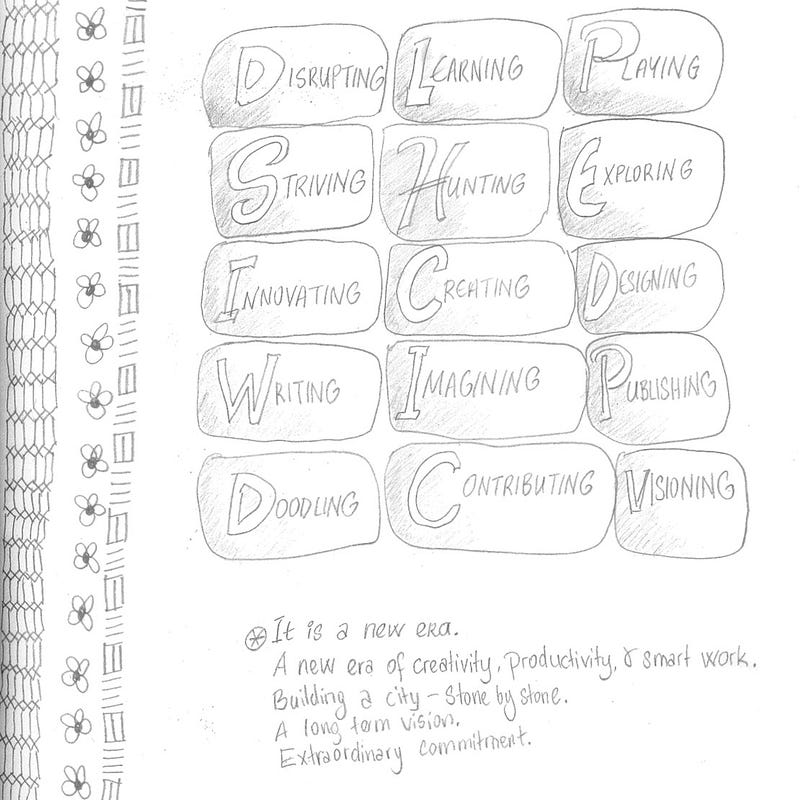
38. In order to find your own creative voice, you can create your own principles for creativity.
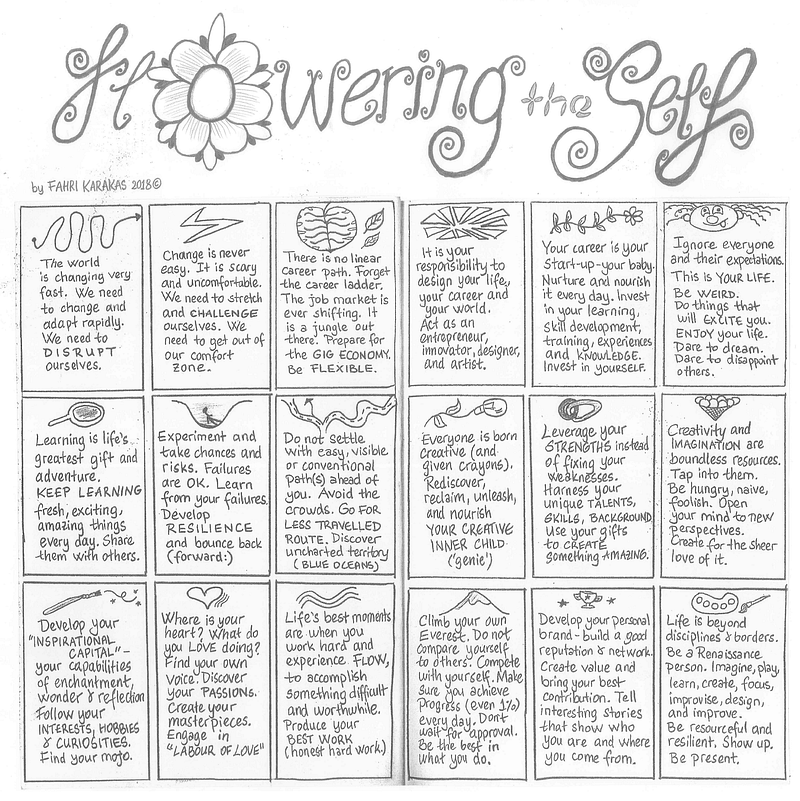
I have created a set of principles for nourishing our inner child of creativity.
These principles also form the basis of the courses I teach at Norwich Business School at University of East Anglia for the last eight years.
Creativity lies at the heart of my courses ‘Management Skills and Personal Development’ and ‘Employability, Creativity, and Personal Development’.
These courses enable students to build their creative assets based on their strengths and passions.
My creativity philosophy and values (that underlie these courses) are captured in this doodle below:
39. Doodling is a wonderful way to develop your creativity and to refresh and revitalize yourself.
Doodling is magical. You can doodle to inspire yourself, to keep learning, to organize your goals, to dream big dreams, and to produce ideas.
Doodling not only helps develop your creativity, self-exploration, mindfulness, and reflective skills, but it can enable you to find new insights and develop essential skills for your life and career design.
Doodling might indeed be one of the most underrated and powerful methods for creativity.
Doodling is also a potent tool for entrepreneurship and personal asset creation.
When you doodle, you think like a designer, a creator, and an artist.
Although it is a seemingly simple activity, research shows that doodling activates neural pathways and the medial prefrontal cortex.
Doodling is known to help with your attention, improve your health and well-being, and foster your creativity in small ways.
Most importantly, doodling is easy and accessible — it is not intimidating. Everyone can do it instantly.
Nothing has to be perfect with doodles. You can end up with ugly shapes. All is fine.
Doodling actually works better if you free yourself from perfectionism.
You do not need any drawing skills. You do not need arts or sketching courses.
You can doodle during late evening hours when you are feeling tired or when you are catching up on Netflix shows.
What matters is capturing your stream of consciousness and fresh ideas as they occur to you. In that sense, doodling is an act of magical creation.
Doodling has recently enabled me to create my own textbook titled “Self-Making Studio: An Inspirational Doodle Kit for Self-Discovery and Employability”; which will now accompany my courses.
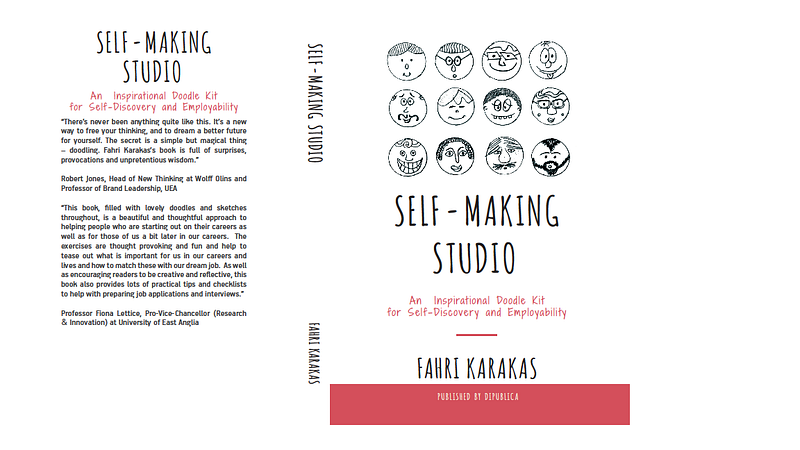
This book encourages you to participate in a series of practical, visual, and creative exercises aimed at developing your own voice.
It is designed as a visual learning diary and a playful workbook to disrupt and re-make your career and life options — one doodle at a time.
It also helps you to develop what I call ‘inspirational capital’ — the individual capability for wonder, enchantment, curiosity, learning, self-disruption, creativity, and skill development.
These capabilities are becoming more and more important in the workplaces of tomorrow.
Everyone is expected to keep learning, create value, adapt to changing circumstances, and innovate at the speed of life.
The rate of change and innovation has become so scary that we all need personal anchors, principles, and systems in place.
The practice of doodling will help you to develop such personal anchors, principles, and systems.
The journey of self-making is difficult and complex. Doodles make this journey easier, more engaging and memorable.
I believe in the magic of doodling as a path to learning and creativity, and I hope to spread it to the world.
Doodling is a simple and small seed; but it is very powerful because you can use it to create enterprises, brands, learning, and skill development.
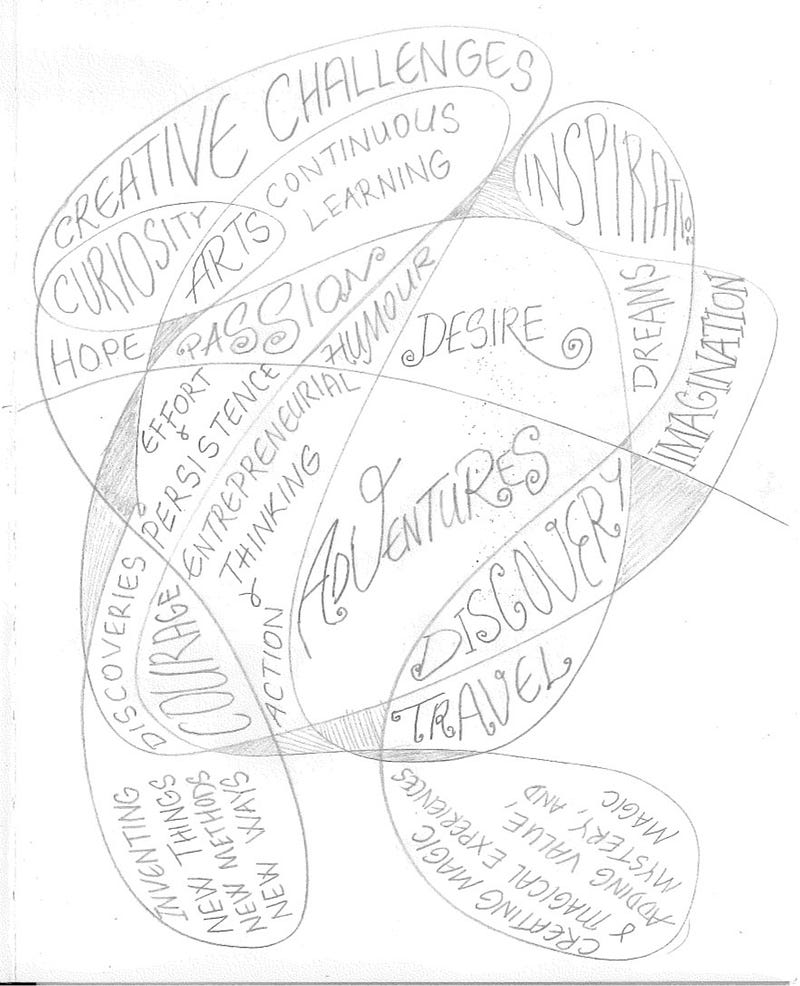
40. Spend time for learning new things and following your curiosity and interests — make this an indispensable habit for yourself.
I have found the secret key formula to a full life of creativity — here it is:
(FOLLOW YOUR HEART + CURIOSITY + LEARNING) X
(PLAY/ADVENTURE + IMAGINATION + CREATION)
41. Try to foster holistic thinking and establish your own imaginative universes.
You can design and create new worlds of fiction, new games, new theories, new videos, new music/sounds, and new brands.
Do you know the Pokémon media franchise is worth more than 90 billion dollars?
Harry Potter, Star Wars, Hello Kitty, Winnie the Pooh, Mickey Mouse, Disney Princesses, Mario, Marvel Universe, Batman, Spiderman, Barbie, Toy Story, James Bond, Lord of the Rings…
These are all creations of fiction and imagination. They all had humble beginnings. They all started in someone’s imagination.
They all grew and acquired tremendous brand value over the years. Each of them is worth more than 19 billion dollars today.
Think and imagine bigger.
You can establish and own your own game.
It is all based on your imagination.
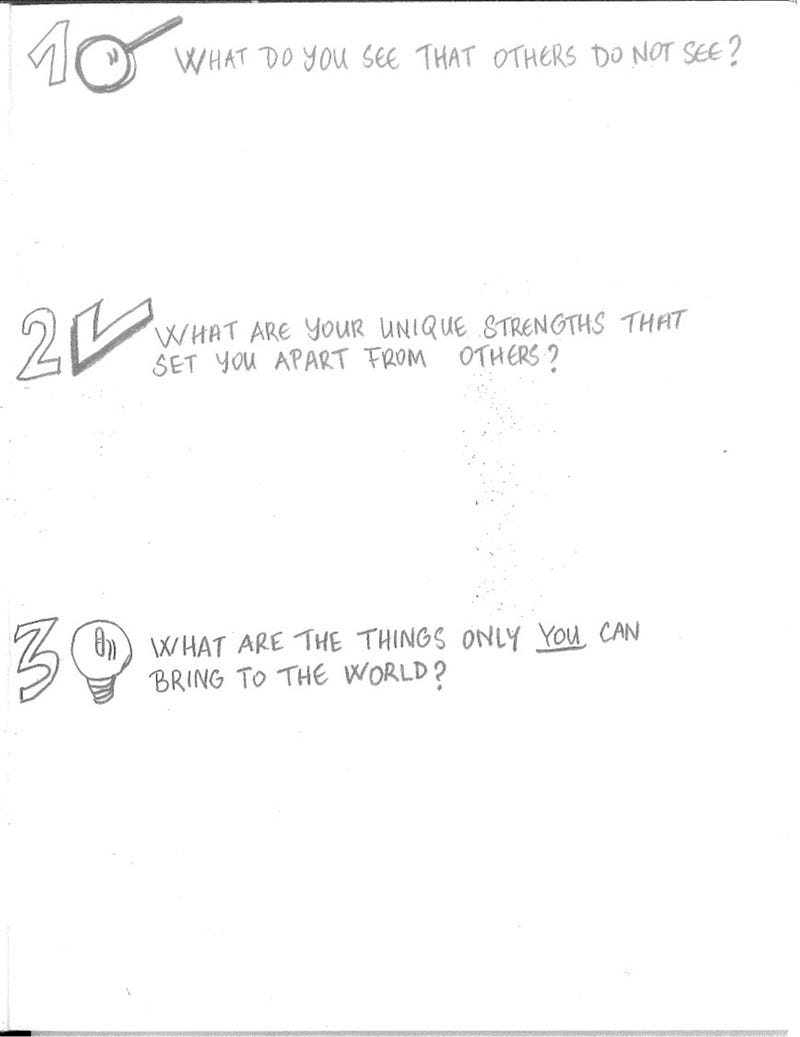
There are fascinating things that only you can bring to the world.
Fresh, exciting, and original things.
What are they?
How can you take a small action now towards making these happen?
How can you continue taking small steps every day?
How can you continue your adventure every day without quitting and without breaking the chain (of creating)?
What will you bring to the world out there?
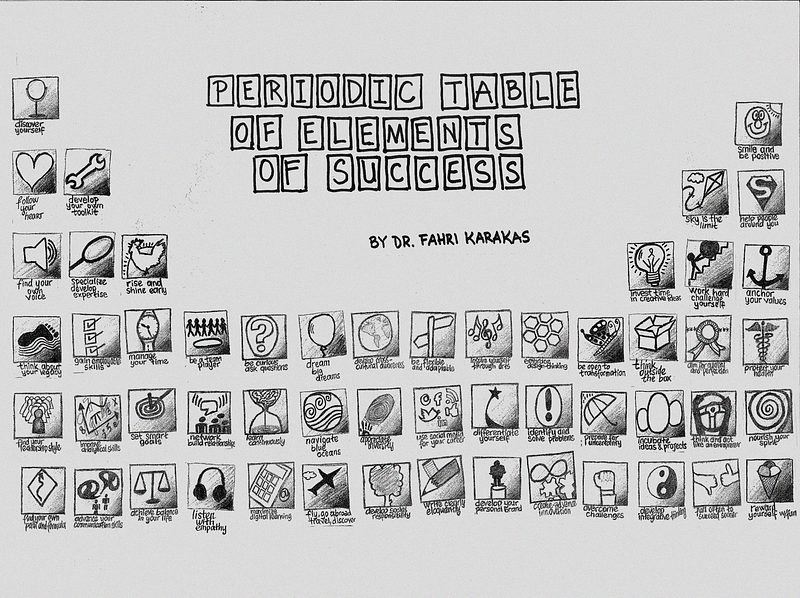
So, these are my 41 lessons.
Whew! I know this was long and overwhelming.
What are your own creativity, success, and wisdom lessons?
Can you share them on your next birthday (trying to create as many lessons as your age)?
Thank you for taking this long journey with me:)