40 Women on a Magazine Cover and Not a Wrinkle in Sight
We complain that social media is destroying young women’s self-esteem, but we forget that women’s magazines like Vogue are the original gangsters
I’m getting old, and I’m really enjoying it. I love no longer feeling the pressure to please the male eye.
I can’t even imagine what it’s like to be a teenager or a young woman these days. To try and feel good about yourself in a world that puts you on a beauty regime when you’re barely out of your diapers.
Social media is peer pressure on steroids.
I’m so glad I never had to deal with the insecurity that comes from comparing yourself to an influencer with a TikTok filter.
But then this “iconic” cover of Vogue came along and reminded me that all this isn’t new. The source of insecurity in my time was women’s fashion magazines.
The “hot looks of the season,” the “how to make a man want you” peddlers. The original purveyors of the “this is what you need to change about yourself to be beautiful” message.
Social media is just the natural evolution of these glossy magazine pages full of impossibly beautiful women.
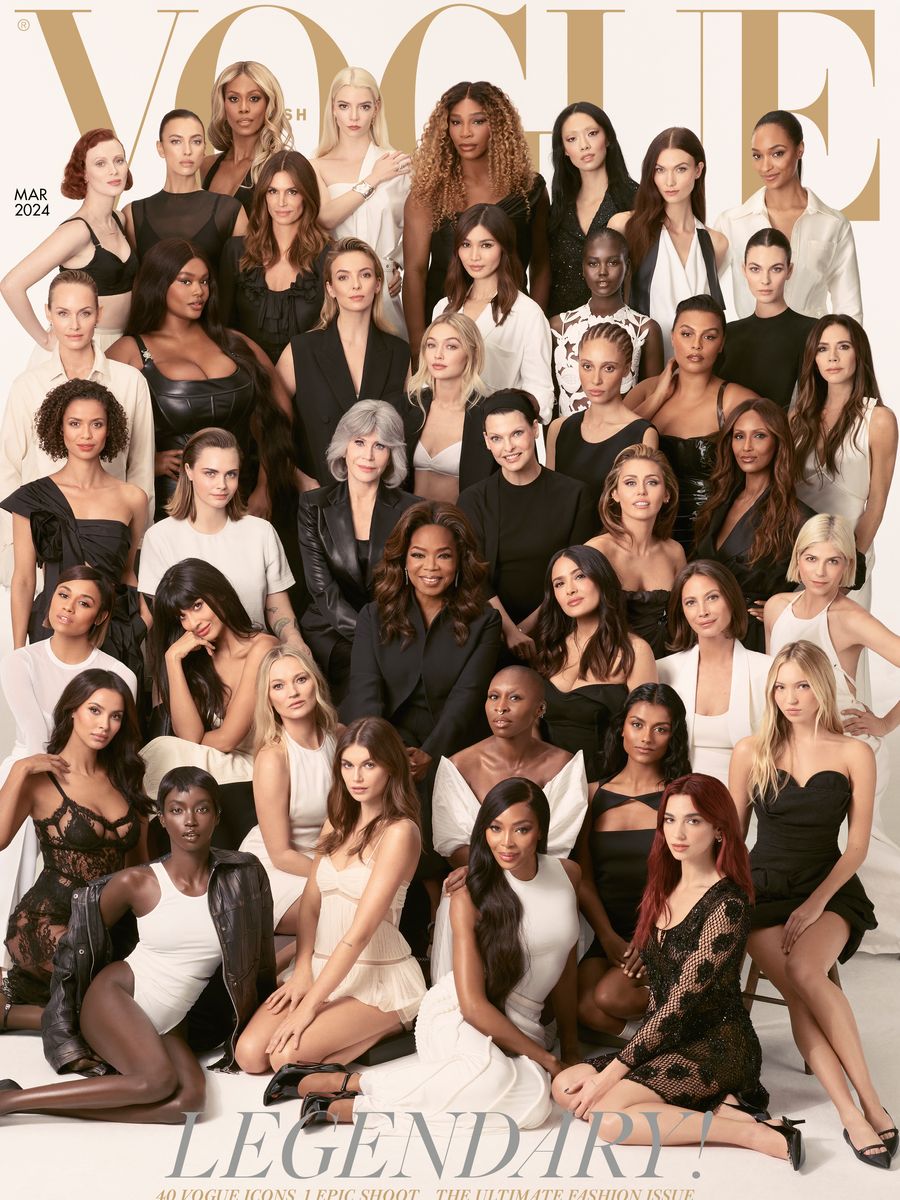
In case you haven’t heard, 40 famous women — including the likes of Oprah Winfrey, Naomi Campell and Jane Fonda gathered to be on outgoing editor Edward Enninful’s final cover for British Vogue.
I stopped reading women’s magazines more than 25 years ago, so I had no clue who Enninful was. But I do know some of the famous names of the women who’re supposedly on that cover.
Let me tell you, I had a hard time finding any of them in that picture.
I zoomed in on the image, and I was still wondering who these women were.
It’s like an adult version of “Find Waldo.” You know your favorite celebrity is in it, but you can’t find her.
Everyone is photoshopped beyond recognition.
Not even Jane Fonda, who is now 86, has a single wrinkle.
They went so overboard with the editing that people started claiming that these 40 women were never in the same room.
The rumor mill said that Vogue created this cover with AI.
They had to release a video called “Was Edward Enninful’s Final British Vogue Cover Actually CGI?” from the set to get people to stop saying the cover was fake.
All over my social media, I see women celebrating this “iconic” photo, and it royally pisses me off.
What exactly are we so happy about?
Now I get that Enninful was an influential editor and a surprising success story. Given the fact that he was a black Ghanaian man, a child of immigrants, he soared to unprecedented heights.
Kudos to him for making it in the predominantly white fashion scene.
He’s praised for his contribution to the diversification of the fashion world.
Google Arts & Culture has an entire page dedicated to him:
At Italian Vogue, Edward Enninful spearheaded the production of its ‘Black Issue’, which featured only black models, including Naomi Campbell, Jourdan Dunn and Alek Wek. Edward described his intentions as wanting to end the “white-out that dominates the catwalks and magazines”. The issue was so successful that Condé Nast had to print an extra 40,000 copies. The ‘Black Issue’ remains Italian Vogue’s best selling edition to this day.
He tried to raise others up alongside himself. He made sure black and brown models finally got a seat at the table.
Some of them are on this final cover.
On the other hand, as editor of an influential magazine like Vogue, he was also instrumental in the eternal crusade to make women feel “less than” themselves.
He built a career on telling women that they’ll never be beautiful enough.
And this final cover is a case in point.
These are 40 beautiful, successful, strong women. Not a single one is deemed good enough as she is by the fashion gods.
Not one of them is allowed to look the way she really does for this glossy magazine cover.
What chance do “normal” women have to feel good about themselves or embrace their natural beauty if even these iconic women aren’t allowed to show themselves as they are?
But this isn’t really about Enninful. It’s about the entire beauty and fashion industry. And everyone else who is willing to turn a blind eye to the damaging effects that this flood of overly perfect images of women has on us all.
The beauty industry is messing with young women’s minds. And it’s coming for young men, too. They’re faced with more and more unattainable beauty standards as well.
According to BigThink.com, our idea of male beauty has shifted very far to the Captain America side of the spectrum:
While men have always aimed to be muscular, the past two decades have witnessed a gradual amplification in what qualifies as fit. Today’s idolized male body not only has well-defined shoulder, chest, and arm muscles; it also sports low body fat, a chiseled six-pack, and glutes shaped to callipygian perfection.
Sure, you might see it as some sort of divine justice if men are now faced with the same insecurities that women had to battle for centuries.
But is this what we want for people?
Equal opportunity body dysmorphia, plastic surgeries, implants, and thousands spent on ineffective beauty treatments?
It feels like people are losing the ability to remember what a normal face should look like.
Just look at some of the results of this pursuit of eternal youth. Some older celebrities have become unrecognizable. Some look barely human anymore.
How about we stop congratulating British Vogue for an “iconic” cover because we love the pretend “diversity” of beauty they depict?
Stop helping them market their false ideal of beauty by reposting this picture over and over again on our social feeds.
What if, instead, we focus on the way they keep making beauty unattainable? Even for the most beautiful women in the world.
Beauty can’t be wrinkle-free, sanitized, streamlined, or forever youthful.
How about we stop buying these magazines and send a letter to the (new) editor asking them to stop photoshopping women beyond recognition?
If you’ve enjoyed my writing and want to support me, buy me a coffee. I’d love that. For more of my writing, subscribe to my newsletter or follow me on Threads or Linkedin.