
4 Ways Travel Can (But Probably Won’t) Make You a Better Person
Is travel still a path to self-discovery?
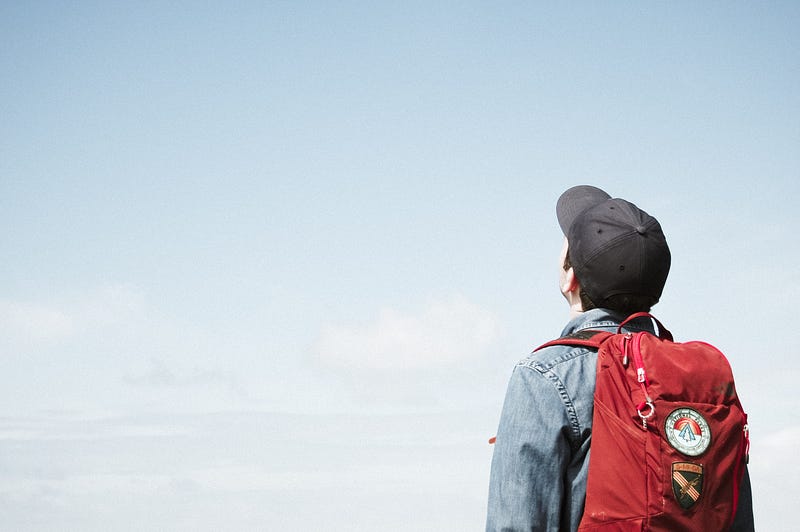
For the last 20 years, I’ve been fortunate enough to live and work on the road for at least a few months every year (sometimes longer).
And whenever I second-guess my nomadic lifestyle, I’m always comforted by the famous Mark Twain quote about the virtues of travel:
“Travel is fatal to prejudice, bigotry, and narrow-mindedness, and many of our people need it sorely on these accounts. Broad, wholesome, charitable views of men and things cannot be acquired by vegetating in one little corner of the earth all one’s lifetime.”
— The Innocents Abroad, by Mark Twain
According to Twain, travel is a path to enlightenment; a way to walk a mile in another man’s shoes. Or at least it was when he wrote The Innocents Abroad after the American Civil War in 1869.
And it’s not just Twain.
Visionary writers like Paul Theroux, Freya Stark, Kerouac, and countless others have held up travel as a virtue in and of itself because of its inherent power to change us.
But I’m not sure how well that wisdom holds up in today’s hyperconnected, frequently more homogenous world of budget flights, IKEA-furnished AirBnBs, and artificial Instagram bucket list destinations.
As my wife and I settle into our second year of living in Spain full-time, I’ve become more critical of the benefits of travel for travel’s sake.
And while I still think travel to new places is one of the best ways to expand your worldview, I’m no longer convinced that travel is a surefire way to become a better, more open-minded person.
Because stamps in your passport don’t make you interesting.
Instead, I’ve been pondering a line from one of my favorite songs, — “Blacking Out the Friction” by Death Cab for Cutie — that speaks to the heart of the problem with travel:
“I think that it’s brainless to assume that making changes to your window’s view will give a new perspective.”
And I’m left wondering.
Which is it?
Is travel still a viable way to push yourself to confront new ideas, or have too many places been homogenized by travelers (like myself) looking for “adventure” and “experiences” while still craving the comforts of home?
I guess I’m asking — can travel still be transformative?
I don’t think I can answer that here, but the question has pushed me to consider four ways that traveling still matters. And how — if you’re lucky — it might just make you a better, more interesting person.
1. Travel interrupts your status quo
If nothing else, travel disrupts our habits. And that’s a great way to initiate change.
Waking up in a different bed, eating different food, and navigating unfamiliar customs, norms, and languages forces us out of our routines. And if nothing else, you can find a new appreciation and gratitude for the things back home that you take for granted.
When we’re not surrounded by the comforts of home, most of us are forced to engage with people, places, and things that we don’t normally encounter.
And that’s when growth happens.
This can vary based on your travel style and destination — “you’re still going to be you on vacation.”
For example, when I’m hiking the Camino de Santiago, I don’t magically become a morning person. But I do appreciate my wife dragging me out of bed early enough to see the sunrise.
Leaving home usually leads to at least a few interruptions in your status quo.
And that’s always a good thing.
2. Travel is all about problem-solving
A few years ago a buddy and I raced a three-wheeled rickshaw over 1000 miles across India.
And it was fantastic.
But what made our adventure so memorable wasn’t just the stunning scenery, friendly people, and non-stop cultural exchange on our weeks-long trek across Indian backroads and highways.
No, the best parts were when things went wrong. Which happened a lot.
We got lost. We broke down. We got stuck in the sand during the heat of the day. We got stuck in crazy traffic. Trucks whizzed past in the dark, and camels blocked our path along the road.
It was pure chaos. And we loved every second of it.
The group that organized the event (The Adventurists) has a slogan that sums it up pretty well:
“If nothing goes wrong, you’re doing it wrong.”
And that’s because travel — at least the kind of travel that has the most power to transform us — almost always comes from a place of struggle.
3. Travel makes you more open
Travel is essentially an act of optimism.
When you leave the comfort and safety of home for somewhere new, you are essentially saying, “I hope this works out,” even when you’re not exactly sure how it’ll work out.
When you travel, you are forced to put your faith in strangers. Which is counterintuitive to everything that we’re taught back home.
In the U.S. at least, we’re constantly taught that everyone is out to get us. Stranger danger is real. You can’t trust anyone. Look out for #1. Get yours. Screw other people.
But when you travel, all that goes out the window, because it has to.
Even if you researched your destination for months, you’ll never know it as well as the people around you. And that creates an openness and humility that encourages us to trust other people and form bonds way faster than we normally do.
It’s hard to travel without depending on the kindness of strangers. And despite the ease of apps like Google Translate and AirBnB, I hope that never changes.
4. Travel highlights the little differences and big similarities
The longer you travel, the more you realize that people are just people.
Yes, there are millions of interesting differences in how we live, but there’s no real difference in how we interact with each other across the world. Families are families and friends are friends. Those bonds don’t change based on geography.
And acknowledging that truth creates empathy.
Empathy isn’t mysterious. It’s just the ability to see yourself in someone else; to recognize that we’re more similar than different.
And that’s what travel is all about.
For instance, I love this Spanish cutting board. It has little wooden slats across the surface so that the crumbs don’t go everywhere when you slice bread.
It’s genius, and we don’t have anything like it in the U.S.
Learning about this cutting board reminded me that different cultures might have different priorities and ways of problem-solving, but at the end of the day, we all appreciate having a snack without making a mess.
And I like that a lot.
Can travel make you a better person?
Travel doesn’t have to be a transformative experience to be valuable. You can just take a vacation to have fun (and I hope you do!).
You also don’t have to volunteer at an orphanage or build a hospital to make a positive impact on a foreign culture (or vice versa). Although kudos if you build a hospital. That’s awesome.
The important thing is to be present.
Be aware of the people, places, and little differences around you when you travel. If you can cultivate your awareness, curiosity, and sense of wonder, you’re on the path to becoming the kind of person people want to be around.
And that has nothing to do with the number of stamps in your passport.
Shawn Forno is a very left-handed travel writer with 15 years of experience for clients like Lonely Planet, Matt D’Avella, and Tortuga Backpacks. Sign up for his newsletter or check out his YouTube channel, Days We Spend, for videos about life in Spain.


