
Life in Spain
7 Tiny Things that Make Life in Spain Worth Living
Little things make a big difference
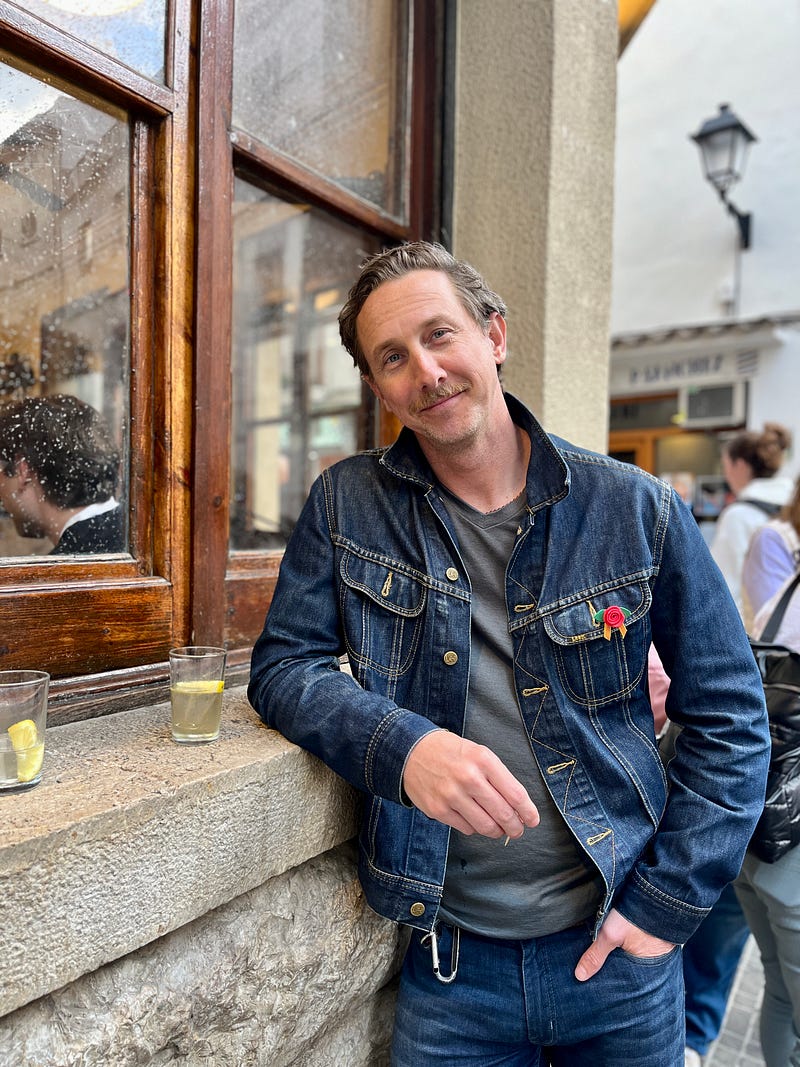
In January 2023, my wife and I moved to Spain on a Non-Lucrative Visa.
And like most expats and digital nomads, we’ve spent the past year frantically trying to learn the language, meet new people, and get a handle on (most) of the local customs.
And it’s been wild.
Life in Spain comes with a unique set of challenges, but we’ve been kind of floored by how much we like living here. And it’s not even all about the wine and food. In fact, some of our favorite parts about life in Spain are things we never expected before making the move.
Here are 9 things about Spanish life that we absolutely love, and why the little things matter more than you think if you’re deciding to move to another country.
#1 This Genius Cutting Board
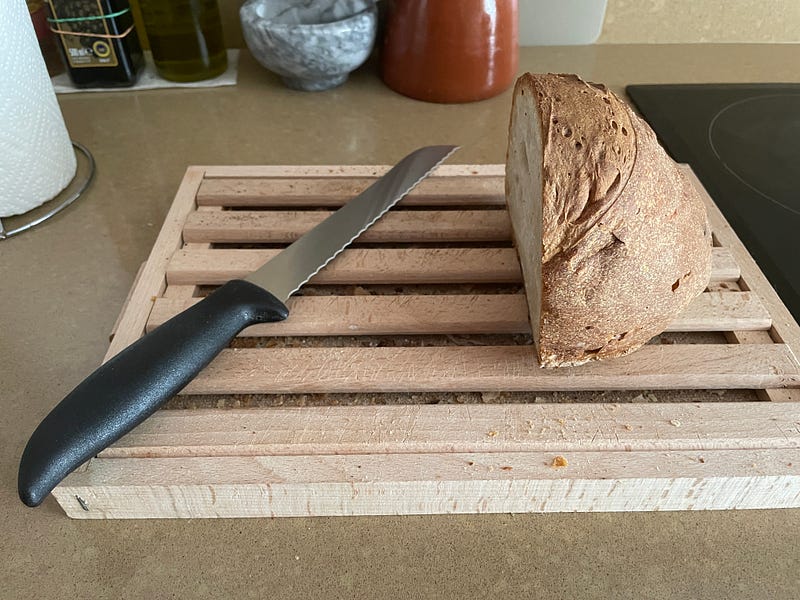
If you’ve ever visited Spain, you know that the Spanish love bread. They eat it with every meal. So it’s no surprise that in Spain, people use a special cutting board that’s specifically to catch crumbs when you slice bread.
The simple design in the picture above shows how the wooden slats let the crumbs fall through so you don’t make a mess on your counter. When the “crumb tray” fills up, you take out the slats (it’s one piece) and dump the crumbs in the trash.
Easy peasy.
It took us a minute to figure out this weird little cutting board, but it’s become a staple in our kitchen and a big part of us embracing the Spanish diet of bread, bread, and more bread!
#2 Delightful Spanish Idioms
We’ve learned the hard way that you can’t just use Google Translate if you want to communicate past a basic conversation. And while some of the results have been hilarious, we’ve ended up learning a few great Spanish idioms that make us feel a lot more like a local.
In Spanish, “Mucha mierda” literally translates as “a lot of shit” — which doesn’t sound awesome. But it actually means “good luck” or “break a leg”.
It dates back to when people rode horses. If a play or show opened and lots of people went to it, there would be piles of horse poop outside. So if you’re embarking on a new creative endeavor, don’t get weirded out if your Spanish friends hope you have a “shitty opening”.
Another fun phrase (that shows how into bread Spanish people are) is “falta de pan, buenas son tortas.” Which literally means “If there’s no bread, cakes will do.”
Talk about loving bread.
#3 Eating Dinner at 10 p.m. (or later)
One of the hardest parts of moving to Spain is coping with the weird time zone.
Spain is located west of the UK, but it’s in the same time zone as Croatia, Serbia, and Finland — thousands of miles east. This is a relic of the fascist government and WWII, but all you really need to know is that stays dark really late in the morning during the winter. And it stays light really late in Spain during the summer — often after 11 p.m.
So obviously, Spanish people take advantage of the extra evening sunlight by eating dinner a little later than you might be used to.
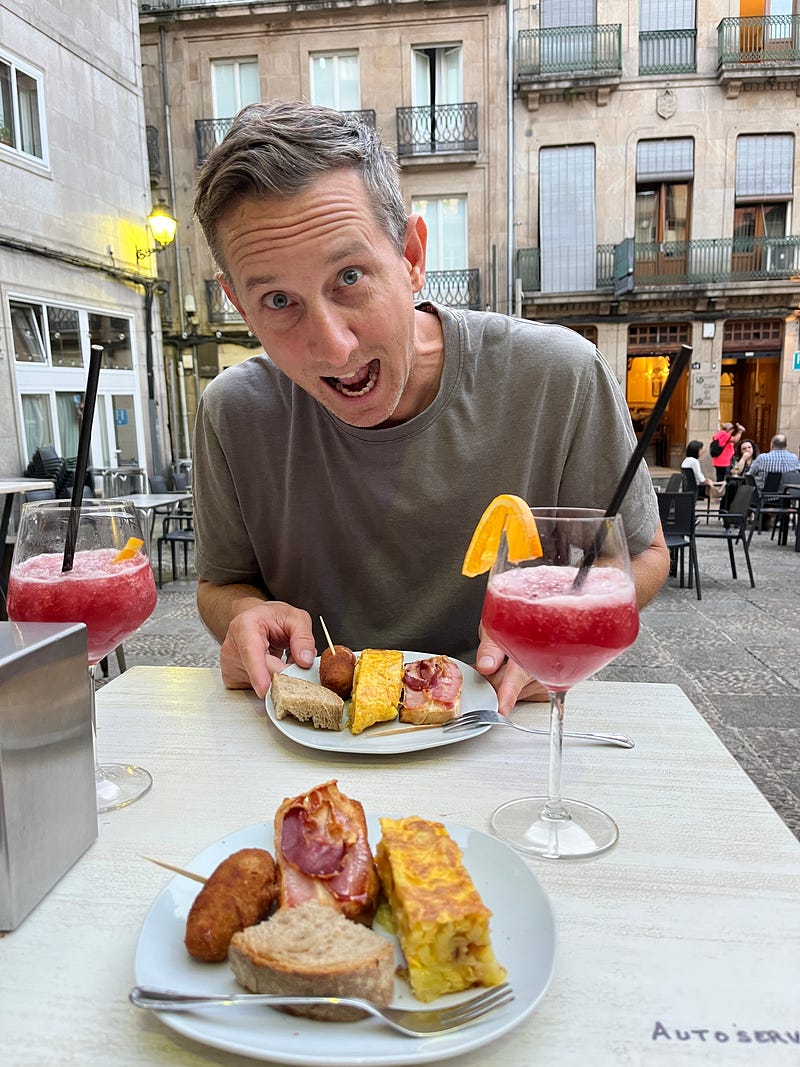
Last night, for example, we met our friends for dinner (with lots of bread) at 10 p.m. Then we went bowling because the night was young.
The thing is, in Spain, most restaurants don’t even open until 8 or 8:30 p.m.
It took us a few months to get used to eating so late, but if you’re able to make the shift to later dinners, it feels like getting a few extra hours in the day (especially if you’re a night owl like me).
But late-night dinners aren’t for everyone.
If you’re someone who needs to eat dinner at 6 p.m. living in Spain is going to be a challenge. But if you can make the switch, having dinner at 11 p.m. is a fantastic way to get on the local schedule and experience how the Spanish really live.
#4 Eating Lunch at 3 pm
It goes without saying that if you get used to eating dinner at 10 or 11 p.m., you have to eat lunch a little later, too.
These days we usually eat a pretty big lunch lunch (with bread, of course) around 2 or 3 p.m. which is not something I expected to enjoy as much as I do.
The notorious Spanish siesta makes more sense when you realize that it’s all in service of later dinners and avoiding the heat of the afternoon sun. And once you adapt your eating habits, the languid afternoons and late lunches serve as a great way to divide your work day — especially if you’re a freelancer or a writer like me!
#5 Great Local Wine for 2€ a Bottle
This is an obvious one, but it’s worth pointing out.
Spanish wine kicks ass.
What makes it even better is how affordable it is. A good bottle of mencia (a local red wine) usually costs between 2 and 5€. If you want something amazing, you can go nuts and spend 10€.
But you don’t have to.
And prices like this aren’t just at the market. Most restaurants in our part of Spain charge 1.50 — 2.50€ for a glass of local Spanish wine, which makes it very easy to walk to old town for a quick glass of delicious wine with dinner or tapas.
#6 The Free Thermal Baths
One of the biggest reasons my wife and I moved to Galicia in the northwest corner of Spain, was the abundance of fantastic (and completely free) thermal hot pools.
Ourense, the town we call home, has over a dozen thermal pools lining the river walk, and they are completely free year-round.
You don’t have to be a hot pool person to love living in Galicia, but it helps.
#7 Living Without the Constant Stress of High Rent, Gun Violence, and Toxic 24-Hour News Cycle
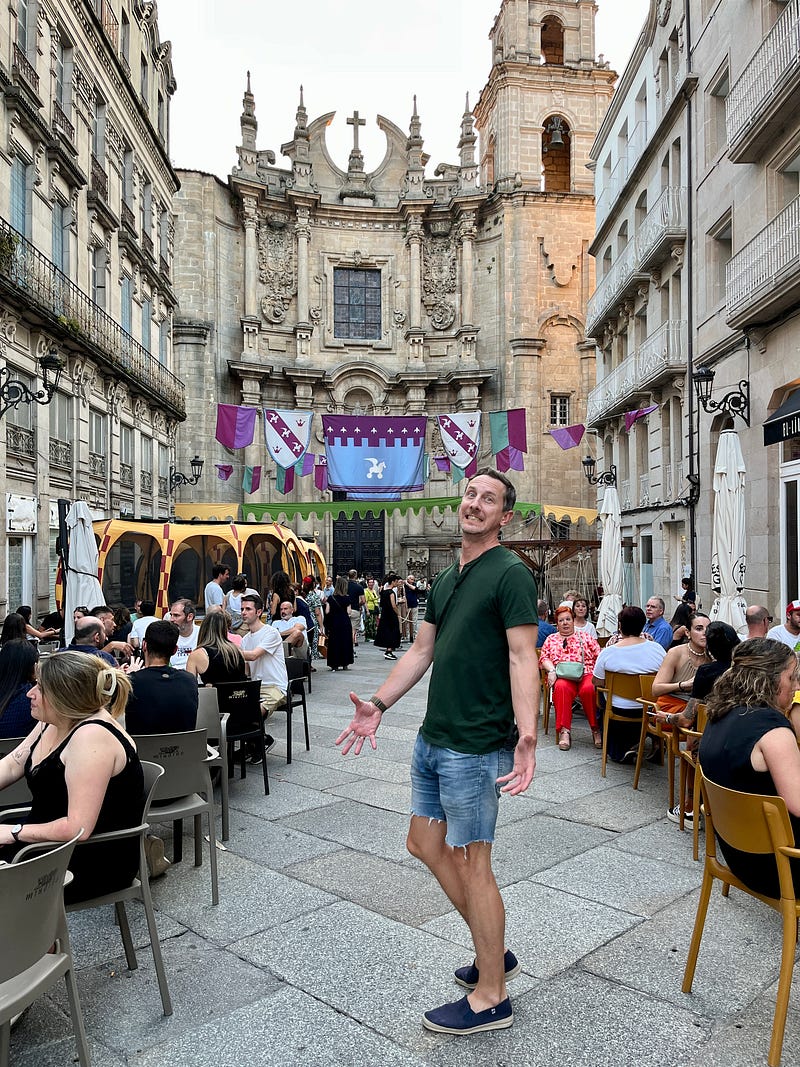
We’ve been living in Spain for less than a year, and while it’s not perfect, I have to say that I already feel different.
Healthier. More relaxed.
Happier, I guess.
I’m sure that cheap delicious wine and walkable cities have a lot to do with my mindset. But I also have a sneaking suspicion that the thing that’s most responsible for my current vibe is the lack of stress that comes from a society that provides reasonable rent, subsidized healthcare, restricts gun ownership, and where it’s literally illegal to campaign for office except for a few weeks before an election.
But it could be all the bread we’re eating.
Shawn Forno is a very left-handed travel writer with 15 years of experience (Lonely Planet, Tortuga Backpacks). Sign up for his newsletter or check out his YouTube channel, Days We Spend, for videos about life in Spain.


