
4 Things I learned in India
A cultural awakening
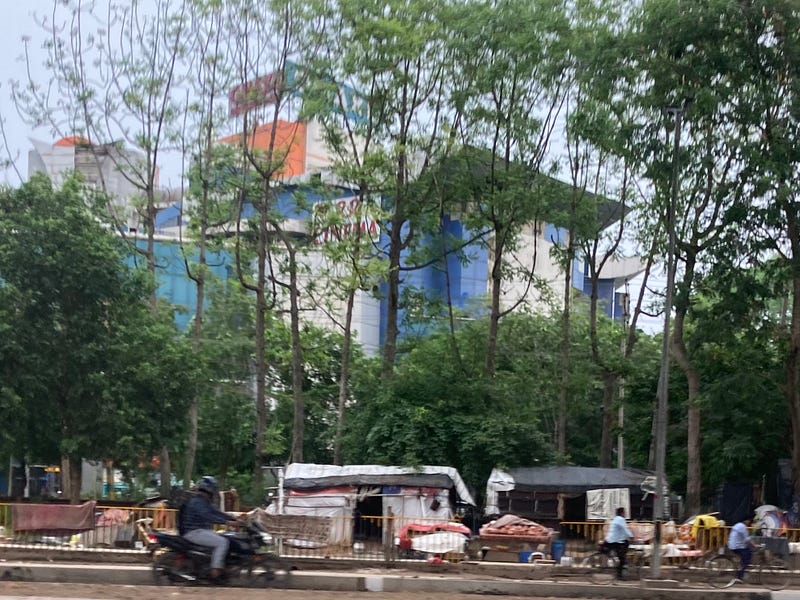
I visited India for the first time last week, and the experience far exceeded anything I could have anticipated. My trip took me to Gurugram, just 30 km southwest of New Delhi.
Driving
Taking a taxi to my hotel, I got my first sense of things being different here in New Delhi, lots of honking cars and motorcycles. At first, I thought this was odd and somewhat rude. I soon realized that honking is the equivalent of an extra mirror. That is, drivers honk when they are preparing to pass.
Roads are jam-packed, and honking is something you will hear often during your ride. Also, drivers need to watch out not only for pedestrians, who cross wherever it is convenient, but also cows that freely roam the roads or hang out in medians of busy streets.
Additionally, there are few signal lights, so instead of turning across traffic drivers make U-turns.
People
The Indian people I met were very kind. They always greeted others with warm smiles and a hearty good morning, afternoon, or evening. I had a bad cold throughout my trip, and my colleagues were constantly inquiring about my condition and quick to offer advice and support. Most of the service staff was also pleasant and welcoming.
There are several cultures blended in India. Rather than competing for supremacy, the people appear focused on getting along and accepting differences. What a difference from America today.
Meetings initially seemed chaotic. Once I understood everyone’s desire to get their say in, it was easier to ensure all were provided the opportunity to speak. The problem with several people speaking at once is that some good ideas get missed. As a facilitator, setting a ground rule of one person speaking at a time appeared to keep everyone engaged, even if discussions lasted longer than expected.
Money
For the most part, India appears to be a cashless society. The locals used an app called Paytm which transfers money directly from one bank account to another without service charges. That is very convenient for locals but makes payment difficult for visitors.
Because Indians do not use coins, getting change can be difficult. It took me three days (of my five-day trip) before I was able to break a 500 Rupee bill. Also, to avoid using coins payments are rounded to the nearest paper money denomination that the shop or merchant has available.
Dining
People eat dinner late in India. Most times, we made reservations for after 8 pm. Then, we began our meals with a wide range of starters, which could have been the main course themselves. Then setted into the curries and a variety of nans served as the main dish.
The restaurants we visited were lively places with DJs spinning popular songs or guests enjoying singing themselves. And it was not uncommon for people to get up and sing or dance between courses.
Traveling to India was a wonderful experience. Its chaos is so different from Japan’s rigid following of rules. India is truly different from any place I have ever experienced.
If you want to visit India, I recommend having a local guide who can help you stay out of trouble and get you safely to the destinations on your wishlist.


