
4 Quotes by Seneca to Help You Revaluate Life
Timeless troves of wisdom that can inspire our best lives.
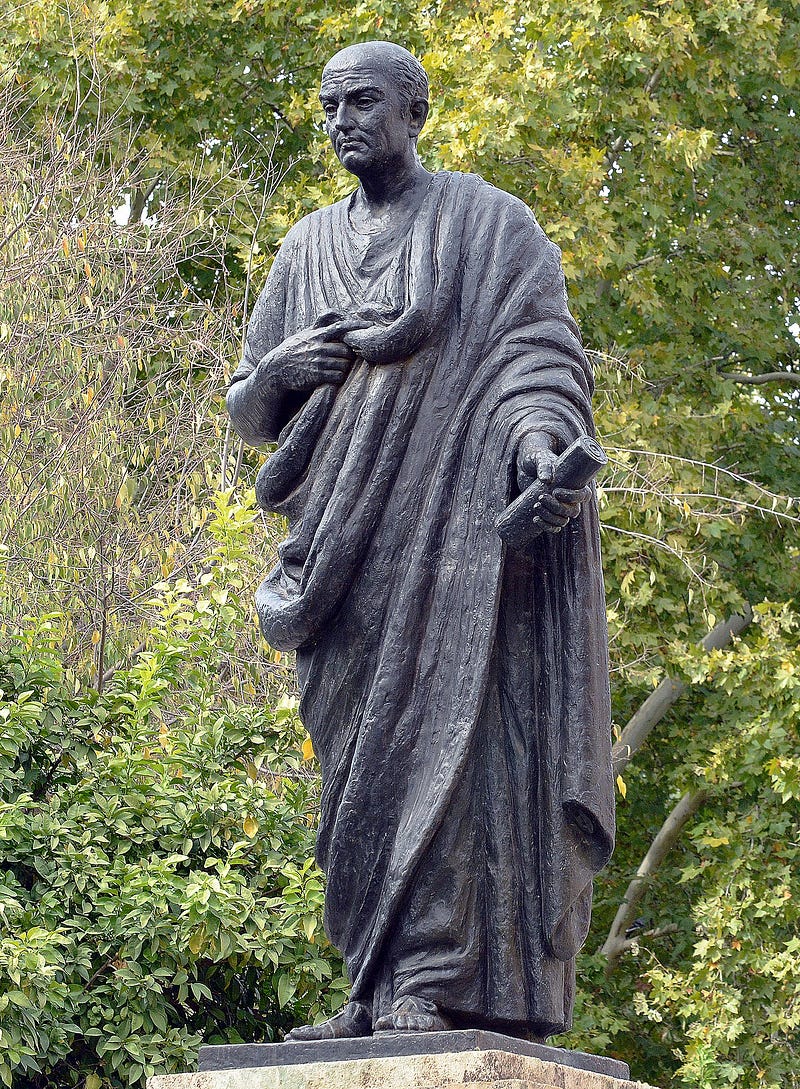
Seneca (4 B.C. — A.D. 65) was an important Latin writer who influenced the Middle Ages, Renaissance, and beyond. His themes and philosophy can still appeal today, with their focus on virtue and reason as the basis for a good life, while also placing importance on living simply and in harmony with nature.
One of the reasons why Seneca’s philosophy continues to rise in popularity is because of its practicality two millennia later.
While exploring the wisdom of Seneca, it becomes clear that our species has passed on small bits of knowledge since its infancy, if not only to inspire, but also to motivate and teach.
These gems can help us to find peace in crisis, solidarity in silence, and answers to the fundamental inquiries of our existence.

Here are four luminous quotes that Seneca shared with the world throughout his earthly inhabitance.
1. Luck is what happens when preparation meets opportunity.
People like to say that they got lucky. And sometimes, what happened was simply that: fortuitous luck. However, I’ve found that usually it’s not just random luck, but rather preparation with a side of determination and focus.
Preparation in anticipation of something good happening is a substantial part of being lucky. If you are willing and ready for something to happen, you know how to seize it at the moment that it shows up.
Imagine that a person prepares for a long time, and then opportunity arrives, but they stand mesmerized, paralyzed, and neglect to act.
Has that ever happened to you? Opportunity knocks, and you are prepared, but you are hesitant to act, or afraid?
We rarely know exactly when something great is going to happen. But when it does happen, we can act.
If an opportunity doesn’t show up, we merely had potential, but when the opportunity presents itself, we must be ready to act.
Opportunity without action is like standing on the shore next to your boat as you watch it drift away.
How to implement this guidance:
The actual key to being lucky is action. Without action, we are guaranteed to fall short of our goals and dreams.
So think: What can I do to prepare? What do I need to know, or what skills must I acquire to get the job done? What can I do to encourage opportunities?
Maybe it’s practicing more, going back to school, networking, increasing specific knowledge, or some other action entirely.
Lastly, put this into practice by asking yourself, What will it take to overcome the unknown and act?
Thinking about what holds you back can be difficult, whether it’s fear of success, fear of failure, or some past trauma. Try to name what holds you back, because otherwise how can you understand, confront, and overcome it?
Take some time to identify what you need to actively improve and see how quickly your luck changes.
2. True happiness is to enjoy the present, without anxious dependence upon the future, not to amuse ourselves with either hopes or fears but to rest satisfied with what we have, which is sufficient, for he that is so, wants nothing.
True happiness is rarely supported in our society.
But when we stop comparing ourselves to others, looking for approval, and chasing the next level of success, we can slow down and focus on what’s important and meaningful right now.
Stop worrying about what’s and instead ask yourself what’s important and meaningful in your life.
For many of us, it’s our creative pursuits (painting, writing, photography, music, etc.). For others, it’s helping others, raising children, or academia.
True happiness comes from being honest with ourselves and living authentic lives in the moment.
How to implement this guidance:
Try to stop pointless worrying about the future.
Embrace what’s important and meaningful.
Remember to have gratitude for what’s already present in your life.
Do these things, and you’ll find it much easier to sustain happiness.
3. Begin at once to live, and count each separate day as a separate life.
Live each day as if it is the first day of your life.
Nothing is promised.
We ultimately are fragile and mortal. It is foolish and reckless to assume that we have unlimited time for our intentions to eventually live an excellent life.
Seneca himself stated that future planning is futile.
“There is indeed a limit fixed for us, just where the remorseless law of Fate has fixed it; but none of us knows how near he is to this limit. Therefore, let us so order our minds as if we had come to the very end. Let us postpone nothing. Let us balance life’s account every day.”
String together enough great days, and you will live your way into a great year; string together enough great years, and you’ll end up with a great decade.
How to implement this guidance:
Think about your daily habits and routines before your long-term goals.
Make the most of each moment that you’re given, and try not to fret about how a possible mistake now might have negative repercussions later.
If you do make a “mistake”? You get a fresh start, a clean slate, every 24 hours.
And as you get ready for bed each night, think about how your day went and how you can make the necessary adjustments to create the new day to which you hope to wake up in the morning.
4. Sometimes even to live is an act of courage.
At times it can feel so easy to give up.
We all have moments where things can seem pointless, whether it’s going to a job that we dislike, having another argument, or questioning the meaning of life. We don’t see the progress or achievement for which we had hoped.
But what is really courageous is that we find ways to overcome those challenges and choose to keep living our luminous lives.
We can be our own worst enemy, and what we might consider unbearable is the daily lot of many people.
Yet they find the courage to continue on with their lives. Doesn’t that speak volumes about the courage of the human spirit?
And although this quote is commonly discussed in terms of the ending of one’s life, it also applies to those who are too scared to live.
It’s up to us to find the courage to not only live, but to make the most of our lives.
How to implement this guidance:
Start by realizing that while it is supremely unfair, bad things happen to good people, even our family members, friends, and co-workers.
We can lament the unfairness of the world or we can face our struggles with courage and determination.
Even if it is painful, we can choose to confront that which drains our courage and renders us mute.
To build courage, try embracing your fear.
Being courageous means doing something regardless of fearful feelings.
Fearfulness is a learned behavior based on our experiences and strengthened by our environment.
Learning to work through fear and step beyond it is about retraining your mind.
Don’t let your failures or limitations dictate who you are. Failure simply means that you are trying; it is something to learn from, not to avoid.
Make sure to remind yourself that your failures do not define you unless you let them.
And above all, have faith in yourself.

With great love and gratitude, Aurora

Connect with me on Twitter and LinkedIn
Read more:


