
4 Lessons From Consistently Making 4 Figures on Medium
Forget reverse engineering, focus on a breakout article

In October last year, I talked about making three figures from writing in one month. January of this year, I wrote about how I grew my Medium earnings by 300%. Although it was a sliver compared to what most full-time writers are being paid, it was enough for me to consider myself a writer. At the very least, I could tell people that I was being paid to write.
Last year was a tumultuous year for my writing, but it was where I saw a huge uptick in earnings from the Medium Partner Program. It was where I added over 30 articles every month, with a grand total of 176 (this article included) published since October.
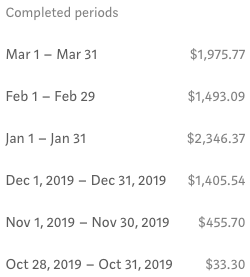
That’s almost one article a day, and it worked out for me.
However, writing consistently, tuning the articles for your audience are all dead-horse-beating advice.
You can find such advice everywhere on Medium, coming from big-name writers on Medium to other full-time writers who found success elsewhere. Rather than churn such advice out in a lifeless listicle, there are four other lessons that I learned that are rarely talked about during this push for earnings.
Like with all advice, there’s always room for variation. For a start, everyone’s working cycle is different. Some prefer to write daily. Others like to hole up elsewhere and write for the entire day. With that in mind, here are four lessons that I learned that helped me earn four figures consistently per month. However, there will be realities: not everything will work all the time, and there are times where your plans will simply collapse.
Reverse Engineering Does Nothing
It’s a feel-good tactic that leads to inaction. Here’s how you do reverse engineering: if you’re intending to earn $2,000 from Medium this month, you would need to earn at least $67 consistently every day to reach that amount.
Sales would tell you this: To earn $10 from selling something, you could price it at $1 and sell ten units of it. Or, you could go the other way and price one item for $10, which means you can hit your goal in one fell swoop.
The reality is that you are more likely to wind up having articles that can earn $8 and articles that can barely make a cent. Here’s an example:


Doing reverse engineering is a simple way to plan your objectives and targets, but it’s no surefire way to ensure you hit your goal. We often overestimate or underestimate ourselves—you have to factor in a margin of error regardless of your calculation. Here’s another reality: you can’t control the amount of money you can earn per article. There are times where an old article can suddenly gain an uptick in earnings, while popular articles fade out and generate zero income.
What’s an alternative to reverse engineering? The truth is, reverse engineering is still a good way to plan. The key is the follow-up:
- Always underestimate your targets. The last thing you want is to believe that ten articles are enough to hit your goal when you actually need another twenty more. There are loads of writers out there and some of them have deployed themselves on Medium fully—competition can be fierce if you look at it closely.
- Don’t have expectations of your articles. Like with any project, expectations can fall through. For instance, you might earn only $5 per article instead of $10 per article.
- Compound with quantity. The truth is, it probably takes more articles than you think to hit your goal. If you can’t create an article that can earn a huge chunk of your objective, use quantity to counter. For instance, thirty articles generating $10 a month each will mean $300 in total earnings.
Work Towards a Breakout Article in Your Niche
Every month, I strive to have a “breakout” article—an article that goes viral and ultimately covers at least 30% of your month’s earnings.


Unfortunately, there’s no hard and fast formula for building a breakout article. Virality is something marketers love the most, but sophisticated algorithms and huge databases are still not enough to predict it. For instance, it’s like how K Camp’s song, Lottery, went viral on TikTok, with millions all over the world doing a dance in front of the phone to it.
For writing, the virality factor is a little different. It’s predicated on many different, unpredictable factors. However, for the factors that you can control, capitalize on them immediately:
- Find a trend that is occurring and find your niche within that trend. For instance, the coronavirus outbreak triggered a remote working movement all over the world to prevent community spread. For writers that have been working remotely or favor remote-work policies, it can be a niche for them to write about. For example, ways to communicate when working remotely, collaboration tools to use, and common challenges of remote working. They could even add commentary as well if they have a strong opinion of it.
- Predict the lifespan of the trend. Not all trends last. At the end of last year, WeWork’s downfall was the trend in the business community, but it’s now out of sight today as every business is busy combating the impact of the coronavirus pandemic. Follow the story for as long as the trend lasts, and jump on newsworthy angles whenever you spot something.
- Establish domain authority in your niche with other articles. Let’s say you want to talk about remote working during the coronavirus pandemic. It’s not enough to simply focus on remote working, churning out articles on it, and hoping it to work out by itself. Rather, you would have to build your domain authority through other articles, which can go back to your attempted breakout article.
- Trends also have limited virality, the reason being that everyone is likely capitalizing on that trend as well. Let’s route back to the remote working example. It’s an almost dead topic—everyone writer is talking about it. Unless you have something contrarian or valuable to say (and even so, it should be rare), it’s not going to enjoy the virality factors that the trend has.
Nevertheless, having a breakout article isn’t a must. For the most part, it’s simply a great way to secure a huge amount of earnings from a few hours’ worth of work. The best way is to underestimate your targets and consistently attempt to write such articles—sometimes the one you don’t expect to go viral will wind up earning the most after a month.
It’s Not Enough to Write More
Writing is tough. It may seem easy, but communicating through the written word poses its own difficulties as well. A quick look at some of the “poorer-quality” articles here and you would be able to guess the person’s experience as a writer.
A lot of articles on Medium claim that writing more can improve skills over time or build a consistent writing habit to encourage progress. The reality is that multiplying anything by zero still equates to zero. Without any single percentage point in improvement, the article will not simply get better—it’ll just become kilobytes of data that Medium will store in their database.
For seasoned writers who have been doing work outside of Medium prior to starting here would not have this problem. However, there are times where an industry expert has an opinion or idea to share but it’s simply difficult for them to pen it down. The last thing these people can do is to write more and have their ideas get lost in the letters on the screen.
Here’s what any writer can do:
- Use Grammarly or something similar. It can save your life with formatting, grammar, and other technicalities.
- Be patient with publishing. Don’t just hit “new story” and then hit “publish” a few hours later. Figure out if that’s your working style, and find out if you are able to churn out quality articles despite only working on the article for a few hours.
- Compare your articles to others. There’s a contrarian opinion on Medium that you shouldn’t compare your articles to other people—you might wind up copying their style if you’re not careful. Rather than compare, find a writer that has a standard of writing that you aspire to reach. It could be the way he structures sentences or his diction: this prevents you from losing your voice.
- Above all, have compassion. It’s okay to not improve every day. You may find a breakthrough in one article. Rather than stress yourself out about improving quickly, enjoy the process.
Don’t Run a Publication Unless You Want to Commit
Running a publication on Medium is quite common and any Medium reader can see that there are popular publications here. Apart from the platform’s internal publications like Marker and OneZero, there are also popular ones like The Startup, Towards Data Science, and Muzli, which have their own niches.
The good thing about the publication is that as it grows, so will the potential number of readers. That means posting an article today and then half a year later will see a different read and view count.
The reality is, running a publication requires commitment. The fundamentals of a publication require:
- Equal respect to it and towards any media company. Treat the publication like an online media company, with its own mission, vision, and values.
- Branding. There’s a huge difference between Marker and OneZero, despite being from the same platform. Branding is important—why start another publication focusing on startups and business again? Find that unique angle and capitalize on it.
- Consistent supply. At the very least, your readers should be able to expect something from time to time. It’s okay to publish small numbers, but it’s never okay to disrupt the article supply chain and leave readers wondering about the radio silence.
In the end, no amount of optimization can save a terrible article. Instead of focusing on optimizing the article, it’s better to look at the root of the readership count that is the article itself. Are you writing well? Do you communicate your ideas easily? Are you writing in a way that makes it an enjoyable read?
Unless your articles are readable (in your own voice, of course), even the best SEO can’t even save it.
The reality is that being a top writer on Medium is more than just writing and getting articles curated. It’s about giving value—most follow the earnings, but giving value is the reason many started writing in the first place. Regardless of whether you’re a seasoned or newbie writer, the learning journey is never-ending. For instance, you’ll find yourself adapting to trends. You might find your writer’s voice. You may become proficient in a certain genre.
The key is to always have a positive feedback loop so you know where you can improve. Regardless of four or five figures, any article that gives value to anyone is in fact, priceless.